Basic geometry understanding Normal Worksheets for Ages 4-7
4 filtered results
-
From - To
Introduce your child to the exciting world of geometry with our engaging "Basic Geometry Understanding Normal Worksheets for Ages 4-7." Crafted to suit young learners, these worksheets will help your child master essential geometric concepts such as shapes, symmetry, and spatial relationships. Each worksheet is designed to make learning fun and interactive, nurturing their critical thinking and fine motor skills while maintaining their natural curiosity. Perfect for preschoolers and early elementary students, these worksheets seamlessly blend learning and play, laying a strong foundation for future math success. Visit our website to explore our complete collection!
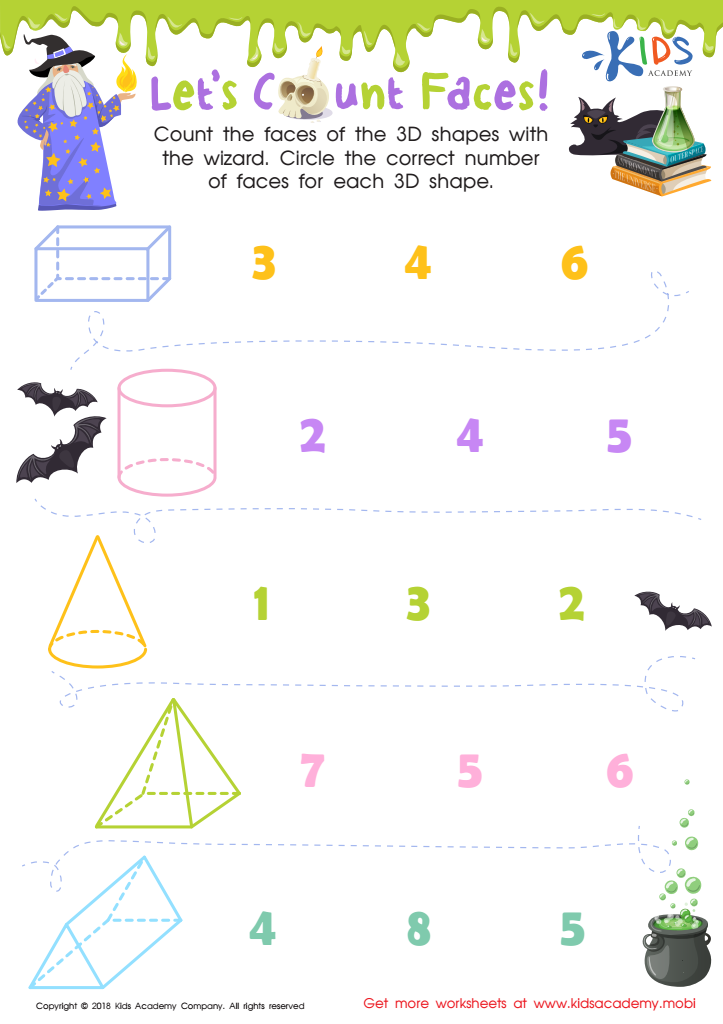
Let's Count Faces! Worksheet
 Assign to My Students
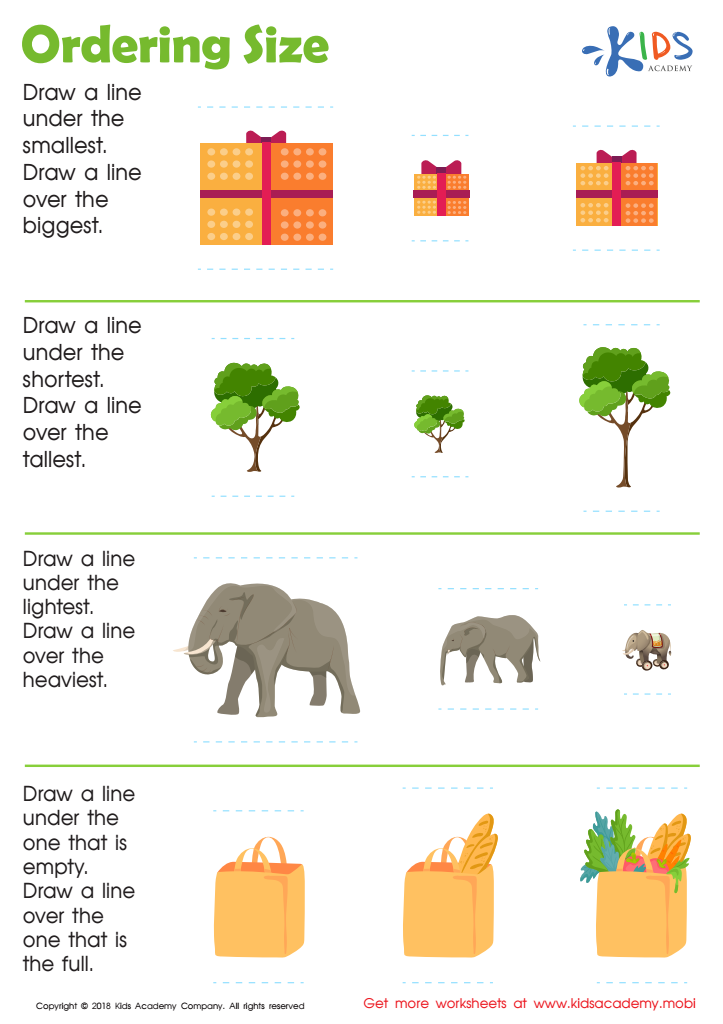
Ordering Size Worksheet
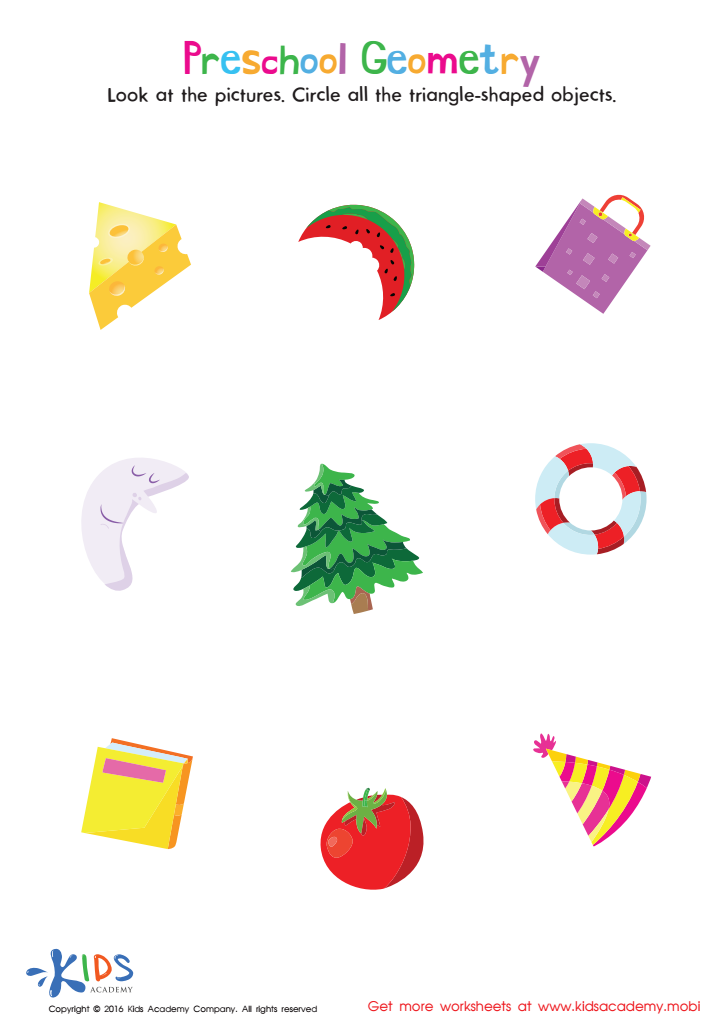
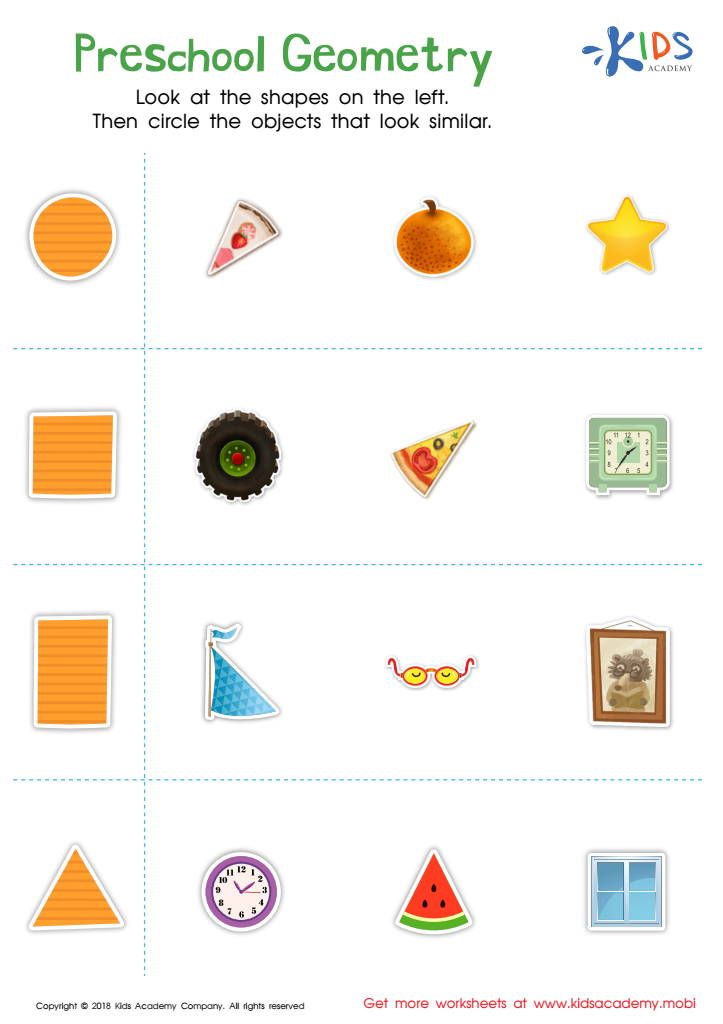
Preschool Geometry Worksheet








Basic geometry understanding is crucial for children aged 4-7 as it lays the foundation for a host of essential skills they will use throughout their lives. At this formative stage, children are naturally curious and their brains are highly receptive to new information. Learning geometry aids in their cognitive development, particularly in recognizing patterns, spatial reasoning, and problem-solving abilities.
When children recognize and differentiate shapes, they are engaging in a form of visual thinking that boosts their ability to process and categorize visual information. This skill translates beyond mathematics into reading and writing, as distinguishing different shapes and forms is fundamentally linked to recognizing letters and numbers. Understanding spatial relationships, such as above, below, next to, and between, also helps in real-world navigation and basic reasoning.
Moreover, early geometry lessons develop fine motor skills through activities like drawing shapes, completing puzzles, and building with blocks, enhancing hand-eye coordination. Socially, discussing shapes and their properties in groups helps improve their communication and collaborative skills.
In essence, early exposure to basic geometry creates a well-rounded foundation, making future mathematical concepts more accessible and fostering critical life skills. Thus, parents and teachers should prioritize geometry to ensure holistic development.








