
Enhance critical thinking Normal Worksheets for Ages 4-7
3 filtered results
Difficulty Level
Grade
Age
-
From - To
Subject
Activity
Standards
Our "Enhance Critical Thinking Normal Worksheets" for ages 4-7 are thoughtfully designed to nurture young minds through engaging activities. These worksheets use creative exercises to boost logical thinking, problem-solving skills, and cognitive development. Each colorful and interactive sheet encourages children to identify patterns, sequences, and relationships, developing foundational critical-thinking abilities. Ideal for both parents and educators, these resources help foster essential learning skills in a fun, supportive environment. Empower your child to think independently and discover solutions with our expertly crafted worksheets. Start your journey towards enhanced critical thinking and academic success today!
Favorites
With answer key
Interactive
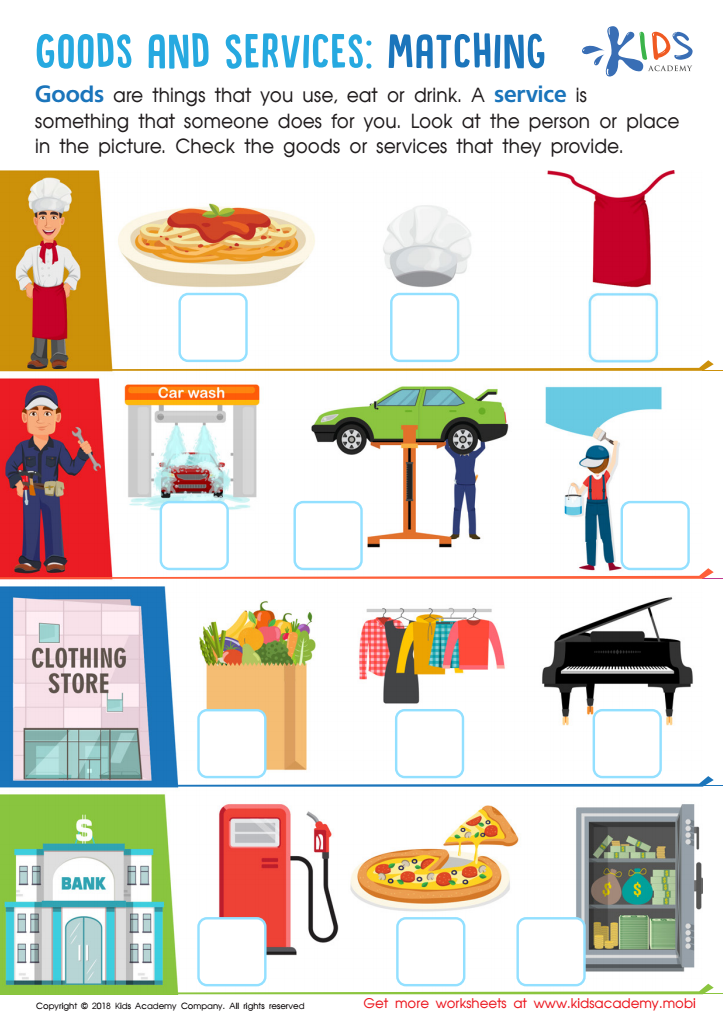
Goods and Services: Matching Worksheet
Goods are things that you use, eat or drink. Ask your kids to give examples of goods and services. Challenge them to identify the people and places in the worksheet, and check the goods or services they provide from the options on the right side.
 Assign to My Students
Goods and Services: Matching Worksheet
Worksheet
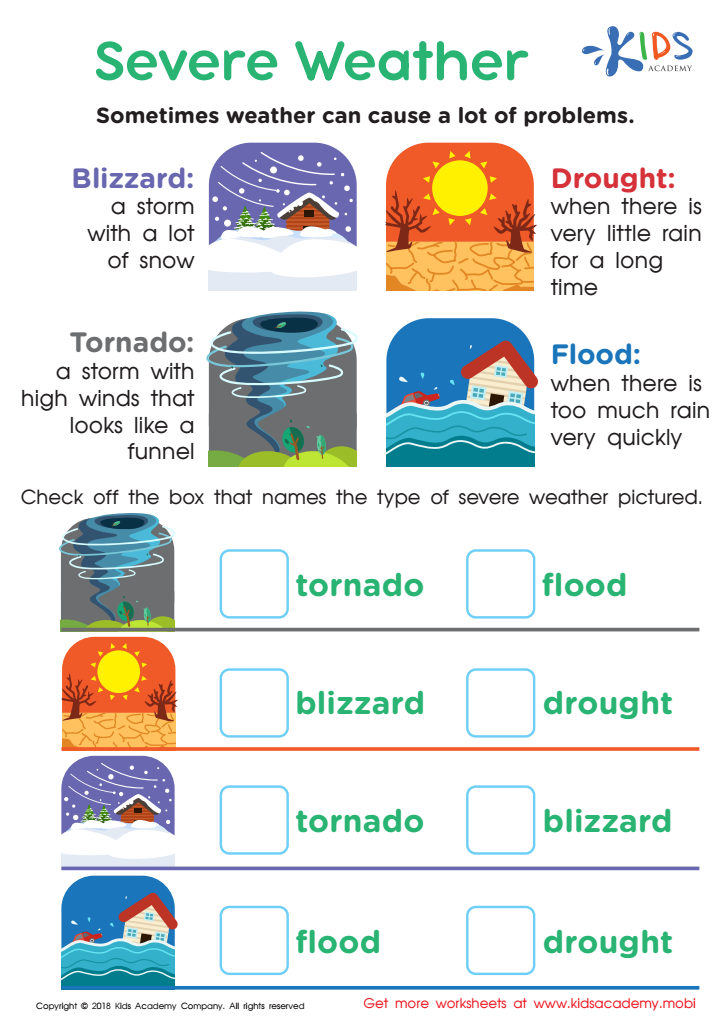
Severe Weather Worksheet
Weather can be dangerous, so teach your kids to stay safe with this interactive weather worksheet. Review the descriptions of tornadoes, blizzards, floods, and drought and match them with the colorful pictures. Tick the boxes to correctly identify each image and complete the sheet.
Severe Weather Worksheet
Worksheet
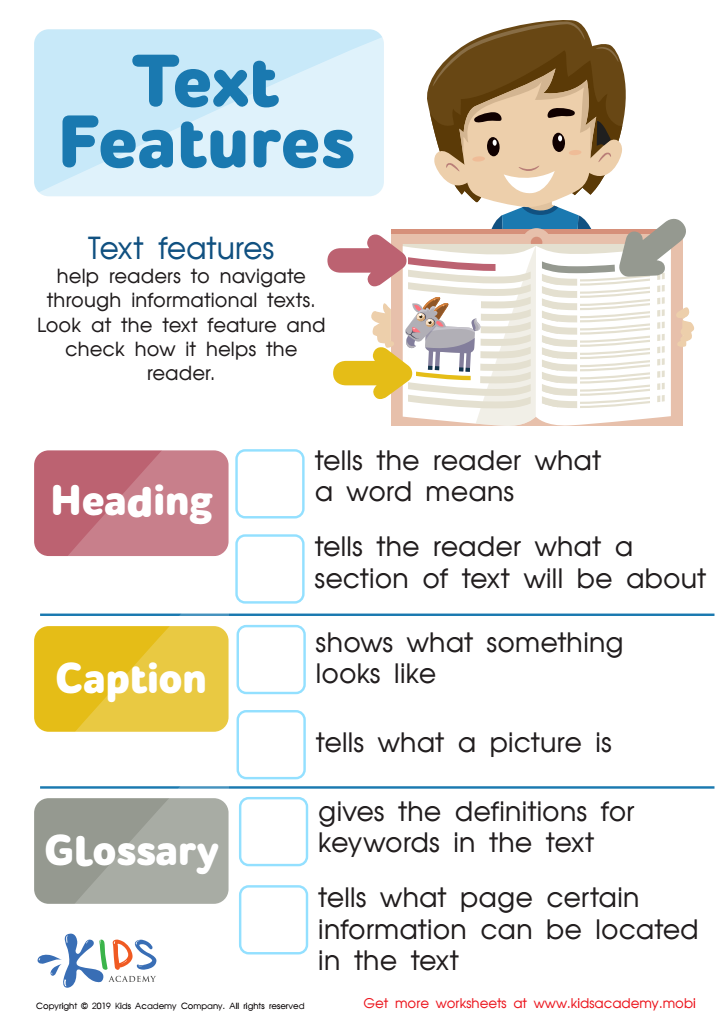
Text Features Worksheet
Help your kids get better at processing and analyzing texts by getting them to practice. Our worksheet with text features will help them find their way. This will help them understand how the features assist in finding information. Encourage practice, and they'll be able to improve quickly.
Text Features Worksheet
Worksheet
Join Kids Academy for Free
Who is primarily going to use this learning content?








Enhancing critical thinking between ages 4-7 is crucial for early development and lays the groundwork for lifelong learning. During this formative period, children's brains are highly receptive and adaptable, meaning skills learned now are more likely to be retained and refined over time. Critical thinking nurtures inquisitiveness and independent thought, enabling children to better understand the world around them. It also fosters problem-solving skills, teaching kids to evaluate different solutions and foresee potential outcomes.
For parents and teachers, promoting critical thinking at this age helps children form a solid foundation for academic success and social interactions. Through engaging activities such as puzzles, open-ended questions, and play-based learning, young children learn to analyze, hypothesize, and come to their own conclusions. These skills not only help in subjects like math and science but also in daily decision-making and emotional intelligence.
Additionally, early development of critical thinking enhances communication skills. When children learn to express their thought processes clearly, they can better articulate their needs and understand others', fostering empathy and cooperation.
In essence, prioritizing critical thinking for young children equips them with essential tools for academic, social, and personal success, making it a key component of early education and development.








