Phonological awareness Normal Worksheets for Ages 4-7
4 filtered results
-
From - To
Enhance your child's early reading skills with our Phonological Awareness Normal Worksheets for Ages 4-7. Designed to develop awareness of sounds, rhymes, and syllables, these worksheets make learning fun and engaging. Our expertly crafted activities support critical pre-reading skills by focusing on listening, segmenting, and blending sounds. Ideal for preschool to first grade, these resources offer a structured approach to phonological development. Perfect for both educators and parents, these worksheets ensure children build a strong foundation in literacy. Visit our website to explore a variety of exercises tailored to your child's learning needs and pace.
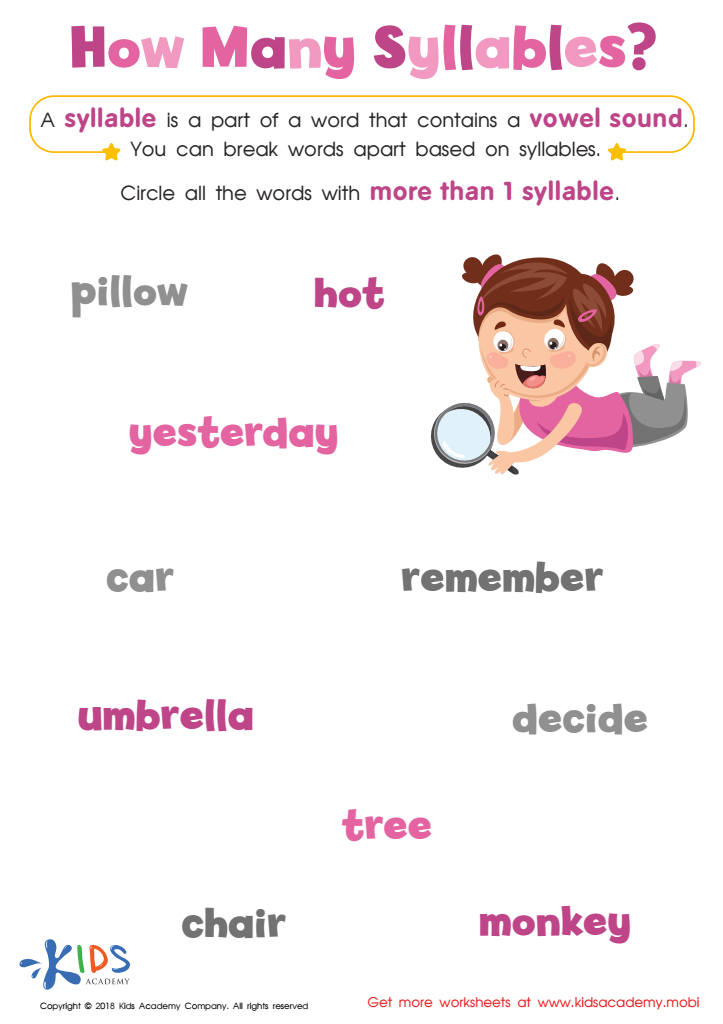
Reading: How Many Syllables Worksheet
 Assign to My Students
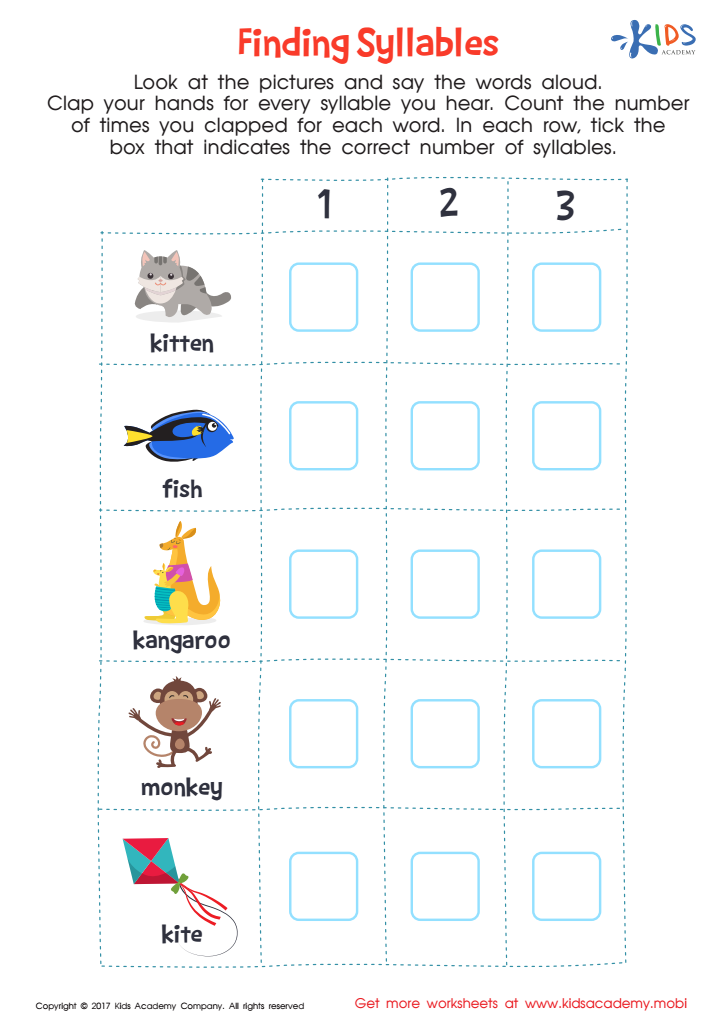
Finding Syllables Word Structure Worksheet
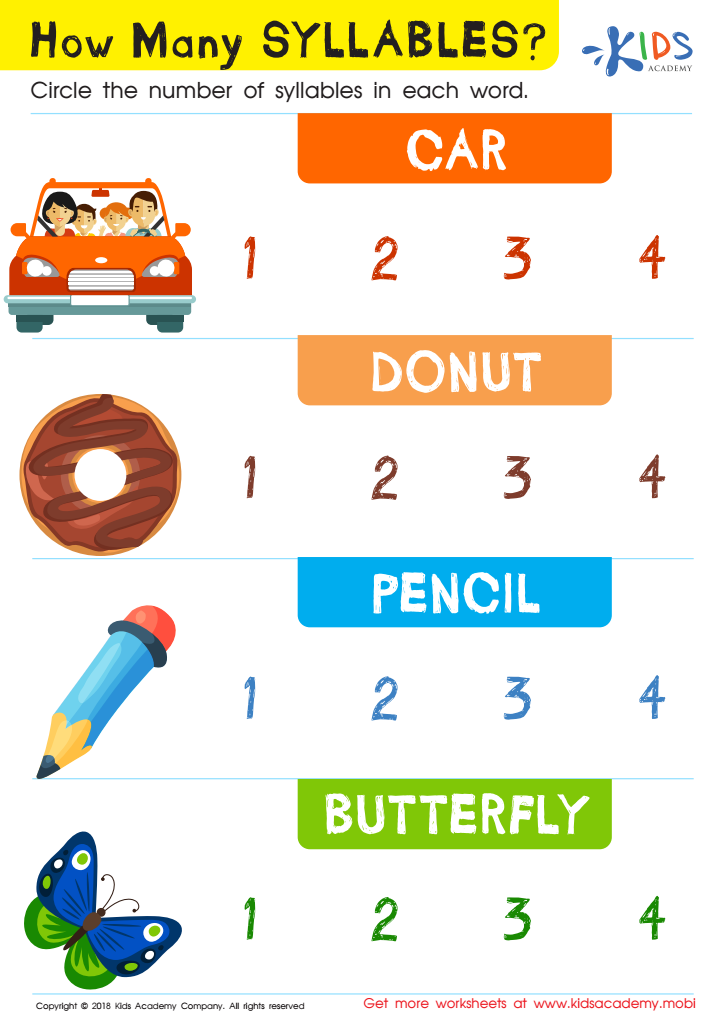
How Many Syllables? Worksheet
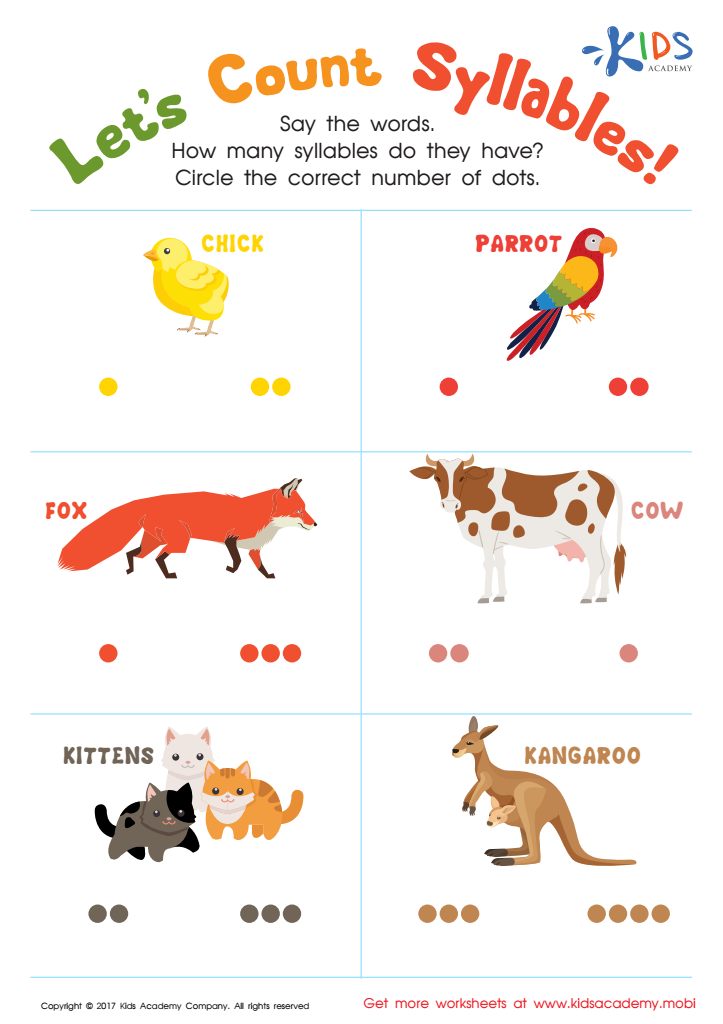
Lets Count Syllables Worksheet


.jpg)



Phonological awareness is a critical skill to develop in children ages 4-7 as it serves as a foundational element for reading and writing. This auditory skill involves recognizing and manipulating the sounds in spoken language, such as rhyming, blending sounds to make a word, and breaking words into individual sounds. By fostering these abilities, parents and teachers provide children with the essential tools for decoding words, an essential phase of reading proficiency.
For parents, promoting phonological awareness at home, through activities such as reading aloud, singing, and playing sound games, translates to early literacy success. These early achievements can build a child's confidence, motivation, and interest in reading, making learning a more enjoyable experience.
For teachers, understanding and nurturing phonological awareness in the classroom contributes to identifying students who may be at risk for later reading difficulties. Early intervention can be provided to address these challenges before they become significant barriers to learning. Employing techniques such as phonemic segmentation exercises and phoneme substitution games can make these skills fun and engaging.
In essence, keen attention to phonological awareness during the early years paves the way for deeper literacy skills, critical thinking, and academic success. Early support in this area can set children on an effective learning trajectory that impacts their educational journey positively.








