Real-life application Normal Worksheets for Ages 4-7
3 filtered results
-
From - To
Discover engaging Real-life Application Normal Worksheets for children ages 4-7, designed to enrich learning through practical experiences. These worksheets encourage young learners to connect essential skills, like problem-solving, critical thinking, and creativity, to everyday situations. Tailored to foster real-world understanding, topics include counting objects, identifying colors, and measuring items. Ideal for enhancing classroom activities or homework, these worksheets make learning fun and relevant. With vibrant illustrations and interactive exercises, children will enjoy practicing valuable skills that serve them beyond the classroom. Explore our collection to provide your child with enjoyable ways to learn about the world around them!
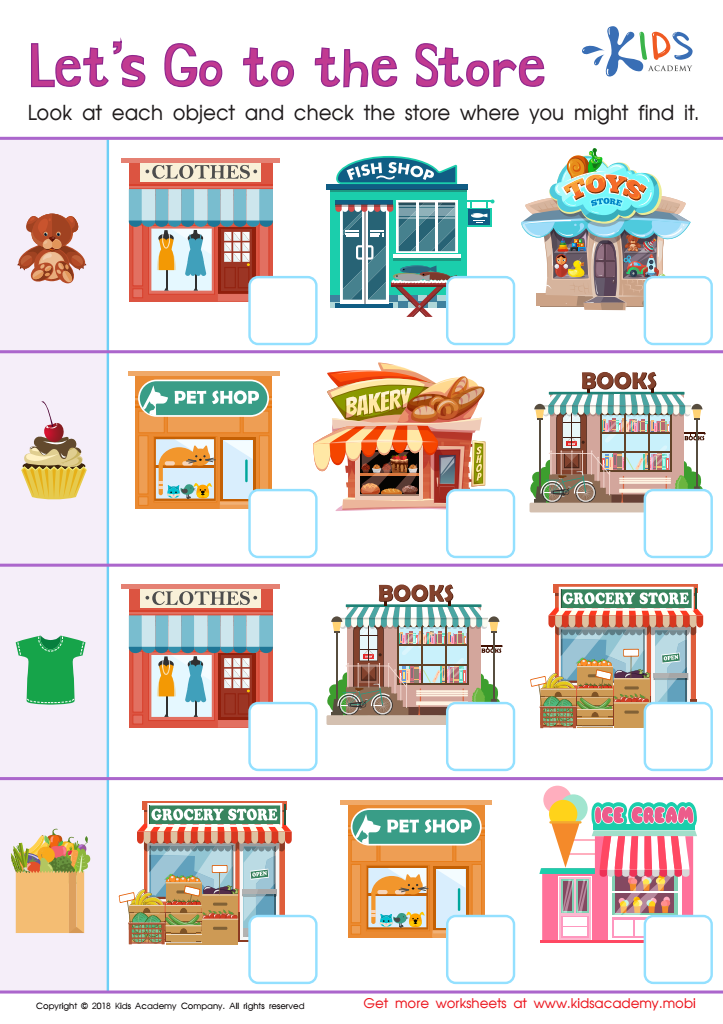
Let's Go to the Store! Worksheet
 Assign to My Students
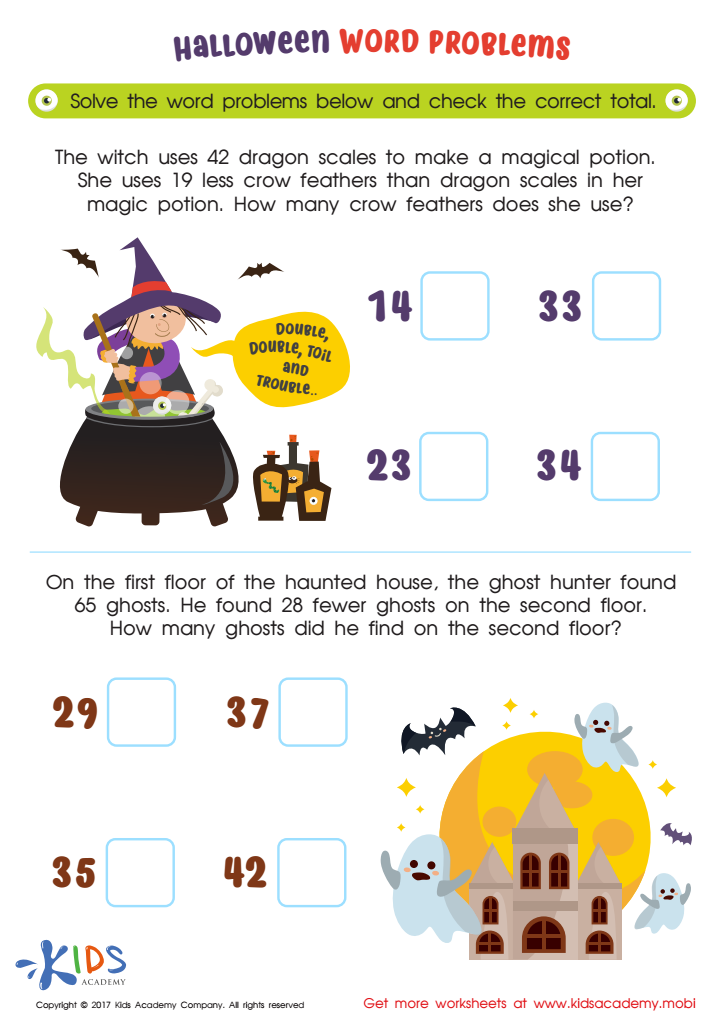
Halloween Word Problems Printable
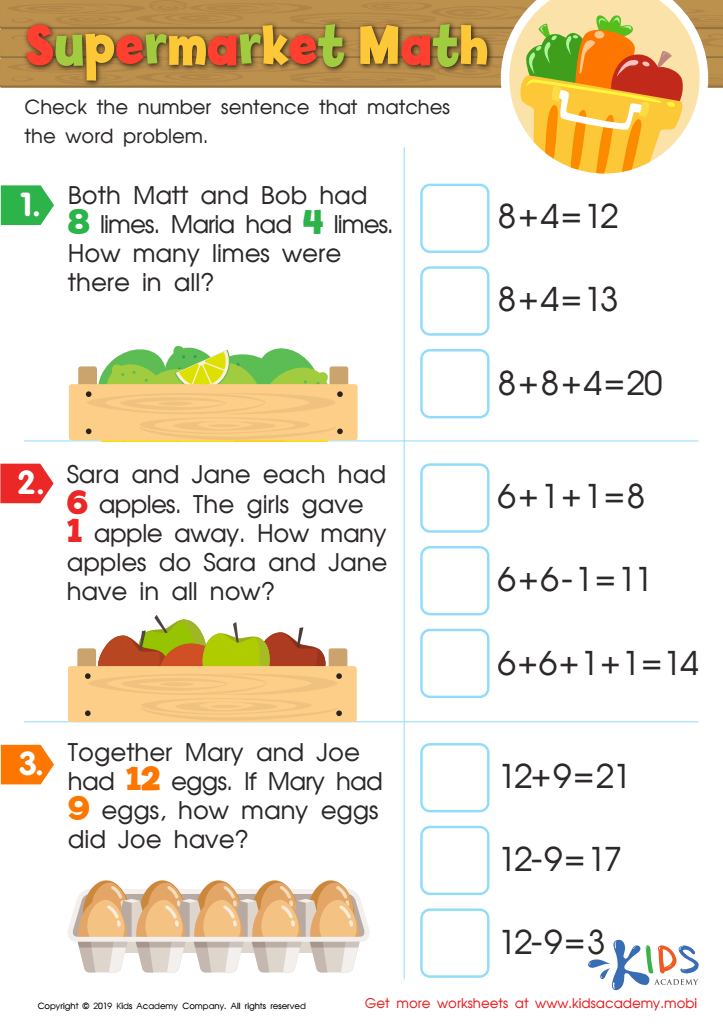
Supermarket Math Worksheet


.jpg)





Parents and teachers should prioritize real-life application for children aged 4-7 because it lays a foundation for meaningful learning and understanding. At this developmental stage, children are naturally curious and eager to explore the world around them. Engaging them in activities that connect lessons to real-life experiences helps to solidify concepts and encourages critical thinking.
Real-life applications foster the development of essential skills—such as problem-solving, decision-making, and collaboration. For instance, cooking together can teach math skills through measuring, while grocery shopping introduces budgeting and planning. Moreover, seeing the relevance of what they learn enhances children's motivation and retention; they are more likely to remember lessons that are meaningful and applicable to their lives.
Additionally, this approach nurtures a love for learning by making it fun and engaging. Children can draw connections between their classroom lessons and everyday situations, fostering a sense of confidence and competence. Ultimately, when parents and teachers emphasize real-life application, they equip young learners with the skills necessary to navigate the world, laying the groundwork for academic success and lifelong learning.








