Recognizing shapes Normal Worksheets for Ages 4-7
3 filtered results
-
From - To
Our Recognizing Shapes Normal Worksheets for Ages 4-7 are expertly designed to help young learners identify and differentiate shapes while fostering early math skills. Engaging and easy-to-follow, these worksheets include a variety of fun activities such as tracing, matching, and coloring, all geared toward enhancing visual perception and fine motor skills. Perfect for home or classroom use, our materials support a foundational understanding of geometry tailored to the developmental stages of children aged 4 to 7. Ignite a love for learning and build confidence as your child explores the exciting world of shapes with Kids Academy.
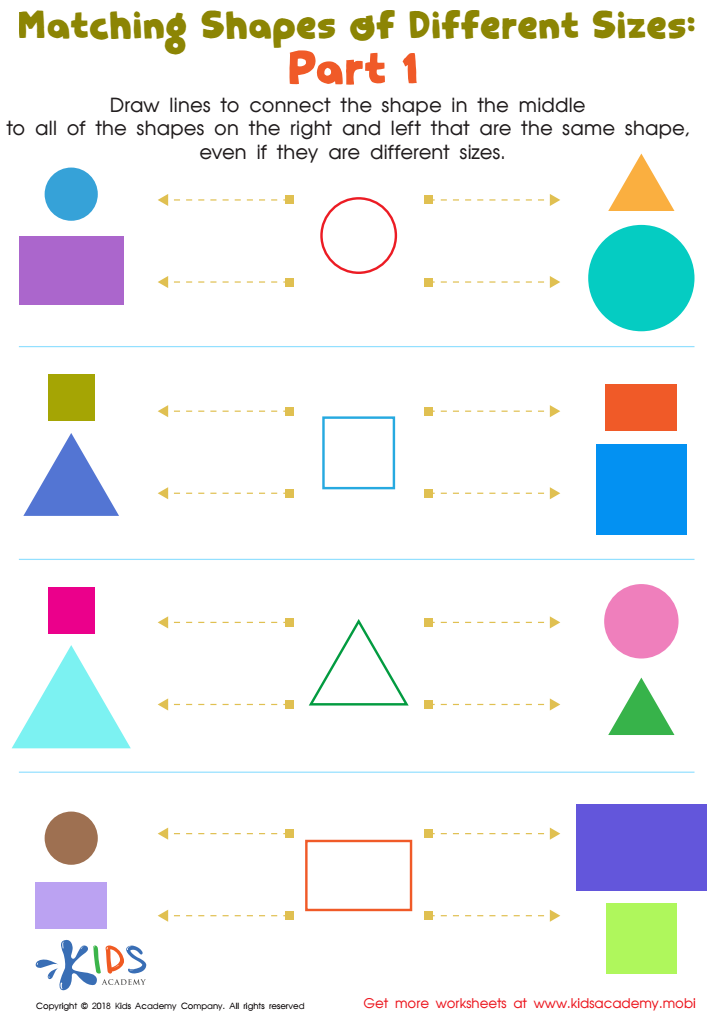
Geometry: part 1 Worksheet
 Assign to My Students
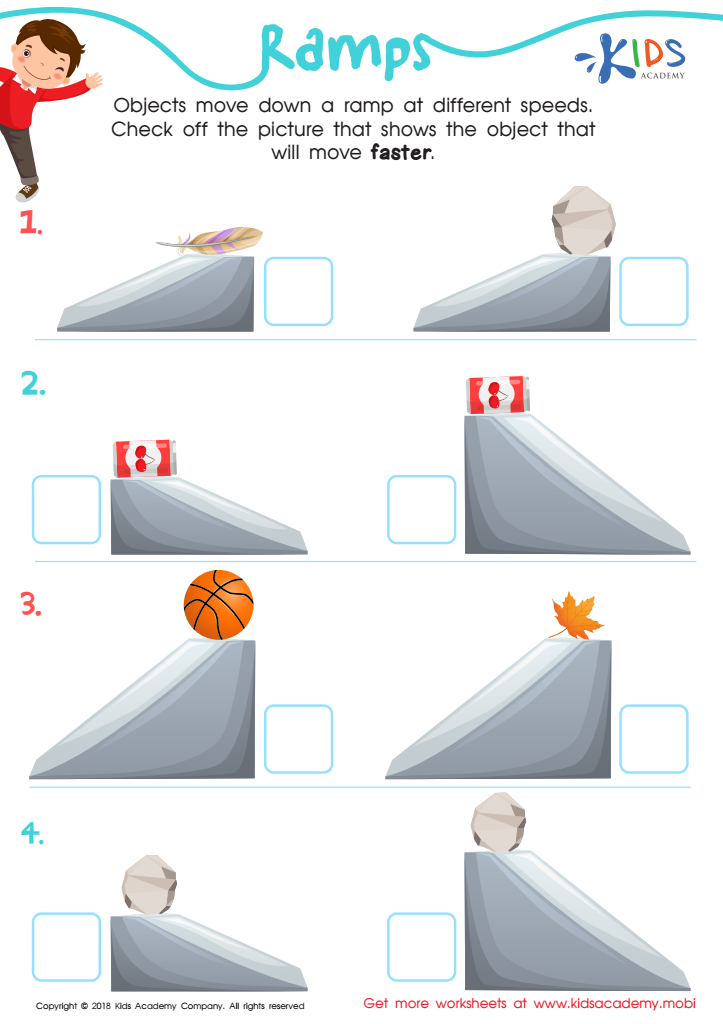
Ramps Worksheet
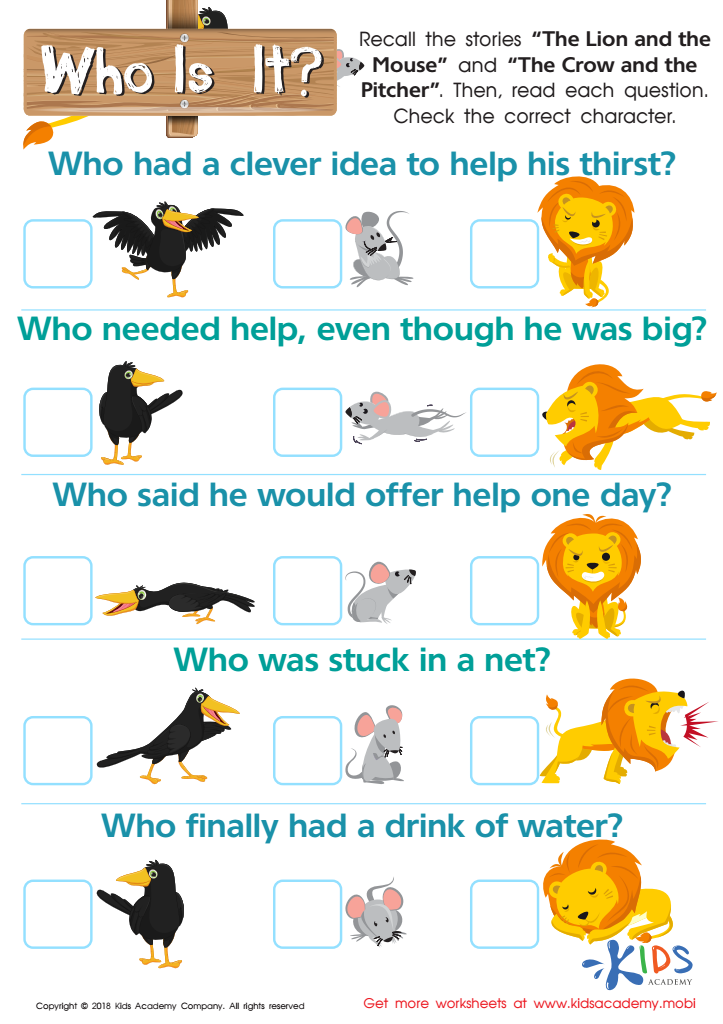
Who Is It? Worksheet








Recognizing shapes is a fundamental skill for children aged 4-7 that plays a crucial role in their cognitive and academic development. At this formative stage, developing the ability to identify and understand shapes enhances a child's spatial awareness, which is essential not only for mathematics but also for daily activities and problem-solving.
Understanding shapes helps in building a strong mathematical foundation. When children can differentiate between circles, squares, triangles, and other shapes, they are essentially learning the properties of these forms – such as the number of sides and corners, symmetry, and relationships between different shapes. This knowledge lays the groundwork for geometry and other complex mathematical concepts they will encounter later in their academic journey.
Equally important is the development of fine motor skills. Activities that involve drawing, modeling, or cutting shapes help children enhance their hand-eye coordination and dexterity. Recognizing shapes also supports literacy skills. Many letters and numbers are essentially combinations of different shapes, so this skill aids in reading and writing comprehension.
Moreover, an early grasp of shapes helps children understand and navigate their environment more efficiently. Integrating shapes into playful activities and real-life contexts simplifies complex ideas, making learning enjoyable and meaningful. For these reasons, parents and teachers should highly prioritize and nurture the ability to recognize shapes in young children.








