Shape identification Normal Worksheets for Ages 4-7
9 filtered results
-
From - To
Discover the perfect resource to help young learners master shape recognition with our Shape Identification Normal Worksheets for Ages 4-7. Tailored specifically for children in this age group, these engaging activities develop foundational geometry skills through fun and interactive exercises. The worksheets include a variety of tasks, from matching shapes to coloring and drawing, all designed to make learning visual and enjoyable. Ideal for use at home or in the classroom, these printable worksheets encourage critical thinking and boost confidence in early math skills. Equip your child with the tools they need to succeed in shape identification and beyond!
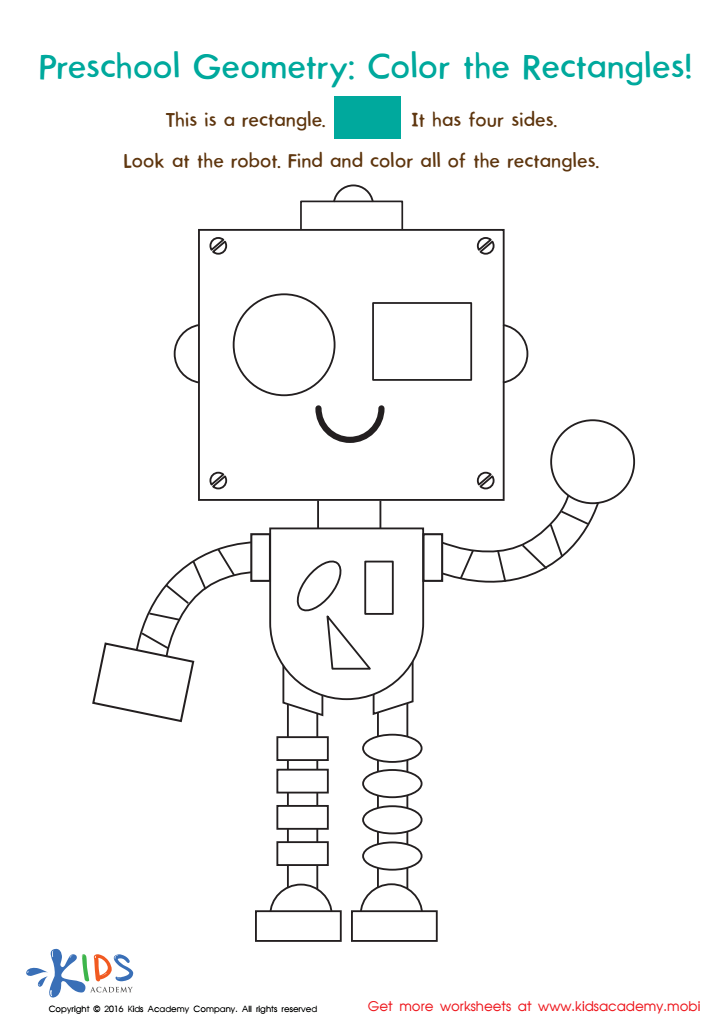
Geometry Worksheet
 Assign to My Students
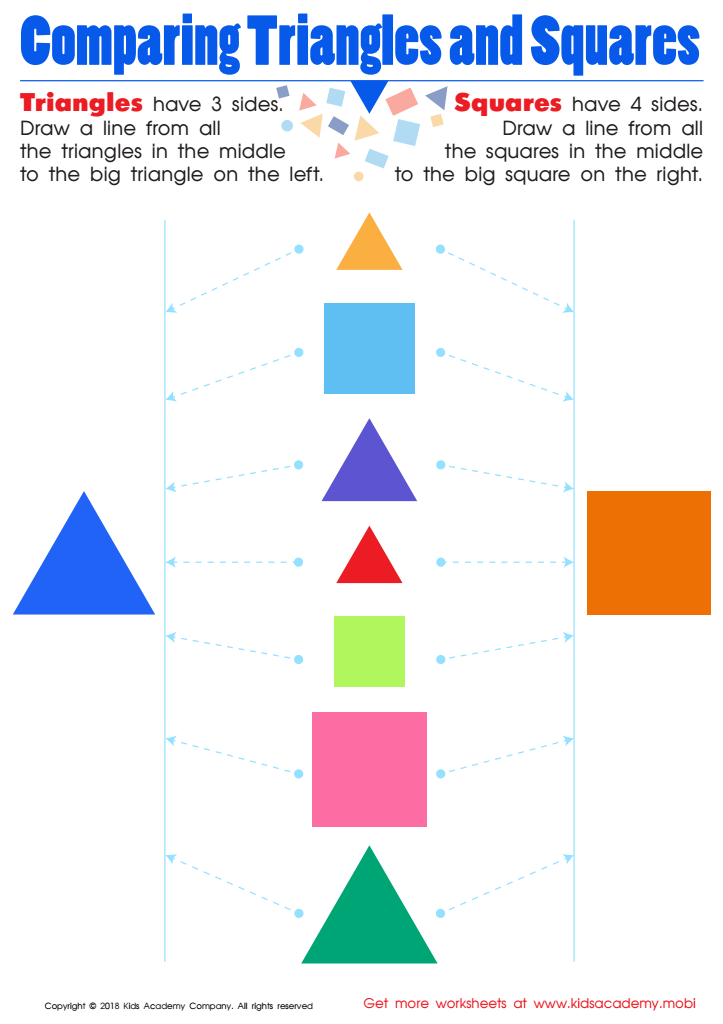
Comparing Triangles Squares Worksheet
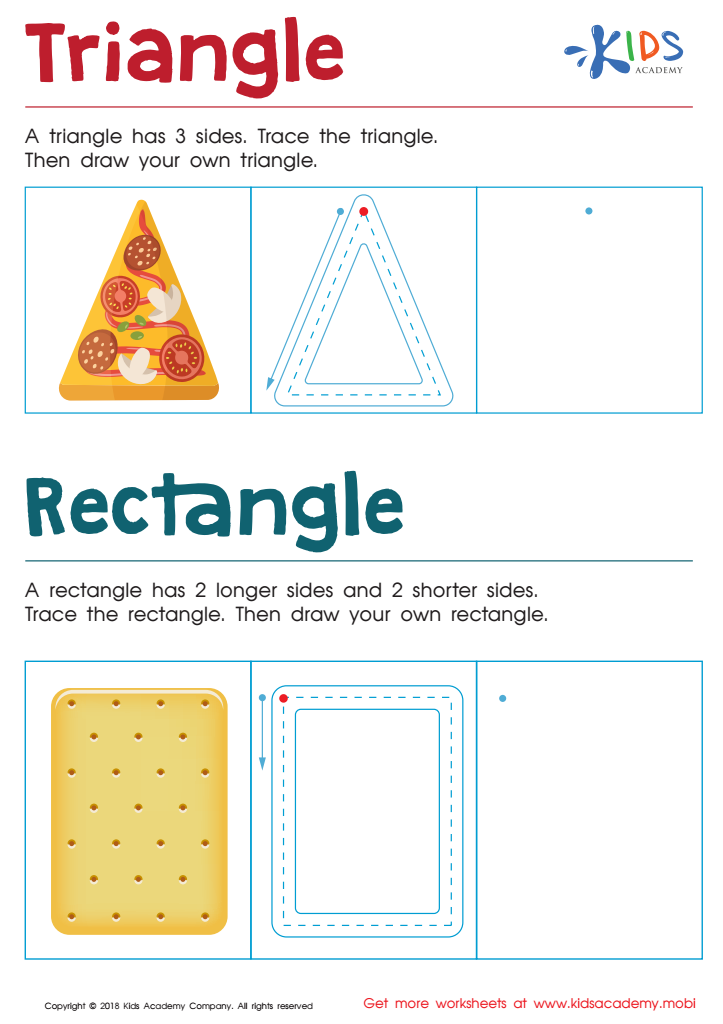
Triangle Rectangle Worksheet

Let's Look! Assessment Worksheet
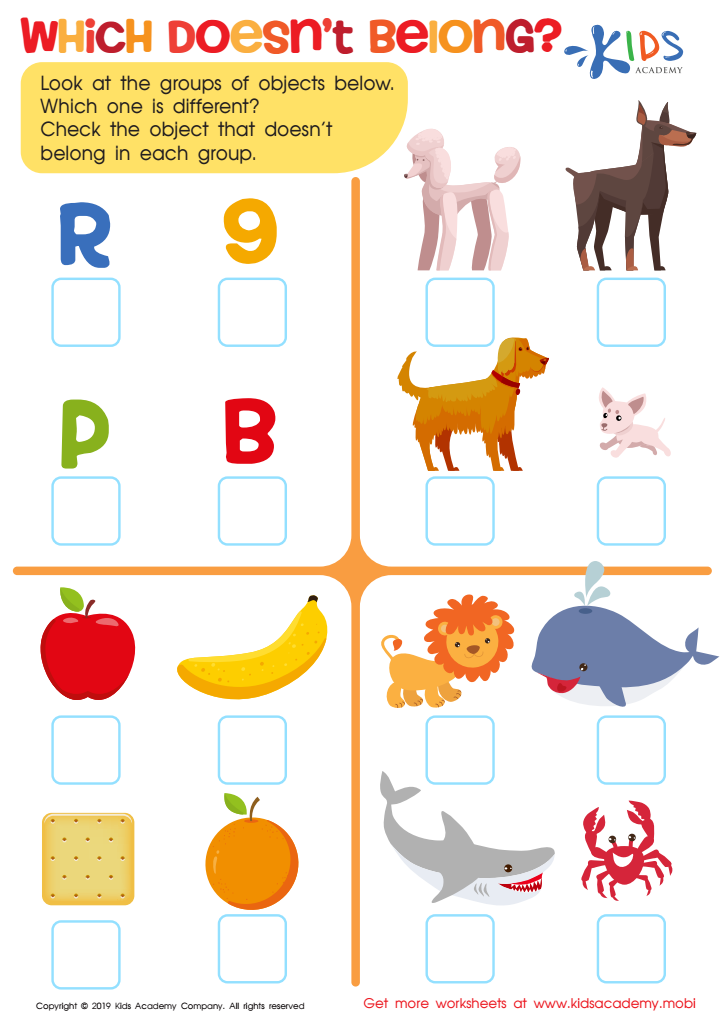
Which Doesn't Belong? Worksheet
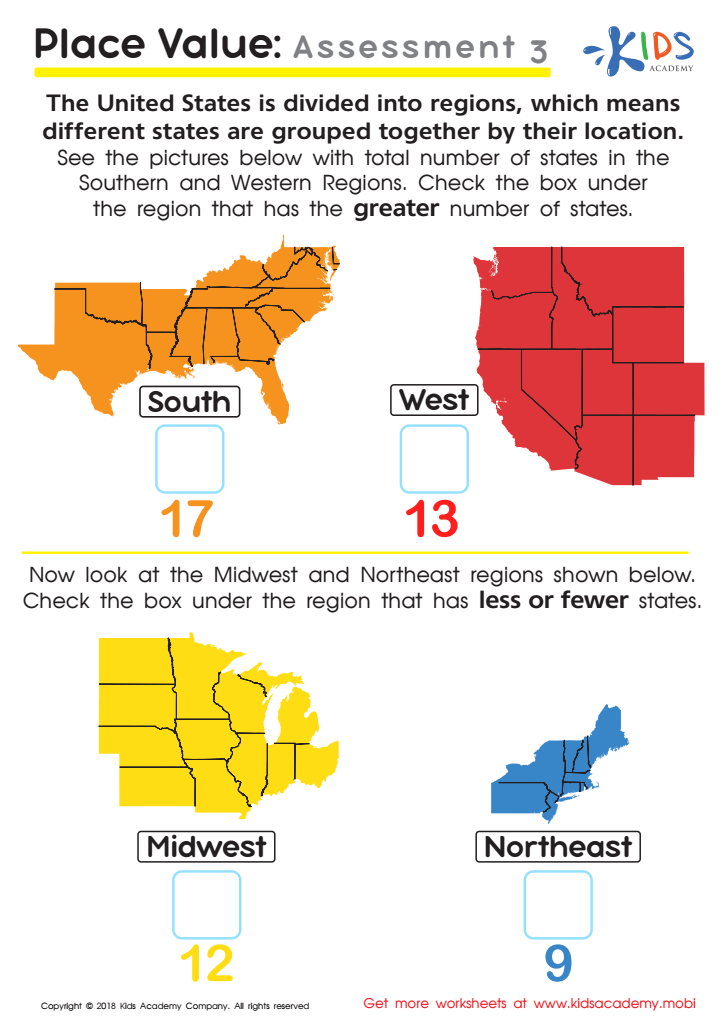
Place Value: Assessment 3 Worksheet
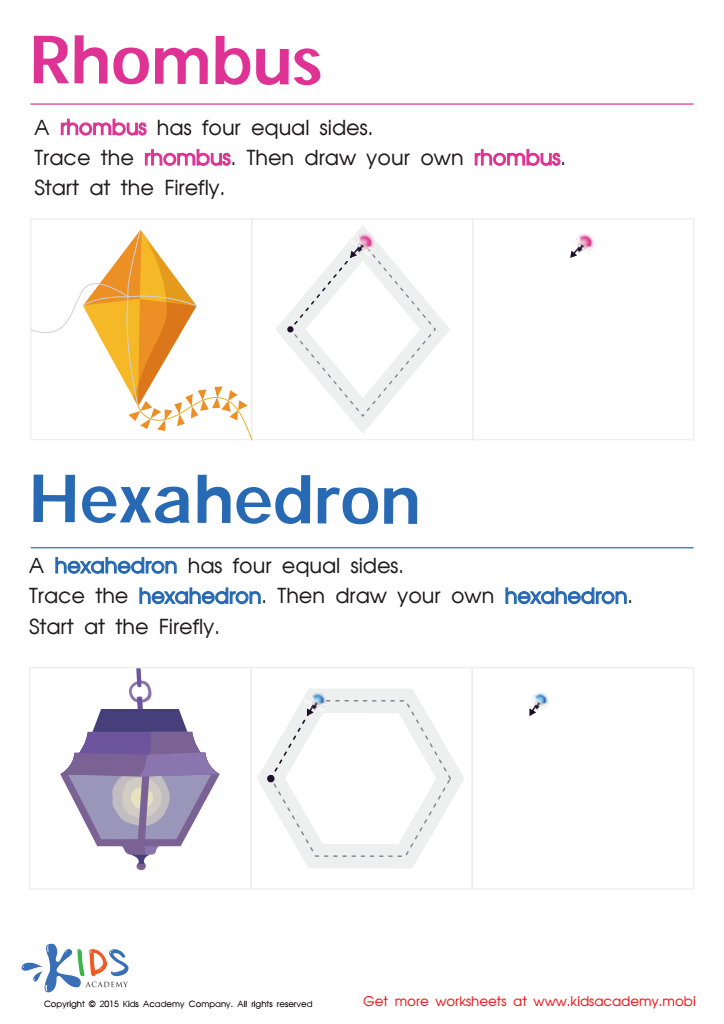
Draw a Rhombus And a Hexahedron Printable
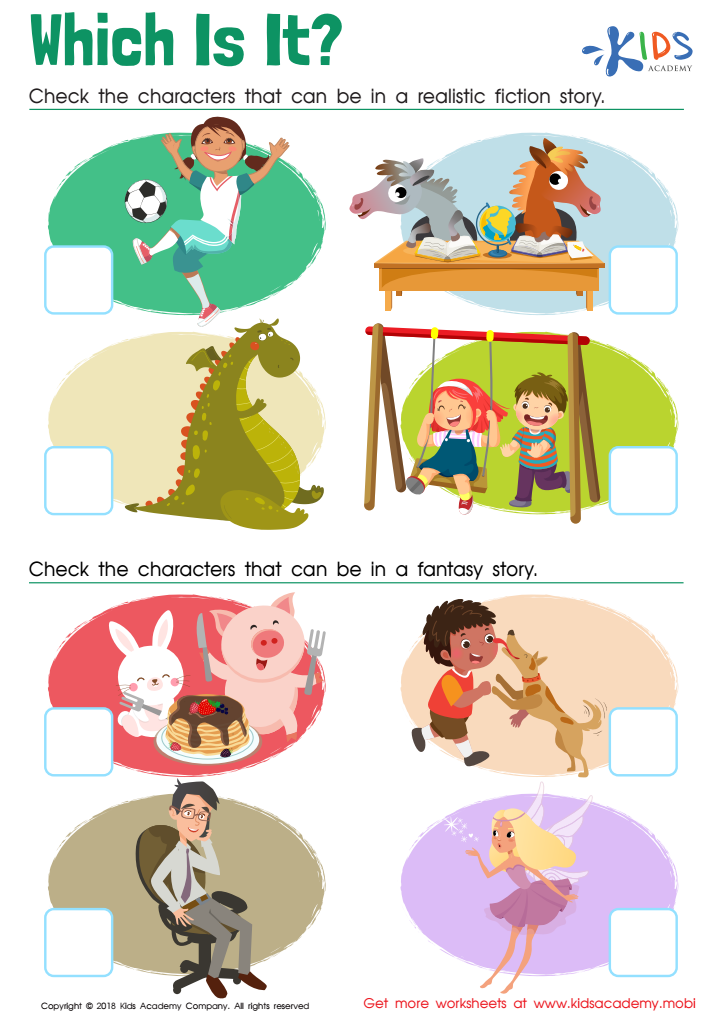
Which Is It? Worksheet
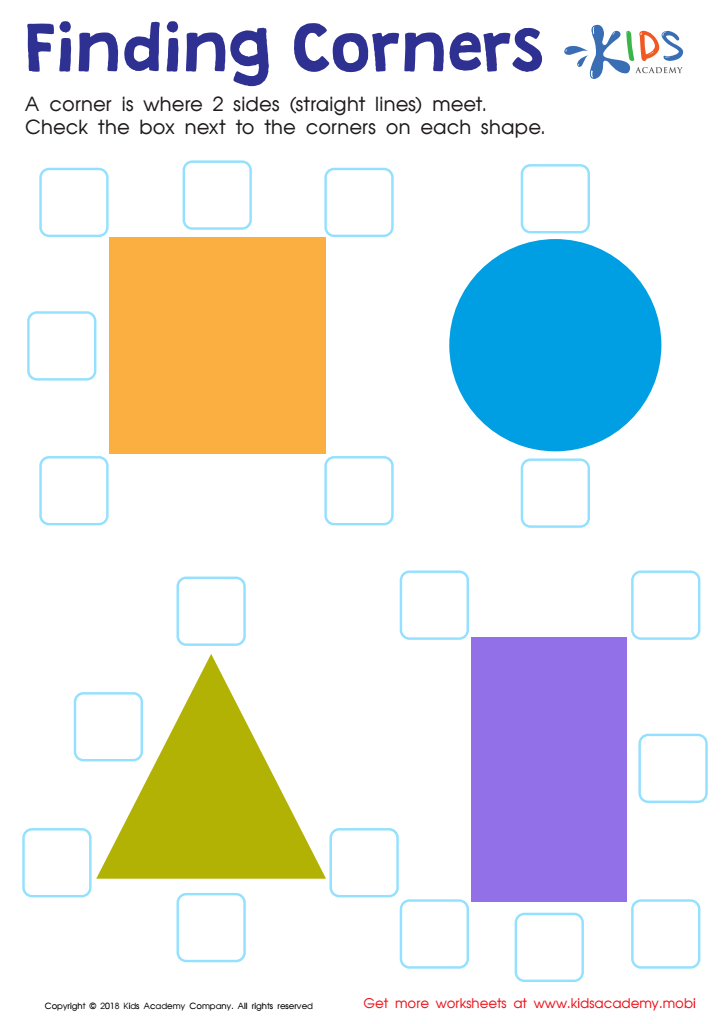
Finding Corners Worksheet







Shape identification for children aged 4-7 is integral to early childhood development, serving as a foundational skill with broad implications. Firstly, recognizing shapes enhances cognitive development by helping children categorize and make sense of their environment. This skill forms the groundwork for later complex learning in mathematics, particularly geometry, as well as in reading and writing, where letter and number recognition often depends on understanding shapes.
Additionally, shape identification aids spatial awareness and logic skills. Children who can distinguish between different shapes are better equipped to understand diverse concepts including patterns, sizes, and positions, which are crucial abilities for problem-solving and reasoning.
On a practical level, proficient shape identification supports fine motor skills development. Activities like drawing shapes and fitting them into puzzles enhance hand-eye coordination and dexterity, essential for writing and other everyday tasks.
Moreover, shape recognition can improve language acquisition as children learn to describe their world. Words like "circle," "triangle," and "square" become part of their vocabulary, promoting both verbal communication and listening skills.
In a social context, engaging in group activities that involve shapes fosters cooperation, patience, and interpersonal skills. Thus, investing time in teaching shape identification yields significant long-term educational benefits and facilitates overall developmental success for young children.








