Spatial Orientation Normal Worksheets for Ages 4-7
3 filtered results
-
From - To
Welcome to our Spatial Orientation Normal Worksheets designed for children aged 4 to 7! These engaging worksheets are crafted to help young learners develop their spatial awareness skills through fun and interactive activities. Kids will explore concepts like position, direction, and relationships between objects, promoting critical thinking and problem-solving. Our user-friendly format ensures that educators and parents can easily integrate these worksheets into daily learning routines. From matching exercises to dynamic imagery, each page is designed to captivate young minds while enhancing their spatial orientation abilities. Set your child on the path to success with our enriching resources today!
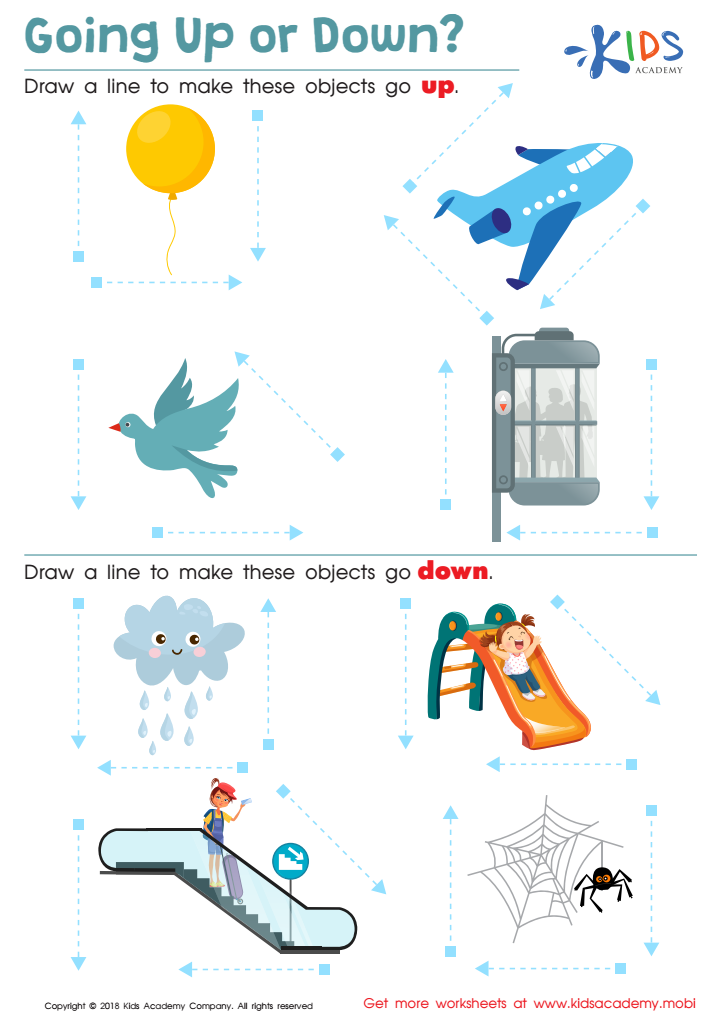
Going up or Down? Worksheet
 Assign to My Students
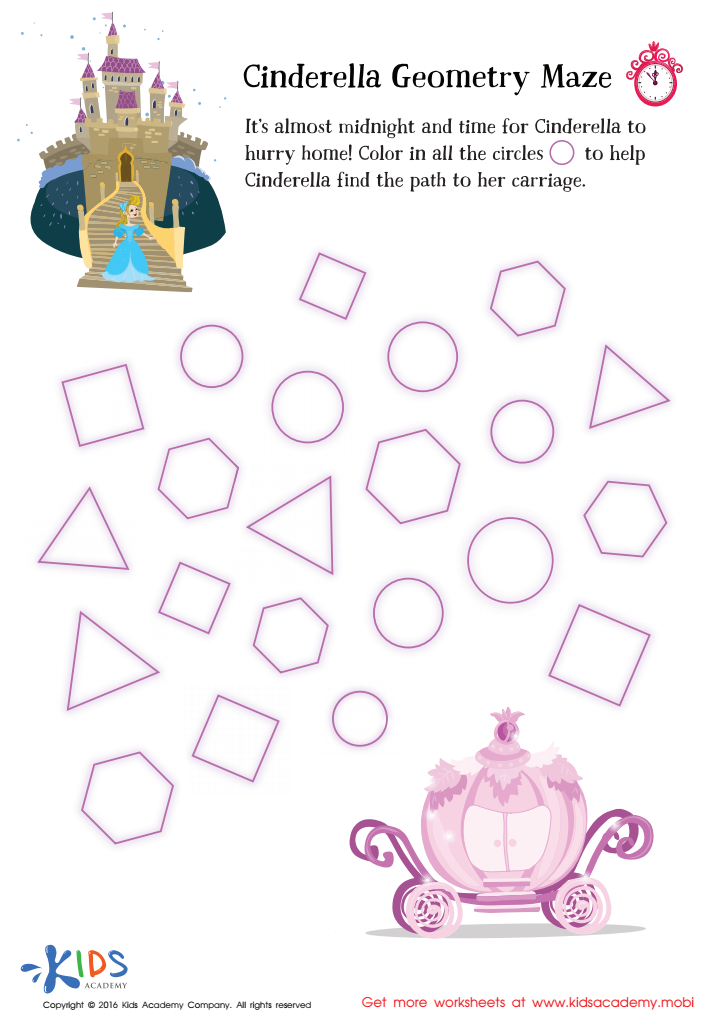
Cinderella Geometry Maze Worksheet
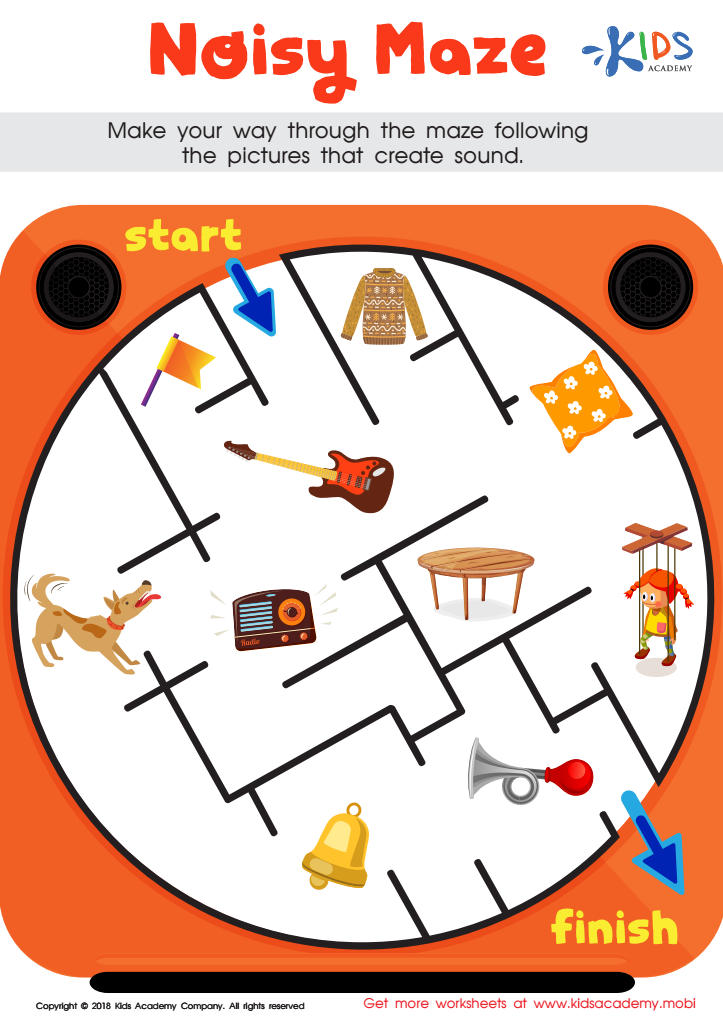
Noisy Maze Worksheet







Spatial orientation is crucial for children ages 4-7 as it forms the foundation for various cognitive and motor skills essential for their development. By understanding spatial relationships, children become better at tasks such as navigating their environment, understanding maps, and following directions. These skills are not only important for physical movement but also for mathematical concepts, such as geometry and measurement.
For parents and teachers, fostering spatial orientation helps children develop problem-solving skills and enhances their ability to concentrate and remember information. Engaging children in spatial activities, such as building blocks or puzzles, promotes creativity and critical thinking. As they learn to recognize shapes, sizes, and their relationships to one another, they also improve their hand-eye coordination and fine motor skills.
Moreover, spatial awareness enhances social skills, as children learn to navigate play areas and interact more effectively with their peers in a shared space. In a rapidly advancing technological world, where skills like robotics and coding increasingly matter, possessing strong spatial orientation abilities can greatly enhance a child's future learning opportunities. Thus, emphasizing spatial orientation during these formative years can have lasting impacts on academic and personal growth.








