
Understanding habitats Normal Worksheets for Ages 4-7
6 filtered results
Difficulty Level
Grade
Age
-
From - To
Subject
Activity
Standards
Explore the fascinating world of habitats with our “Understanding Habitats” Normal Worksheets designed for children aged 4-7! These engaging worksheets help young learners discover various ecosystems, the plants and animals that inhabit them, and their unique features. With colorful images and fun activities, kids will enhance their observation and comprehension skills while gaining a deeper appreciation for nature. Ideal for both home and classroom use, these worksheets encourage creativity and critical thinking through drawing exercises, matching games, and fill-in-the-blank prompts. Start your child's adventure in learning about habitats today and nurture their curiosity about the environment!
Favorites
With answer key
Interactive
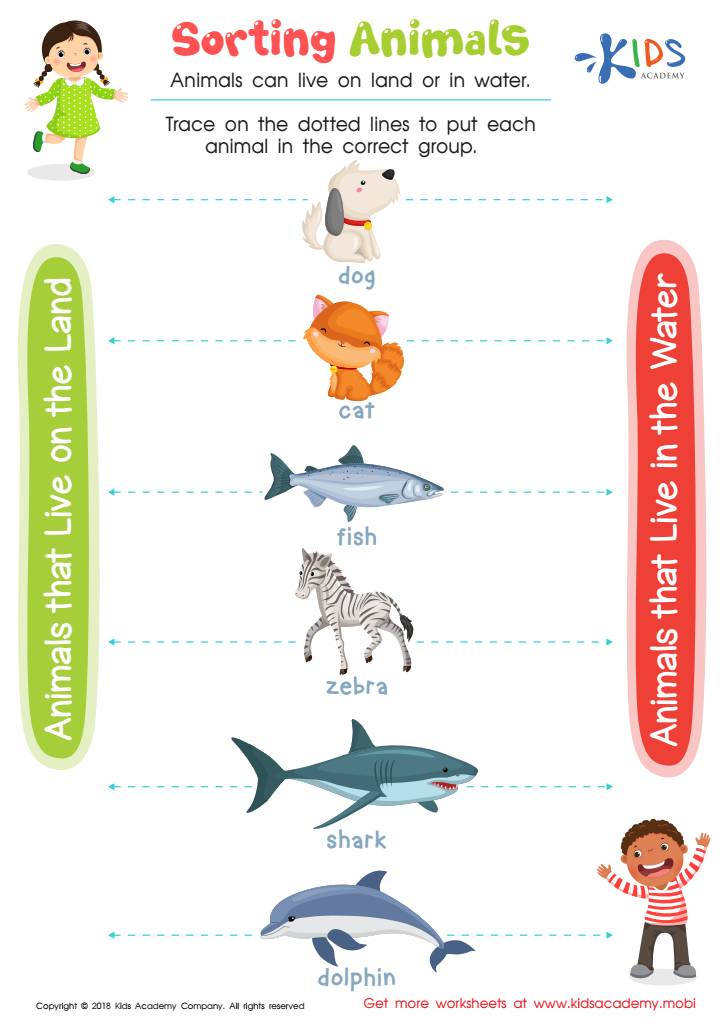
Sorting Animals Worksheet
Your kids will love this free, interactive worksheet! With image clues, they can read and trace the animal names, and then sort them into groups of land or water animals. It's an enjoyable way to boost their critical thinking, fine motor and prior knowledge skills.
 Assign to My Students
Sorting Animals Worksheet
Worksheet
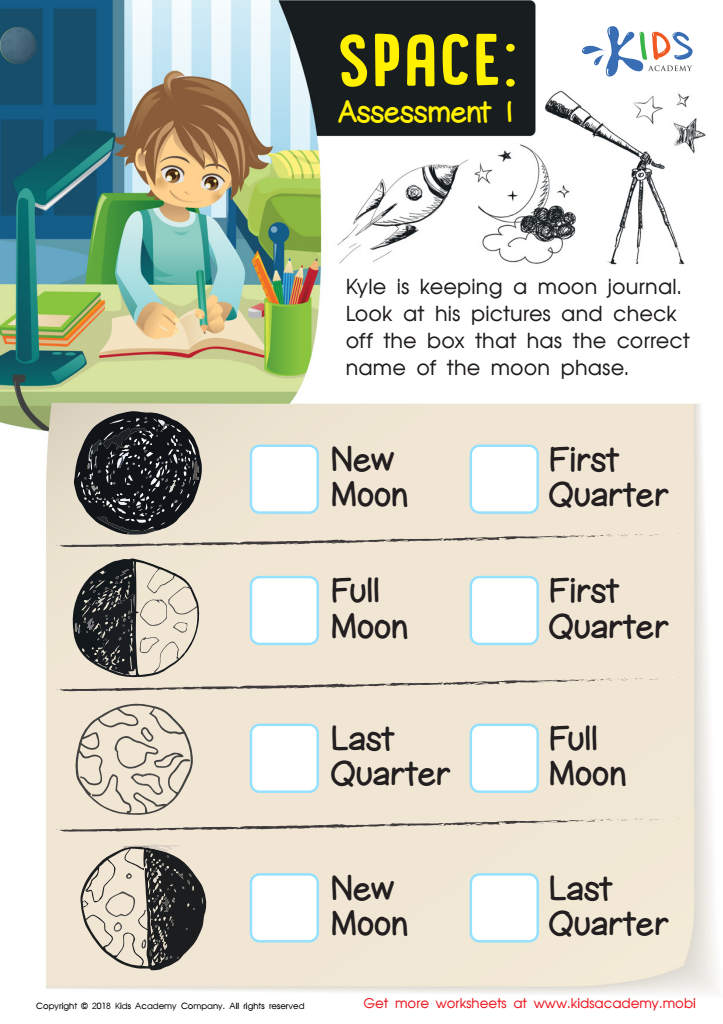
Space: Assessment 1 Worksheet
Introduce Kyle and his moon journal to your kids! Ask if they know what it is, or if they keep one too. Together, look at Kyle's pics and help them identify the phases of the moon. Have them check off the correct name of each. It's a great way to get kids interested in space!
Space: Assessment 1 Worksheet
Worksheet
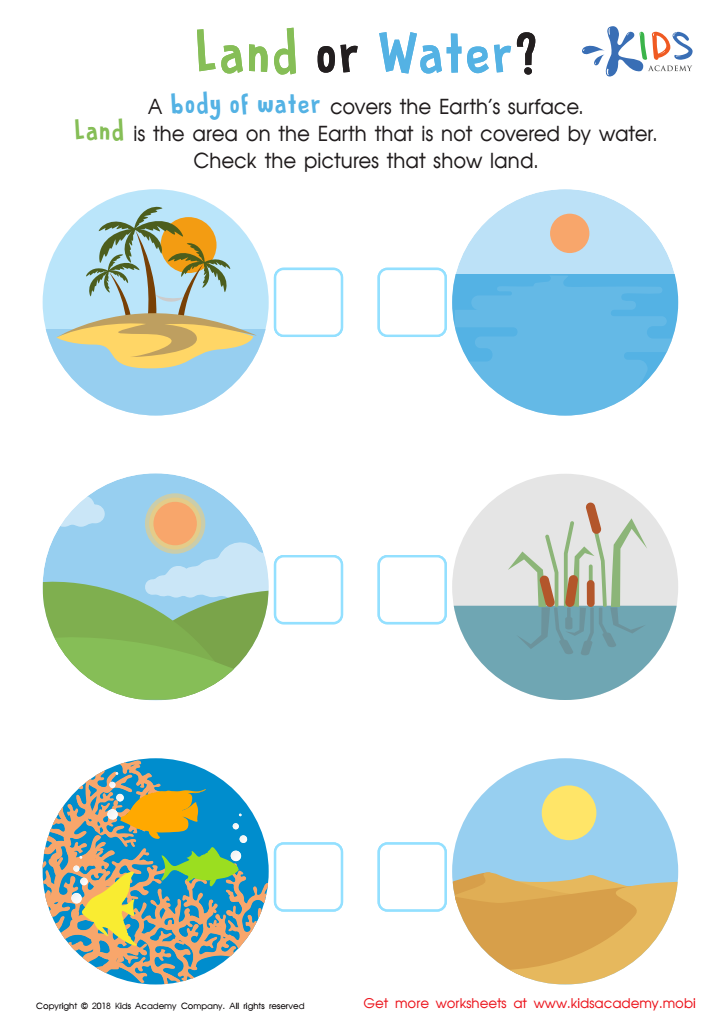
Land or Water Worksheet
The Earth is mostly covered by water. Ask your kids to name examples of land and water, then look at a worksheet with them. Ask them to identify pictures that show land and water, then help them check.
Land or Water Worksheet
Worksheet
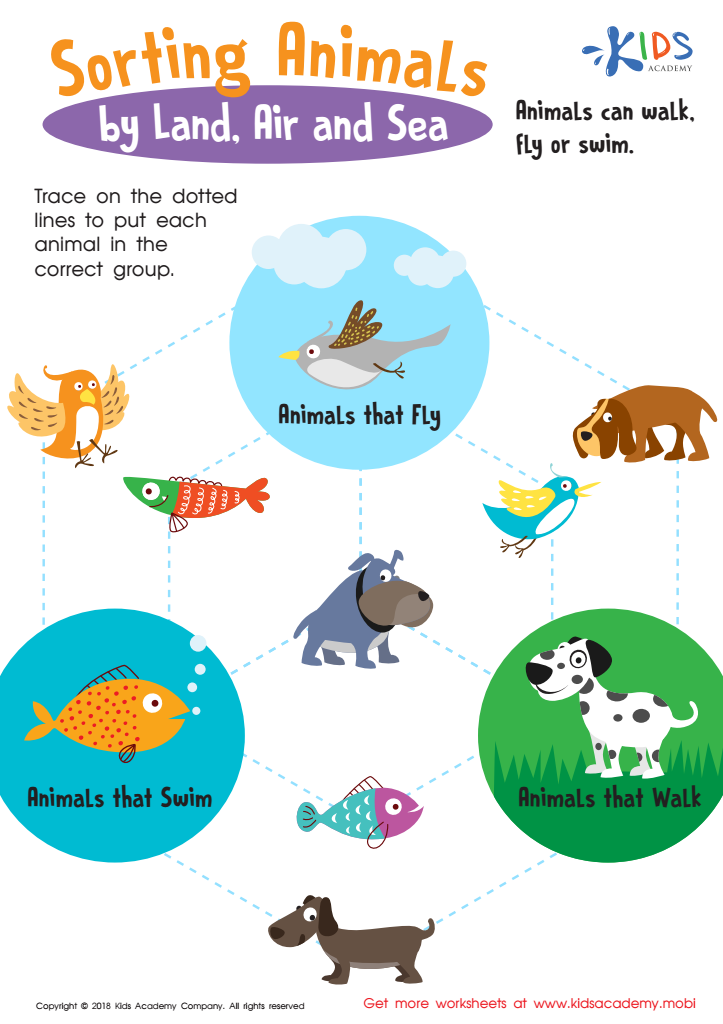
Sorting Animals by Land, Air and Sea Worksheet
Kids will use critical thinking and fine motor skills with this worksheet! They'll analyze animal traits and draw lines to sort them into groups of those that fly, swim, or walk. It's a fun way to hone skills and have a great time!
Sorting Animals by Land, Air and Sea Worksheet
Worksheet
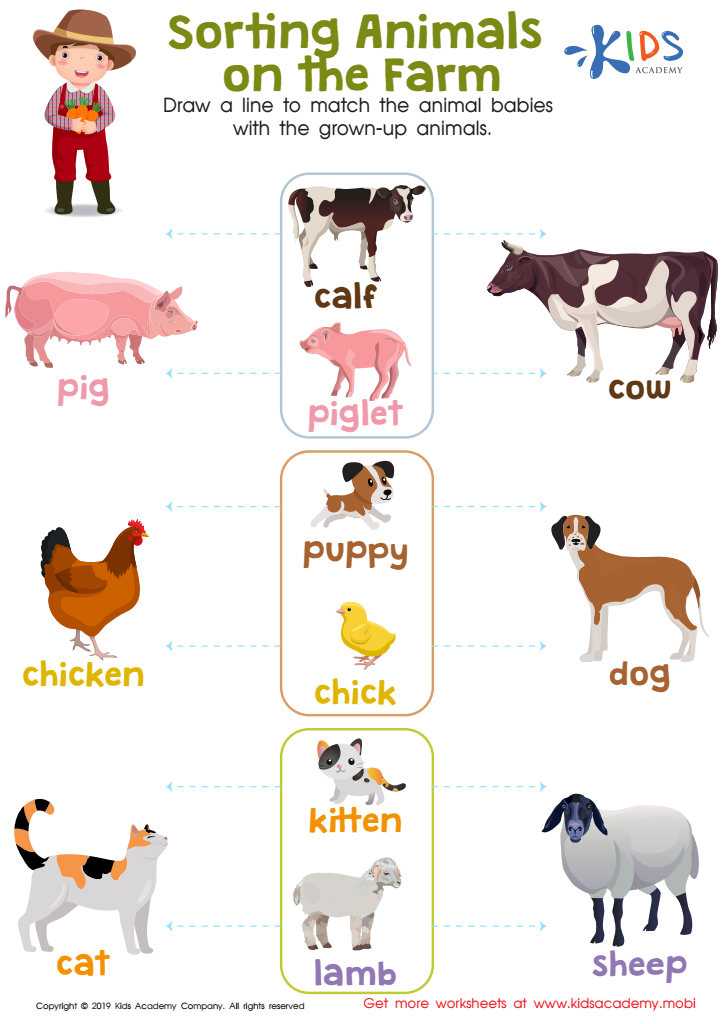
Sorting Animals on the Farm Worksheet
This PDF worksheet engages preschoolers in a fun activity to match Mama farm animals with their babies, strengthening their sorting and patterning skills. They'll learn to recognize rules and relationships, while gaining familiarity with animal-related words.
Sorting Animals on the Farm Worksheet
Worksheet
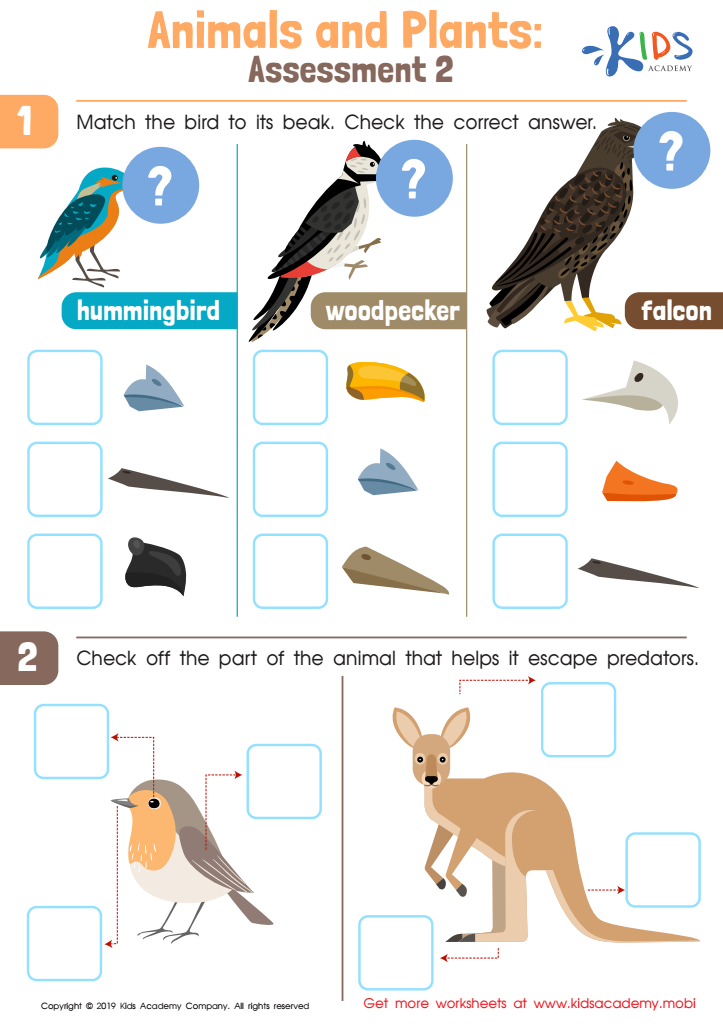
Animals and Plants: Assessment 2 Worksheet
This free PDF is ideal to quickly test your child's knowledge of animal adaptations. They'll select the right beak patterns for hummingbird, woodpecker and falcon, and identify which parts of animals help them escape predators. It's easy to assess your kid's understanding.
Animals and Plants: Assessment 2 Worksheet
Worksheet
Join Kids Academy for Free
Who is primarily going to use this learning content?







Understanding habitats is essential for children aged 4-7, and parents or teachers should prioritize this knowledge for several reasons. First, learning about habitats nurtures children's curiosity about the natural world, fostering a love for exploration and discovery. It allows them to connect with the environment, promoting awareness of different ecosystems, such as forests, oceans, and wetlands.
Secondly, this understanding builds foundational knowledge about biodiversity. Children learn about the various plants and animals that inhabit different areas, encouraging empathy and respect for living creatures. Recognizing the importance of diverse habitats helps instill values of conservation and stewardship from an early age.
Additionally, learning about habitats aligns with early science education standards, promoting critical thinking and observation skills as children classify animals, identify their homes, and understand their roles in the ecosystem. Classroom activities involving storytelling, arts and crafts, and outdoor exploration can make these concepts fun and engaging.
Lastly, understanding habitats equips children with the basics of ecological balance, which will add to their future appreciation of science and the environment. Thus, fostering an understanding of habitats plays a crucial role in shaping informed, caring, and environmentally conscious individuals.








