Understanding life cycles Normal Worksheets for Ages 4-7
4 filtered results
-
From - To
Discover "Understanding Life Cycles Normal Worksheets for Ages 4-7," designed to engage young learners in the fascinating world of growth and development. These worksheets provide fun and interactive activities to help children explore the life cycles of various plants and animals, enhancing their knowledge of nature. With colorful visuals and age-appropriate challenges, students can grasp essential concepts through drawing, matching, and labeling exercises. Ideal for preschool and early-grade educators, these resources foster curiosity and support critical thinking skills. Equip your classroom with these enriching worksheets and inspire the next generation to appreciate the wonders of life cycles!
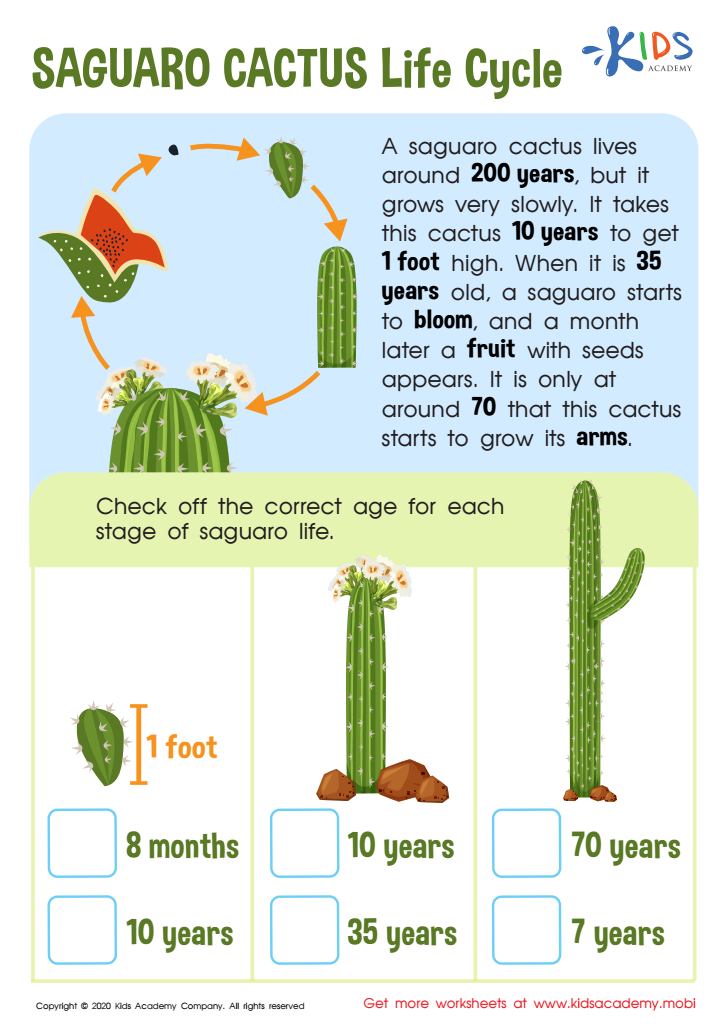
Saguaro Cactus Life Cycle Worksheet
 Assign to My Students
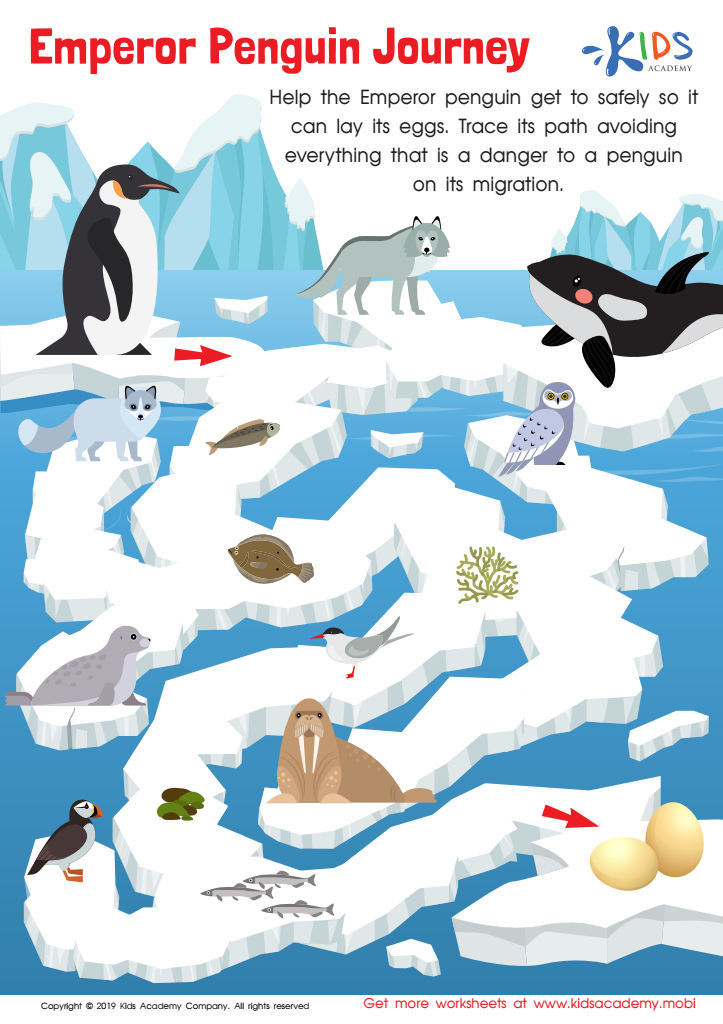
Emperor Penguin Journey Worksheet
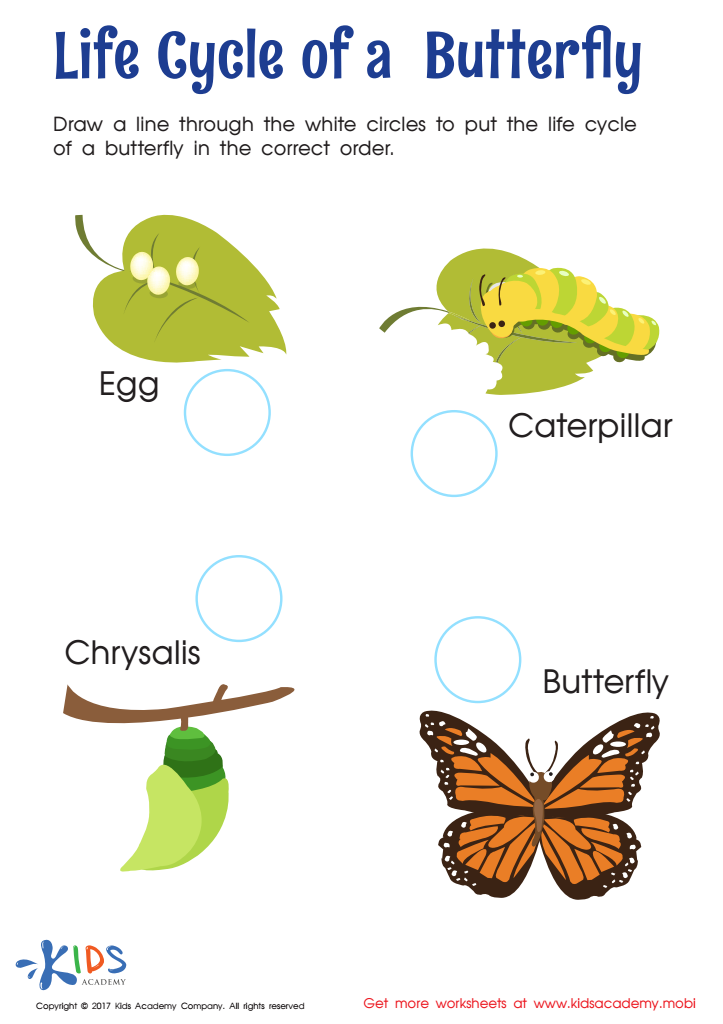
Life Cycle of Butterfly Worksheet
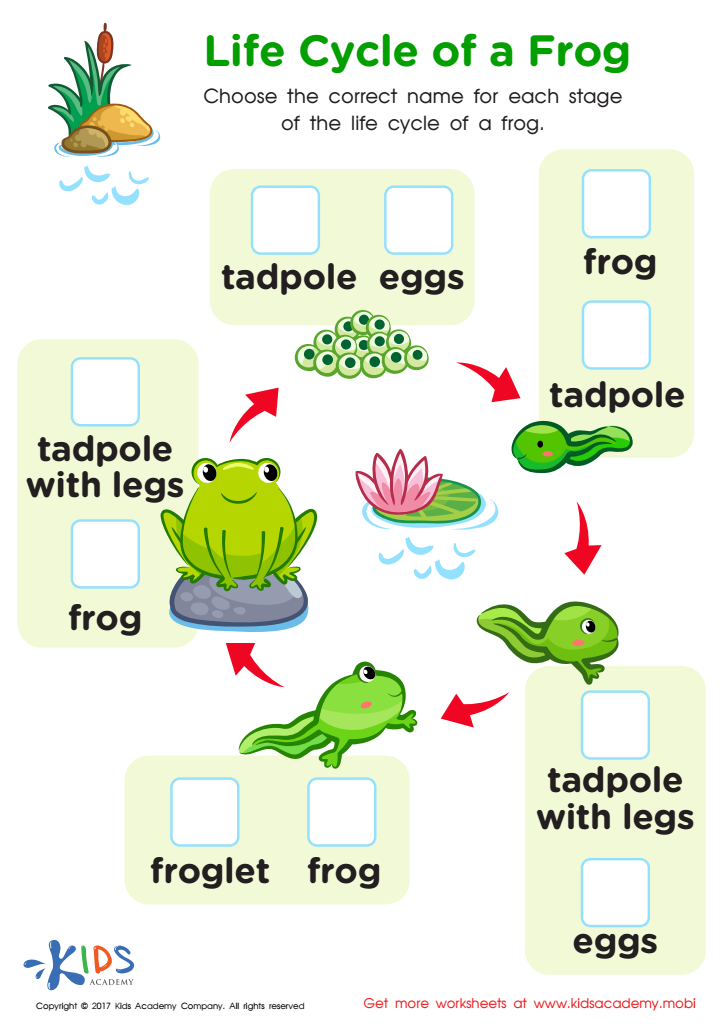
Life Cycle Frog Printable








Understanding life cycles is crucial for children aged 4-7 as it offers foundational knowledge about the natural world, helping them develop curiosity and respect for living things. Teaching life cycles fosters early awareness of processes such as growth, change, and reproduction. This knowledge lays the groundwork for essential scientific concepts while integrating critical thinking and observational skills.
For parents and teachers, incorporating life cycle lessons can instill a sense of wonder in young learners. Kids are naturally inquisitive, and observing stages of life, such as from egg to butterfly or seed to flower, can provide engaging, hands-on learning experiences. This encourages exploration, promotes inquiry-based learning, and is a wonderful way to connect science to everyday life.
Moreover, understanding life cycles cultivates empathy in children. They learn to appreciate different organisms and their roles in the ecosystem, fostering a sense of responsibility towards nature. This understanding can lead to lifelong values of environmental stewardship and conservation.
Additionally, these concepts align well with various curriculums and can be seamlessly integrated into art and storytelling, enhancing overall literacy and creativity. Therefore, parents and teachers play a vital role in fostering students' understanding of life cycles to enrich their educational experiences.








