Understanding measurements Normal Worksheets for Ages 4-7
8 filtered results
-
From - To
Welcome to our “Understanding Measurements” worksheets designed for young learners aged 4-7! These engaging and interactive printable resources help children grasp basic measurement concepts through fun activities. Your little ones will explore essential skills like length, weight, and volume using hands-on exercises, colorful visuals, and relatable examples. Ideal for preschool and early grade educators, these normal worksheets foster critical thinking and enhance fine motor skills while making learning enjoyable. Whether at home or in the classroom, these materials support early mathematical foundations and prepare children for future success. Dive into the world of measurements and watch your child's confidence grow!
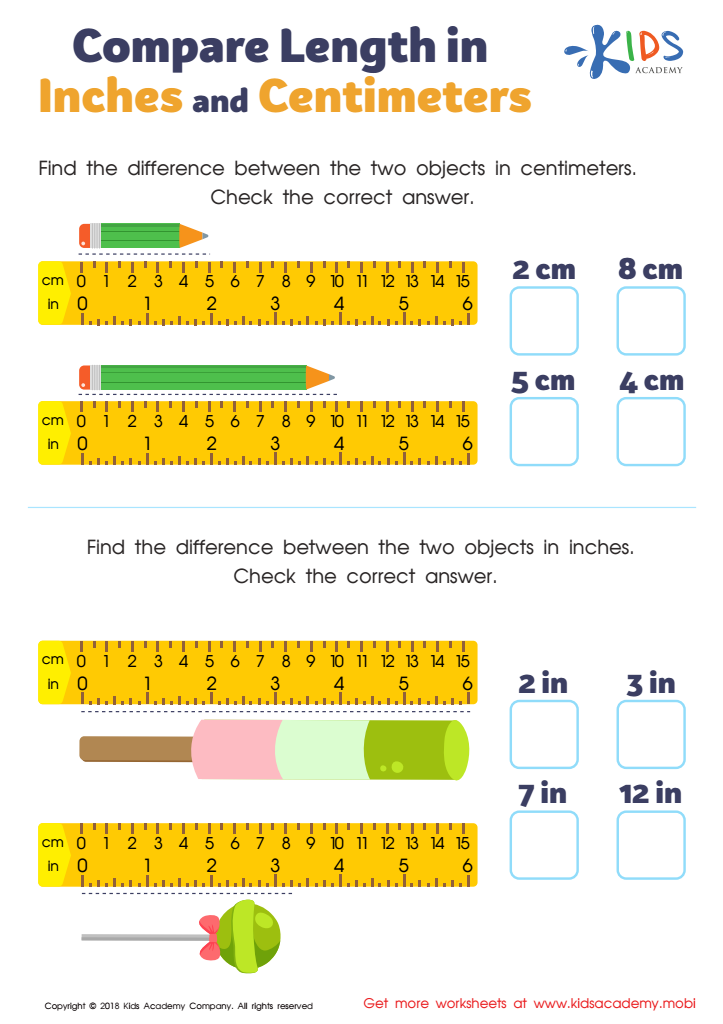
Compare Length in Inches and Centimeters Worksheet
 Assign to My Students
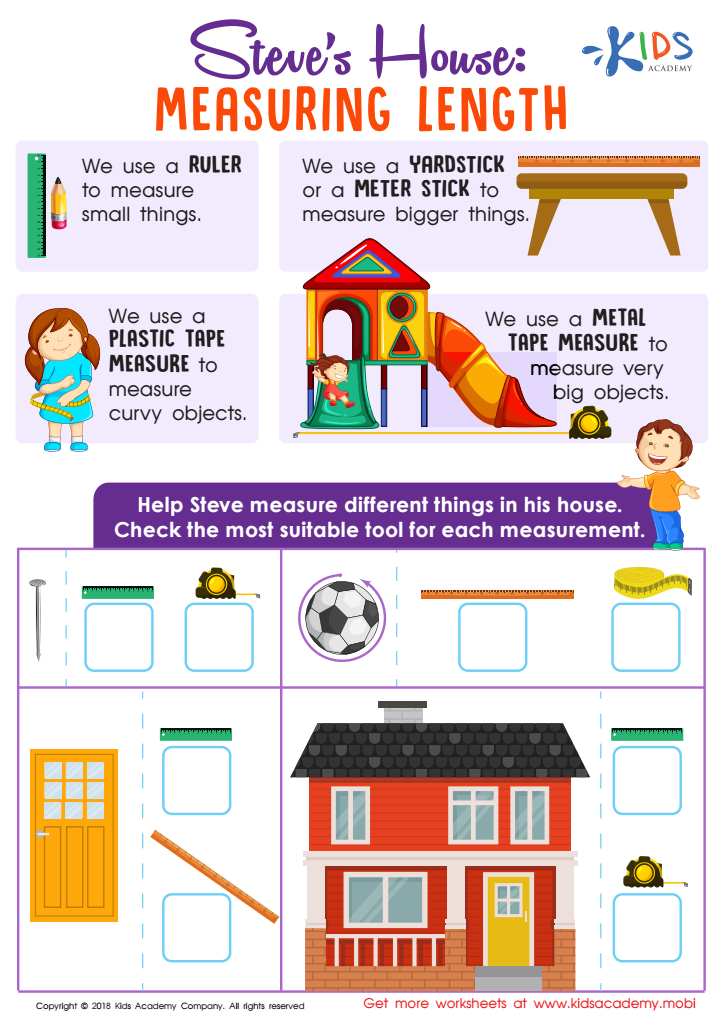
Steve's House: Measuring Length Worksheet
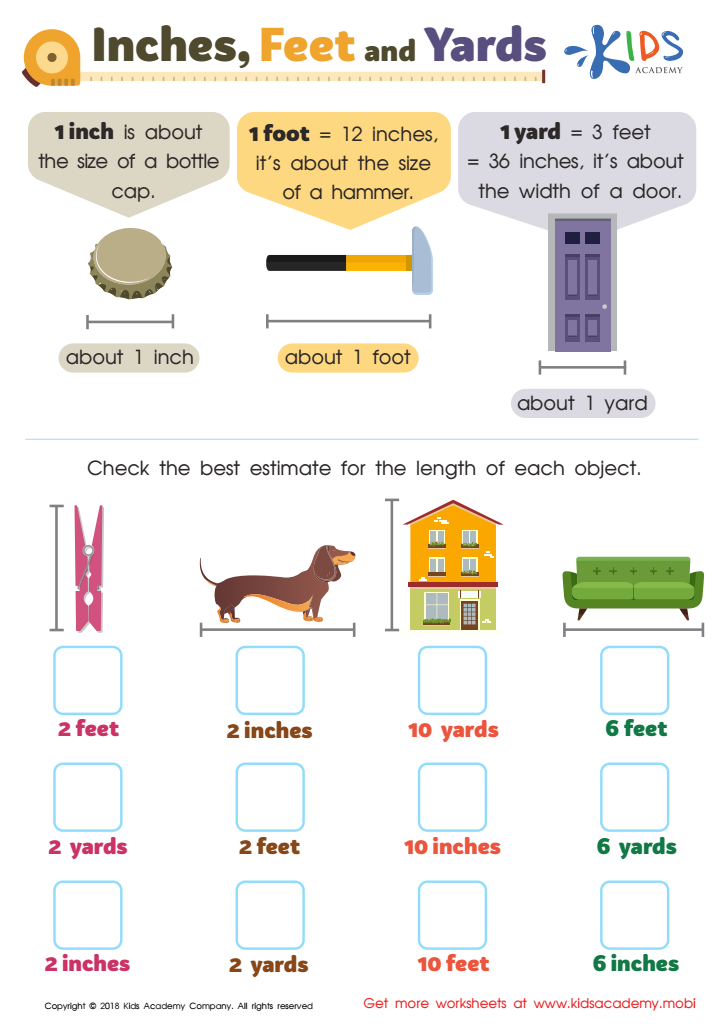
Inches, Feet and Yards Worksheet
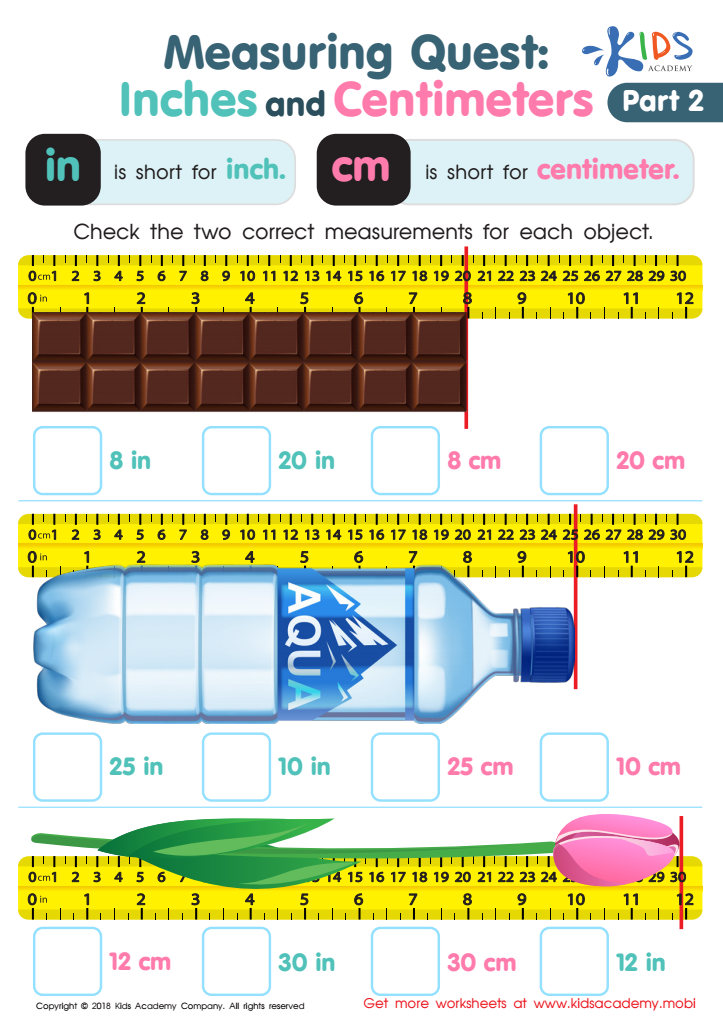
Measuring Quest: Inches and Centimeters - Part 2 Worksheet
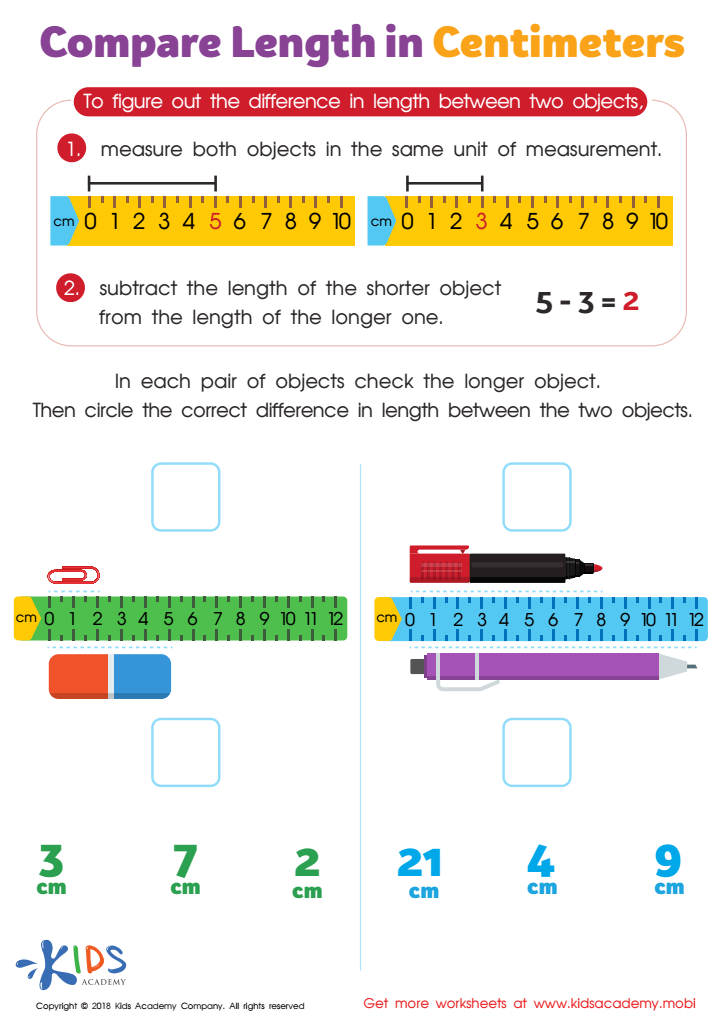
Compare Length in Centimeters Worksheet
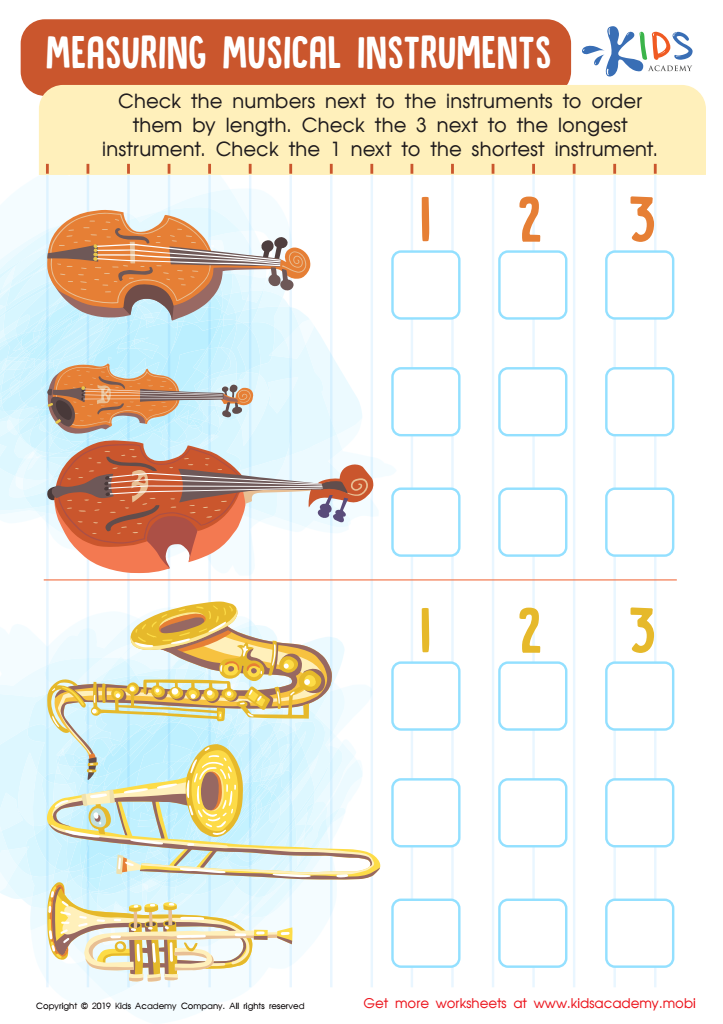
Measuring Musical Instruments Worksheet
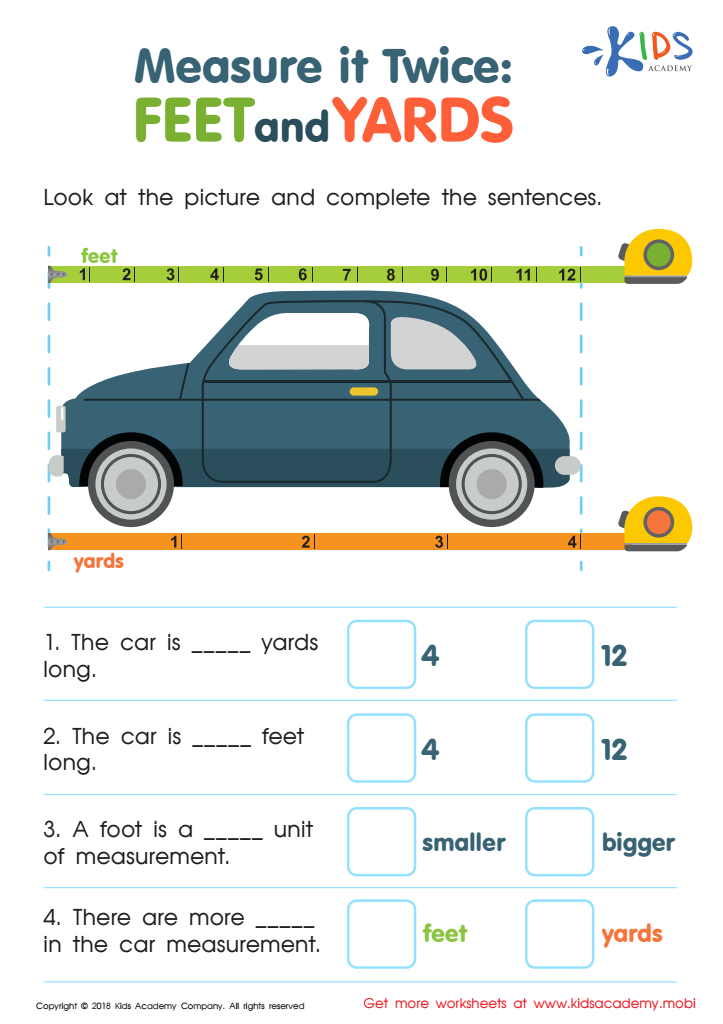
Measure It Twice: Feet and Yards Worksheet
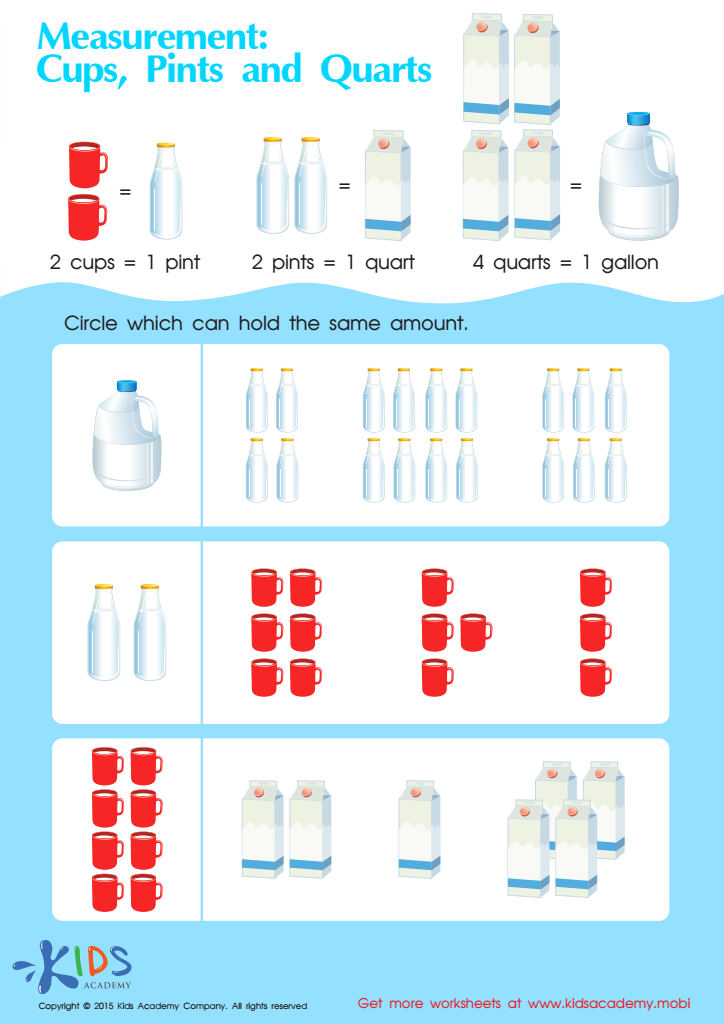
Cups, Pints and Quarts 2 Worksheet







Understanding measurements is crucial for children aged 4-7, as it lays the foundation for practical skills they will use throughout their lives. At this developmental stage, children's cognitive and motor skills are rapidly advancing, making it an ideal time to introduce concepts such as length, weight, volume, and time. Learning about measurement fosters critical thinking and problem-solving abilities, essential for future academic success.
Parents and teachers should care about teaching measurements because it enhances children's understanding of the world around them. For instance, measuring ingredients for a recipe can spark interest in cooking and mathematics, while measuring height can improve self-awareness and confidence. Furthermore, incorporating measurement into everyday activities—like comparing the lengths of toys or weighing fruits—increases engagement and relevance, making learning enjoyable and meaningful.
By emphasizing measurement, adults help children develop a strong mathematical foundation that supports advanced learning in later years. This understanding is also linked to better performance in science and engineering concepts, which are increasingly important in today’s technology-driven society. Ultimately, fostering early measurement skills not only cultivates mathematical literacy but also promotes curiosity, creativity, and an analytical mindset that children will carry into their future educational endeavors.








