Normal Addition and Subtraction Word Problems Worksheets for Ages 4-7 - Page 2
29 filtered results
-
From - To
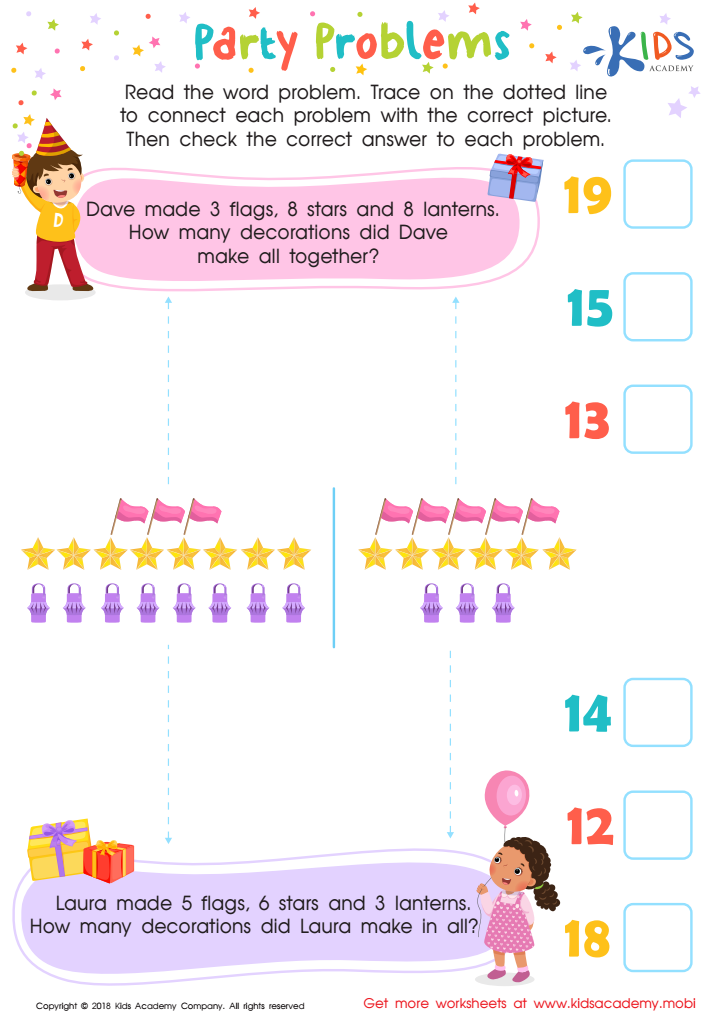
Party Problems Worksheet
 Assign to My Students
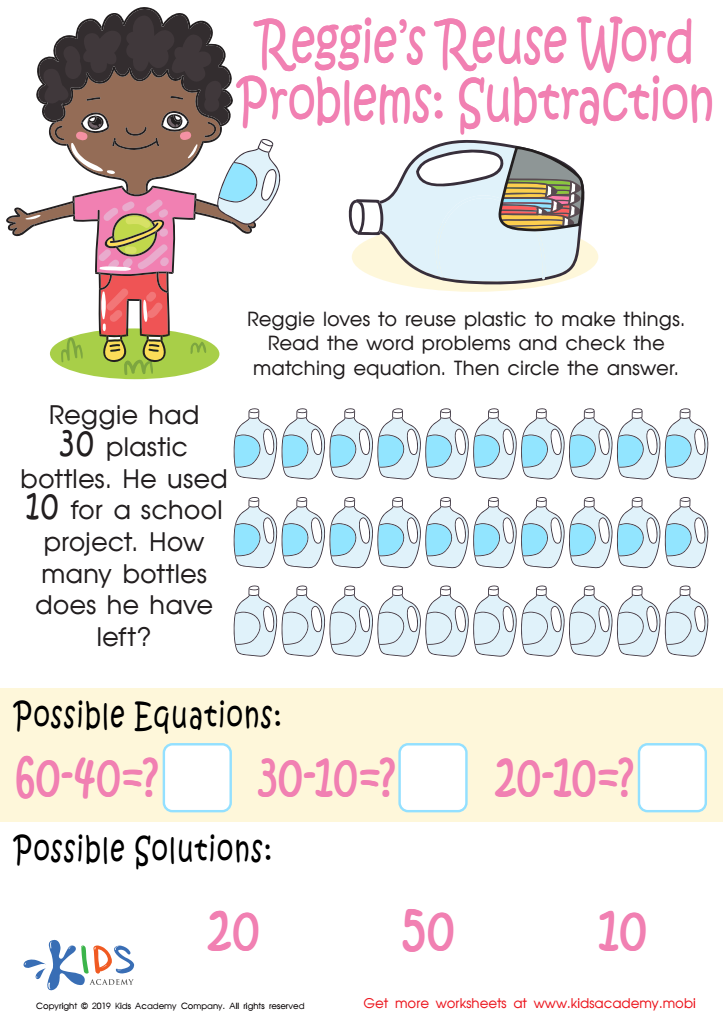
Reggie's Reuse Word Problems: Subtraction Worksheet
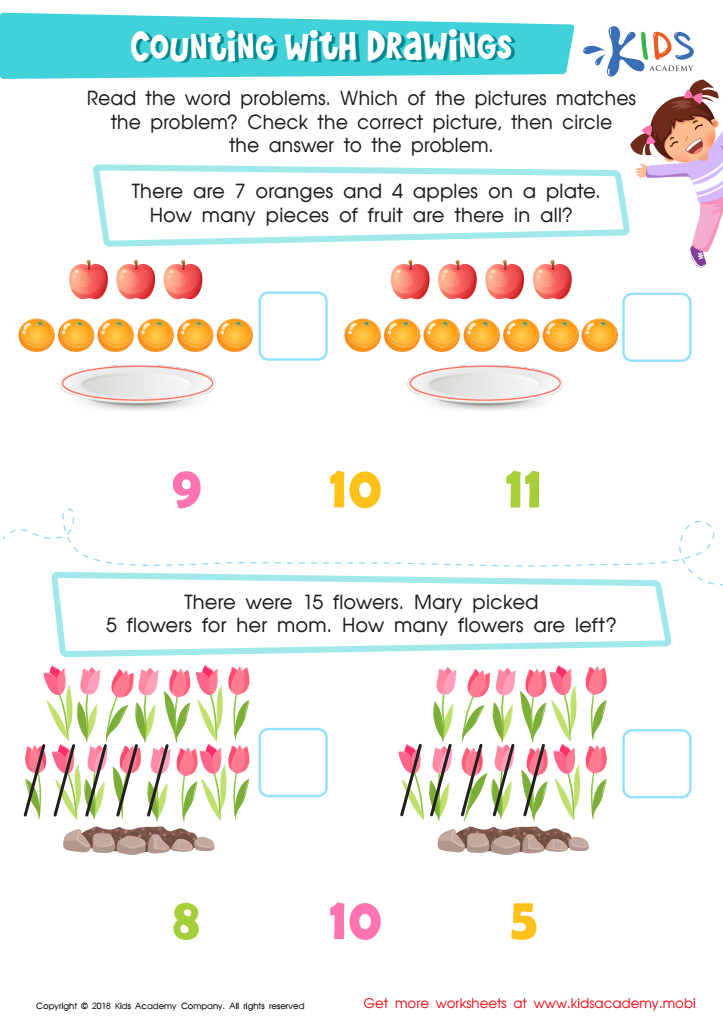
Counting with Drawings:Fruits & Flowers Worksheet
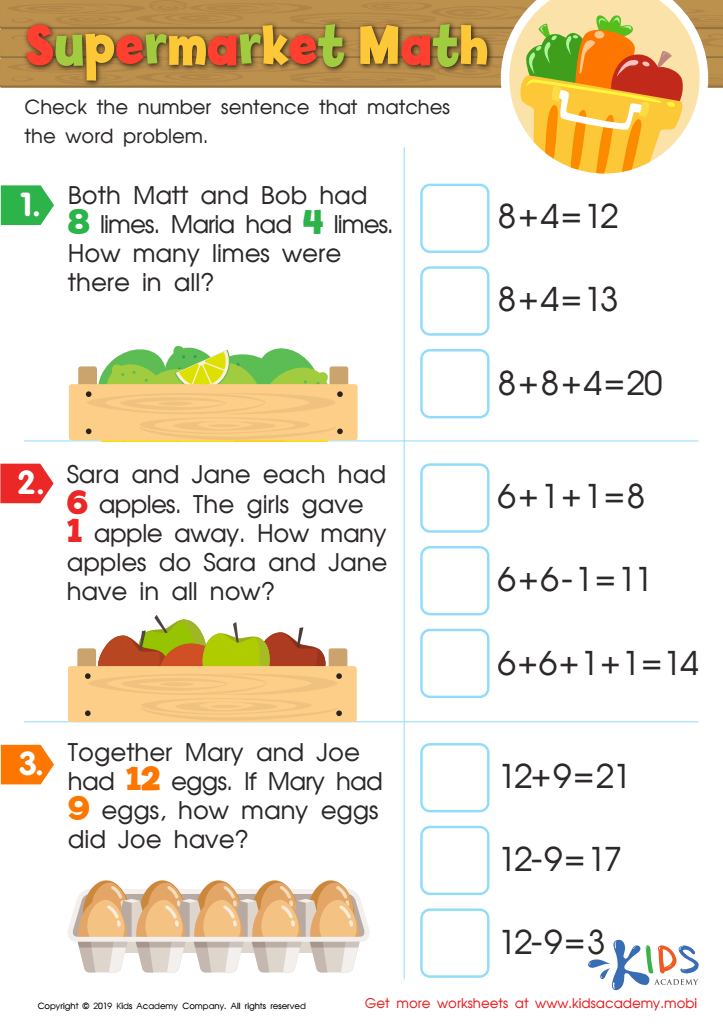
Supermarket Math Worksheet
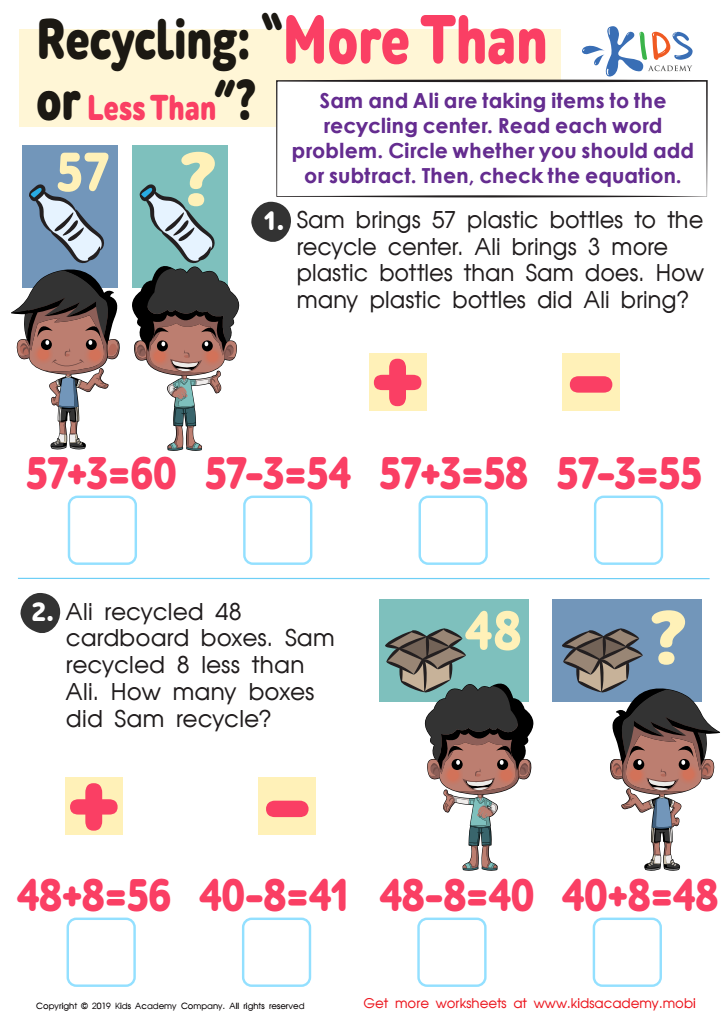
Recycling - More or Less Worksheet








Parents and teachers should care about normal addition and subtraction word problems for children ages 4-7 because these activities play a critical role in early childhood development and academic success. At this formative stage, young minds are highly receptive and eager to explore the world of numbers and basic arithmetic. Introducing word problems rooted in everyday contexts can provide practical, engaging, and relatable scenarios for children to apply mathematical concepts.
Solving word problems helps children not only understand the mechanics of addition and subtraction but also fosters essential skills like critical thinking, problem-solving, and comprehension. By interpreting and making sense of these problems, kids practice how to read carefully, understand contexts, and select appropriate strategies to find solutions. This blend of language and math promotes cognitive development and lays a strong foundation for future learning.
Additionally, when parents and teachers take an active interest in such activities, they can identify gaps in a child's understanding and provide tailored support. Celebrating small successes in solving word problems builds confidence and nurtures a positive attitude towards mathematics. Hence, prioritizing addition and subtraction word problems at an early age is an investment in a child's academic growth, confidence, and lifelong learning skills.