Logical thinking development Normal Addition & Subtraction Worksheets for Ages 4-7
3 filtered results
-
From - To
Unlock your child's potential with our Logical Thinking Development Normal Addition & Subtraction Worksheets for ages 4-7. Designed by educational experts, these engaging activities help young learners build a strong foundation in math while enhancing their problem-solving skills. Each worksheet carefully balances fun and learning, making it easier for kids to grasp essential addition and subtraction concepts. Through interactive exercises and age-appropriate challenges, students will not only gain confidence but also develop critical logical thinking abilities that are essential for future academic success. Perfect for parents and teachers seeking effective resources to support children’s math journey.
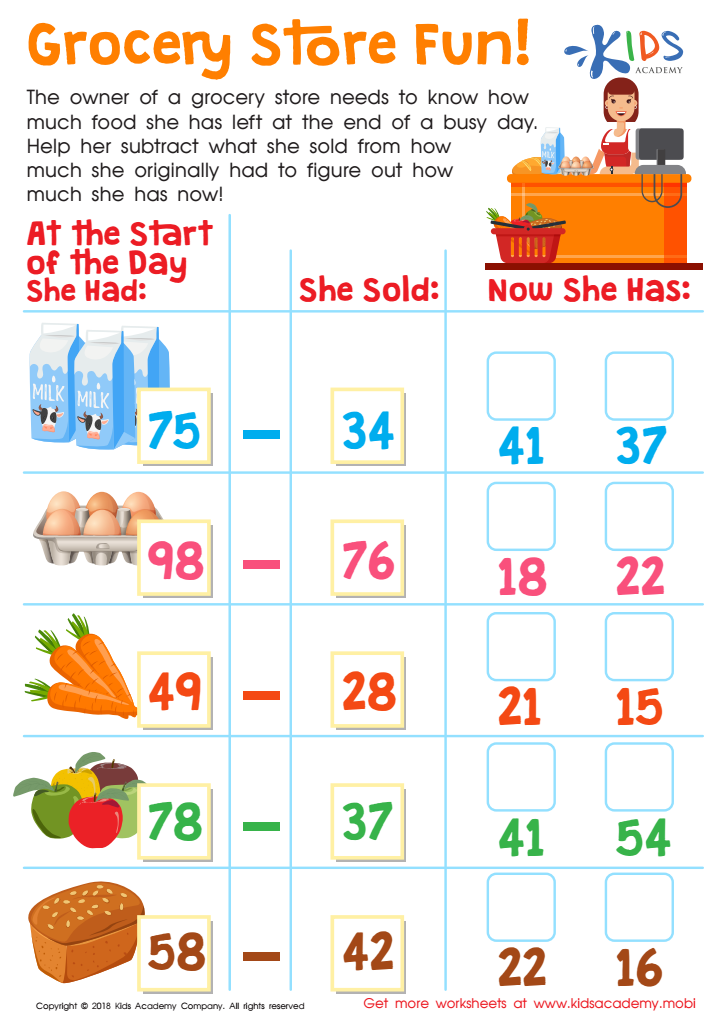
Grocery Store Fun! Worksheet
 Assign to My Students
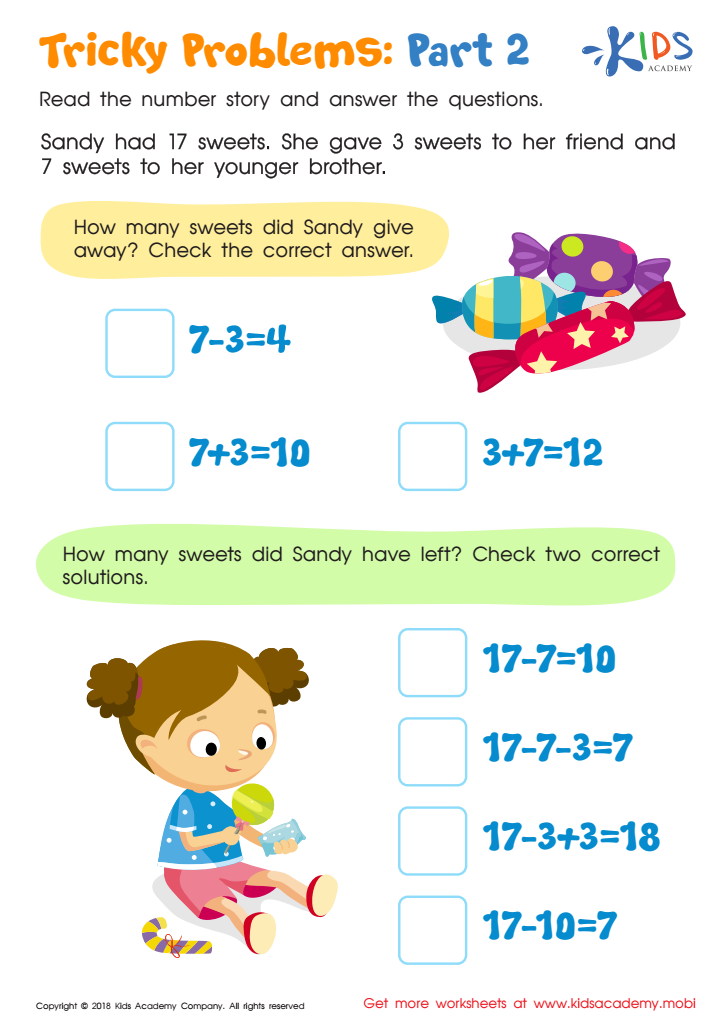
Tricky Problems Worksheet: Part 2
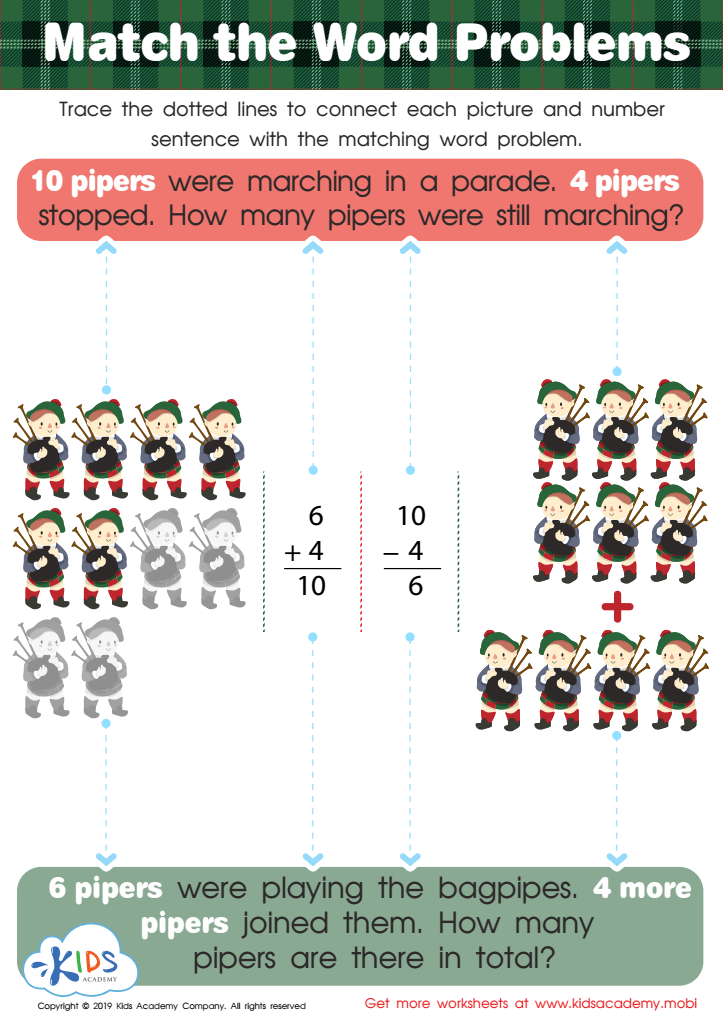
Match the Word Problems Worksheet








Understanding the importance of developing logical thinking and mastery of basic addition and subtraction for children ages 4-7 is paramount for parents and teachers. At this age, children's brains are rapidly growing, and foundational skills in logical reasoning and basic arithmetic provide the groundwork for more complex problem-solving in later years.
Logical thinking develops through activities that require children to make sense of patterns, sequences, and relationships. Engaging in logical reasoning enhances their cognitive abilities, enabling them to approach problems methodically and think critically about potential solutions. Such skills are not confined to mathematics; they are universally applicable and foster abilities in reading comprehension, decision-making, and everyday problem solving.
Simultaneously, mastering addition and subtraction serves as a building block for all future math learning. These basic arithmetic operations help children understand concepts of quantity, comparison, and incremental changes. Proficiency in these areas allows for smoother transitions into more advanced mathematical topics and strengthens their confidence in handling numeric problems.
Combining logical thinking and arithmetic lays a robust educational foundation. As children practice and enhance these skills, they receive critical cognitive stimuli that promote brain development, academic readiness, and life skills. Therefore, parents and teachers committed to nurturing these abilities are essentially investing in a child’s long-term success across many domains.








