
Subtraction skills Normal Addition & Subtraction Worksheets for Ages 4-7
5 filtered results
Difficulty Level
Grade
Age
-
From - To
Subject
Activity
Standards
Enhance your child's understanding of subtraction with our engaging and interactive worksheets designed for ages 4-7. These Normal Addition & Subtraction Worksheets focus on building essential subtraction skills through fun exercises tailored to young learners. Our materials provide a variety of practice opportunities, blending visual aids and problem-solving activities that reinforce comprehension. Whether your little one is just starting or looking to strengthen their abilities, these worksheets are ideal for home or classroom use. Foster a positive attitude towards math and help unlock your child's potential with our carefully crafted subtraction resources today!
Favorites
With answer key
Interactive
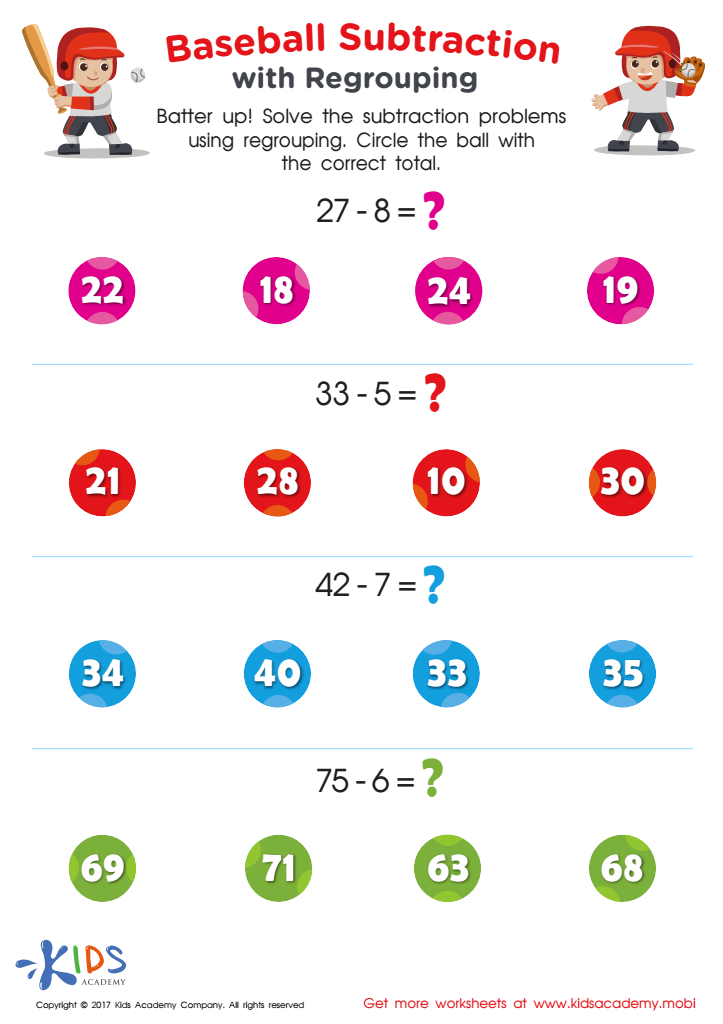
Subtraction With Regrouping for 2nd Grade Worksheet
Kids solve two-digit subtraction problems using regrouping and color in the baseballs.
2nd graders may find regrouping for subtraction tricky, so give them a helping hand with this fun worksheet! They practice two-digit subtraction and regrouping by coloring in baseballs as they solve the problems. Let them practice the skill and enjoy the game at the same time.
 Assign to My Students
Subtraction With Regrouping for 2nd Grade Worksheet
Worksheet
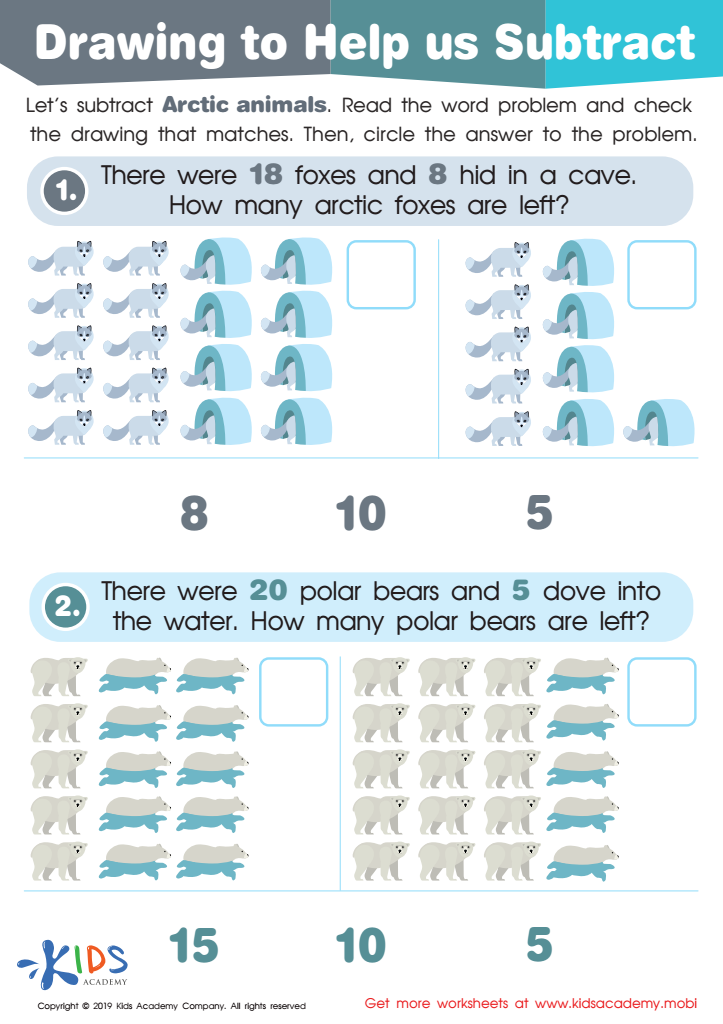
Drawing to Help Us Subtract Worksheet
Math is made fun with this free worksheet featuring Arctic animal pictures to solve basic subtraction word problems. Kids read the problem and choose the correct drawing of the animals to represent the solution. They'll have a blast with their cool animal friends while learning math!
Drawing to Help Us Subtract Worksheet
Worksheet
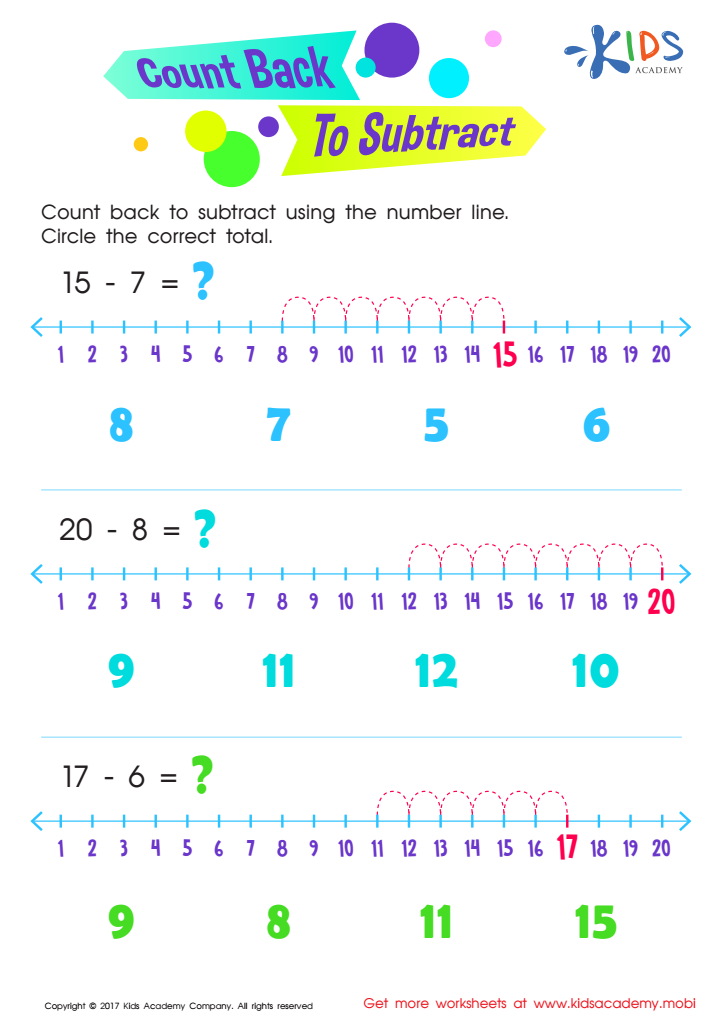
Count Back to Subtract Substraction Worksheet
With this worksheet, your child can visually see and count each number they’re subtracting.
This worksheet provides a number line to help your child master subtraction visually. Counting back on the line will give them a deeper understanding of the concept. It's a great way to teach subtraction and help children gain confidence with the subject.
Count Back to Subtract Substraction Worksheet
Worksheet
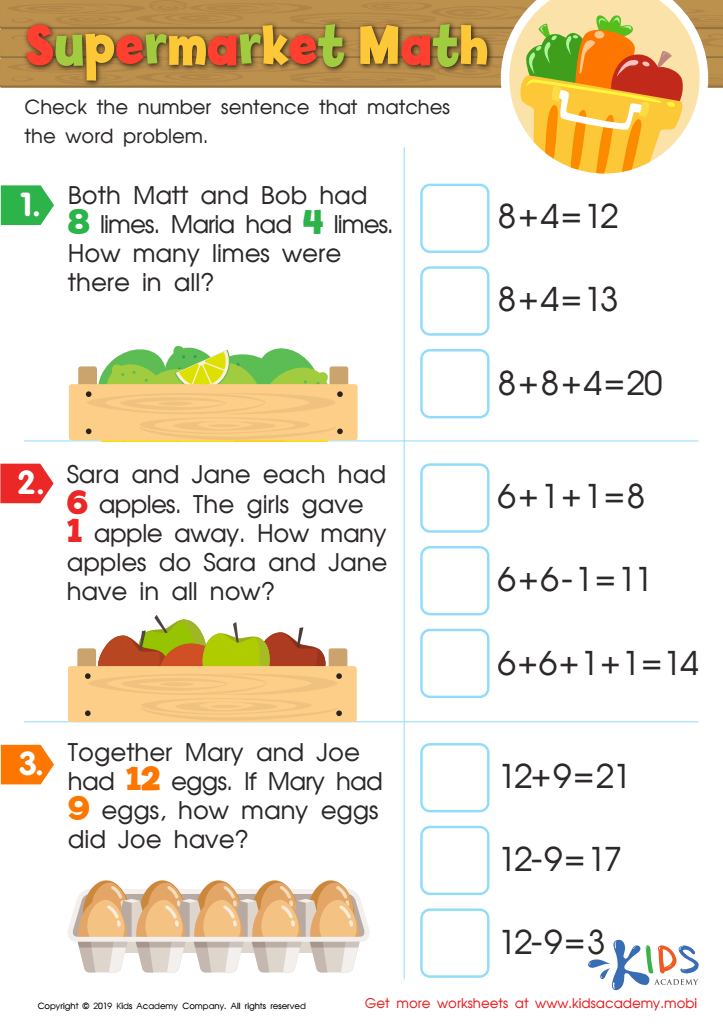
Supermarket Math Worksheet
Take your kids to the supermarket and ask what they're looking forward to buying. Help them solve the three questions in the worksheet by interpreting each one into an equation, then choose the right answer.
Supermarket Math Worksheet
Worksheet
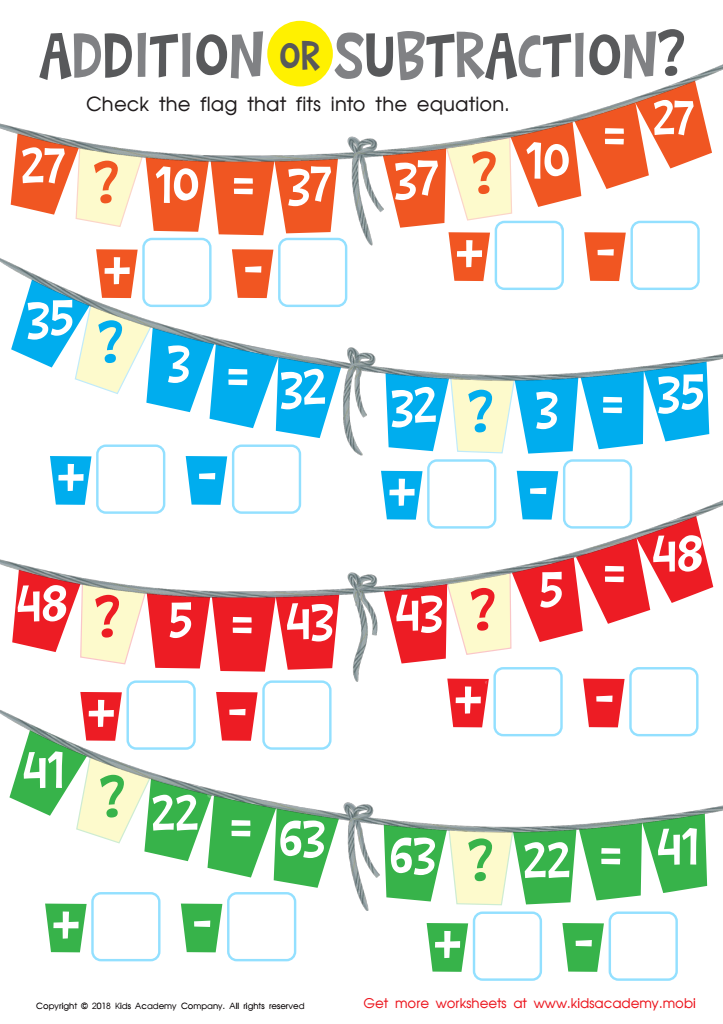
Addition or Subtraction? Worksheet
Help your math whiz's number skills advance with these colorful flag equations! With the free PDF, they'll learn to solve addition and subtraction facts by following the correct orders of operation. And the best part? They'll develop a deeper understanding of how the different operations work together within equations. Give it a try and watch their skills soar!
Addition or Subtraction? Worksheet
Worksheet
Join Kids Academy for Free
Who is primarily going to use this learning content?








Parents and teachers should prioritize the development of subtraction skills in children aged 4-7 as this foundational math skill is crucial for their overall cognitive growth. Mastery of normal addition and subtraction not only boosts a child's confidence but also enhances critical thinking and problem-solving abilities. At this age, children are naturally curious and adept at absorbing new information; building a strong understanding of subtraction during these formative years encourages a positive relationship with mathematics that can last a lifetime.
Subtraction skills also have practical implications. Children need to grasp these concepts as they encounter everyday situations it, such as sharing items or understanding quantities. This real-world application makes learning subtraction engaging and relevant. Furthermore, a solid grasp of subtraction contributes to a child's future success in more advanced mathematical concepts, while lack of proficiency can lead to difficulties as they progress in school.
Additionally, social-emotional skills can be nurtured through collaborative subtraction activities, promoting teamwork and communication. By focusing on these skills, parents and teachers play an integral role in helping children develop not just academically, but also socially and emotionally, laying the groundwork for lifelong learning.








