Understanding patterns Normal Addition & Subtraction Worksheets for Ages 4-7
4 filtered results
-
From - To
Explore our "Understanding Patterns: Normal Addition & Subtraction Worksheets" designed for children ages 4-7. These engaging worksheets help young learners recognize and analyze patterns while developing foundational math skills. Perfect for reinforcing addition and subtraction concepts, our materials incorporate colorful visuals and interactive exercises to keep students motivated. Each worksheet is crafted to foster critical thinking and improve problem-solving abilities, ensuring a fun learning experience. Help your child thrive in mathematics by introducing them to the excitement of patterns through these easy-to-follow worksheets. Download and watch your little one gain confidence in their math skills today!
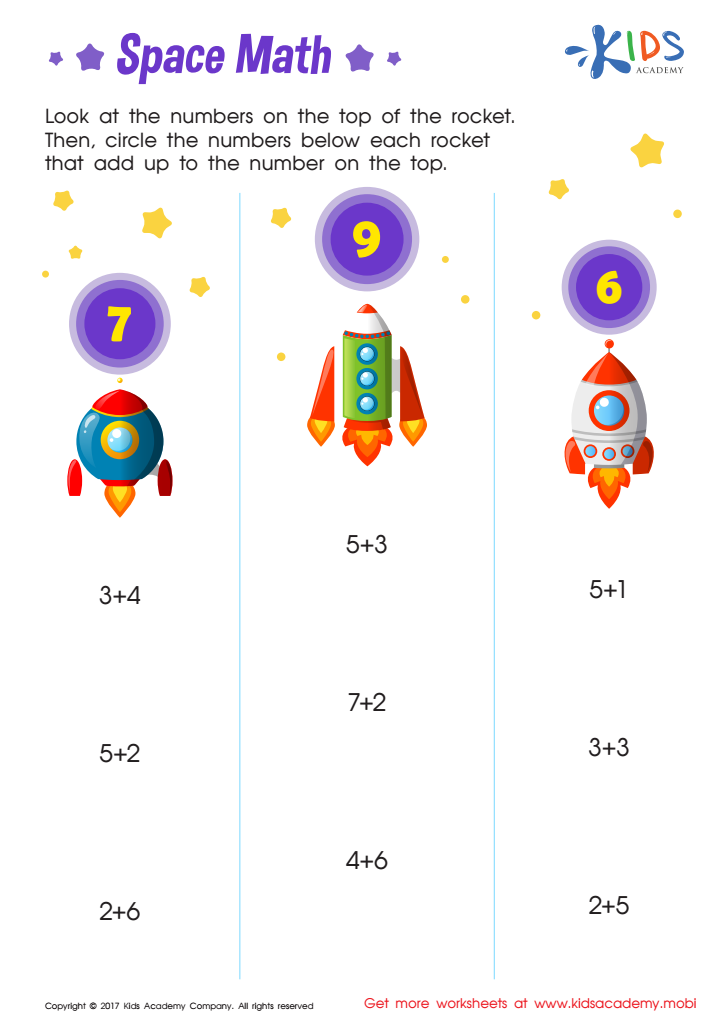
Addition: Space Math Worksheet
 Assign to My Students
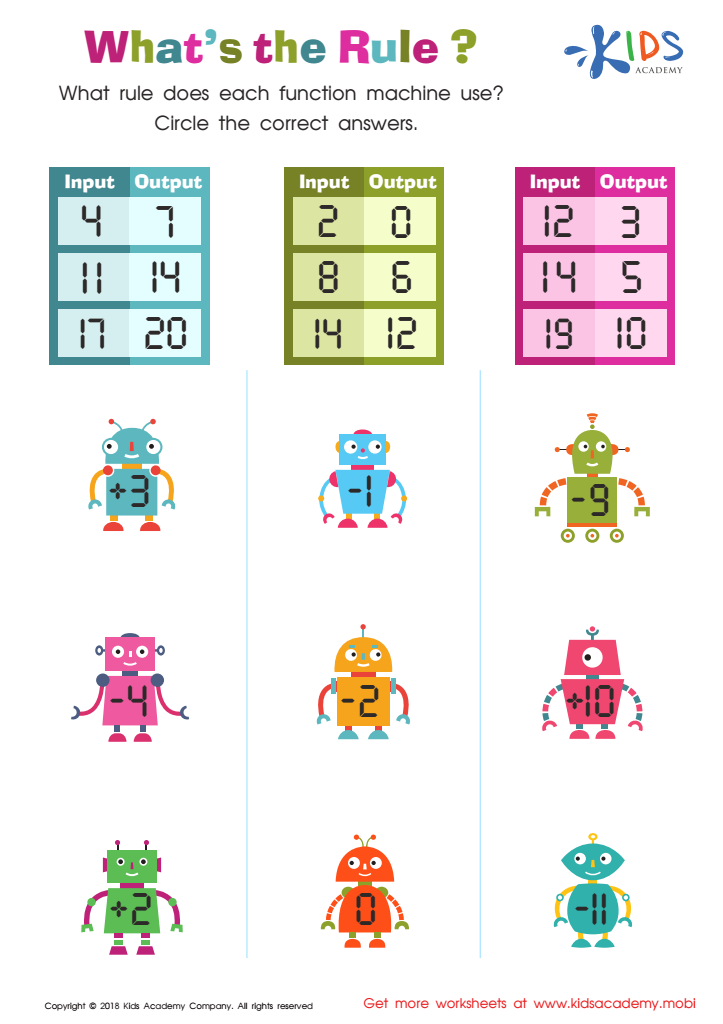
What's the Rule Worksheet
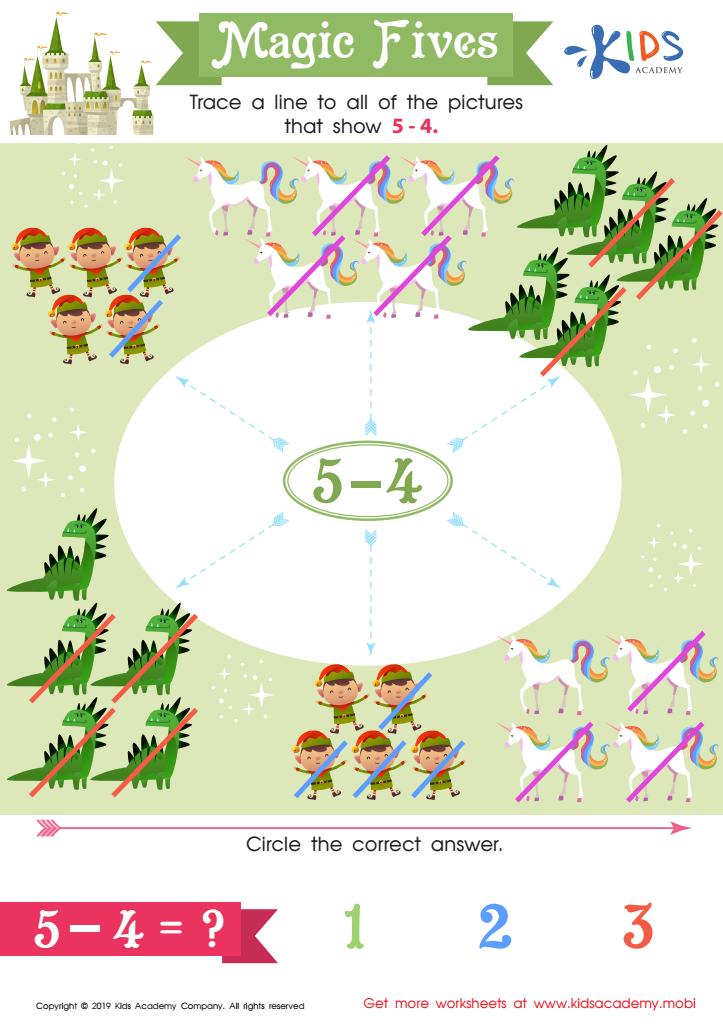
Magic Fives Worksheet
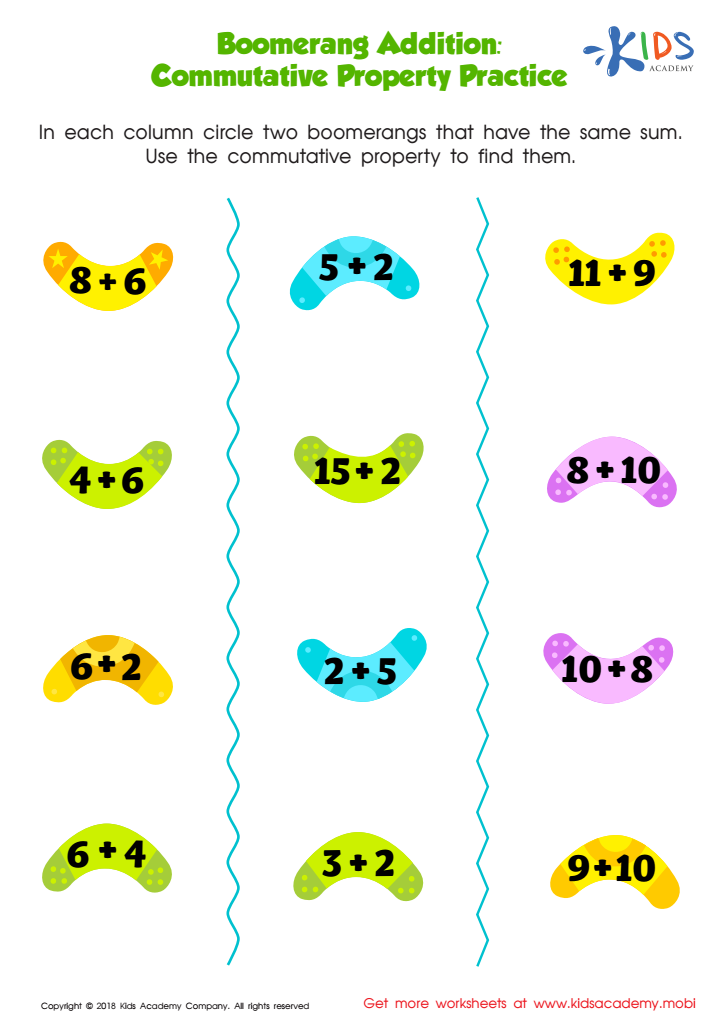
Boomerang Addition Worksheet








Understanding patterns through normal addition and subtraction is crucial for children aged 4-7 as it lays the foundational skills necessary for future mathematical learning. At this age, children are naturally curious and eager to explore concepts, making it an ideal time for parents and teachers to introduce patterns in mathematics. Recognizing and creating patterns enhances children's cognitive development, enabling them to make connections between numbers and understand sequences.
When children grasp addition and subtraction through patterns, they can perform tasks more fluently. For instance, recognizing that 2+3 can be visualized as jumping on a number line reinforces their understanding of the relationship between operations. This foundational knowledge not only strengthens their math skills but also encourages logical thinking and problem-solving abilities.
Additionally, teaching these concepts in fun, engaging ways can build a love for math, reducing anxiety around the subject as they grow older. Moreover, understanding patterns helps children in other areas, such as reading and science, by developing their ability to discern sequences and relationships. Ultimately, nurturing these early math skills equips children with the necessary tools for academic success, making it vital for parents and teachers to prioritize these lessons.








