Counting practice Normal Geometry Worksheets for Ages 4-7
3 filtered results
-
From - To
Boost your child's early math skills with our engaging Counting Practice Normal Geometry Worksheets, designed for ages 4-7. These worksheets blend fundamental counting techniques with basic geometry concepts, helping young learners grasp shapes and numbers through fun, interactive exercises. Perfect for at-home practice or supplemental classroom activities, our printable worksheets nurture numerical confidence and geometric understanding. Kids will enjoy counting objects, identifying shapes, and developing a solid math foundation. Set your child on the path to math success with these expertly crafted and age-appropriate geometry counting worksheets! Visit now and download them for free!
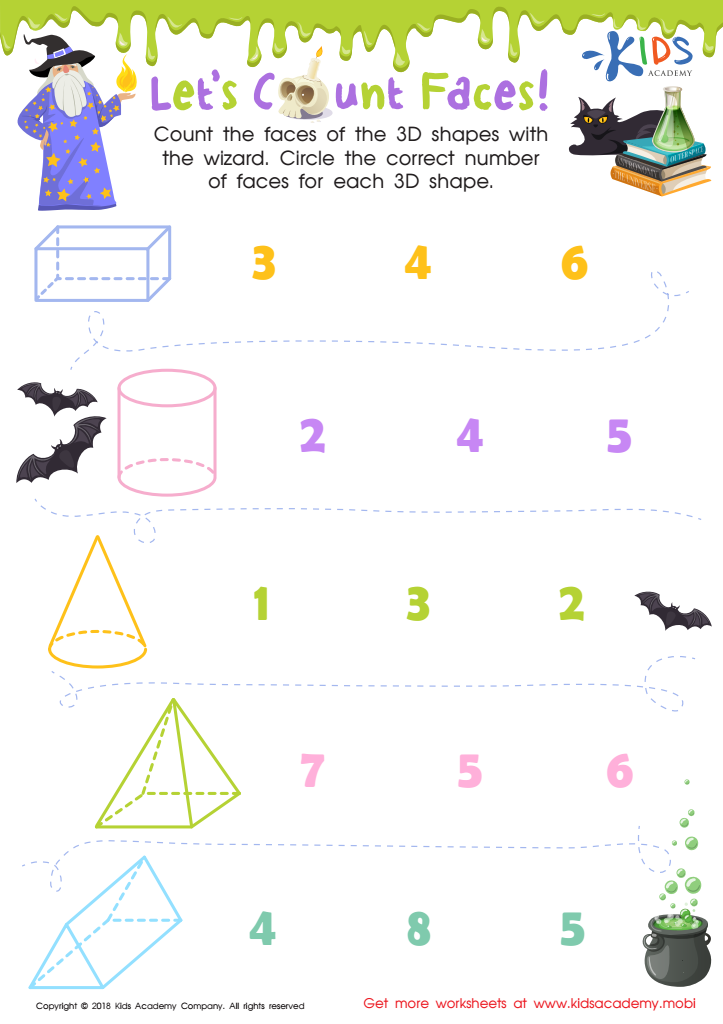
Let's Count Faces! Worksheet
 Assign to My Students











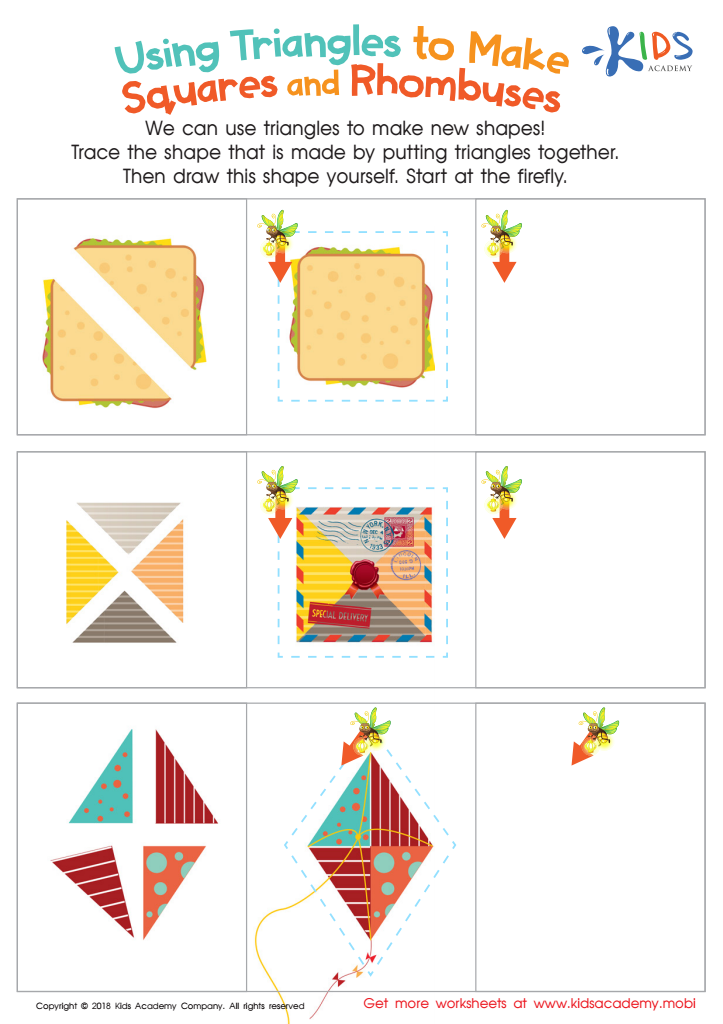
Using Triangles to Make Squares and Rhombuses Worksheet
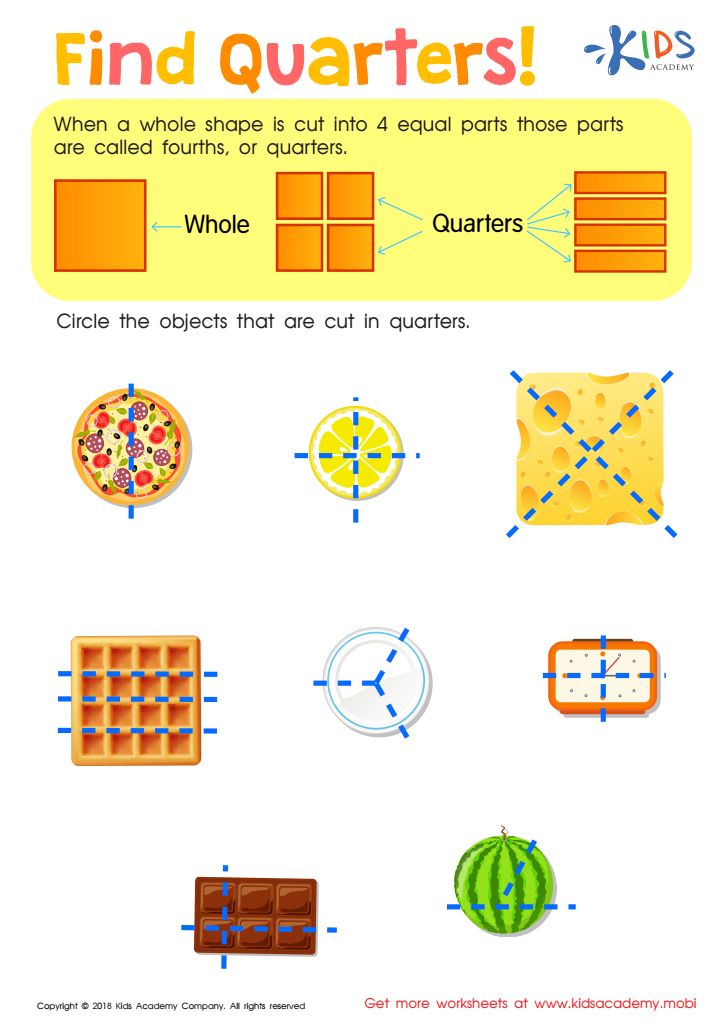
Find Quarters Worksheet








Counting practice and exposure to basic geometry are fundamental building blocks in early childhood education, crucial for ages 4-7. This formative period is when children's cognitive abilities are rapidly developing, making it an ideal time to introduce essential mathematical concepts.
First, counting practice helps children comprehend numbers, sequencing, and one-to-one correspondence. These skills support a variety of everyday tasks, such as organizing, comparing quantities, and recognizing patterns. Early counting proficiency lays the groundwork for more complex arithmetic operations they'll encounter later in their educational journey.
Incorporating basic geometry at this age, such as recognizing shapes, understanding positional words (like 'above', 'below', 'next to'), and identifying spatial relationships, dramatically enhances spatial reasoning. Spatial reasoning is crucial for problem-solving and is linked to success in STEM (Science, Technology, Engineering, and Mathematics) fields. Activities that include manipulating shapes or fitting blocks together bolster fine motor skills and hand-eye coordination.
Instilling these basics early isn't just about academic preparation; it boosts children’s confidence and fosters a positive attitude toward learning. Engaging parents in these practices strengthens the home-school connection, ensuring a consistent and supportive learning environment. Thus, prioritizing counting and basic geometry gives children a robust foundation for future academic success and life skills.








