Spatial reasoning Normal Geometry Worksheets for Ages 4-7
3 filtered results
-
From - To
Enhance your child's spatial reasoning skills with our engaging Normal Geometry Worksheets, specifically designed for ages 4-7. These printable resources provide a fun and interactive way for young learners to explore shapes, positions, and patterns. Each worksheet features colorful visuals and age-appropriate activities that make geometry enjoyable. As children practice identifying and manipulating various geometric forms, they will develop critical thinking and problem-solving abilities necessary for future math success. Perfect for home or classroom use, these worksheets inspire creativity while building a strong foundation in spatial awareness, preparing kids for more complex math concepts ahead. Start your child's geometric journey today!
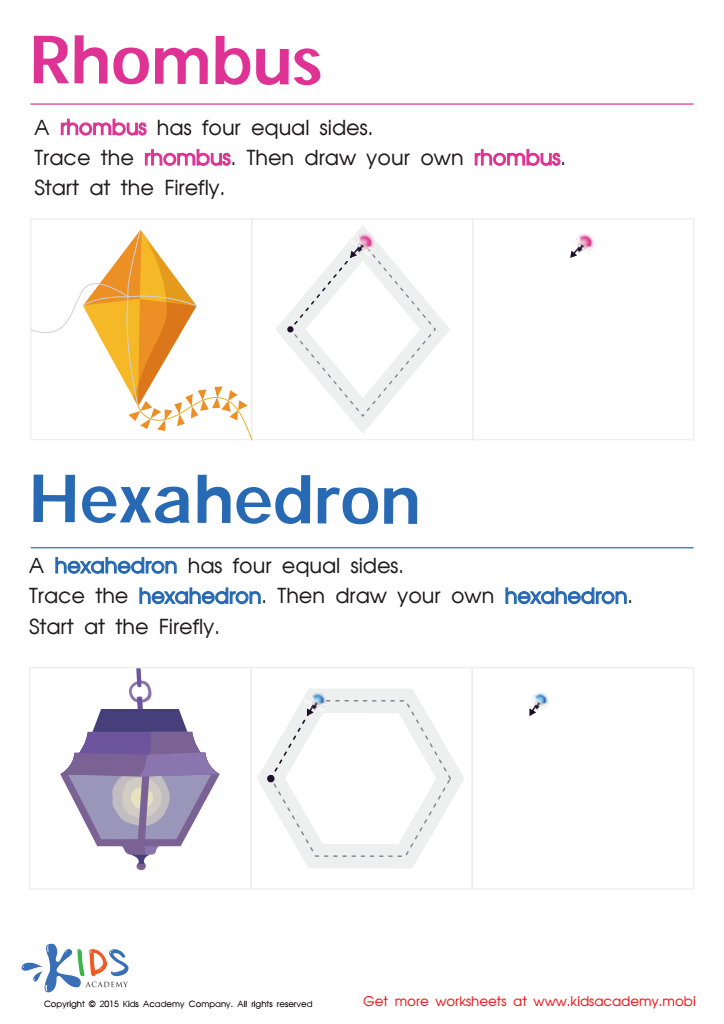
Draw a Rhombus And a Hexahedron Printable
 Assign to My Students











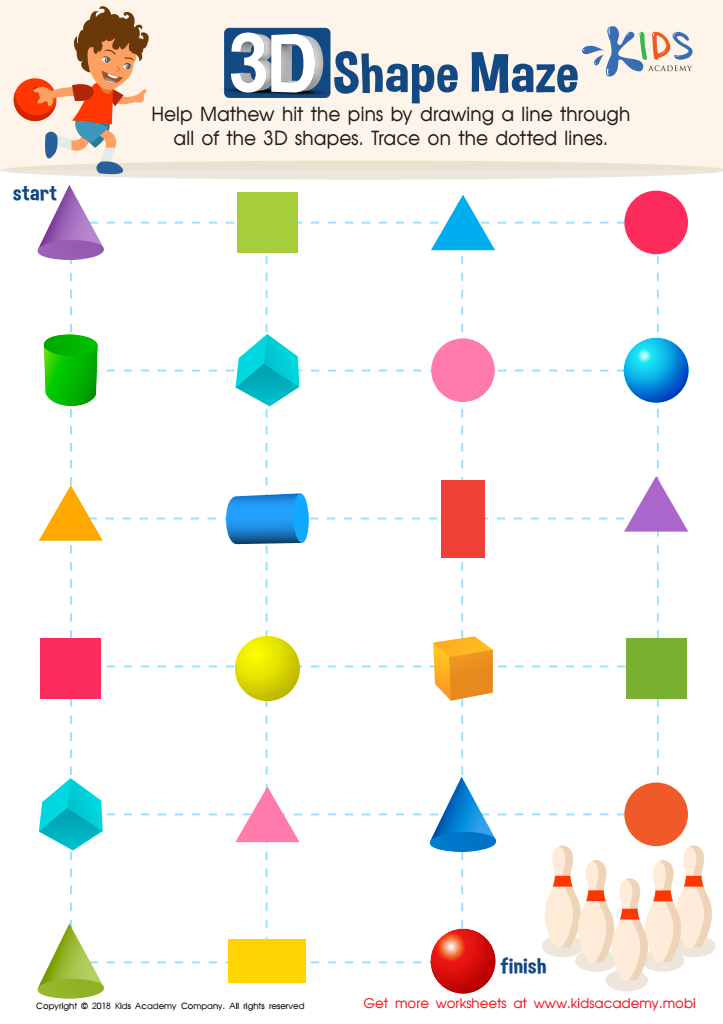
Shapes Maze Geometry Worksheet
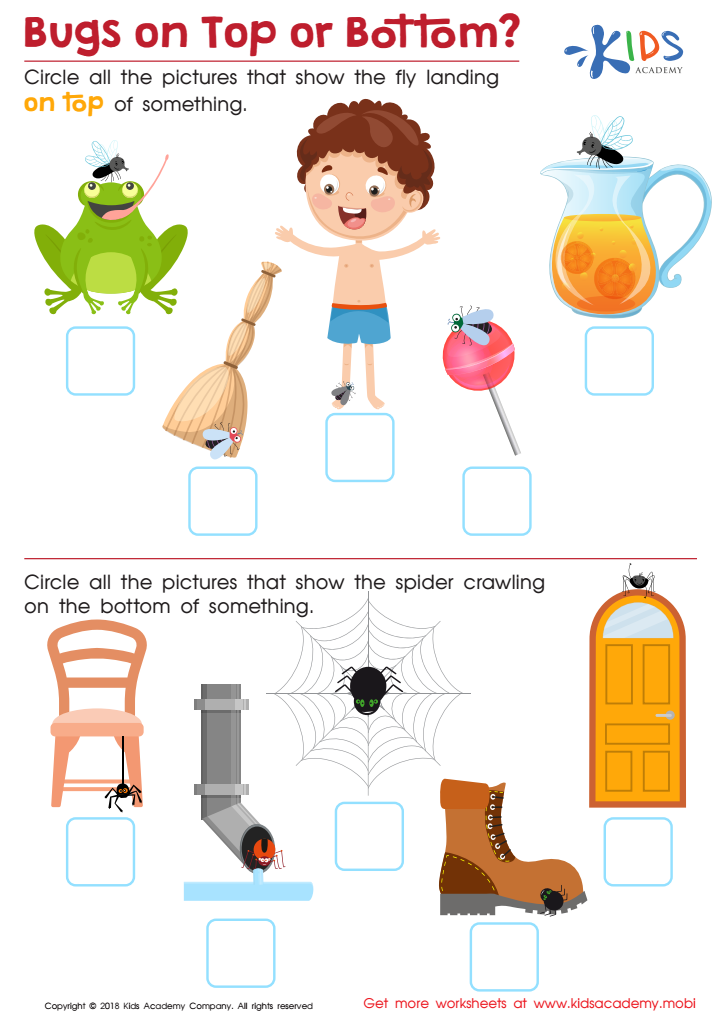
Bugs on Top or Bottom? Worksheet








Spatial reasoning and fundamental geometry concepts are essential for children aged 4-7 as they form the foundation for critical thinking, problem-solving, and understanding their world. Developing spatial reasoning skills helps young learners visualize and manipulate objects in three-dimensional space, which is crucial for everyday tasks and future academic success, particularly in math and science.
During the early years, cognitive development thrives through hands-on experiences. Activities that involve shape recognition, pattern formation, and understanding spatial relationships promote not only math skills but also enhance memory, focus, and creativity. Furthermore, these skills contribute to spatial navigation and locomotion, influencing a child’s ability to operate in various environments.
For teachers and parents, fostering these competencies can significantly improve a child's performance in later stages of learning. Engaging children with puzzles, building blocks, and interactive games nourishes their understanding of geometry while making learning enjoyable. By prioritizing spatial reasoning and geometry at this age, adults invest in children’s ability to think abstractly and apply their knowledge in real-world scenarios, setting them on a path for academic success and greater confidence in their problem-solving abilities. Ultimately, nurturing these skills benefits children throughout their educational journey and in their everyday lives.








