
Understanding prepositions Normal Geometry Worksheets for Ages 4-7
3 filtered results
Difficulty Level
Grade
Age
-
From - To
Subject
Activity
Standards
Unlock your child's potential in geometry with our "Understanding Prepositions" worksheets, designed specifically for ages 4-7! These engaging normal geometry worksheets help young learners grasp essential prepositions, contributing to their spatial awareness and language skills. Each activity is thoughtfully crafted to encourage exploration and understanding of terms like "above," "below," "next to," and more, all within a fun, interactive context. With colorful visuals and age-appropriate challenges, your child will enhance their comprehension while enjoying the learning process. Perfect for home or classroom use, these worksheets make mastering geometry concepts enjoyable and easy. Start building a strong foundation today!
Favorites
With answer key
Interactive
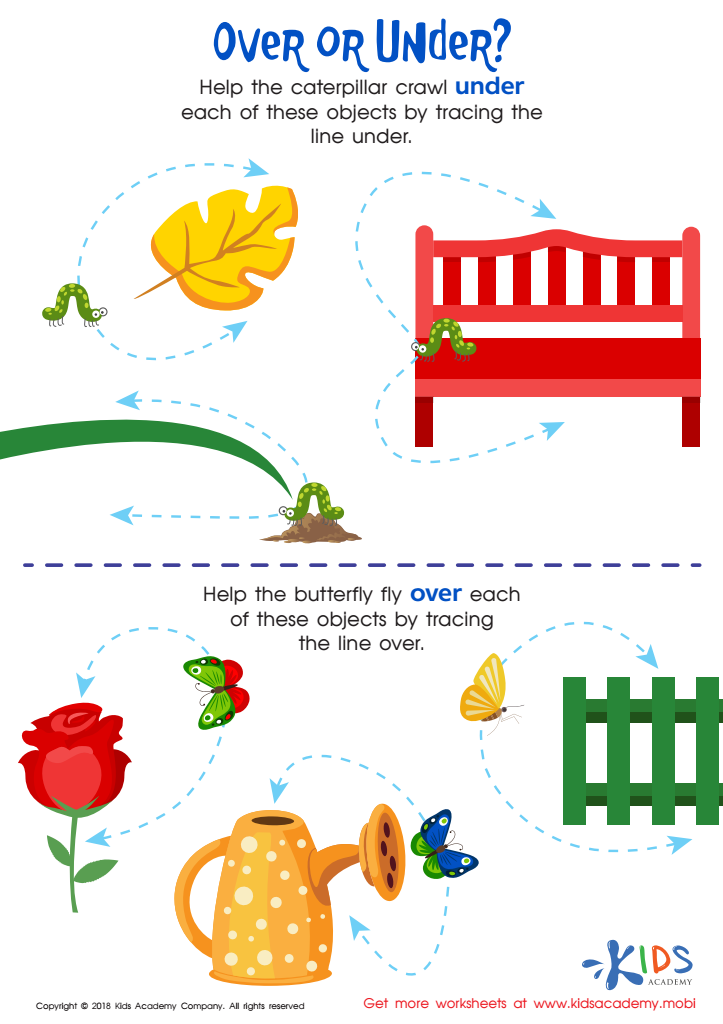
Over or Under? Worksheet
Math for young kids isn't just about numbers and counting, but also spatial concepts like geometry. This worksheet helps students learn "over" and "under" by tracing the movement of caterpillars and butterflies. Downloadable for free, it's an effective teaching tool for early learners.
 Assign to My Students
Over or Under? Worksheet
Worksheet











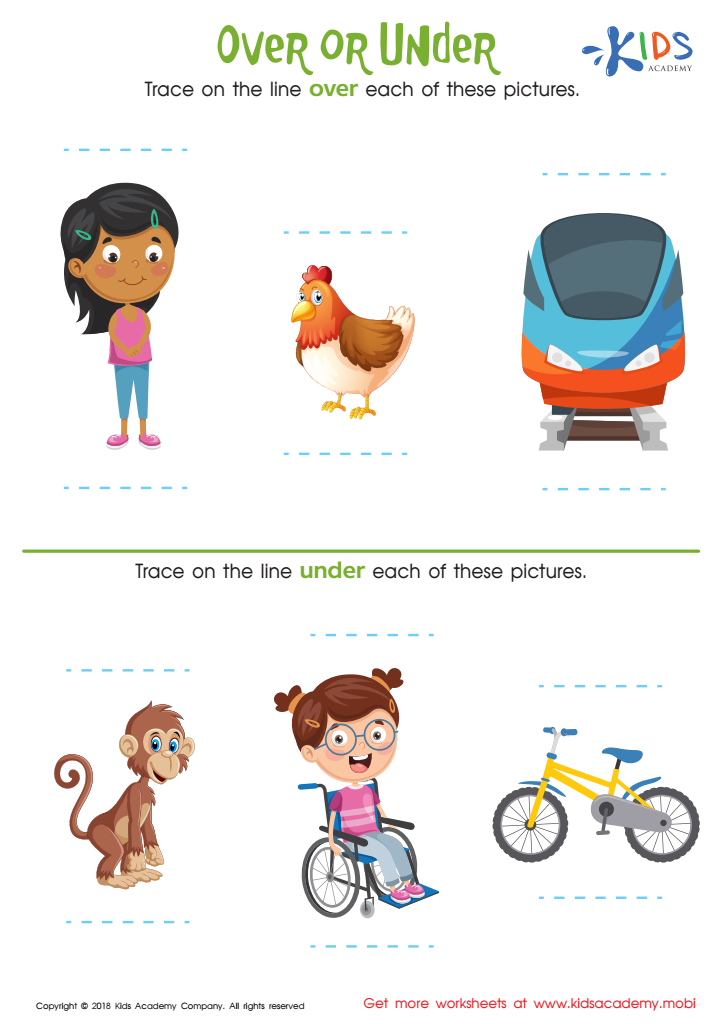
Over or Under Worksheet
Help your toddler grasp prepositions like "over" and "under" with this fun worksheet. Have them trace lines over the pictures on one half and under the pictures on the other, thus practicing basic communication and math concepts. Strengthen your child's understanding and communication skills with this activity.
Over or Under Worksheet
Worksheet
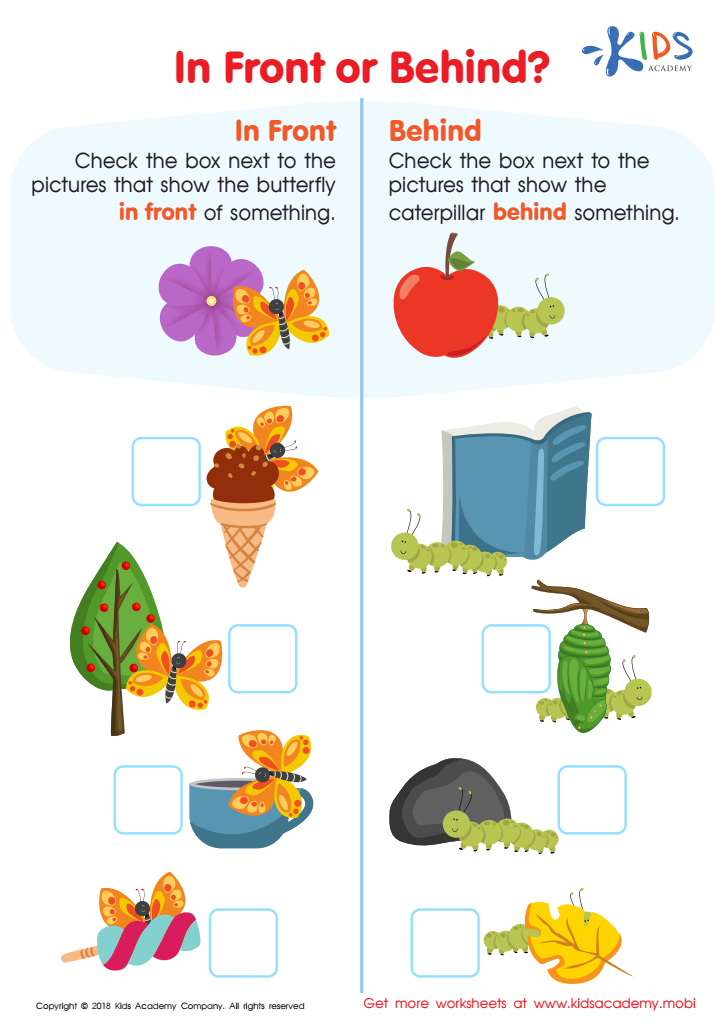
In Front or Behind Worksheet
Hone your child's spatial skills with 'in front' and 'behind'! This knowledge is essential for communication and study. Get them started with this free PDF worksheet - check off the pictures that show the butterfly in front and caterpillar behind!
In Front or Behind Worksheet
Worksheet
Join Kids Academy for Free
Who is primarily going to use this learning content?








Understanding prepositions and basic geometry concepts is crucial for young learners aged 4-7. At this stage, children are developing foundational skills that set the stage for their future learning. Prepositions, words that indicate relationships between objects, help children articulate their thoughts and comprehend spatial relationships. For example, understanding the difference between "in," "on," and "under" enhances their ability to navigate and describe their environment effectively.
Simultaneously, introducing normal geometry concepts fosters spatial awareness, which is essential for logical reasoning and problem-solving. Recognizing shapes, sizes, and their attributes not only develops critical thinking skills but also enhances children's ability to categorize and relate to objects around them. In mathematics, a solid grasp of shapes such as circles, squares, and triangles lays the groundwork for more advanced concepts later on.
For parents and teachers, prioritizing these skills helps boost children's confidence and curiosity in learning. Generating interest in geometry and spatial language provides a playful yet strategic approach to education, making learning both enjoyable and impactful. Ultimately, building these skills nurtures successful communicators, thinkers, and problem-solvers, equipping children for academic success and everyday interactions.








