Addition skills Normal Numbers Worksheets for Ages 4-7
5 filtered results
-
From - To
Boost your child's math confidence with our engaging Addition Skills Worksheets for Normal Numbers, specifically designed for ages 4-7. These worksheets provide a fun and interactive way for young learners to grasp basic addition concepts. Each activity encourages hands-on learning, helping children visualize and solve simple addition problems. From relatable, real-life scenarios to colorful illustrations, our worksheets make math enjoyable and accessible. Perfect for home or classroom practice, these resources are tailored to meet developmental milestones, ensuring a solid foundation in math. Explore our collection to help your child master addition skills and enjoy the journey of learning with confidence!
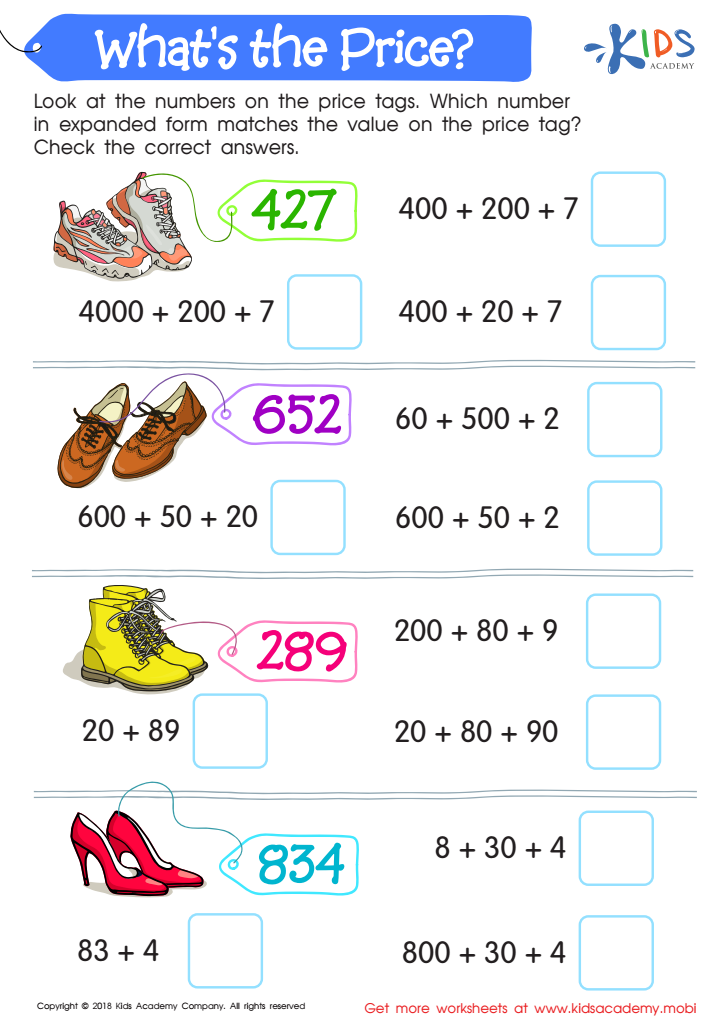
What's the Price? Worksheet
 Assign to My Students
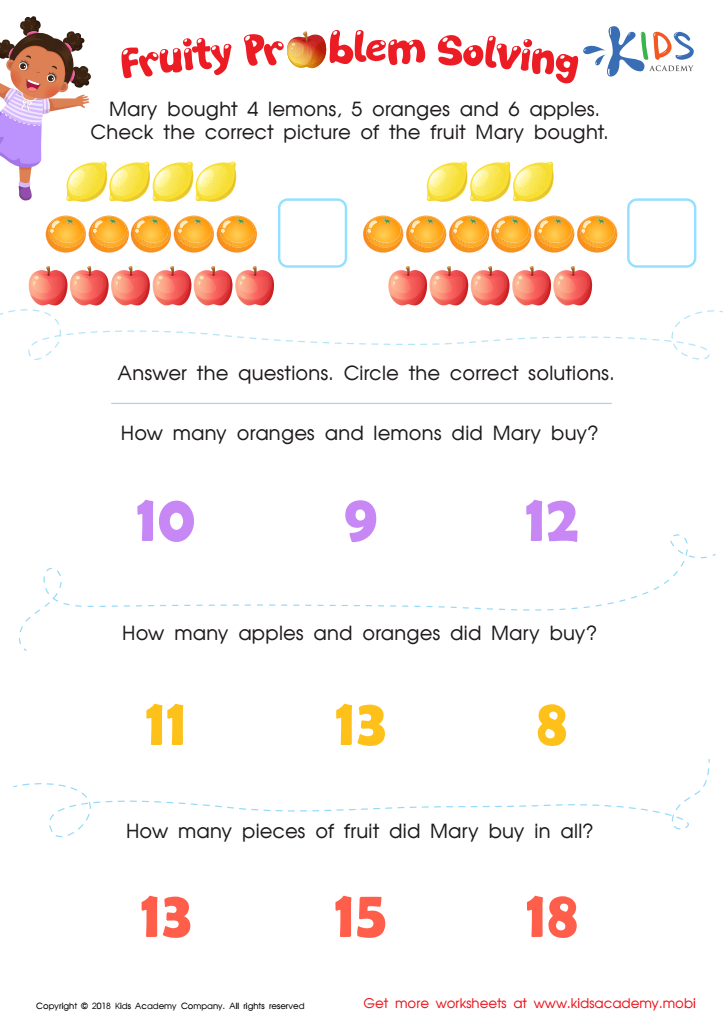
Fruity Problem Solving Worksheet
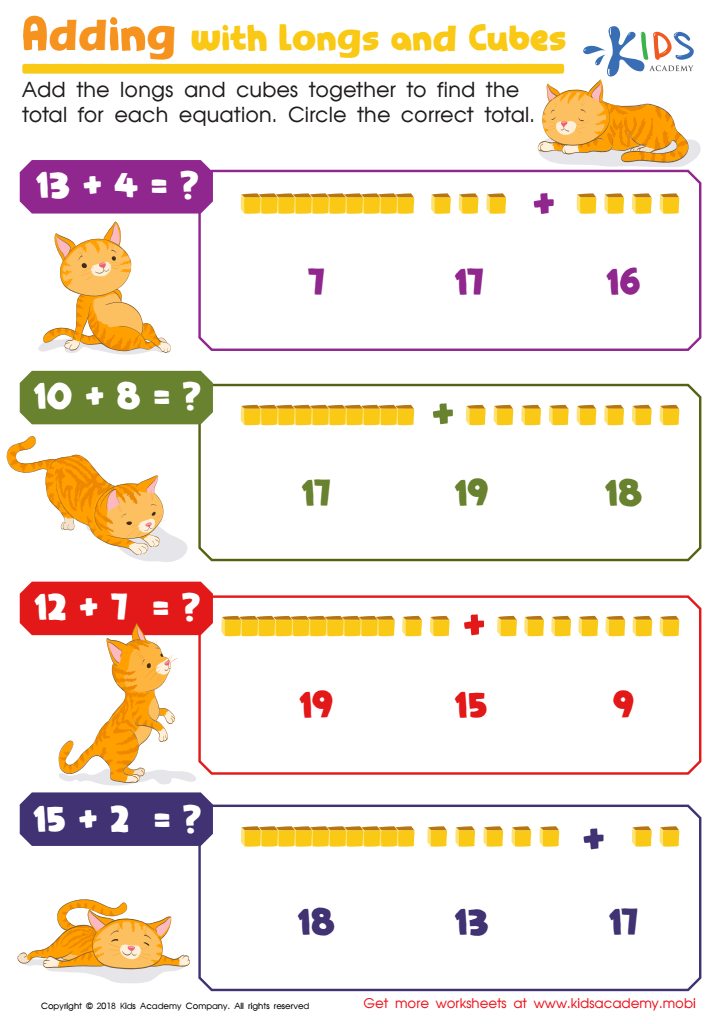
Adding With Longs and Cubes Worksheet
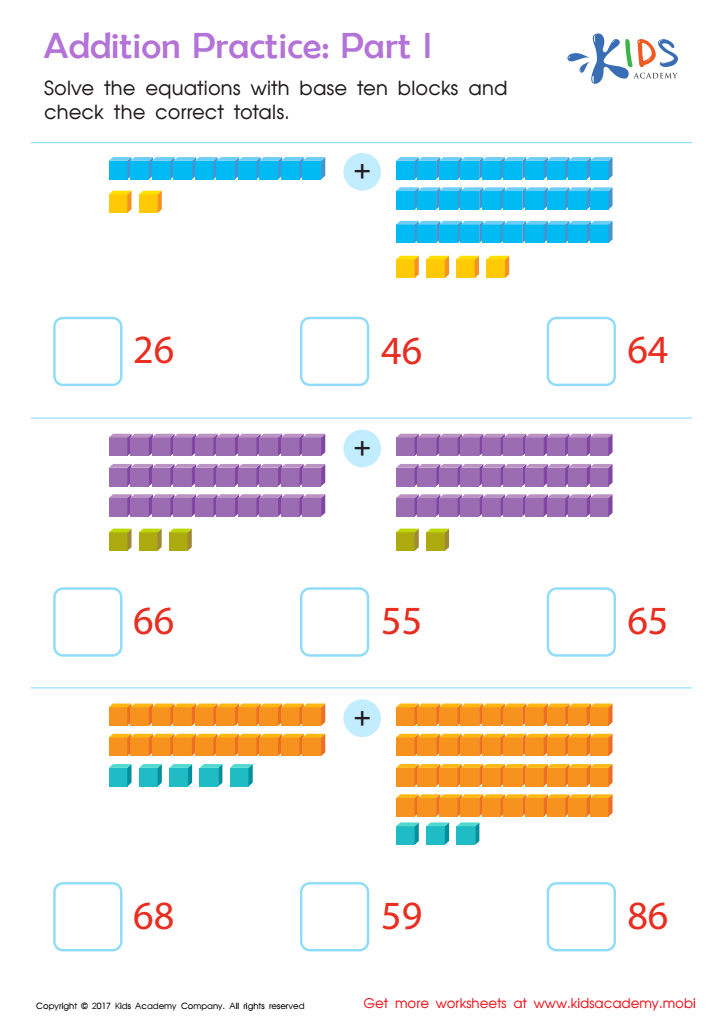
Addition Practice Sheet: Part 1
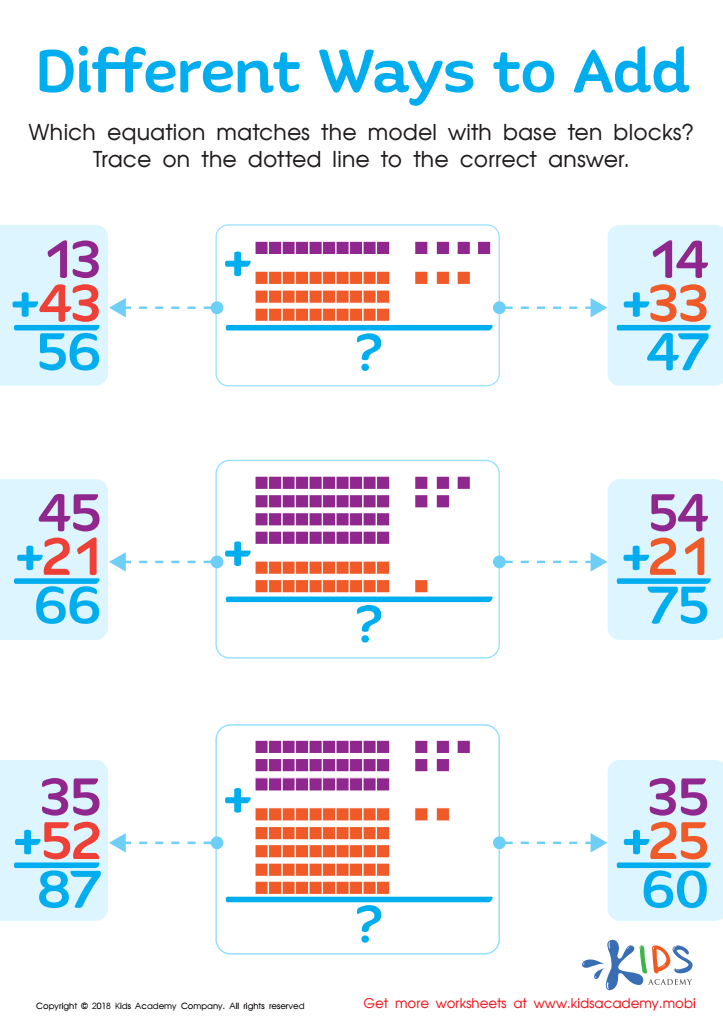
Different Ways to Add Worksheet







Parents and teachers should prioritize the development of addition skills using normal numbers for children aged 4-7, as these foundational math concepts are essential for their future academic success and daily life applications. At this age, children are naturally curious and eager to learn, making it an ideal time to introduce basic addition. Mastery of these skills fosters critical cognitive development, enhancing problem-solving abilities and logical thinking.
Furthermore, addition serves as the gateway to understanding more complex mathematical concepts later on, such as subtraction, multiplication, and division. Early proficiency in addition can build a child's confidence, reduce math anxiety, and create a positive attitude towards mathematics as they progress in their education.
In addition, practicing normal number addition helps improve fine motor skills through engaging activities like counting blocks or drawing number lines. It also nurtures social skills when working collaboratively with peers during learning sessions or games.
Ultimately, supporting the acquisition of addition skills at this critical developmental stage lays the groundwork for lifelong learning and equips children with the necessary tools to navigate both academic challenges and practical, everyday tasks.








