Basic Addition Skills Normal Numbers Worksheets for Ages 4-7
6 filtered results
-
From - To
Introduce your child to the world of numbers with our Basic Addition Skills Normal Numbers Worksheets, designed for ages 4-7! These engaging, beautifully crafted worksheets from Kids Academy create a fun learning environment while developing essential addition skills. Perfect for young learners, each worksheet includes visually appealing exercises to help children grasp basic math concepts. Through a variety of practice problems and interactive activities, your child will gain confidence and proficiency in adding normal numbers. Equip your little one with the skills needed for a strong mathematical foundation with our expertly designed addition worksheets!
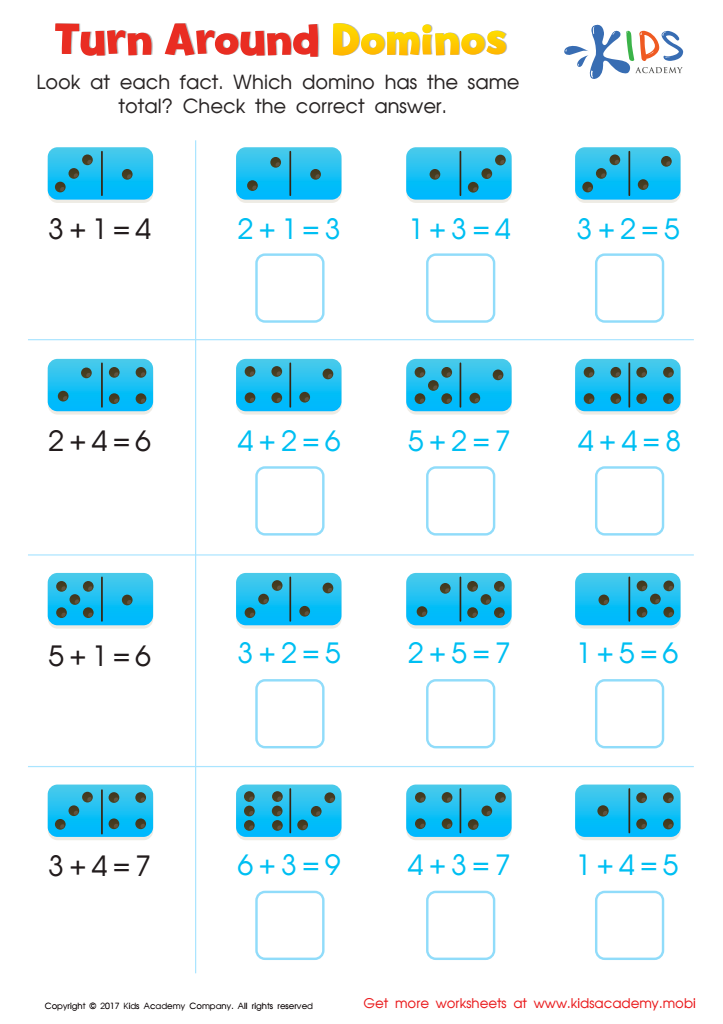
Turn Around Dominos Worksheet
 Assign to My Students
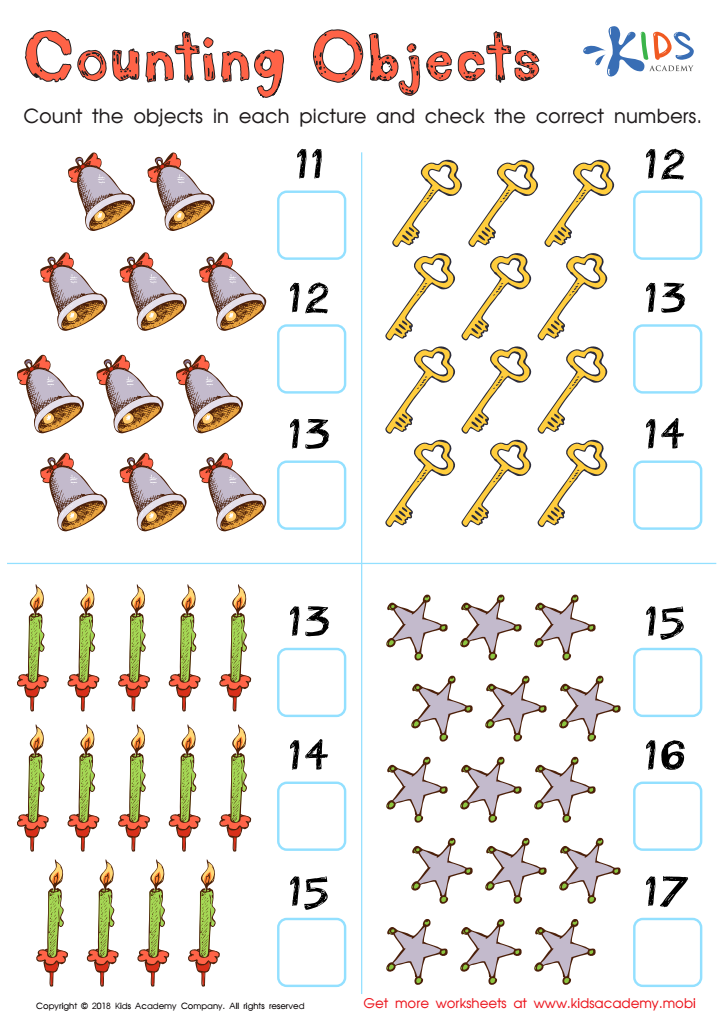
Counting Numbers Worksheet For Kindergarten
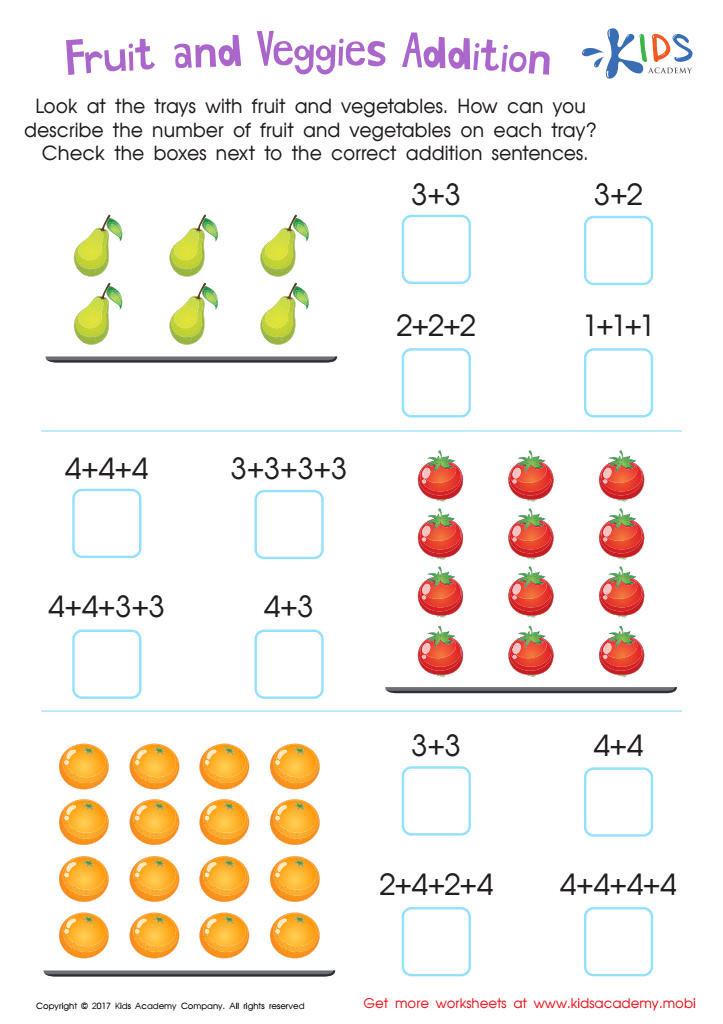
Fruit and Veggies Worksheet
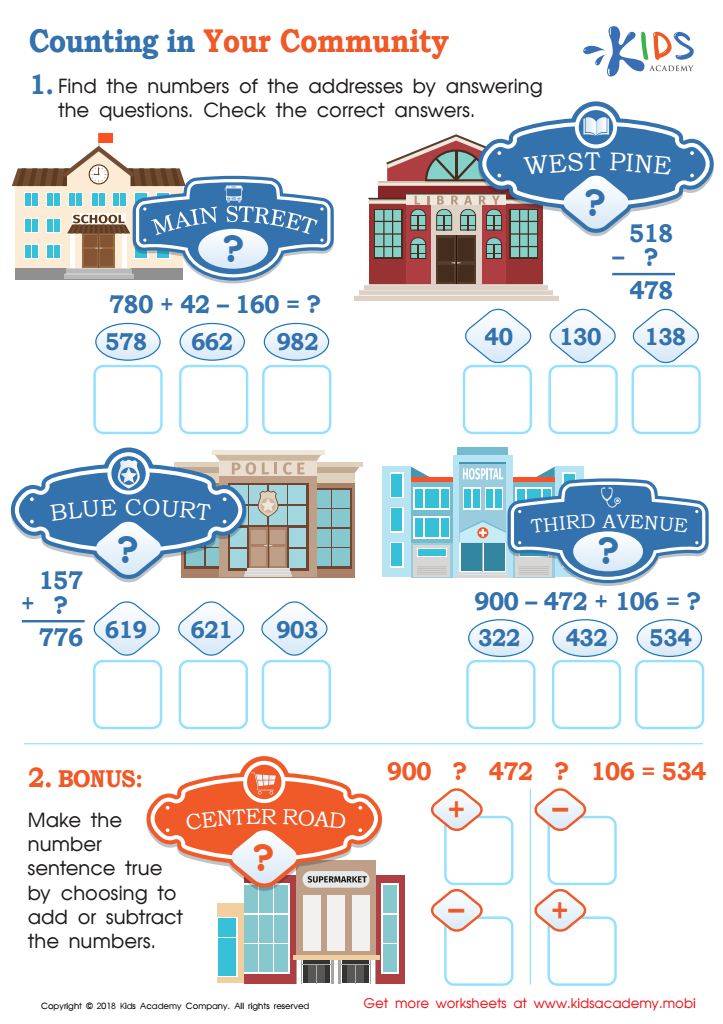
Counting in Your Community Worksheet
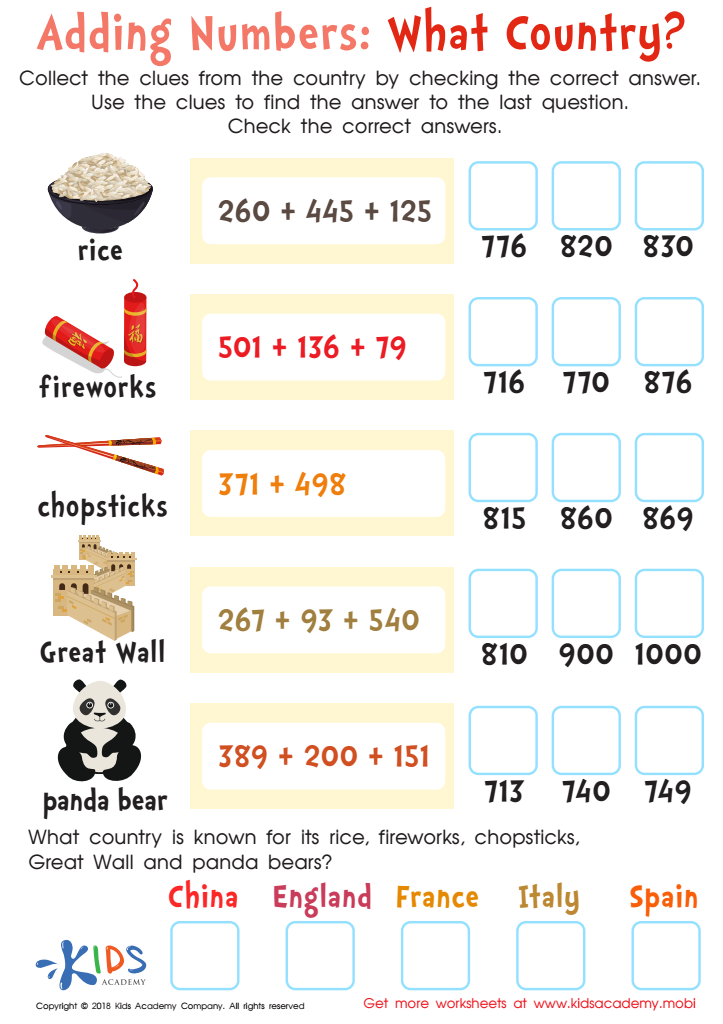
Adding Numbers: What Country Worksheet
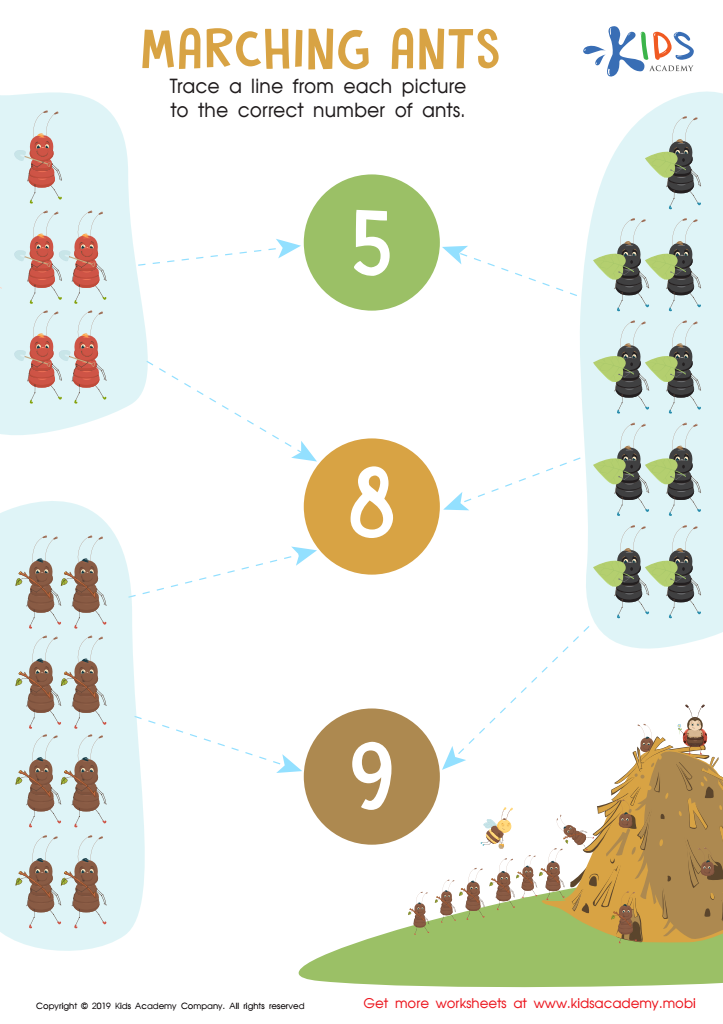
Marching Ants Worksheet








Parents and teachers should care about basic addition skills for ages 4-7 because these foundational skills are crucial for a child's overall cognitive and academic development. Early numerical skills pave the way for more complex mathematical concepts that children will encounter in later grades. Mastery of basic addition instills a sense of confidence in young learners, encouraging a positive attitude towards mathematics and learning in general.
At ages 4-7, children are in a prime developmental stage, where their brains are highly receptive to new information. Engaging them in basic addition activities helps to enhance their problem-solving and critical-thinking abilities. Moreover, understanding addition lays the groundwork for future concepts such as subtraction, multiplication, and division. These skills do not operate in isolation but form an interconnecting web of knowledge that supports comprehensive mathematical literacy.
In addition, proficiency in basic addition is not only limited to academic success but also essential for daily life. Children apply these skills in everyday activities, such as sharing toys, counting objects, and understanding time. Therefore, investing effort in teaching and reinforcing basic addition skills equips children with essential tools that will support their lifelong learning and practical decision-making. Early engagement and encouragement in these fundamental skills are vital for fostering both intellectual growth and practical competence.








