
Handwriting practice Normal Numbers Worksheets for Ages 4-7
6 filtered results
Difficulty Level
Grade
Age
-
From - To
Subject
Activity
Standards
Discover engaging and educational "Handwriting Practice Normal Numbers Worksheets for Ages 4-7" at Kids Academy! Perfect for young learners, these printable worksheets creatively combine fun and learning to help children master number recognition, counting, and handwriting skills. Each worksheet features traceable numbers and engaging activities designed to boost fine motor skills and numerical understanding. Ideal for home or classroom use, these resources support preschoolers and early elementary students as they build a solid foundation in math. Explore our diverse selection and support your child's journey toward numerical literacy today!
Favorites
With answer key
Interactive
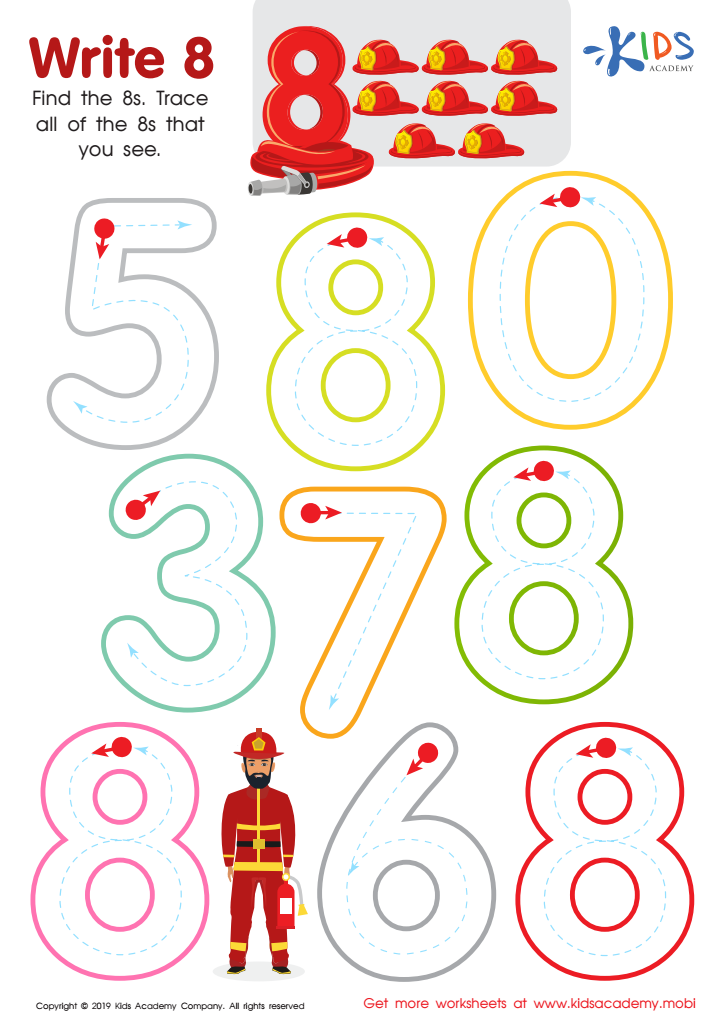
Write 8 Worksheet
Once your kids can count small numbers, it's time to learn how to write them. With your help and patience, they will soon be pros! This worksheet will make learning easier. Help them spot the 8s in the picture, then help them trace them.
 Assign to My Students
Write 8 Worksheet
Worksheet
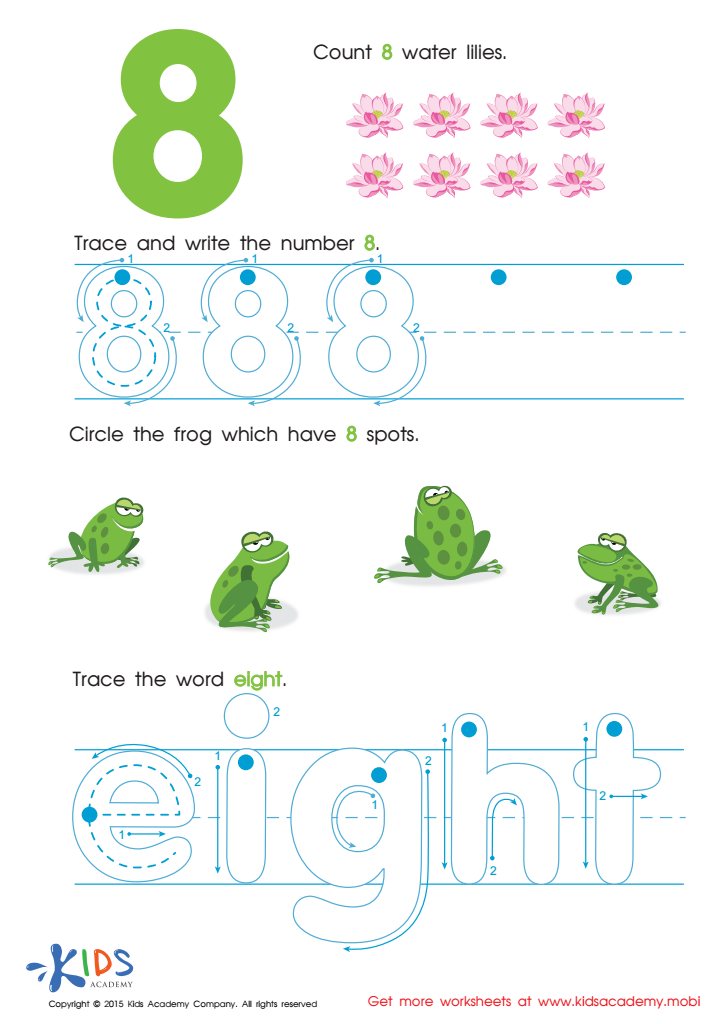
Learn Number 8 Easily Worksheet
Kids can trace, write numbers and learn to pronounce them through exciting activities and games. Try our number worksheets for preschoolers to make learning fun!
Learn Number 8 Easily Worksheet
Worksheet
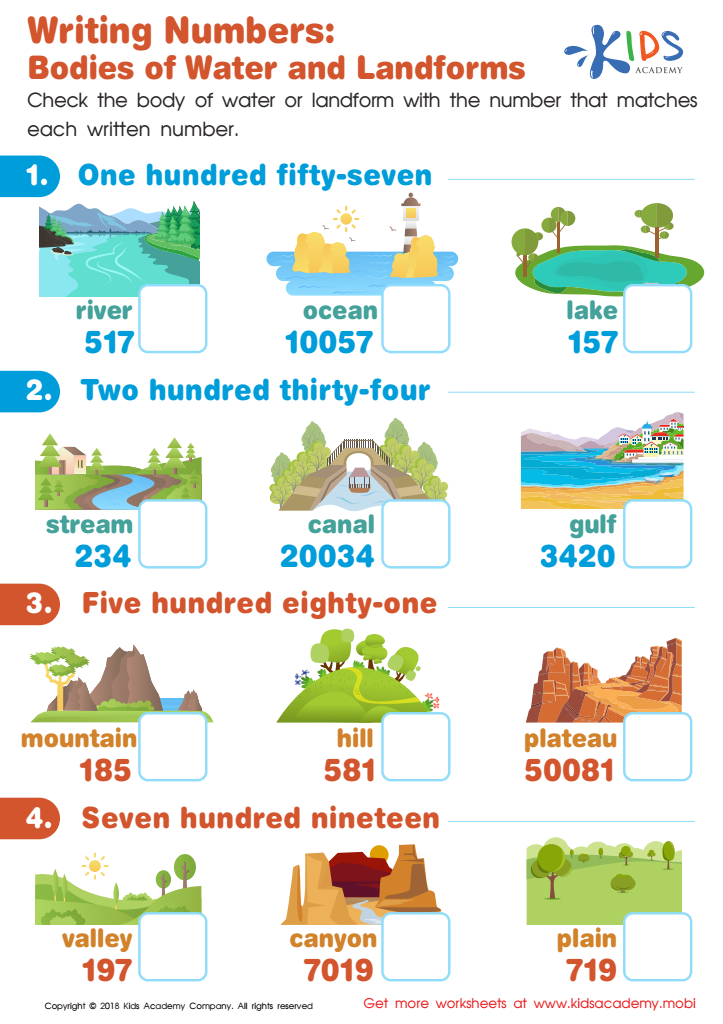
Bodies of Water and Landforms Writing Numbers Worksheet
Your student will love this engaging worksheet with its bright hues, while you give them practice comparing numbers with higher place values. Matching the correct number words to their numeral representations is key for our students as they deal with larger numbers and higher place values.
Bodies of Water and Landforms Writing Numbers Worksheet
Worksheet
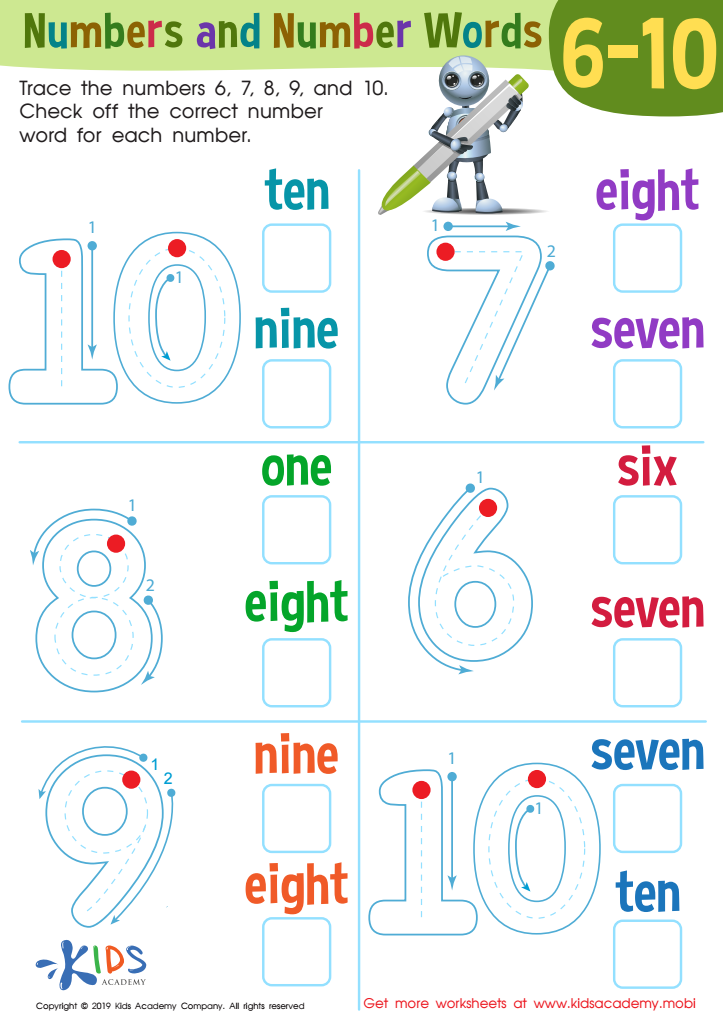
Numbers and Number Words 6–1 Worksheet
As children explore numbers and words, parents and teachers can help them learn to count and read with activities such as this worksheet. Here, the student traces numbers 6-10 and then selects the right number words to match. A fun and interactive way to learn!
Numbers and Number Words 6–1 Worksheet
Worksheet
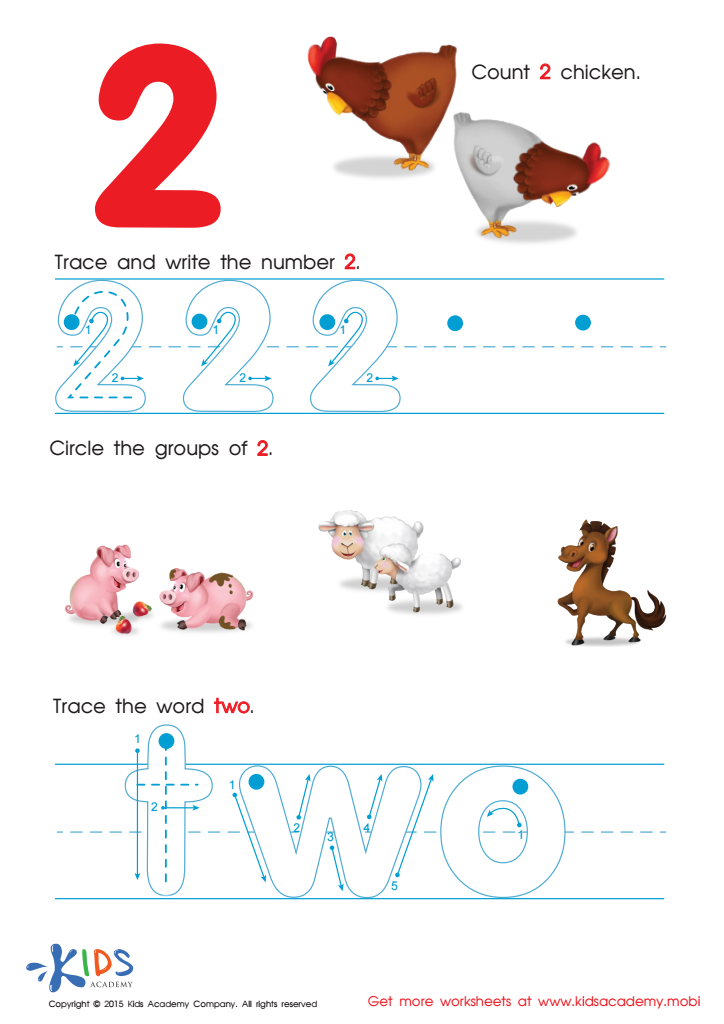
Learn to Write the Number 2 Worksheet
Teaching numbers should be fun! Ask your kids to count the two chicks, circle the groups of two among the animals, then trace and write the number and word. Get more fun worksheets from Kids Academy.
Learn to Write the Number 2 Worksheet
Worksheet
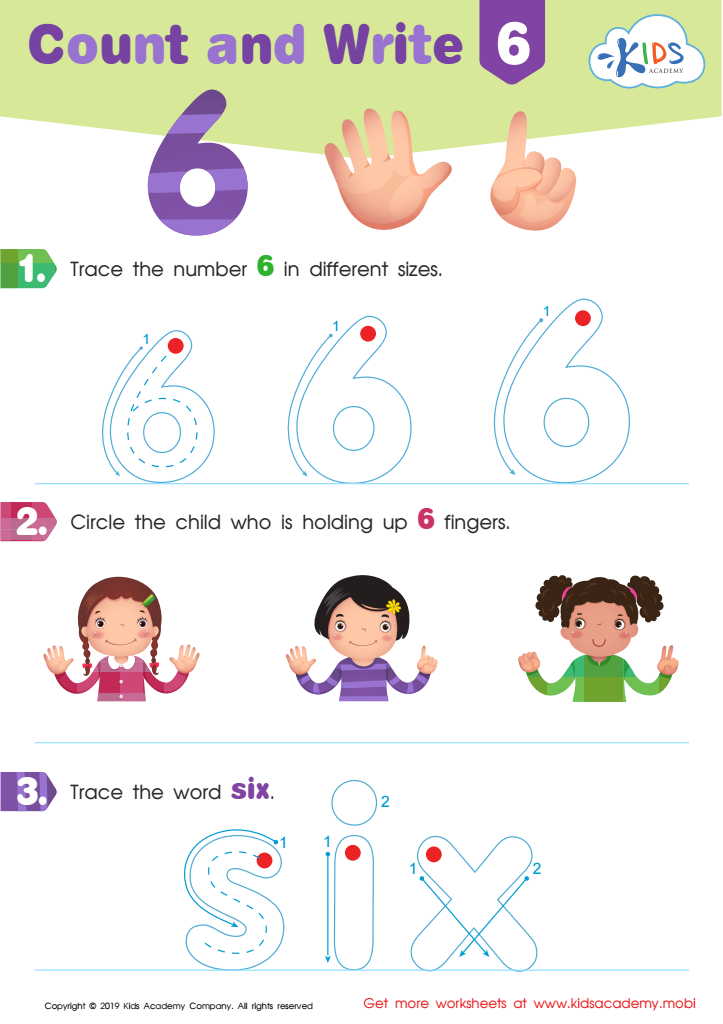
Count and Write 6 Worksheet
Kids begin math by mastering recognition skills. This worksheet helps with that by giving them practice writing "six" and the numeral 6, with guide dots and traceable lines. Giving kids multiple ways to learn the basics helps them build a strong math foundation.
Count and Write 6 Worksheet
Worksheet
Join Kids Academy for Free
Who is primarily going to use this learning content?



.jpg)




Handwriting practice of normal numbers for children ages 4-7 is crucial for cognitive and motor development. At this formative age, engaging in the repetition of number writing helps solidify number recognition, which is essential for early math skills. This foundational practice enhances children's ability to distinguish between different numerical digits, fostering a better understanding of counting, addition, and subtraction.
Moreover, handwriting numbers fine-tunes their fine motor skills, promoting better hand-eye coordination and dexterity, which are essential for other academic tasks like drawing, cutting, and eventually, writing letters and words. Beyond the immediate academic benefits, learning to write numbers legibly underlines the importance of neatness and perseverance, qualities that translate into broader aspects of a child's life and learning.
From an emotional and psychological perspective, successfully mastering such skills builds self-confidence and independence in young learners. It makes them more willing to tackle other challenging tasks, knowing they have the capability to succeed. For these reasons, parents and teachers should view handwriting practice not just as a procedural task, but as a significant developmental step that impacts a child’s overall educational journey and future academic confidence.








