Cognitive Development Normal Math Worksheets for Ages 4-7 - Page 2
25 filtered results
-
From - To
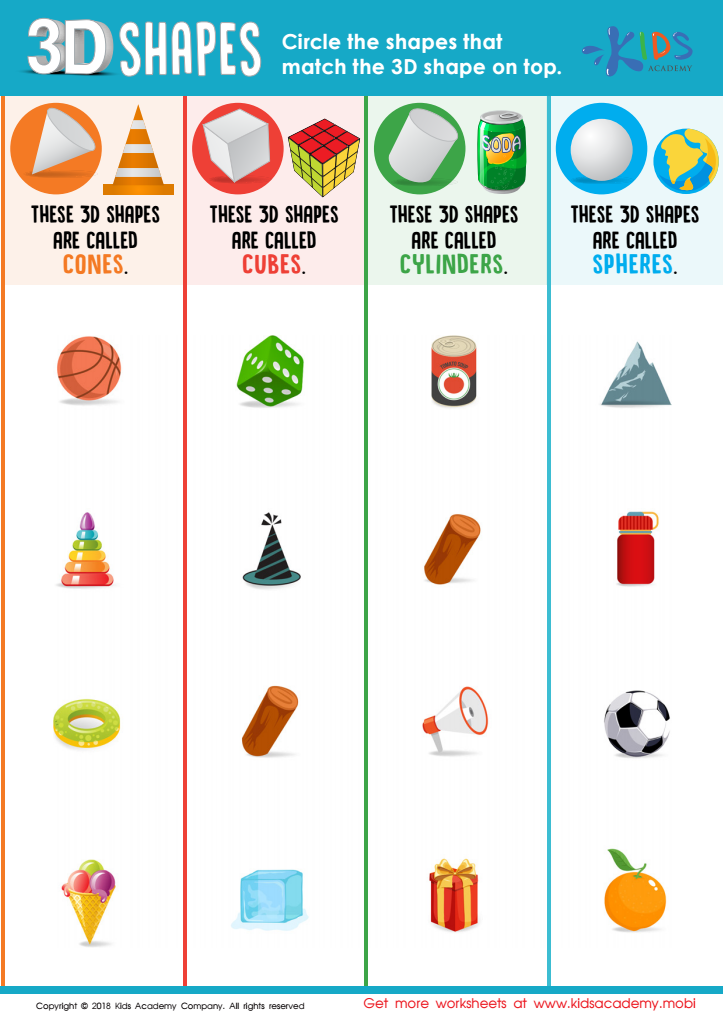
3D Shapes Worksheet
 Assign to My Students








Cognitive development in early childhood, particularly in the domain of mathematics for ages 4 to 7, is pivotal for a child’s overall growth. During these formative years, children are particularly receptive to acquiring foundational math skills that will serve them throughout their lives. Understanding concepts such as counting, number recognition, basic addition and subtraction, and patterns becomes essential for their academic success.
Parents and teachers should care about normal math development at this stage because it lays the groundwork for critical thinking and problem-solving abilities. Engaging in mathematical activities enhances cognitive skills, such as memory, attention span, and logical reasoning. Early proficiency in math is linked to self-confidence, promoting perseverance and a positive attitude toward learning.
Moreover, math skills are increasingly seen as integral to everyday tasks and decision-making. By recognizing the importance of cognitive development in mathematics, adults can foster a rich learning environment, offering resources and activities that are age-appropriate and vital for development. Ensuring children meet these cognitive milestones translates into improved academic achievements and brighter future opportunities. Supporting normal math development not only equips children with essential skills but also nurtures a lifelong love for learning.








