Discover our engaging Matching Skills Normal Math Worksheets designed specifically for children ages 4 to 7. These worksheets help young learners develop their critical thinking and problem-solving abilities by presenting fun and age-appropriate matching activities. Kids will enjoy identifying and connecting similar items, enhancing their cognitive skills while reinforcing basic math concepts. Our thoughtfully crafted resources support early education by providing diverse learning opportunities tailored to your child's developmental stage. Perfect for homeschooling or classroom settings, these worksheets will keep children entertained while they strengthen their matching skills. Explore our collection and watch your child flourish in their math journey today!

Check out this FREE Trial Lesson on Math for age 4-7!

Match Exactly the Same

Favorites
With answer key
Interactive
  • 4-7
  • Matching skills
  • Math
  • Normal
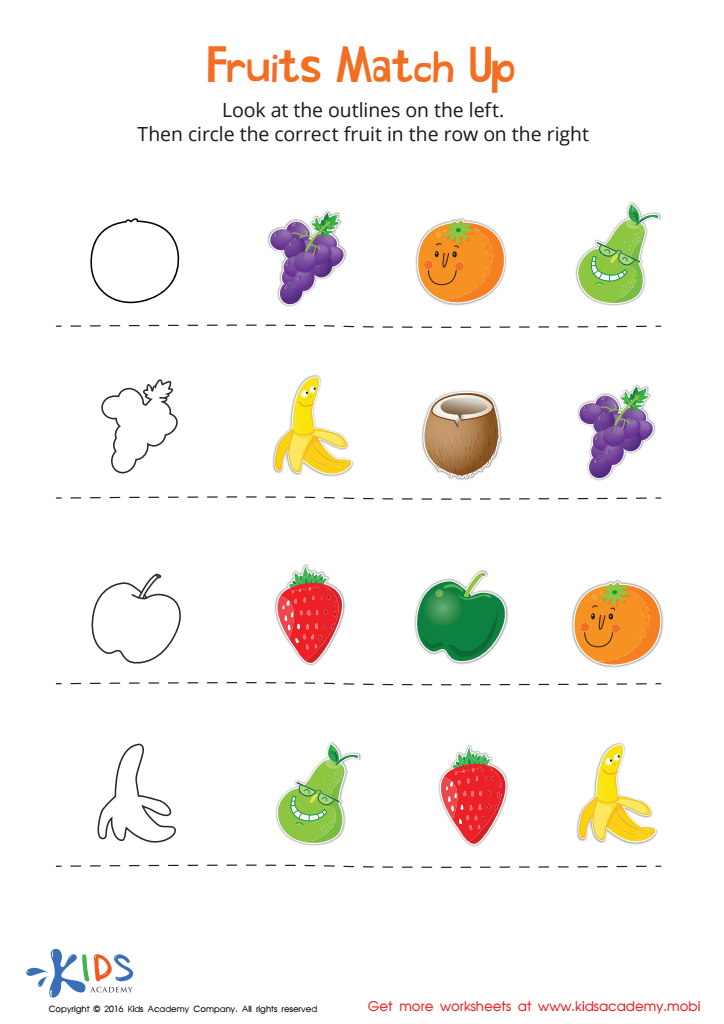
Fruits Matching Worksheet

Fruits Match Up Worksheet

Motivate your child to count and sharpen their spatial reasoning skills with this vivid fruit worksheet.
Fruits Match Up Worksheet
Worksheet
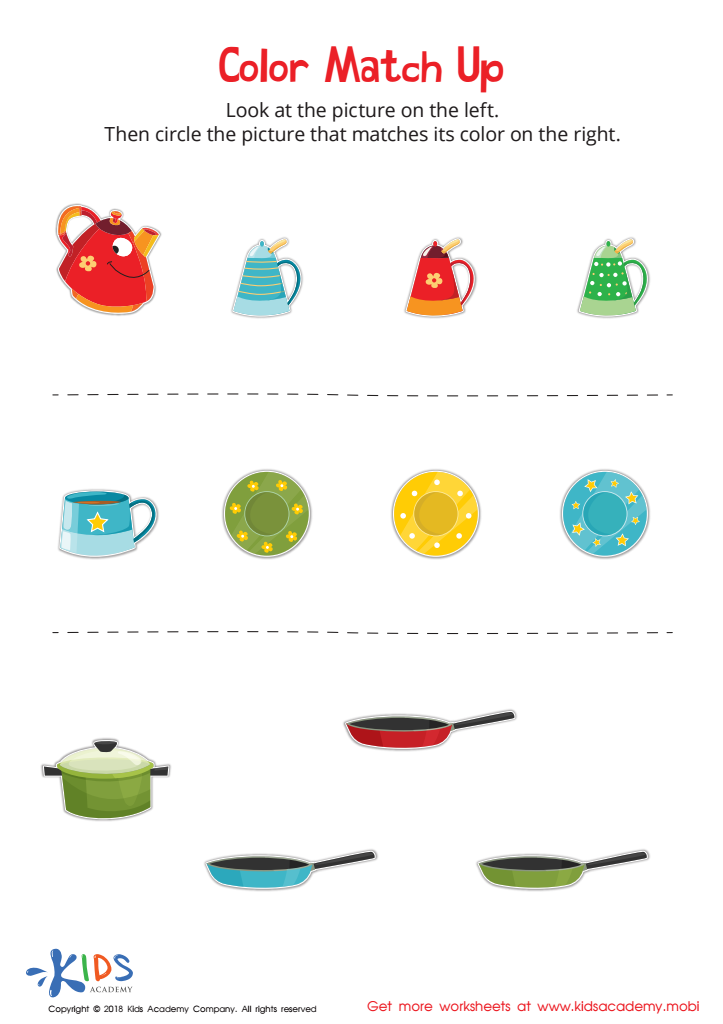
Free Preschool Color Matching Worksheet

Color Match Up Worksheet

Color Match Up Worksheet
Worksheet
Preschool Matching Worksheets

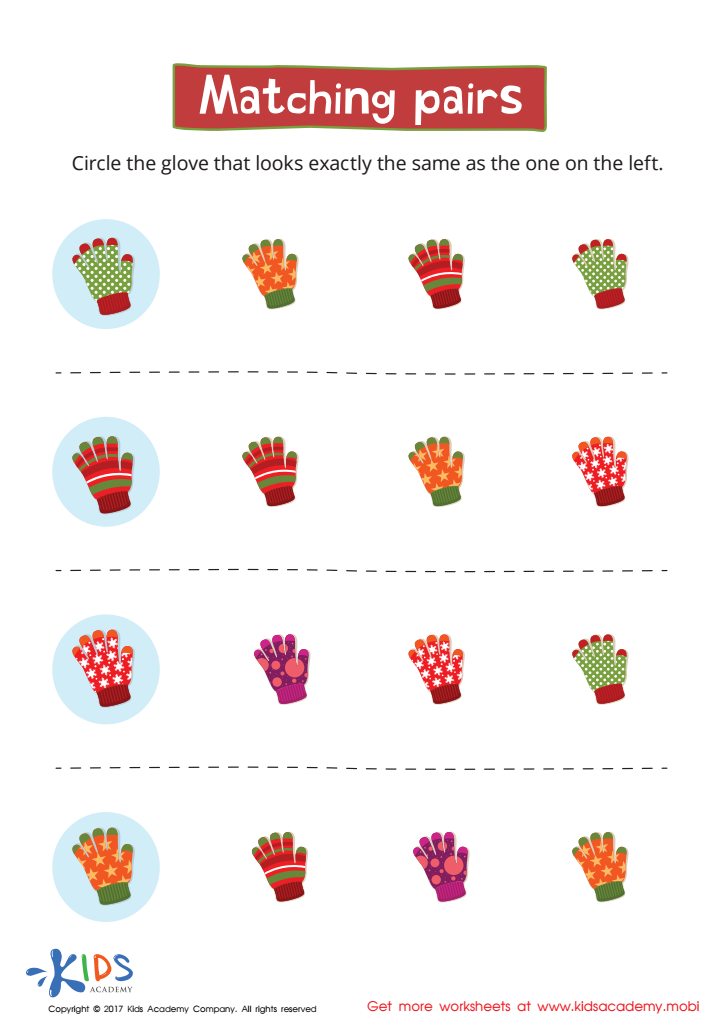
Matching: Matching Pairs Worksheet
Winter's here! Get your child ready with a fun matching worksheet. Challenge them to sort mitten designs, recognize directions, and match mittens in other rows. This helps preschoolers hone problem-solving skills and recognize shapes. Print out more seasonal activities for a diverse summer experience!
Matching: Matching Pairs Worksheet
Worksheet
Food Matching Worksheet

Food Match Up Worksheet

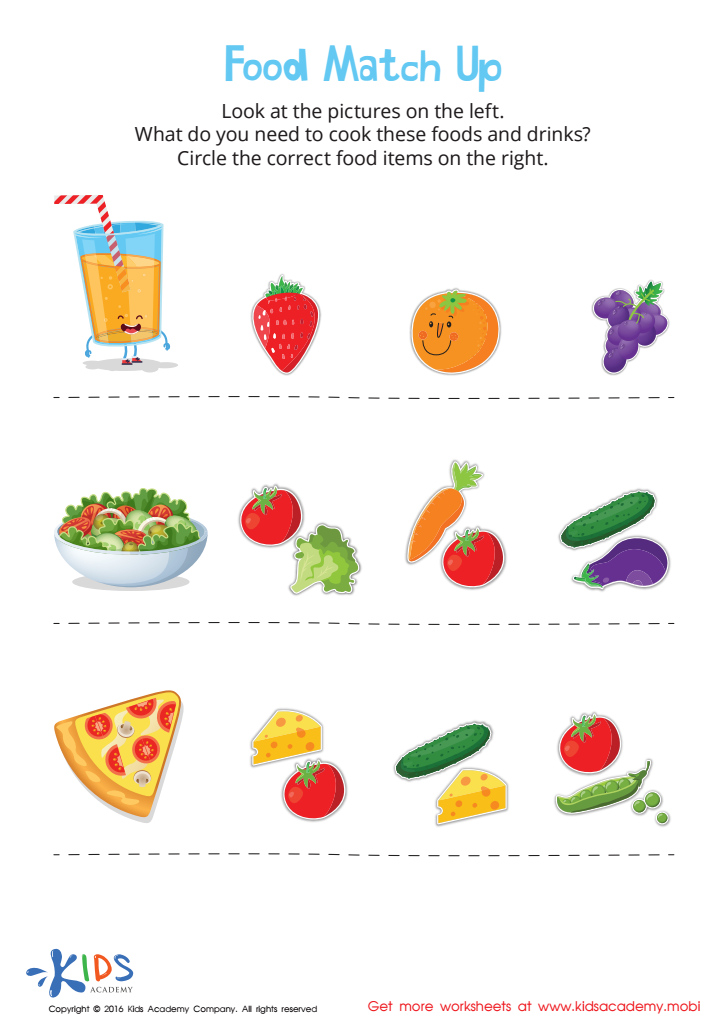
This worksheet will help your preschooler develop early math and cognitive skills. It challenges them to pay attention to details, understand how smaller parts make a whole, and increase important matching skills. Use it to give them a hands-on learning experience in the kitchen, and watch them understand how ingredients come together to make something delicious!
Food Match Up Worksheet
Worksheet
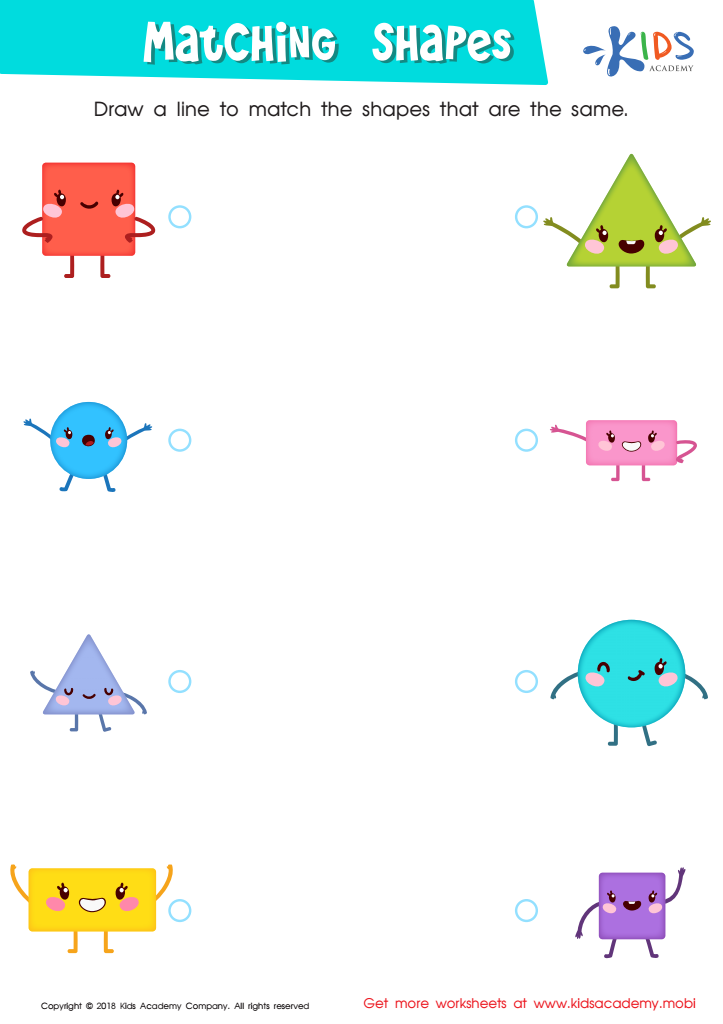
Matching Shapes Worksheet

Matching Shapes Worksheet

Introduce your students to the 4 most common shapes: squares, triangles, rectangles and circles. When they progress, show them other shapes like rhombuses and parallelograms. Use this matching shapes worksheet to help them match two identical shapes. Print out the worksheet and instruct them to draw lines connecting them.
Matching Shapes Worksheet
Worksheet
none
none

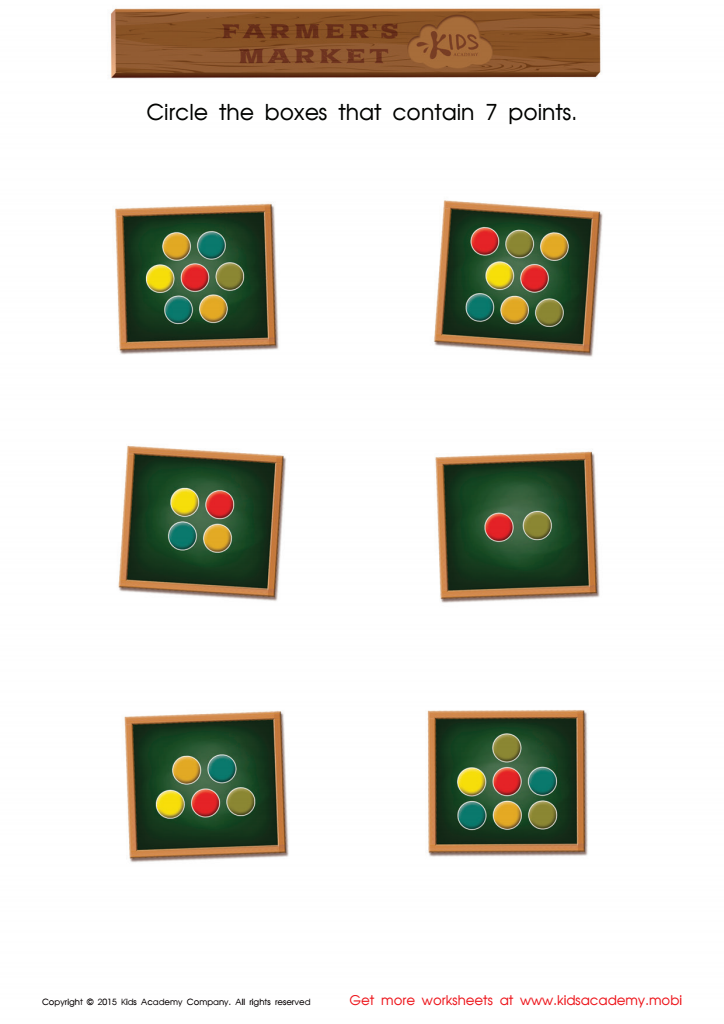
Count and Match Points 7 Math Worksheet
Help your child count and recognize similar numbers by using this fun, colorful worksheet. Guide them to count the dots in each box, then circle those with a total of 7. It's a great way for your child to see how different arrangements lead to the same number.
Count and Match Points 7 Math Worksheet
Worksheet
Bubble Matching Fun Worksheet

Bubble Matching Fun Worksheet

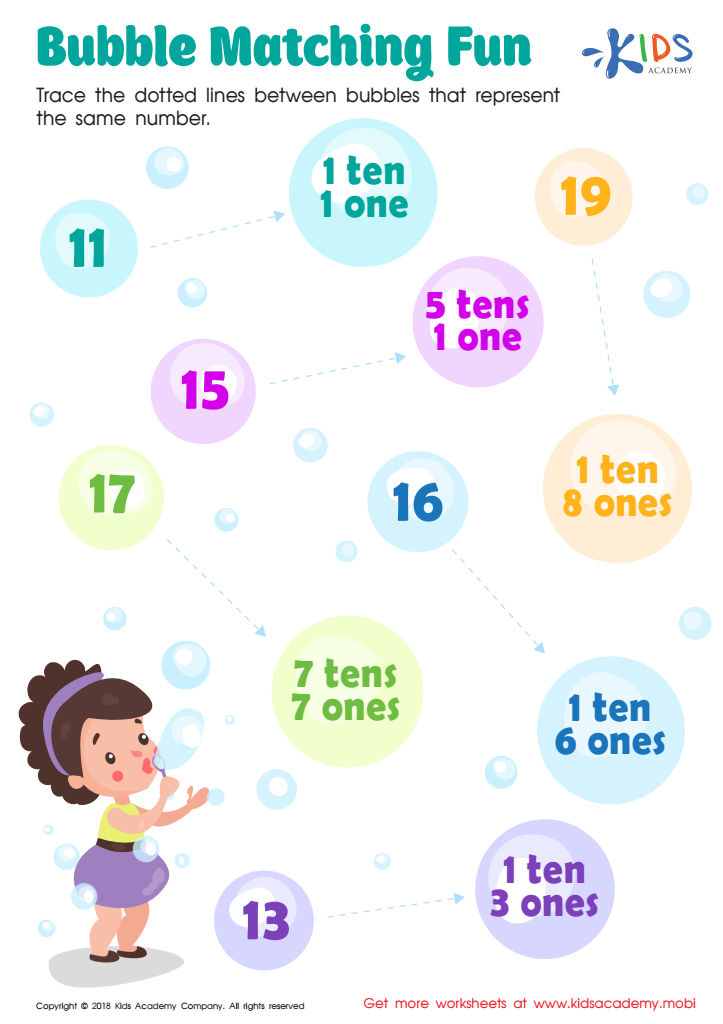
Try this fun worksheet to stimulate your young one's learning! Test their number matching skills by having them trace the dotted lines between bubbles representing the same numbers. Look through the exercise with your child and watch their understanding of how two numbers can add up to the same value grow!
Bubble Matching Fun Worksheet
Worksheet
Matching Numbers to Amounts Worksheet


Matching Numbers to Amounts Worksheet

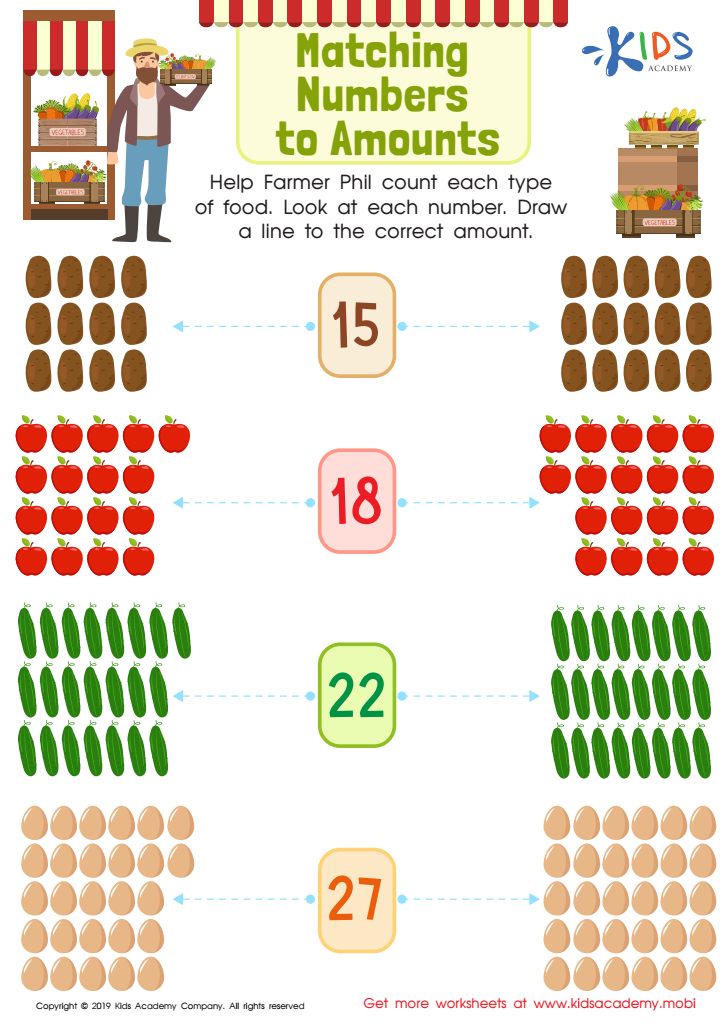
Farmer Phil needs your kid's help! Ensure they know the basics of math such as counting, adding and subtracting. Before beginning, help your child identify and count the different foods in the picture. Then, draw a line to the correct amount.
Matching Numbers to Amounts Worksheet
Worksheet


Parents and teachers should prioritize Matching Skills in early math education for children aged 4-7, as these foundational skills are crucial for cognitive development. Matching Skills help children recognize and categorize objects, which fosters critical thinking and problem-solving abilities. Early mastery of these skills translates to improved numerical understanding, as children learn to associate quantities with symbols, a precursor to more complex math concepts.

Moreover, Matching Skills enhance children's sensory processing and attention to detail, enabling them to make connections between different pieces of information. As children engage in activities involving matching numbers, shapes, and quantities, they develop hand-eye coordination and fine motor skills necessary for writing and more advanced tasks.

Additionally, mastering these skills builds confidence, making children more willing to tackle challenging tasks in the future. By nurturing Matching Skills early on, parents and teachers can lay a solid foundation for mathematical literacy, promoting a positive attitude towards learning.

In a world where computational skills are increasingly essential, ensuring children develop strong Matching Skills early in life prepares them for academic success and future career opportunities in a variety of fields, from engineering to finance. Focusing on these early skills is an investment in a child's lifelong learning journey.