Problem-Solving Skills Normal Math Worksheets for Ages 4-7 - Page 3
50 filtered results
-
From - To
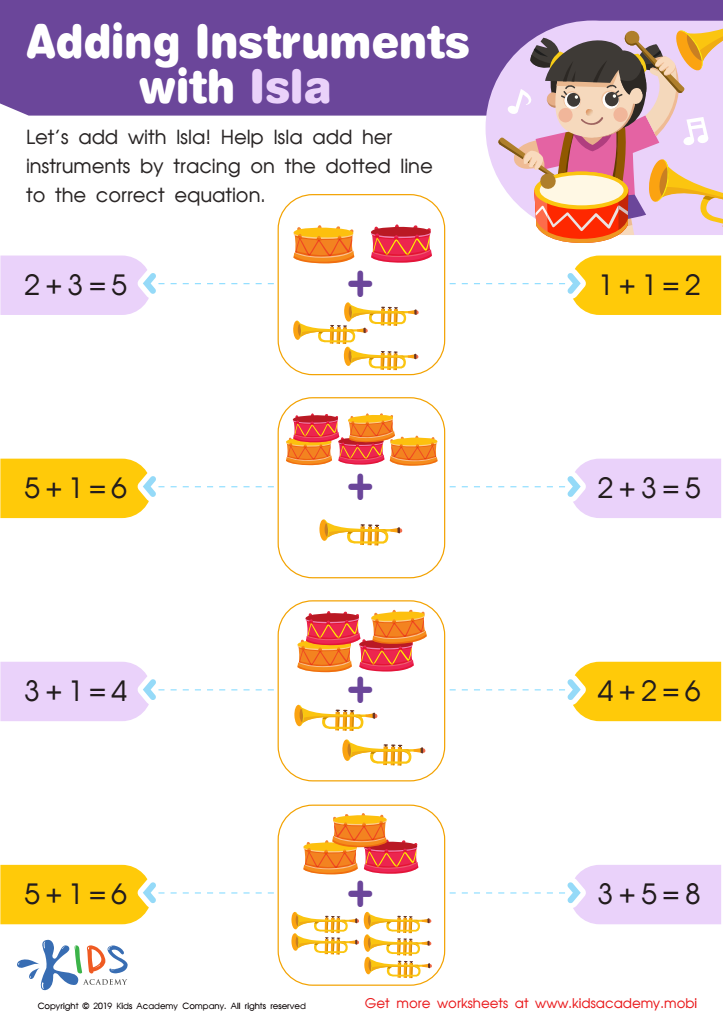
Adding Instruments with Isla Worksheet
 Assign to My Students

Time to Catch the Train Part 2 Worksheet








Problem-solving skills in early math education are crucial for children aged 4-7 because they lay the foundation for future learning and critical thinking. At this age, children are naturally curious and eager to explore their environment, making it an ideal time to introduce mathematical concepts through problem-solving activities.
When parents or teachers focus on these skills, they help children develop a growth mindset, enabling them to approach challenges with confidence and resilience. Engaging in problem-solving encourages children to think critically and creatively, fostering skills such as reasoning, planning, and perseverance. Moreover, these skills promote collaboration and communication, as children often work in groups to discuss and solve problems.
Strong problem-solving abilities instill a love for mathematics, making it less intimidating and more enjoyable. As children learn to find solutions and identify patterns, they improve their cognitive function, which supports learning in other disciplines as well. By nurturing problem-solving skills in early math, parents and teachers help build a strong educational foundation, equipping children with the tools they need to become lifelong learners and successful individuals in an increasingly complex world. Therefore, investing time and effort into developing these skills is essential for shaping well-rounded, capable learners.








