Understanding patterns Normal Math Worksheets for Ages 4-7
5 filtered results
-
From - To
Explore our engaging "Understanding Patterns Normal Math Worksheets" designed especially for children aged 4-7. These printables provide a fun and interactive way to introduce young learners to essential pattern recognition skills. With a variety of colorful and captivating activities, kids will stay motivated while honing their ability to identify and create patterns. Perfect for use in the classroom or at home, our worksheets support early math development and build a strong foundation for future learning. Download today and give your child a head start in math with worksheets that make learning both enjoyable and effective!
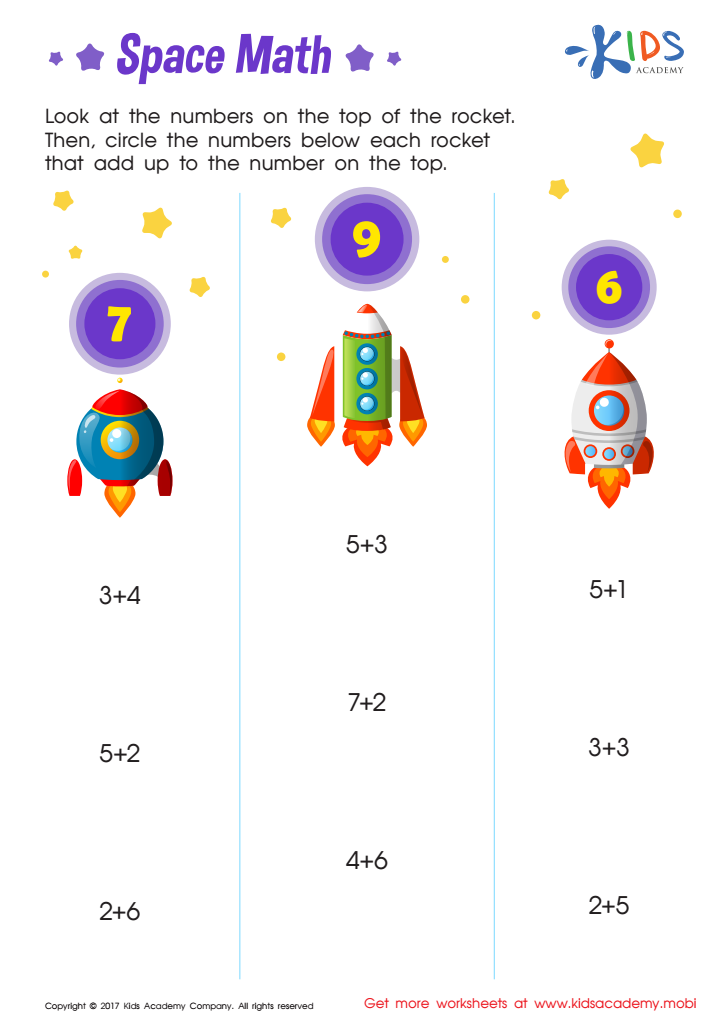
Addition: Space Math Worksheet
 Assign to My Students
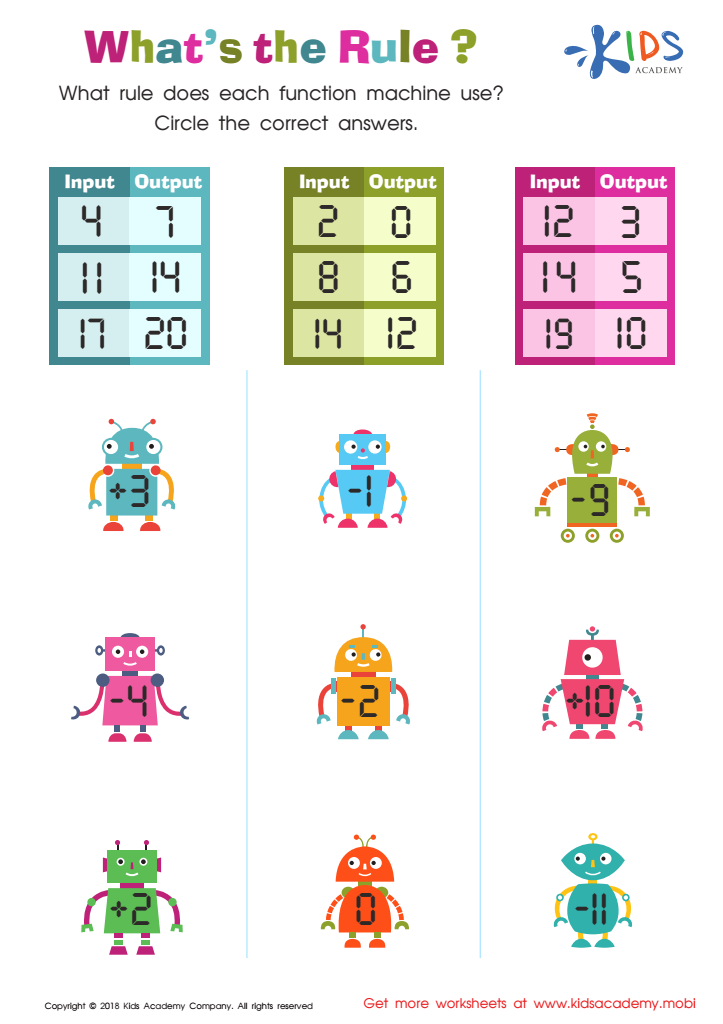
What's the Rule Worksheet
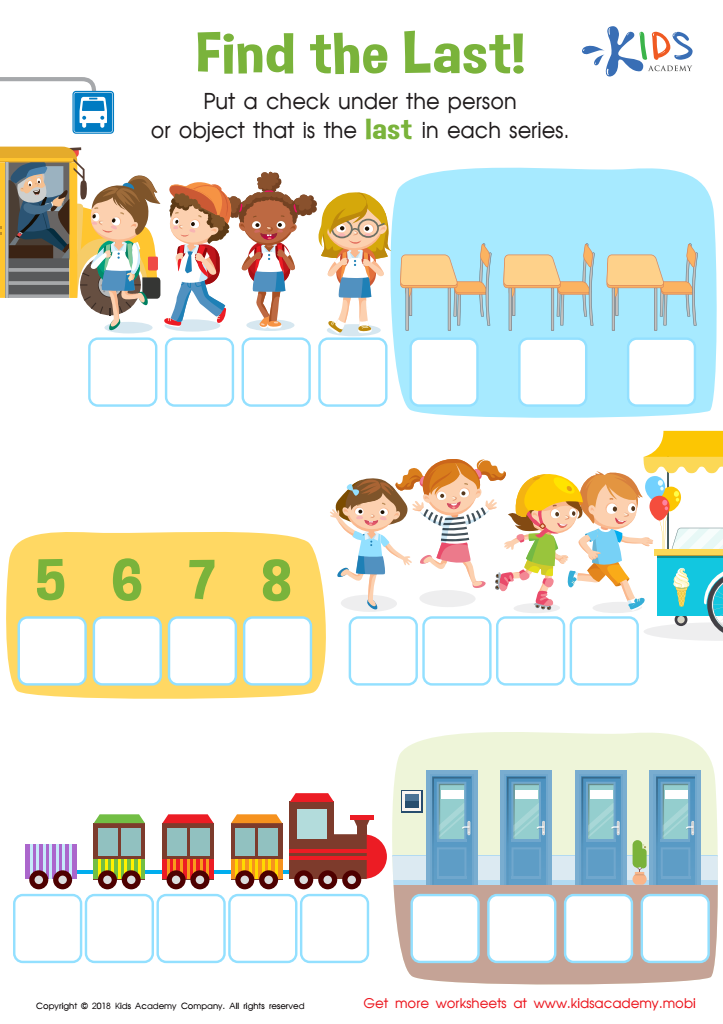
Find the Last! Worksheet
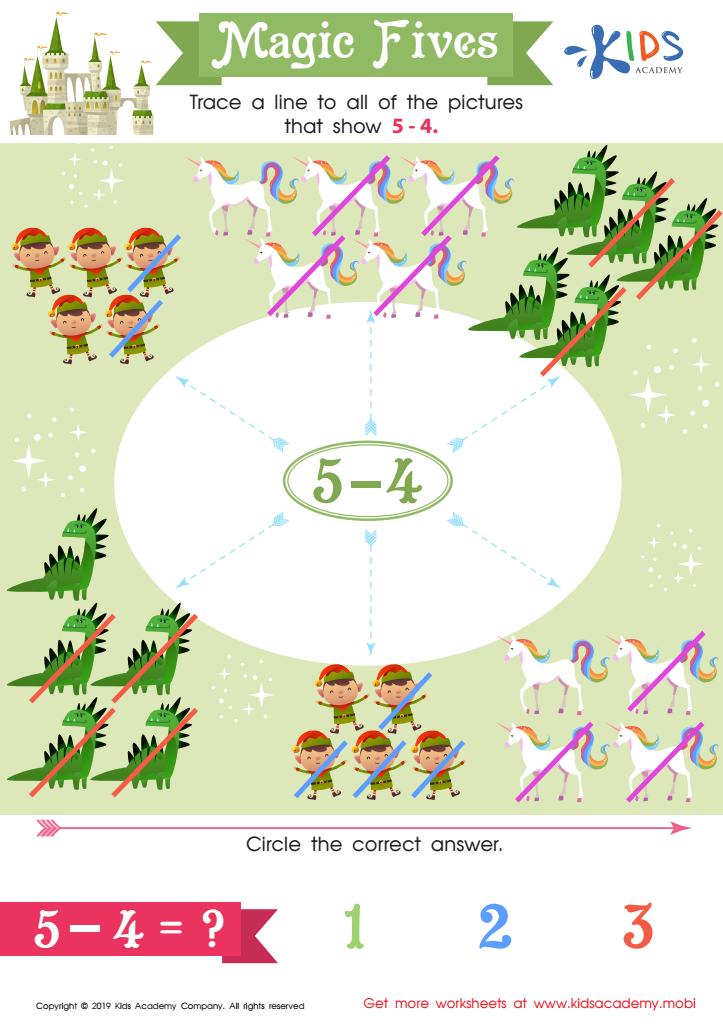
Magic Fives Worksheet
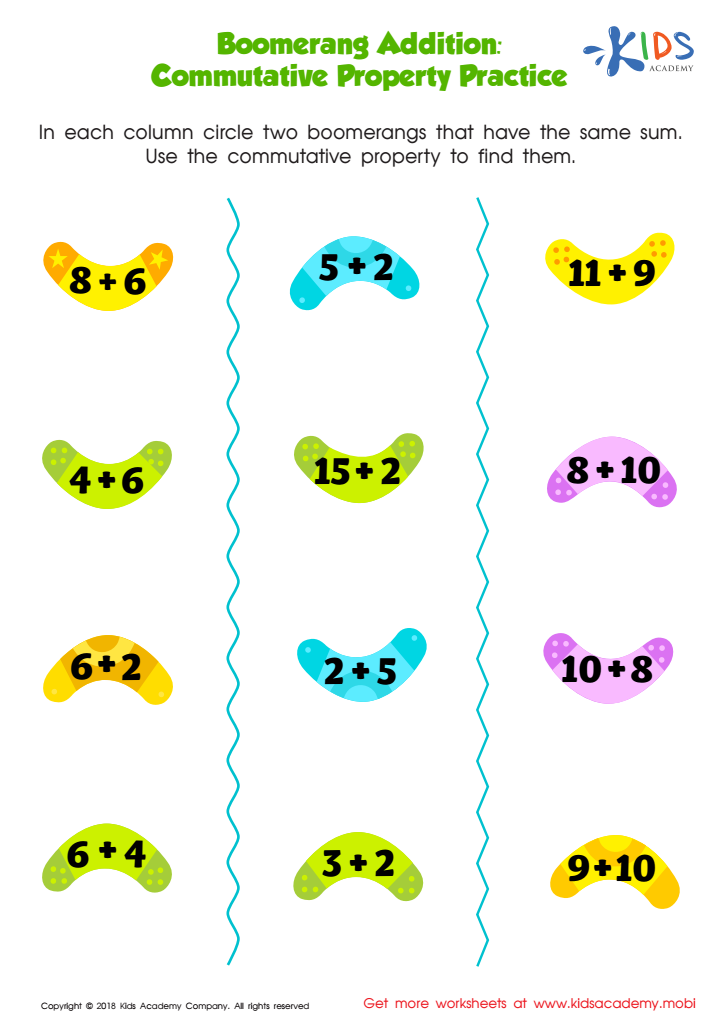
Boomerang Addition Worksheet






.jpg)
Understanding patterns in math is crucial for young children aged 4-7 because it forms the foundation for their future mathematical thinking and problem-solving skills. Patterns help children recognize order and predictability in their world, which are essential cognitive processes.
Firstly, identifying patterns nurtures a child's ability to observe and organize information logically, fostering their analytical thinking. For instance, spotting a sequence like red-blue-red-blue in blocks trains their attention to detail and sequencing skills, which are vital not only in math but across other subjects and everyday life.
Secondly, understanding patterns is directly connected to essential math concepts such as counting, addition, and subtraction. Recognizing numerical patterns can aid in grasping the idea of skip counting, understanding odd and even numbers, and later more complex operations like multiplication and division.
Moreover, pattern recognition builds problem-solving abilities, as children learn to make predictions and form conclusions based on identified regularities. This develops critical-thinking skills necessary for advanced math and science.
Additionally, engaging with patterns supports language development through the practice of describing and explaining sequences, and boosts creativity by encouraging children to create their own patterns.
Given these benefits, parents and teachers should ensure children are exposed to and understand patterns to enhance their mathematical foundation and cognitive development during these formative years.








