
Animal Classification Normal Sorting Worksheets for Ages 4-7
3 filtered results
Difficulty Level
Grade
Age
-
From - To
Subject
Activity
Standards
Discover our engaging Animal Classification Normal Sorting Worksheets designed for children ages 4-7! These worksheets aim to enhance early learning by introducing kids to the fascinating world of animal classification. Through playful sorting activities, your little learners will differentiate between various animal groups, fostering critical thinking and observation skills. The colorful illustrations and simple instructions make learning fun and accessible, ensuring a captivating educational experience. Perfect for classroom use or at-home learning, these worksheets promote cognitive development while sparking children's curiosity about wildlife. Explore our collection and give your child the tools they need to thrive in this essential learning stage!
Favorites
With answer key
Interactive
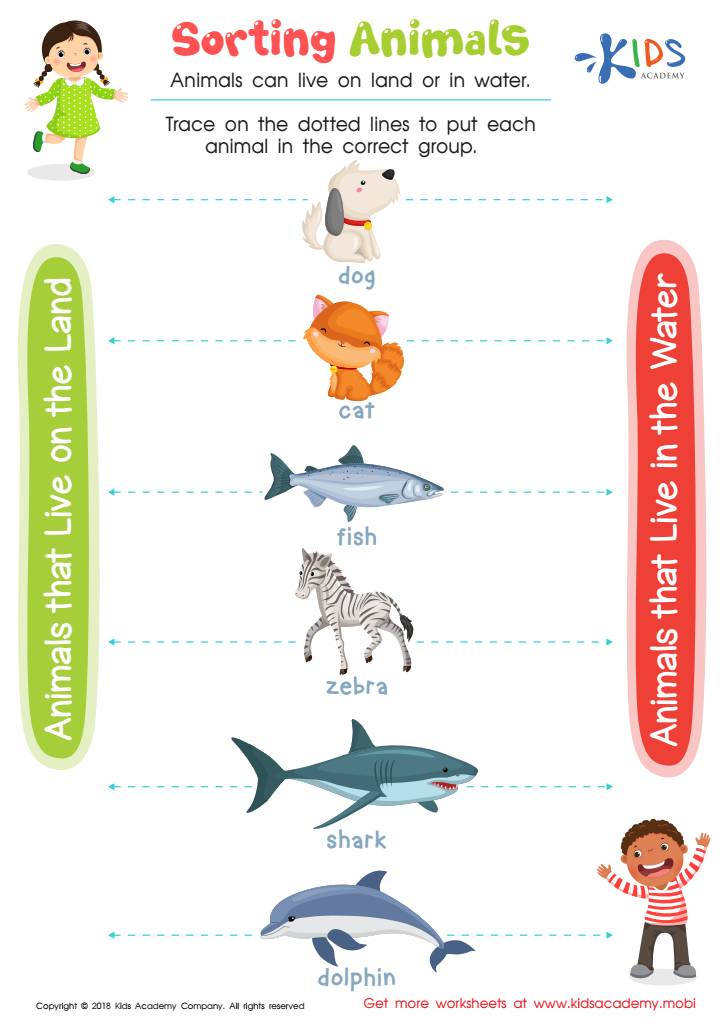
Sorting Animals Worksheet
Your kids will love this free, interactive worksheet! With image clues, they can read and trace the animal names, and then sort them into groups of land or water animals. It's an enjoyable way to boost their critical thinking, fine motor and prior knowledge skills.
 Assign to My Students
Sorting Animals Worksheet
Worksheet
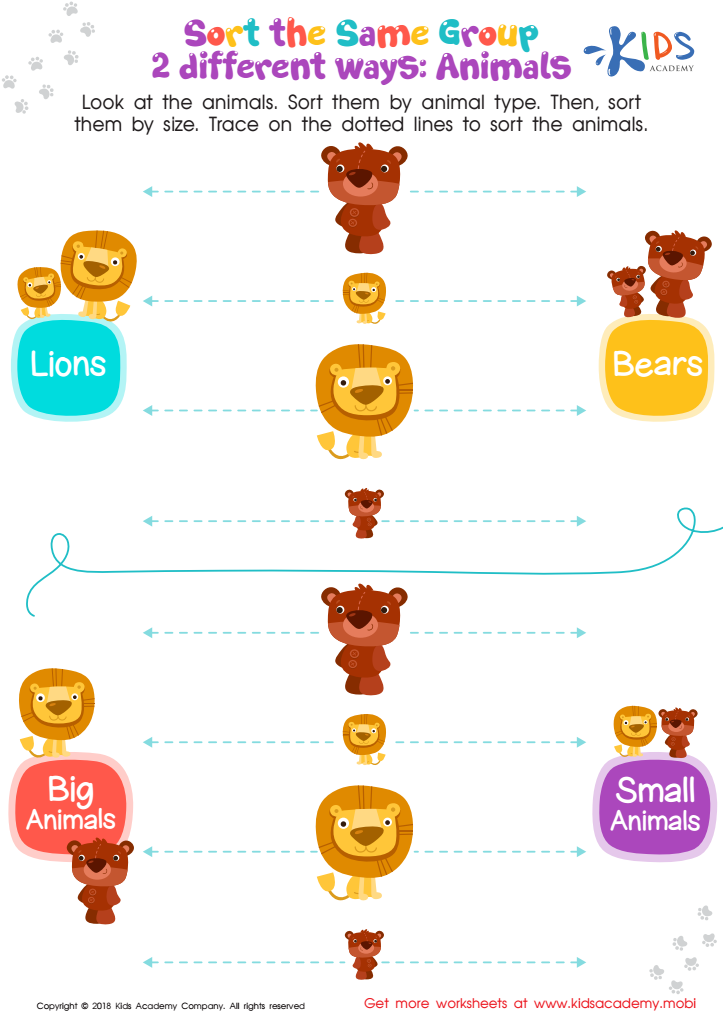
Sort the Same Group 2 Different Ways: Animals Worksheet
Look at the animals with your child. Ask them to name them, then sort them by type (e.g. lions and bears). Next, help them sort by size, tracing the dotted lines. This will teach them sorting skills.
Sort the Same Group 2 Different Ways: Animals Worksheet
Worksheet
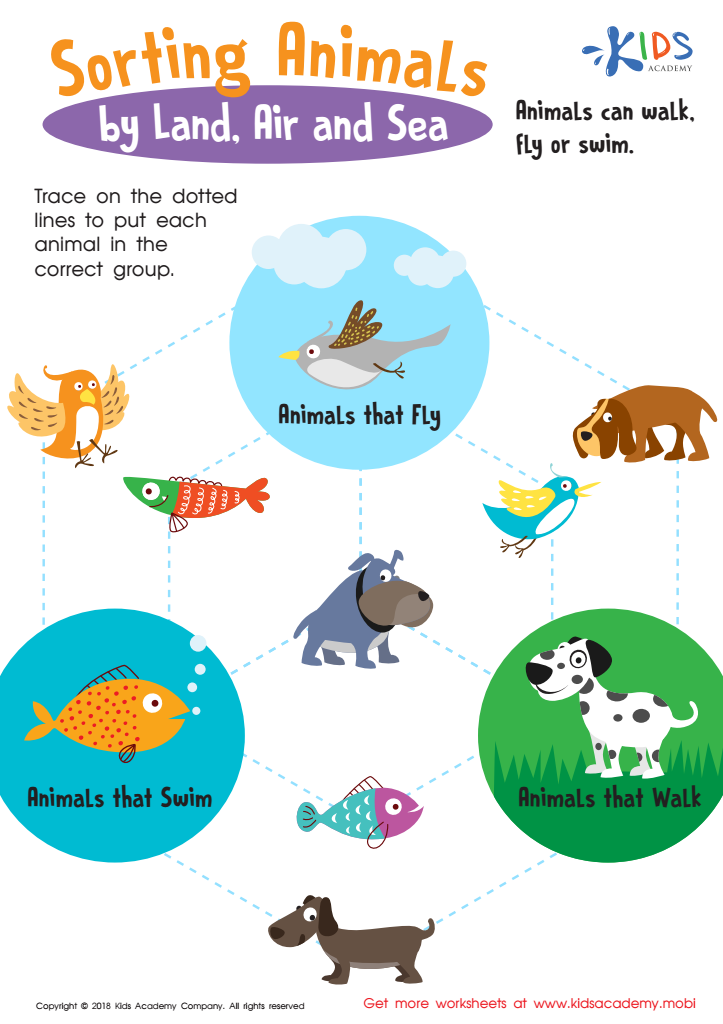
Sorting Animals by Land, Air and Sea Worksheet
Kids will use critical thinking and fine motor skills with this worksheet! They'll analyze animal traits and draw lines to sort them into groups of those that fly, swim, or walk. It's a fun way to hone skills and have a great time!
Sorting Animals by Land, Air and Sea Worksheet
Worksheet
Join Kids Academy for Free
Who is primarily going to use this learning content?







Animal Classification Normal Sorting is a vital educational activity for children aged 4-7, promoting both cognitive and social development. At this age, children are naturally curious about the world around them, and classifying animals enhances their observational skills and critical thinking. Understanding how to sort animals into categories—such as mammals, reptiles, birds, and amphibians—helps children grasp the concept of classification, making complex biological concepts more relatable and digestible.
Engaging in animal sorting activities also fosters vocabulary development, as children learn specific terminology related to animal traits and habitats. This not only boosts language skills but encourages discussions about the environment, ecosystems, and animal behaviors, enriching their knowledge base.
Furthermore, these activities often incorporate playful elements that enhance social interaction, teamwork, and communication skills. When children work in pairs or groups to classify animals, they learn to share ideas, negotiate, and collaborate—skills essential for future academic and personal relationships.
For parents and teachers, nurturing these skills through animal classification fosters a love for learning and curiosity about nature. By providing a structured yet playful way to explore the animal kingdom, adults empower children to develop a profound appreciation and respect for biodiversity from an early age.








