Developing critical thinking Normal Science Worksheets for Ages 4-7
3 filtered results
-
From - To
Discover our engaging "Developing Critical Thinking Normal Science Worksheets" designed for children aged 4-7! These worksheets encourage young learners to explore scientific concepts while enhancing their critical thinking skills. Through fun activities and interactive prompts, kids will learn to ask questions, make observations, and draw conclusions based on their findings. Perfect for parents and educators, our printable worksheets promote curiosity and creativity, allowing children to develop essential analytical skills in a playful environment. Whether at home or in the classroom, these engaging resources are ideal for nurturing a lifelong love of science and learning. Start your child's journey today!
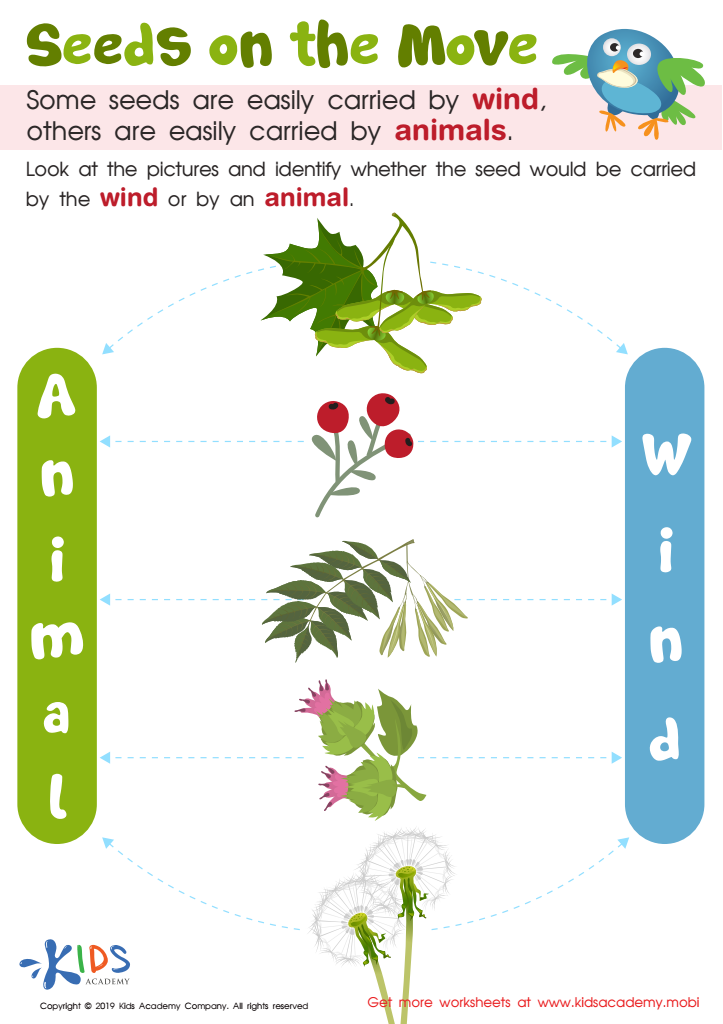
Seeds on the Move Worksheet
 Assign to My Students
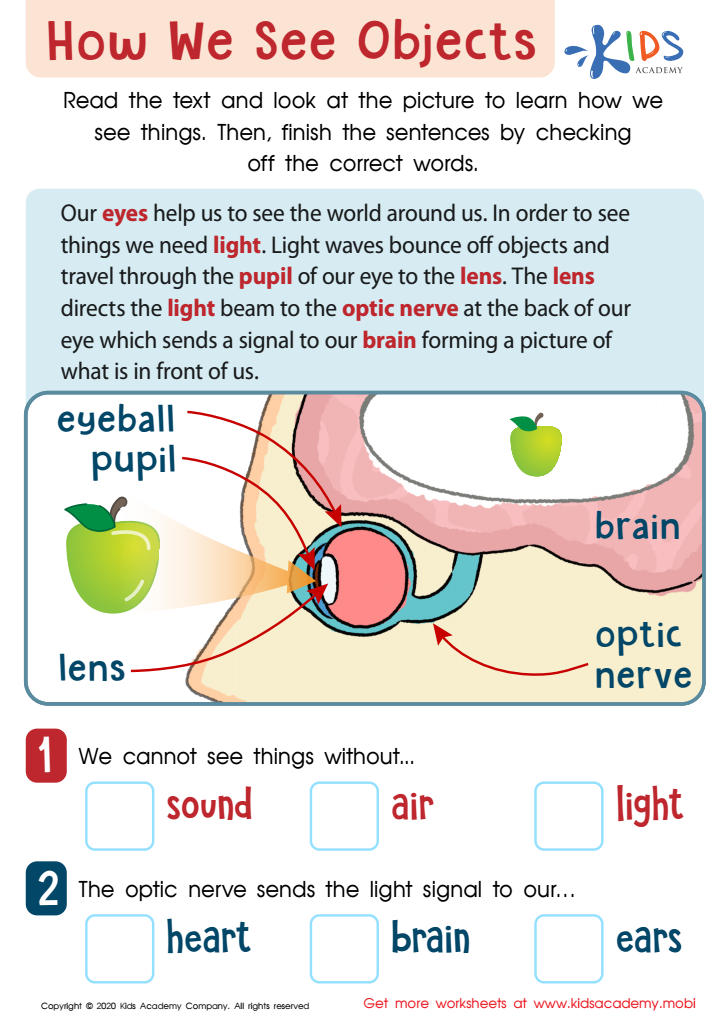
How We See Objects Worksheet
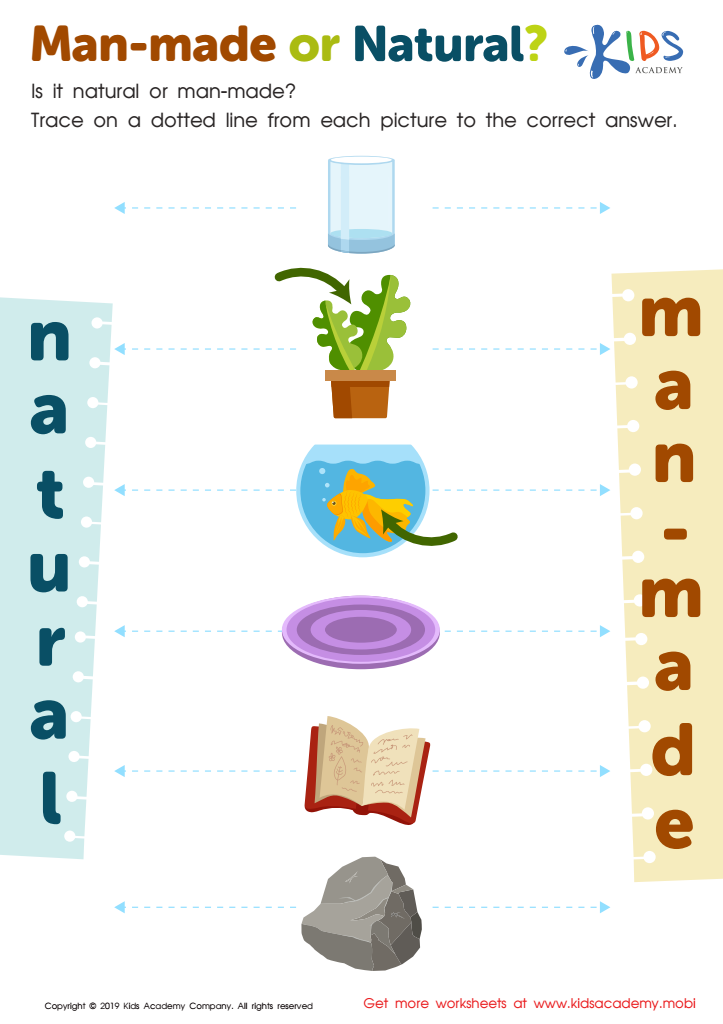
Man-Made or Natural? Worksheet







Developing critical thinking skills in young children, particularly in the context of Normal Science, is essential for fostering their innate curiosity and understanding of the world. Between ages 4 and 7, children are in a critical developmental phase where they begin to form cognitive abilities that will shape their future learning and problem-solving capabilities. Teaching them to think critically about scientific concepts helps them learn how to observe, question, experiment, and draw conclusions.
Critical thinking nurtures a child's ability to analyze information rather than accepting it at face value, which is vital in our information-rich society. It promotes scientific literacy, vital not only for future academic success but also for making informed decisions in everyday life. When parents and teachers prioritize science inquiry at this stage, they instill an appreciation for the scientific method, encouraging children to engage in systematic exploration and reasoning.
Moreover, fostering critical thinking can enhance social skills like collaboration and communication, as children discuss and reflect on their findings. In a world that increasingly values innovation and problem-solving, equipping young learners with these skills can lead to greater confidence and competence in navigating future challenges, laying a strong foundation for lifelong learning.







