
Geography knowledge Normal Science Worksheets for Ages 4-7
3 filtered results
Difficulty Level
Grade
Age
-
From - To
Subject
Activity
Standards
Explore our engaging Geography Knowledge Normal Science Worksheets designed specifically for children aged 4-7. These worksheets make learning about the world fun and interactive, allowing young learners to discover basic geographical concepts through colorful illustrations and age-appropriate activities. From identifying landforms and continents to understanding maps and habitats, our resources support early childhood education and spark curiosity about the environment. Perfect for classrooms and home learning, each worksheet aims to develop essential skills in geography while promoting creativity and critical thinking in young minds. Start your child’s geographical journey today with our engaging and educational worksheets!
Favorites
With answer key
Interactive
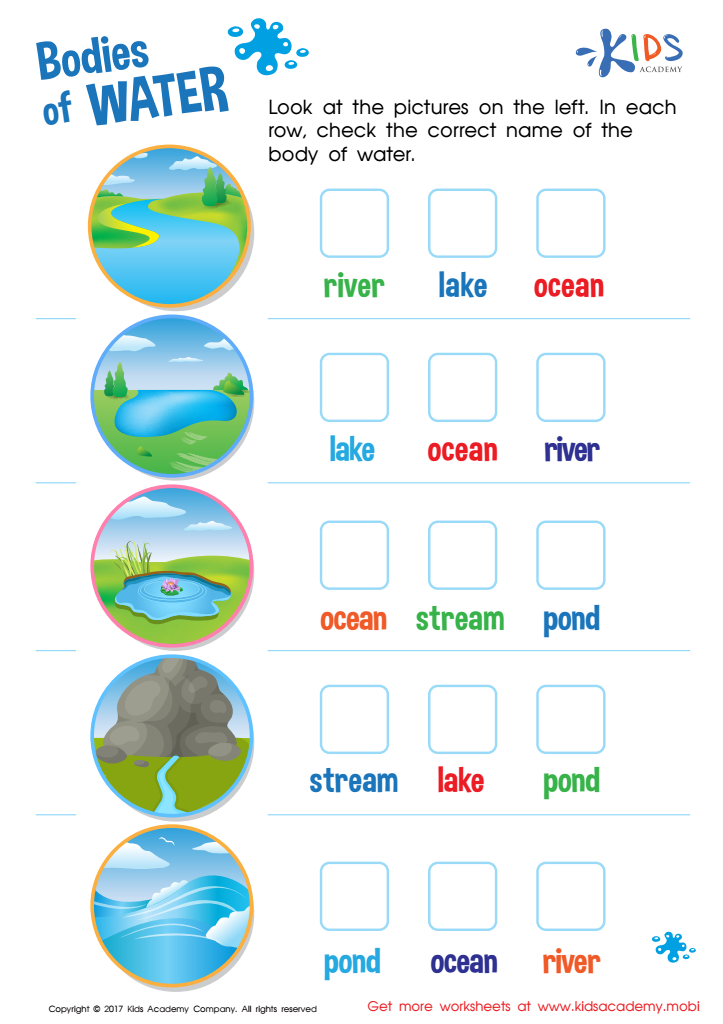
Bodies of Water Worksheet
From oceans to streams, our planet is filled with different types of waterways. Show your child how to recognize them using this bodies of water worksheet PDF. It has vivid illustrations to help your kid learn without leaving home.
 Assign to My Students
Bodies of Water Worksheet
Worksheet
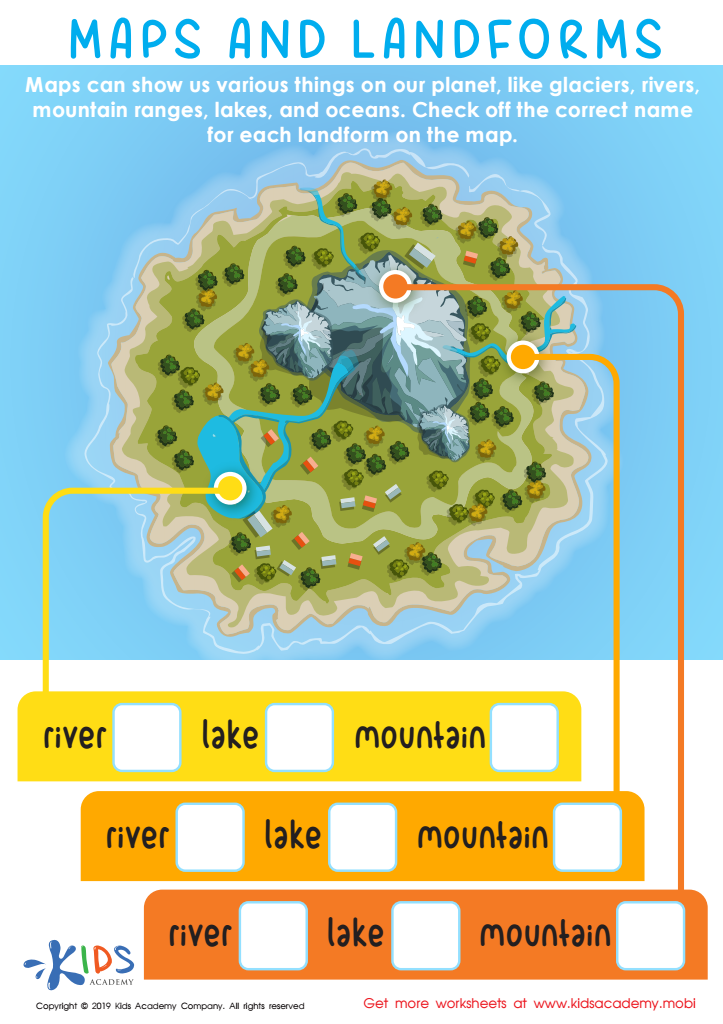
Maps and Landforms Worksheet
We can educate our kids on the world and its landforms by showing them a map. Point out mountains, rivers, and oceans, and help them identify each correctly. With this knowledge, they will better understand our planet.
Maps and Landforms Worksheet
Worksheet
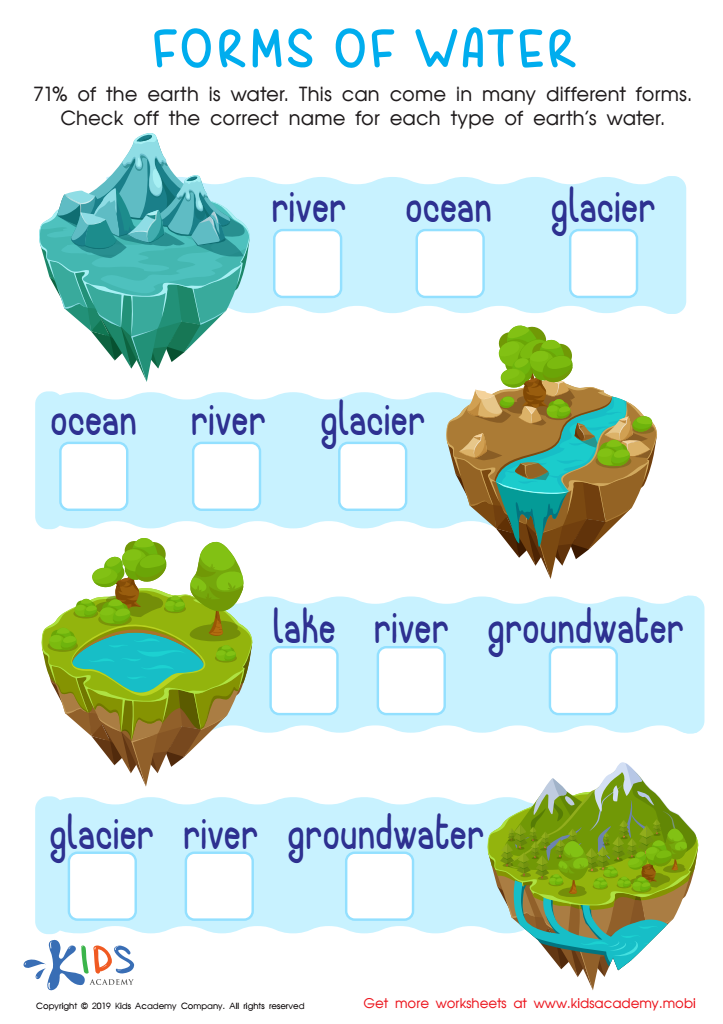
Forms of Water Worksheet
Life on Earth needs water to survive. Luckily, water makes up 75% of the Earth's surface and comes in various forms such as rivers, oceans and lakes. Ask your kids to name other forms and use this worksheet to help them identify each type.
Forms of Water Worksheet
Worksheet
Join Kids Academy for Free
Who is primarily going to use this learning content?





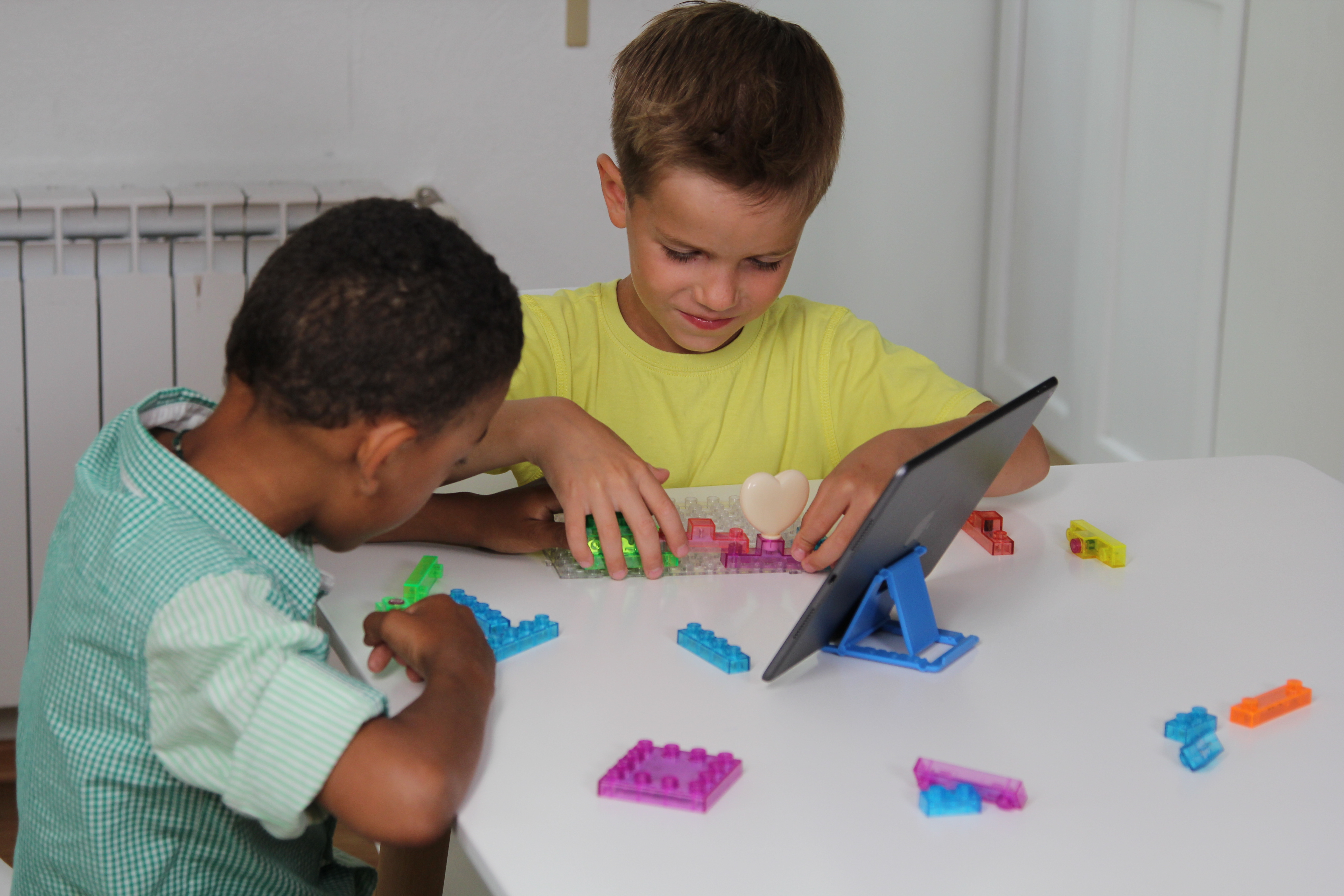

Geography knowledge is essential for children aged 4-7, as it lays the foundation for understanding their place in the world. At this early age, children are naturally curious about their surroundings. Introducing concepts of geography nurtures this curiosity, helping them make sense of different places, cultures, and environments. Through geography, kids learn about maps, globes, landscapes, and the diverse communities that exist, fostering a sense of connection and belonging.
This knowledge enhances critical thinking skills, enabling children to relate to their immediate environment and recognize their relationship with the wider world. It encourages awareness of global issues, such as climate change and cultural diversity, promoting empathy and respect for others. Furthermore, exploring geography aids language development and boosts literacy as children engage with new vocabulary and concepts.
For parents and teachers, fostering geography knowledge is a proactive way to promote spatial awareness and cognitive development. Children who engage with geographical concepts at a young age are better prepared for future studies in social sciences, environmental literacy, and critical thinking. Ultimately, investing time in geography knowledge helps shape informed, responsible, and empathetic global citizens, empowering children to navigate and positively contribute to an interconnected world.







