Science knowledge Normal Science Worksheets for Ages 4-7
3 filtered results
-
From - To
Unlock your child's curiosity with our "Science Knowledge Normal Science Worksheets" designed specifically for ages 4-7. Our engaging activities introduce young minds to the wonders of science through exploration and fun exercises. Each worksheet nurtures budding scientists with age-appropriate topics like nature, weather, animals, and simple experiments, fostering critical thinking and problem-solving skills. Perfect for parents and educators, our collection provides a solid foundation in science knowledge, encouraging a lifelong love for discovery. Explore our range of worksheets to make learning science an exciting adventure for your little ones!
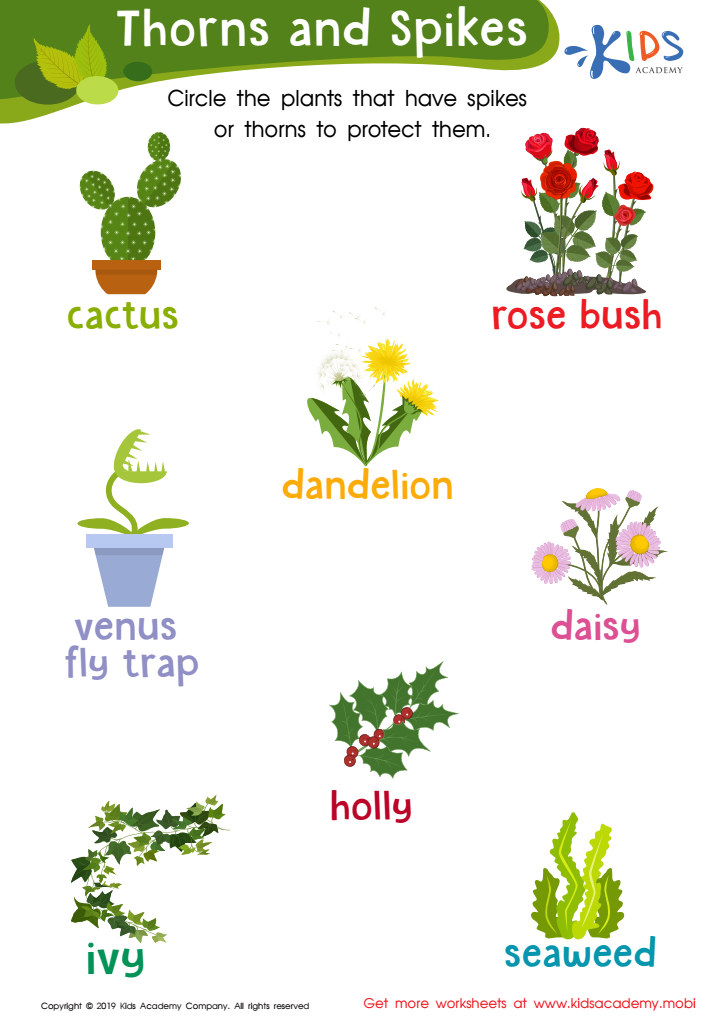
Thorns and Spikes Worksheet
 Assign to My Students
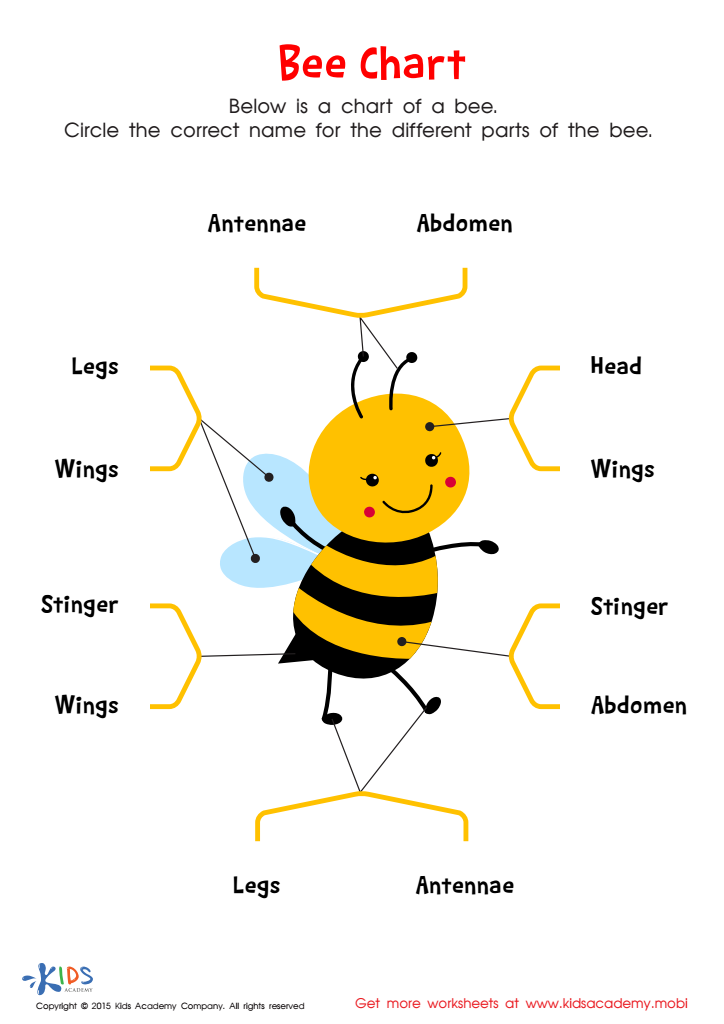
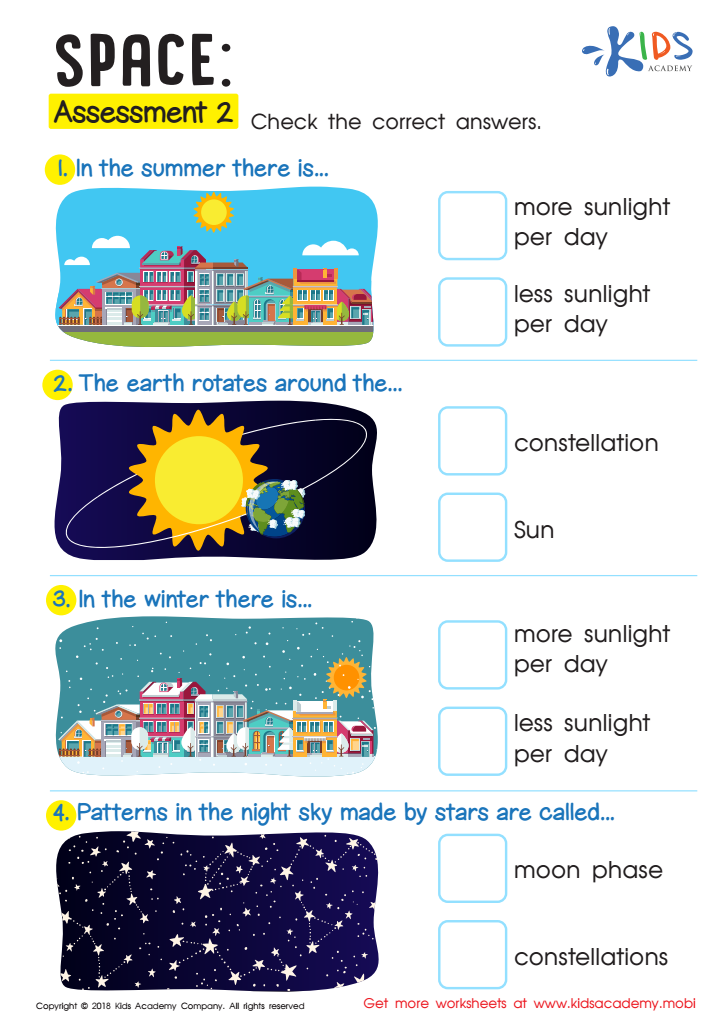
Space: Assessment 2 Worksheet






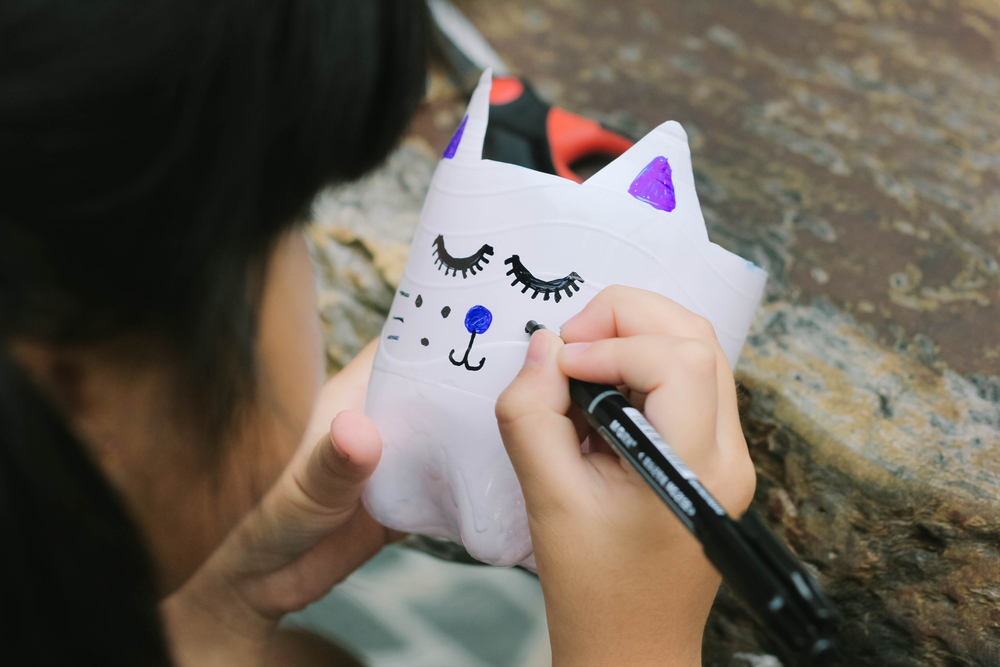
Fostering an understanding of science among children aged 4-7 is crucial for several compelling reasons. At this formative stage, children's natural curiosity about the world around them is at its peak, making it an ideal time to introduce the foundational concepts of science. Early exposure helps stimulate inquisitive thinking, encouraging youngsters to ask questions, make observations, and seek explanations — essential skills for lifelong learning and problem solving.
Moreover, an early grasp of scientific principles lays the groundwork for more complex ideas they will encounter later. When children learn about basic phenomena, such as gravity, plant growth, or simple chemical reactions, they start to develop critical thinking and logical reasoning skills. These abilities are valuable not only in future science classes but also in daily life and other academic disciplines.
Teachers and parents should also recognize that early science education helps foster a sense of environmental stewardship and responsibility. Children who learn about ecosystems, weather, and our planet's resources are more likely to grow into adults who care about and contribute positively to the world around them.
Furthermore, hands-on experiments and interactive learning make science engaging and fun, fostering a love of learning. Cultivating this enthusiasm early can lead to greater academic motivation and achievement in the long run.







