Understanding landforms Normal Science Worksheets for Ages 4-7
3 filtered results
-
From - To
"Understanding Landforms Normal Science Worksheets for Ages 4-7" by Kids Academy offers engaging and educational resources to help young learners explore the Earth's diverse landscapes. Designed specifically for ages 4-7, these printable worksheets introduce children to various landforms, such as mountains, valleys, lakes, and rivers, through interactive activities and captivating visuals. Students will build foundational knowledge in geography and earth science while developing critical thinking and observation skills. Ideal for classroom use or homeschooling, these worksheets provide a fun and meaningful way to foster curiosity and a love for the natural world in early learners.
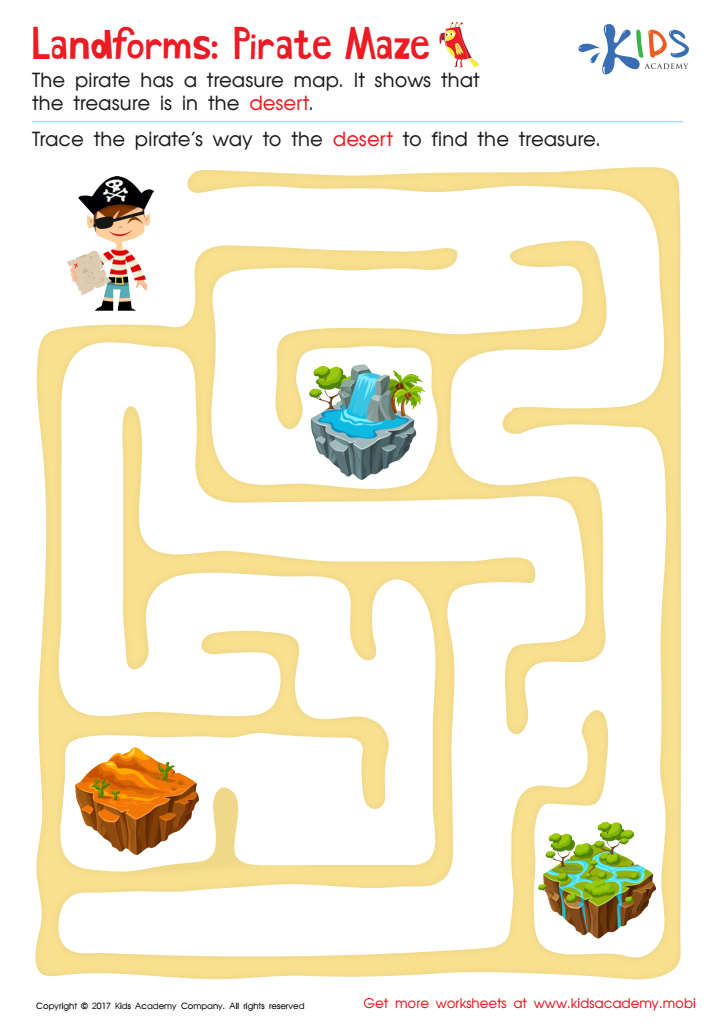
Landforms: Pirate Maze Printable
 Assign to My Students
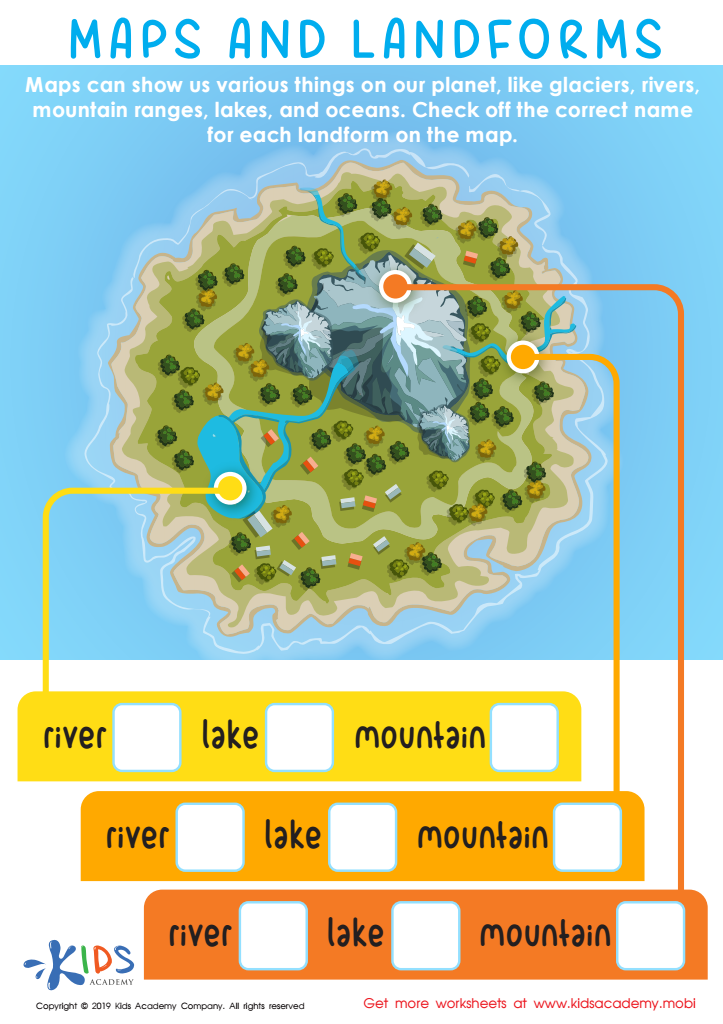
Maps and Landforms Worksheet
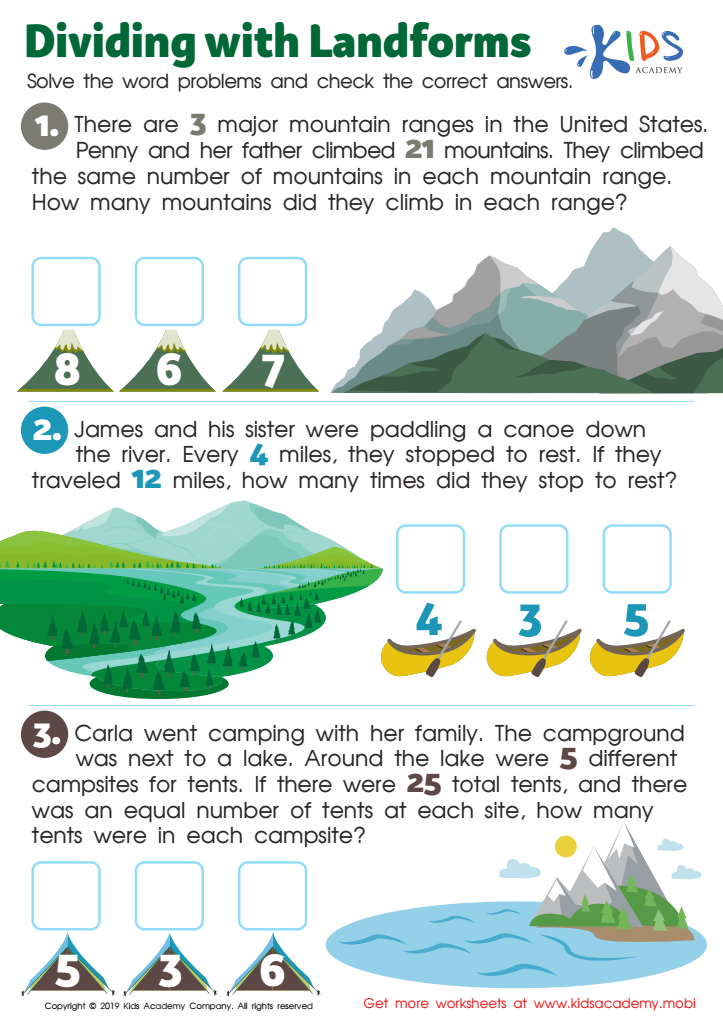
Dividing with Landforms








Understanding landforms is essential for young children because it lays the foundation for their comprehension of the natural world. Landforms such as mountains, valleys, plains, and hills are a part of our everyday surroundings and play a significant role in how we interact with our environment. Teaching children about these concepts early in life fosters curiosity and awareness about the earth, paving the way for more complex geographic, scientific, and environmental studies later on.
For parents and teachers, incorporating landform education for children aged 4-7 is crucial because it aids in developing vocabulary and language skills as children learn specific terms and descriptions. This not only enhances their speaking and reading abilities but also boosts cognitive development through classification and comparative thinking.
Additionally, understanding landforms supports the development of spatial awareness. It helps children make sense of maps and globes, setting a groundwork for geographic literacy. Engaging with these concepts through interactive activities and exploration cultivates ecological awareness and can foster a love for nature.
Moreover, learning about landforms promotes a sense of global awareness and cultural sensitivity. As children learn about diverse landforms around the world, they gain insights into different environments and ways of life, encouraging empathy and a broader worldview.
In essence, introducing landform concepts to young learners is a step toward building informed, engaged, and ecologically responsible citizens.







