Critical Thinking Normal Plants and Animals Worksheets for Ages 4-7
5 filtered results
-
From - To
Unlock your child’s potential with our engaging Critical Thinking Normal Plants and Animals Worksheets, designed specifically for ages 4-7. These interactive printable resources introduce young learners to essential concepts in nature while enhancing their critical thinking skills. From identifying various plants and animals to exploring their habitats and characteristics, each worksheet encourages children to think independently and creatively. Perfect for home or classroom use, our worksheets are tailored to foster curiosity and support early science education. Start your child on a path of discovery and inquiry—download our fun, informative critical thinking worksheets today!
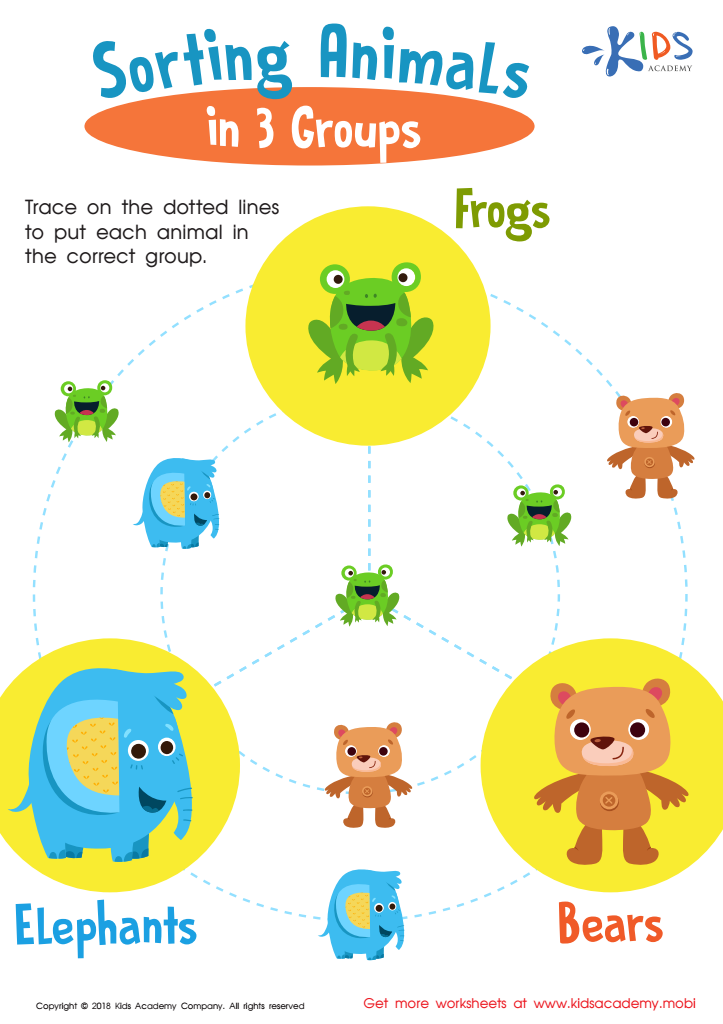
Sorting Animals in 3 Groups Worksheet
 Assign to My Students











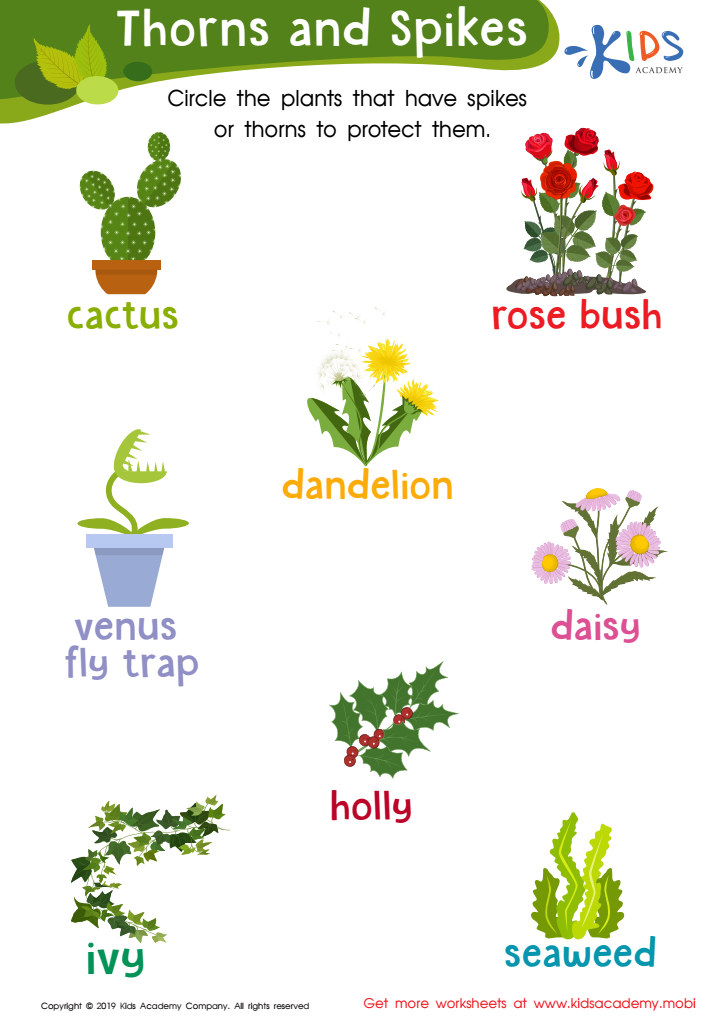
Thorns and Spikes Worksheet
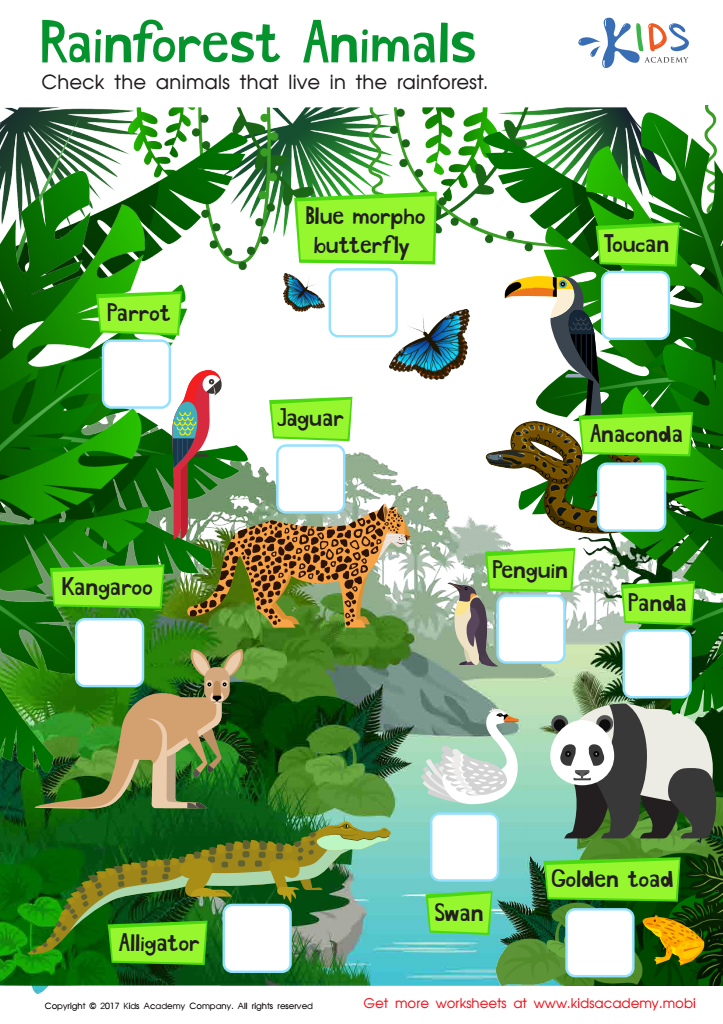
Rainforest Animals Worksheet
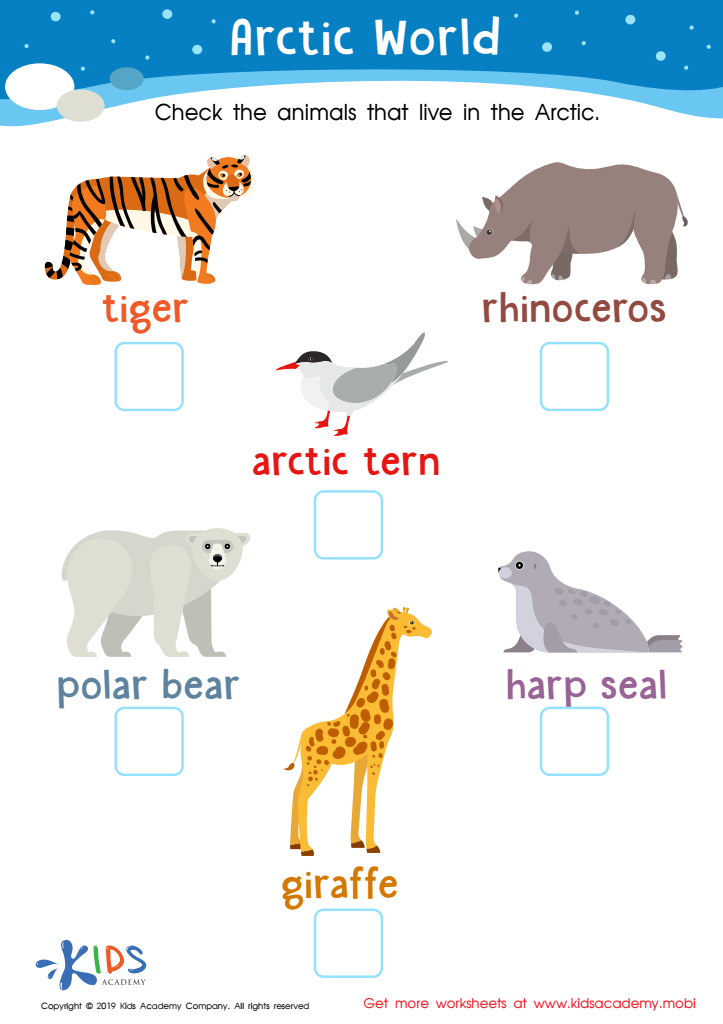
Arctic World Worksheet
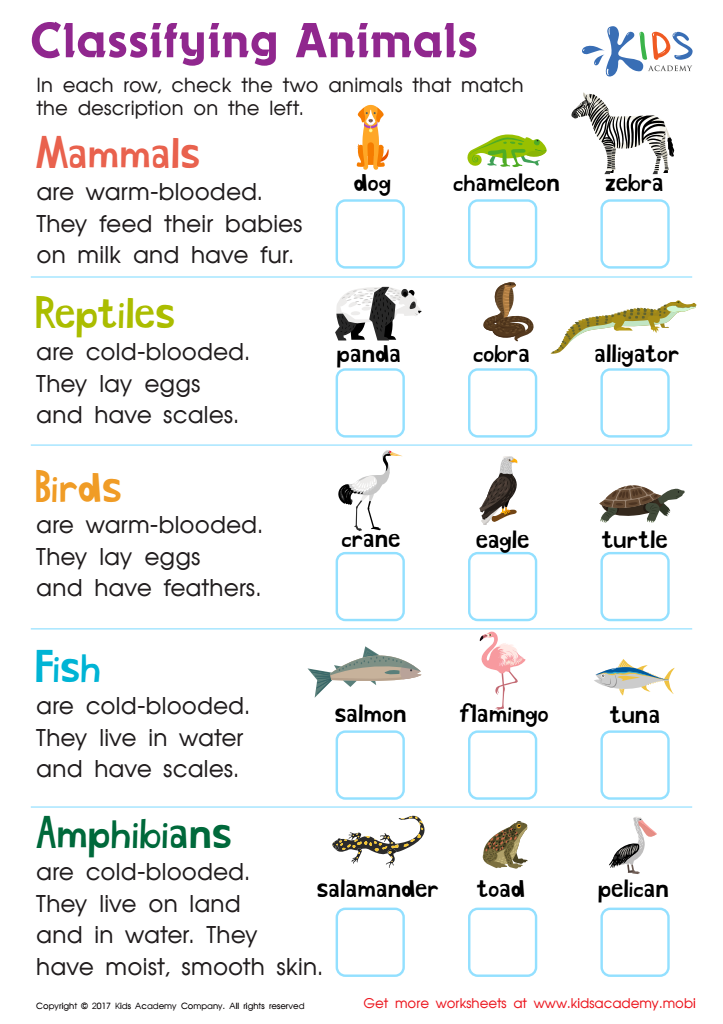
Classifying Animals Worksheet







Parents and teachers should prioritize critical thinking about normal plants and animals for children aged 4-7 because it shapes foundational cognitive skills essential for lifelong learning. At this age, children are naturally curious, and engaging them in critical thinking activities fosters their ability to analyze, compare, and draw conclusions about the world around them.
Learning about plants and animals not only sparks interest in biology but also encourages observation and interpretation skills. For instance, asking children to guess why certain animals have specific adaptations or how plants grow in different environments promotes inquiry and critical reasoning.
Furthermore, this approach enhances children's communication skills, as they learn to express their thoughts and questions more clearly. By participating in discussions about ecosystems, food chains, and the importance of biodiversity, young learners develop a sense of responsibility towards nature and an understanding of their role in the environment.
Additionally, nurturing critical thinking aligns with educational standards and helps children prepare for more complex scientific concepts in later grades. Ultimately, fostering these skills at an early age creates informed, thoughtful individuals who can contribute positively to society and the planet.







