
Critical Thinking Normal Community Worksheets for Ages 4-7
5 filtered results
Difficulty Level
Grade
Age
-
From - To
Subject
Activity
Standards
Explore our engaging Critical Thinking Normal Community Worksheets for kids aged 4-7! Designed to spark curiosity and promote problem-solving skills, these worksheets provide fun activities centered around community themes. Young learners will enhance their critical thinking abilities as they explore essential concepts such as belonging, cooperation, and responsibility in their community. Each worksheet promotes creativity and encourages children to think independently while they engage with vibrant illustrations and relatable scenarios. Perfect for homeschooling or classroom enrichment, these resources help shape young minds and prepare them for future academic success. Dive into the world of exploration and critical thinking with our delightful worksheets today!
Favorites
With answer key
Interactive
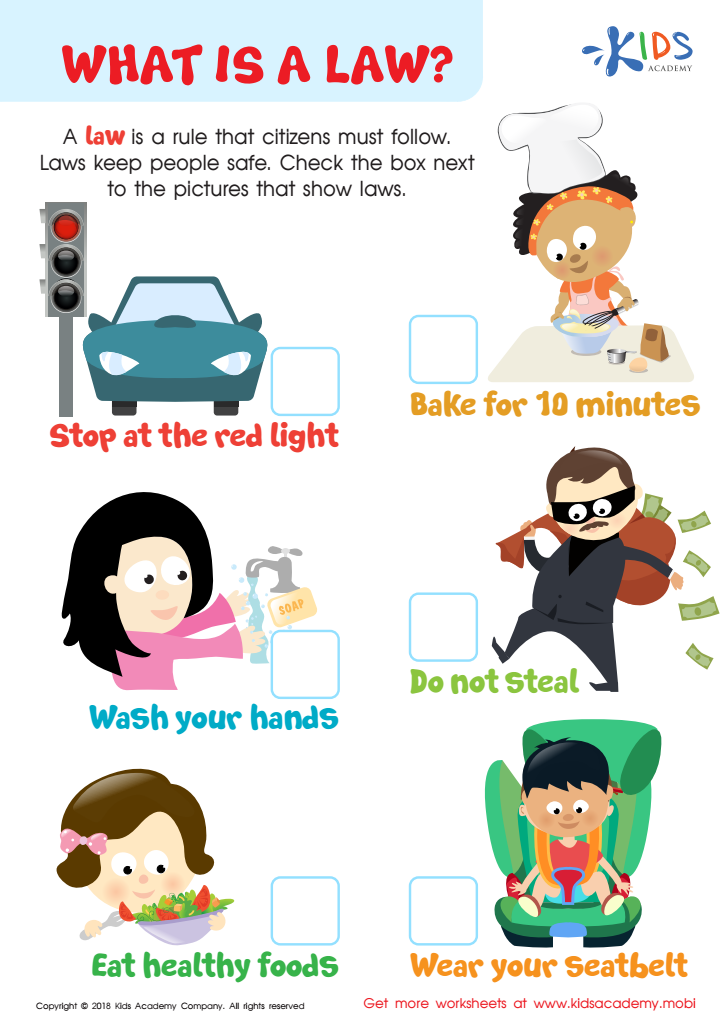
What is a Law? Worksheet
Encourage your students to think about the laws they abide by - at home, school, and the playground. Explain the importance of laws in keeping us safe, then ask them to check the box next to the pictures depicting different laws in a worksheet.
 Assign to My Students
What is a Law? Worksheet
Worksheet
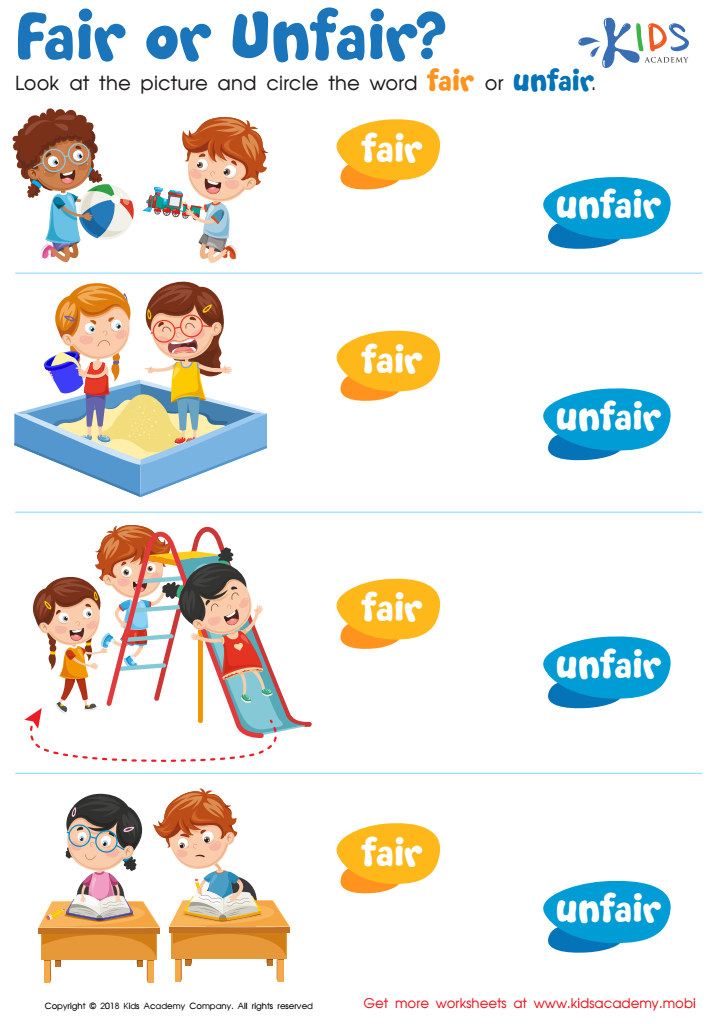
Fair or Unfair Worksheet
Look at the pictures in this worksheet with kids. Can they tell if the actions are fair or unfair? Help them decide and circle the appropriate option. When something causes harm to one person, it is unfair; when all parties benefit, it is fair.
Fair or Unfair Worksheet
Worksheet
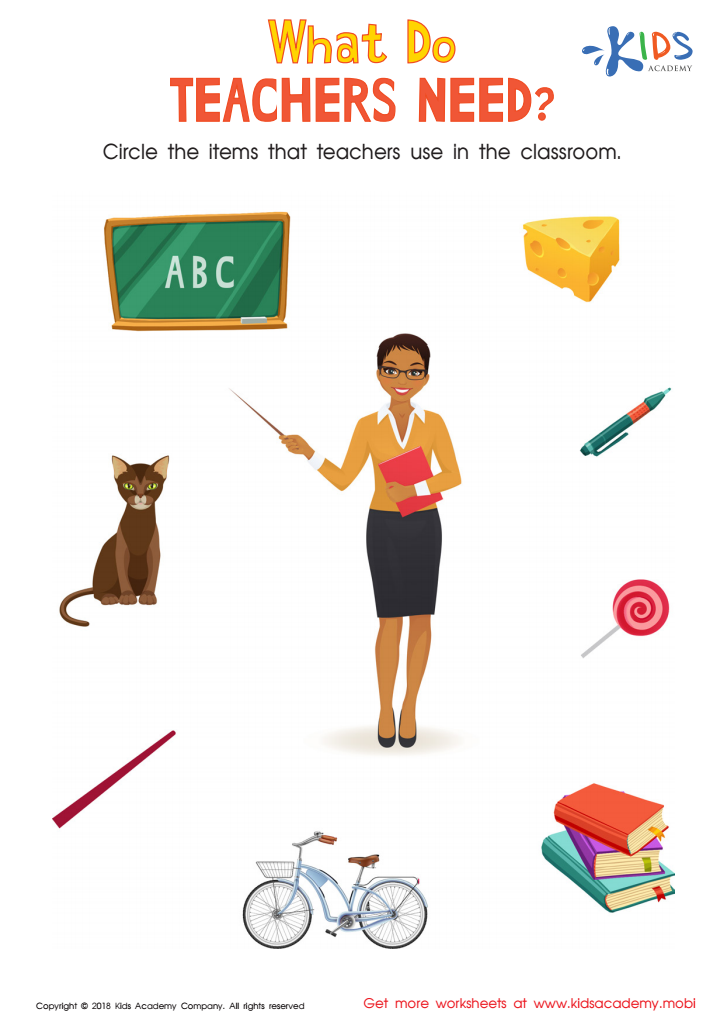
What Do Teachers Need Worksheet
This interactive worksheet tasks kindergarten students with identifying essential items a teacher needs in a classroom. They will be asked to circle items, helping them learn what teachers need to have in their classrooms.
What Do Teachers Need Worksheet
Worksheet
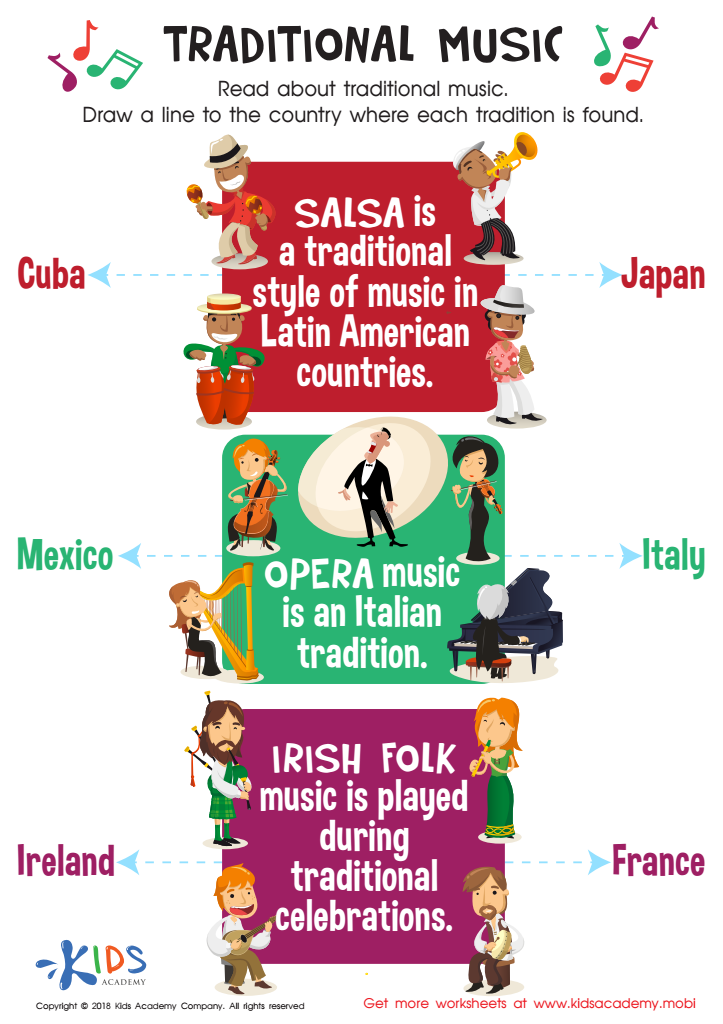
Traditional Music Worksheet
Exploring different countries' music is a great way for global learners to appreciate their place in the world. This worksheet helps them match music - like Salsa and Irish Folk - to various geographic regions with colorful visuals. It boosts reading comprehension while supporting their cultural understanding.
Traditional Music Worksheet
Worksheet
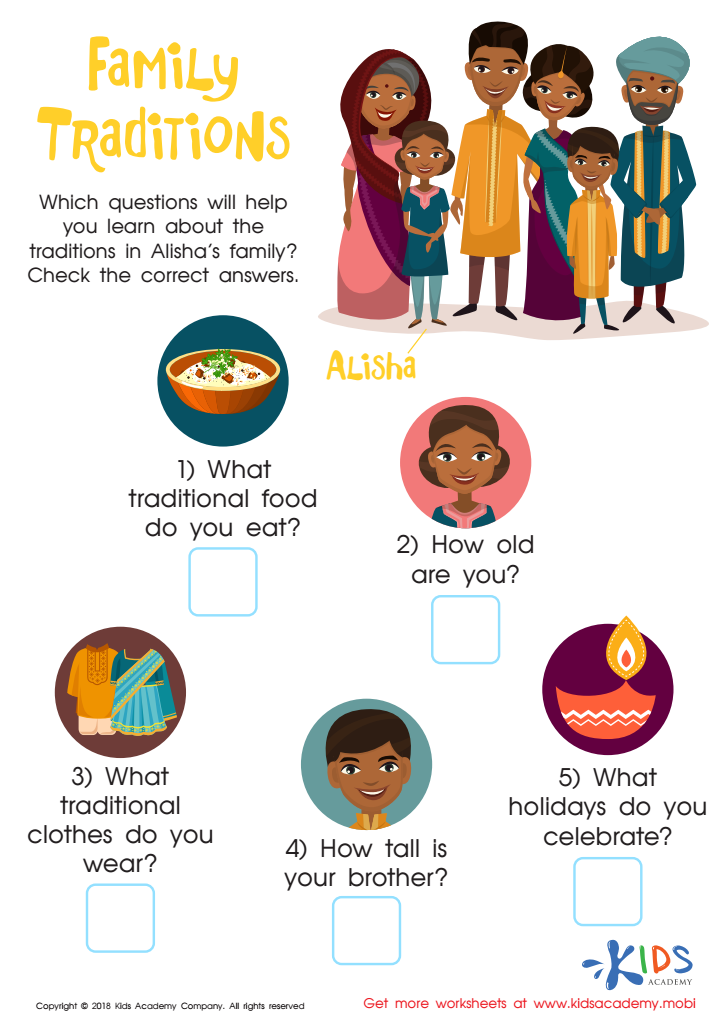
Family Traditions Worksheet
This worksheet helps kids understand Alisha's family traditions. It has questions a child can ask a new friend from a different culture. These questions cover food, clothing and holidays. Explain to your child how the answers are educational and guide them through the questions.
Family Traditions Worksheet
Worksheet
Join Kids Academy for Free
Who is primarily going to use this learning content?






Parents and teachers should care about developing critical thinking skills in children aged 4-7 because these foundational abilities enhance cognitive development, problem-solving skills, and emotional intelligence. In a rapidly changing world, the ability to analyze, evaluate, and create ideas is essential for lifelong learning and adaptability. Critical Thinking Normal Community provides an organized platform where young minds can engage in discussions, play interactive games, and undertake group projects that stimulate logical reasoning and creativity.
By fostering a critical thinking environment, children learn to ask questions, understand different perspectives, and make decisions based on evidence, which cultivates independence and confidence. Early exposure to critical thinking activities encourages a growth mindset, enabling children to view challenges as opportunities rather than obstacles. Furthermore, these skills are not just essential for academic success; they translate into everyday situations, empowering children to navigate social interactions and conflicts effectively.
Parents and teachers play a crucial role in guiding this process, setting the stage for a lifetime of curiosity and enthusiasm for learning. Ultimately, investing time in critical thinking development at this age equips children with the tools to thrive in both their academic and personal lives, creating thoughtful, empathetic, and engaged members of society.








