Letter recognition Normal Elementary Phonics Worksheets for Ages 4-8
3 filtered results
Difficulty Level
Grade
Age
-
From - To
Subject
Activity
Standards
Enhance your child's reading skills with our Letter Recognition Normal Elementary Phonics Worksheets for Ages 4-8. Designed to make letter learning engaging and effective, these worksheets assist young learners in mastering the alphabet through a variety of fun activities. Tailored for early learners, they focus on recognizing and distinguishing letters, developing foundational phonics skills. Each worksheet is crafted to build confidence and proficiency, ensuring your child is well-equipped for reading success. Ideal for homeschoolers, teachers, and parents, our worksheets provide a structured approach to elementary phonics. Explore our extensive collection today!
Favorites
With answer key
Interactive

Long and Short U Worksheet
Revised: Spice up your lesson on long and short vowels with this fun printout! Kids read the words "tube" and "tub," then reinforce the sound by coloring in the words and pictures. It's a great way to make phonics class enjoyable!
Download (PDF)
 Assign to My Students
Assign to My Students
Long and Short U Worksheet
Worksheet
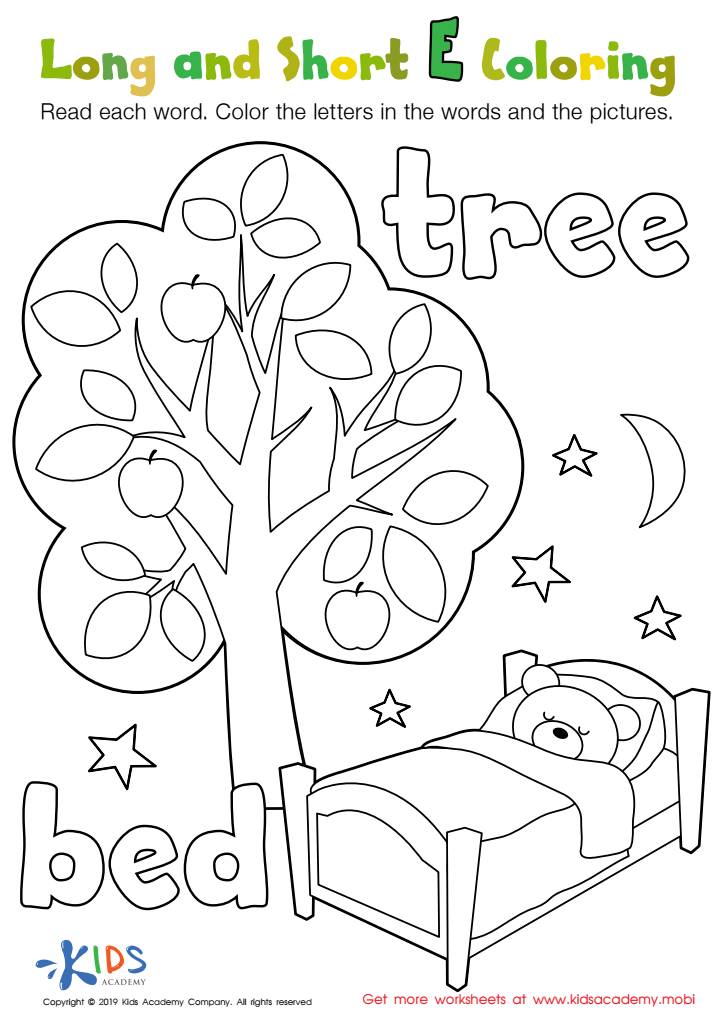
Long and Short E Worksheet
This fun printout makes learning phonics enjoyable for Grade 3 students. Get them to read the words “tree” and “bed” to recognize the different sounds of the letter “E”. After hearing the words they can color the words and the pictures to understand differences between long and short vowels.
Download (PDF)
Assign to My Students
Assign to My Students
Long and Short E Worksheet
Worksheet
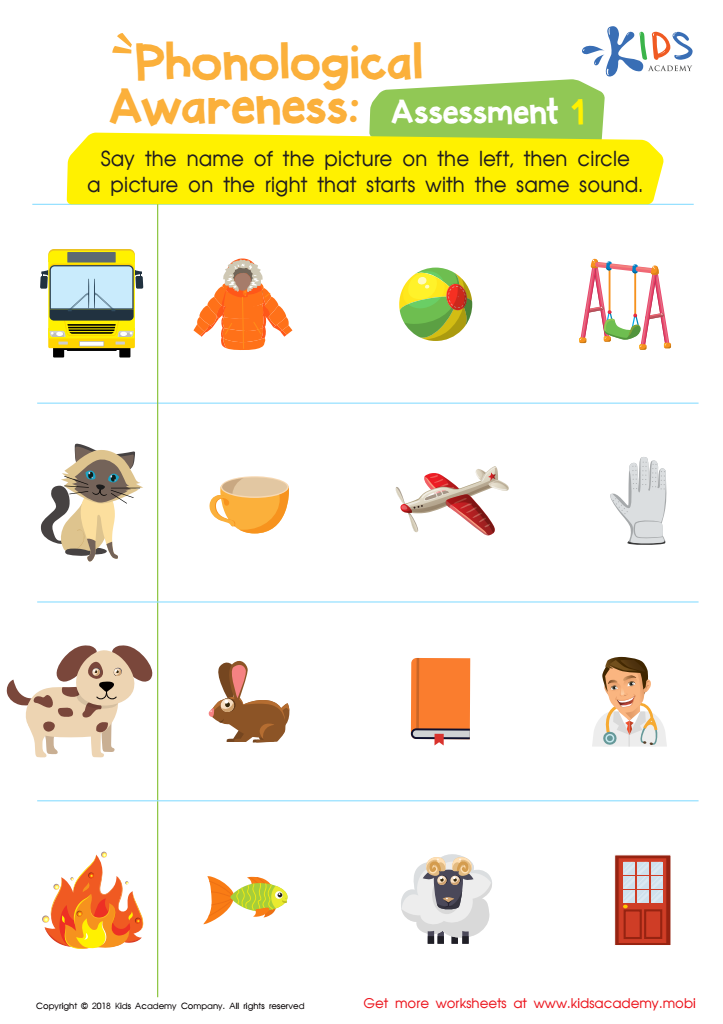
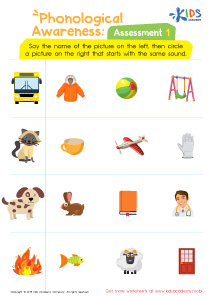
Phonological Awareness: Assessment 1 Worksheet
This worksheet helps kids build key phonics skills for pre-reading. They say each picture name aloud, focusing on the starting sound. Then, they match the sound with an image in the same row. Use as a checkpoint for kindergarten or grade 1 phonics readiness.
Phonological Awareness: Assessment 1 Worksheet
Worksheet
Join Kids Academy for Free
Who is primarily going to use this learning content?




Letter recognition and elementary phonics are foundational skills crucial for young learners ages 4-8. Understanding letter recognition means that children can identify and name both uppercase and lowercase letters across various contexts, which is a foundational step toward reading fluency. When children know their letters, they are better equipped to understand that letters represent sounds. This understanding guides them to start "decoding" words, or sounding them out, which is at the heart of reading.
Elementary phonics further builds on letter recognition by teaching children the relationships between letters and sounds. This includes understanding syllables, blends, and more complex letter patterns. Phonics instruction supports learners in becoming confident decoders and readers, as they use phonics knowledge to tackle new and unfamiliar words with greater ease.
Early mastery of these skills is associated with academic success and can boost children's reading comprehension, vocabulary, and eventual enjoyment of reading. Strong reading skills developed early have strong implications for a child’s progress across all subjects, since literacy is integral to learning as a whole. Therefore, parents and teachers focusing on letter recognition and phonics provide children with critical tools to thrive academically and nurture a life-long love of learning.