
Handwriting Skills Normal Alphabet Worksheets for Ages 4-8
5 filtered results
Difficulty Level
Grade
Age
-
From - To
Subject
Activity
Standards
Enhance your child's handwriting skills with our specially designed Normal Alphabet Worksheets for ages 4-8. Created to make learning fun and effective, these worksheets support young learners in mastering the alphabet through engaging traceable letters and writing exercises. Each sheet incorporates easy-to-follow guidelines that help children develop proper penmanship, spacing, and letter formation. These activities not only foster fine motor skills but also build a strong foundation for confident writing. Perfect for at-home practice or classroom use, our Handwriting Skills Worksheets are an invaluable resource for early literacy development. Download now and watch your child’s writing abilities flourish!
Favorites
With answer key
Interactive
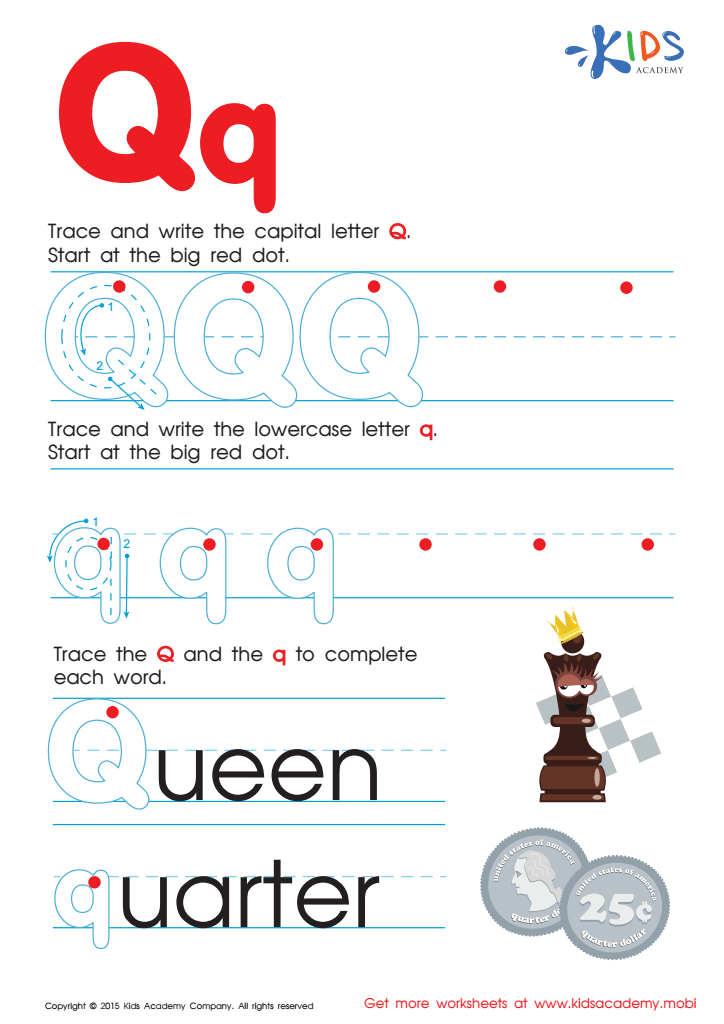
Letter Q Tracing Page
Learn the letter "Q"! Trace and write it a few times in upper and lowercase. Then help the Queen by writing her initial letter. Finally, write "quarters" and practice with more alphabet worksheets.
 Assign to My Students
Letter Q Tracing Page
Worksheet
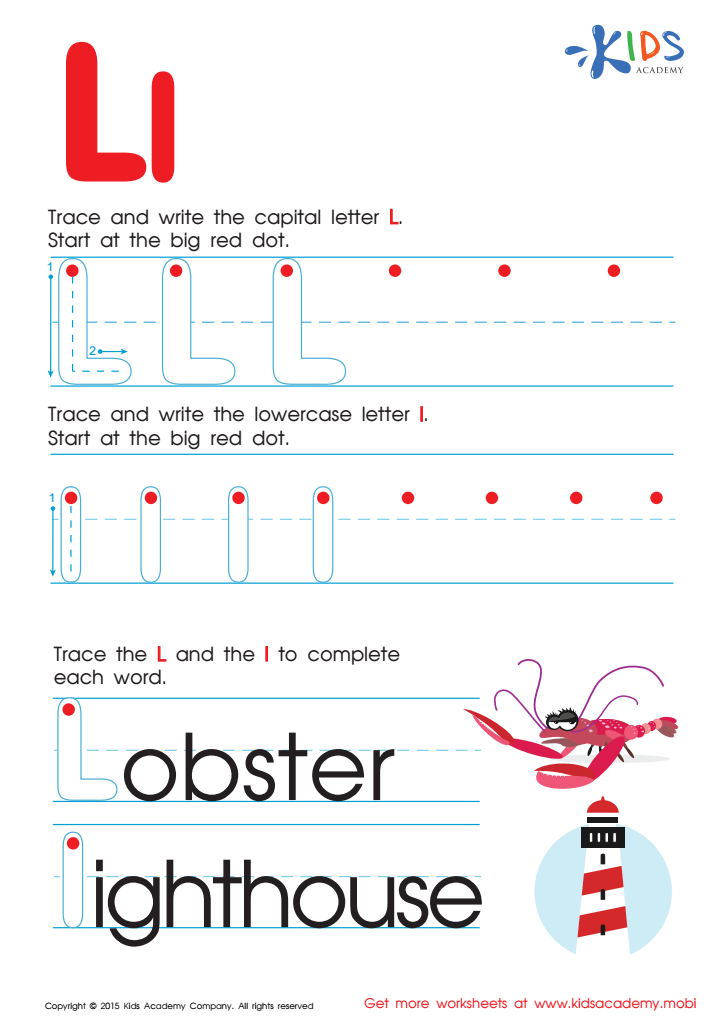
Letter L Tracing Page
Trace uppercase and lowercase letters to practice writing. Pay attention to the lowercase letters, like the "L", that are not as tall as an uppercase "I" or as short as a lowercase "i". Words like "lobster" and "lighthouse" are waiting to be completed. Enjoy!
Letter L Tracing Page
Worksheet
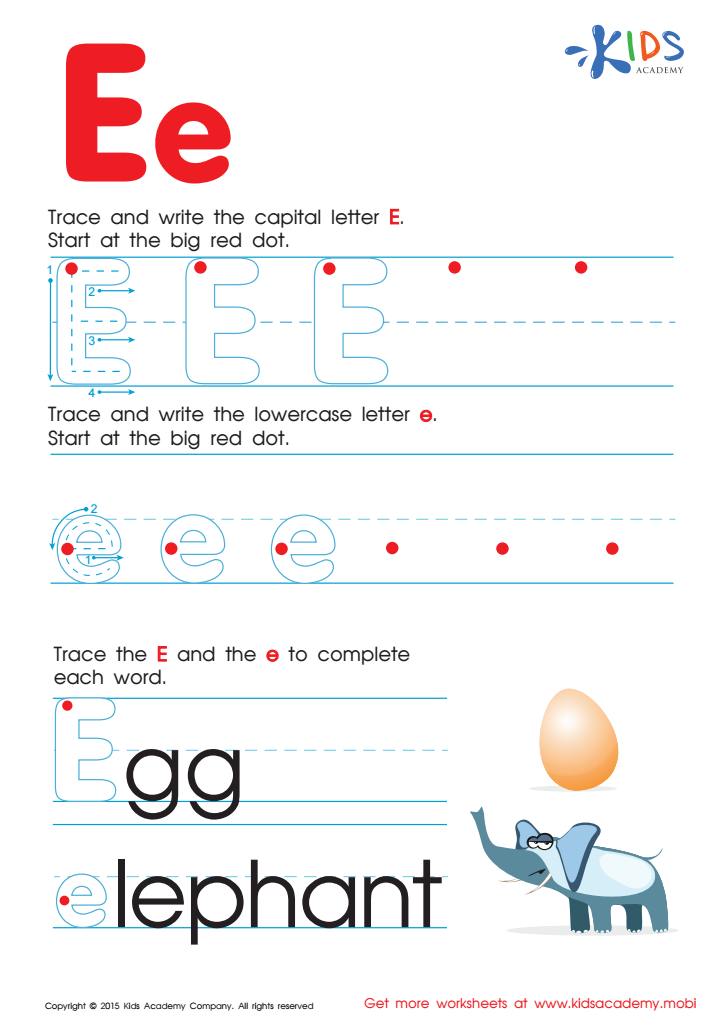
Letter E Tracing Page
Trace and write the uppercase and lowercase "E" starting at the big red dot. Complete words to perfect letter writing. Egg and Elephant must be written carefully. More alphabet worksheets for kindergarten are available for download to spend more time with your children learning.
Letter E Tracing Page
Worksheet
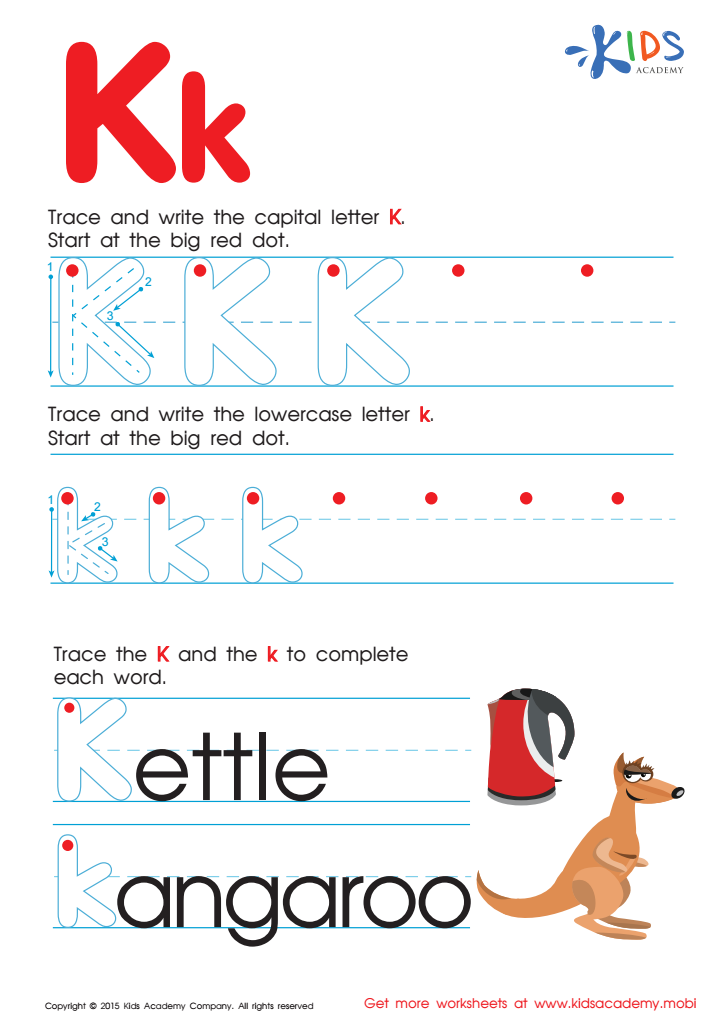
Letter K Tracing Page
Trace and write the letter K; start at the big red dot. Use it to complete words like "Kettle" and "Kangaroo". Visit Kids Academy for more free alphabet worksheets for kindergarten.
Letter K Tracing Page
Worksheet
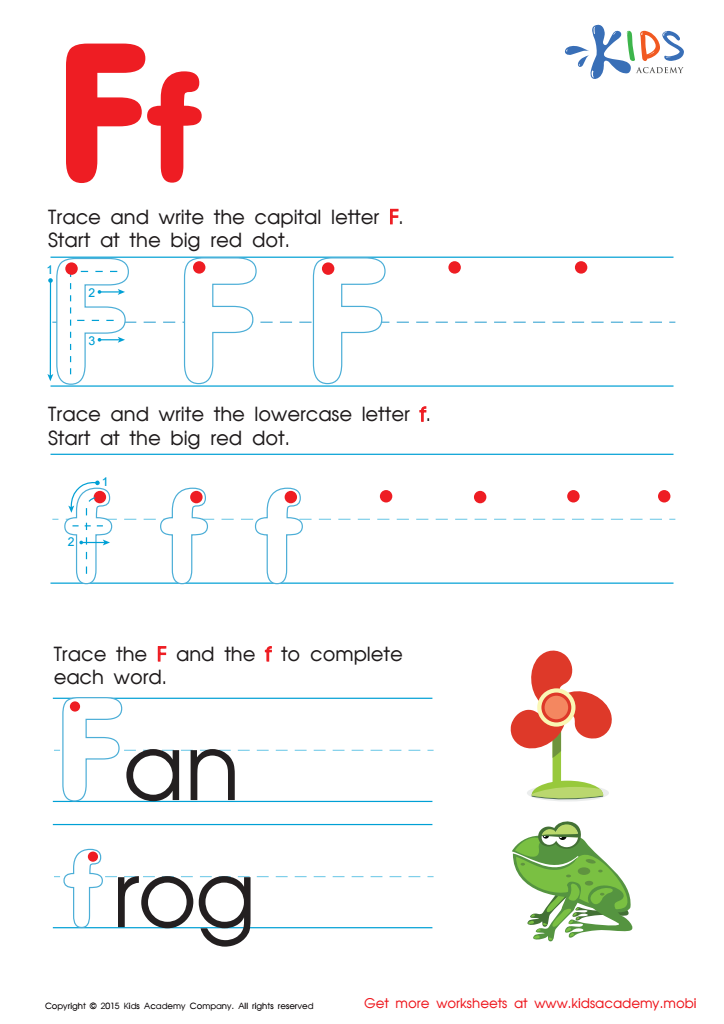
Letter F Tracing Page
Trace "F" with your pencil! Start at the red dot and draw lines — it's fun! Check it out — it looks great! Keep practicing to make it even better. Then, try completing words. Help out the broken fan and funny frog! Get free alphabet worksheets and activities for your kids. Come see our new tracing pages!
Letter F Tracing Page
Worksheet
Join Kids Academy for Free
Who is primarily going to use this learning content?







.jpg)
Early childhood is a foundational period for developing essential skills, and handwriting is no exception. For children ages 4-8, mastering the normal alphabet handwriting is not merely about neat penmanship; it’s a critical developmental milestone that influences cognitive, motor, and academic growth.
Firstly, handwriting practice improves fine motor skills. The coordinated movements required to write letters strengthen the small muscles in the hands and fingers, which are vital for daily tasks like buttoning clothes and using utensils. This fine motor development also translates to better coordination and dexterity, boosting overall physical development.
Secondly, handwriting is closely linked to cognitive processes. Learning to write each letter correctly requires mental focus, memory, and comprehension, thereby enhancing children’s cognitive abilities. This task challenges their brain to process visual, spatial, and kinesthetic feedback simultaneously, fostering neural connections that underpin learning.
Academically, strong handwriting skills contribute to literacy. As children learn to write letters, they become more familiar with their shapes and sounds, promoting reading skills. Moreover, the ability to write clearly enables students to express their thoughts coherently, aiding in effective communication and boosting confidence.
In summary, focusing on handwriting for children aged 4-8 is essential not only for developing legible writing but also for advancing motor skills, cognitive functions, and overall academic success.







