Reading development Normal Alphabet Worksheets for Ages 4-8
5 filtered results
-
From - To
Explore our "Reading Development Normal Alphabet Worksheets" designed specifically for children aged 4-8. These engaging worksheets focus on enhancing early literacy skills, helping young learners recognize letters, sounds, and basic words. With a variety of fun activities, your child can practice letter tracing, matching, and phonics exercises, making reading an enjoyable journey. Our worksheets are perfect for both classroom and home use, providing invaluable support as your child embarks on their reading adventure. Encourage a love for reading while building foundational skills with our thoughtfully crafted resources. Ideal for preschool and early elementary education, these worksheets are a fantastic tool for young readers!
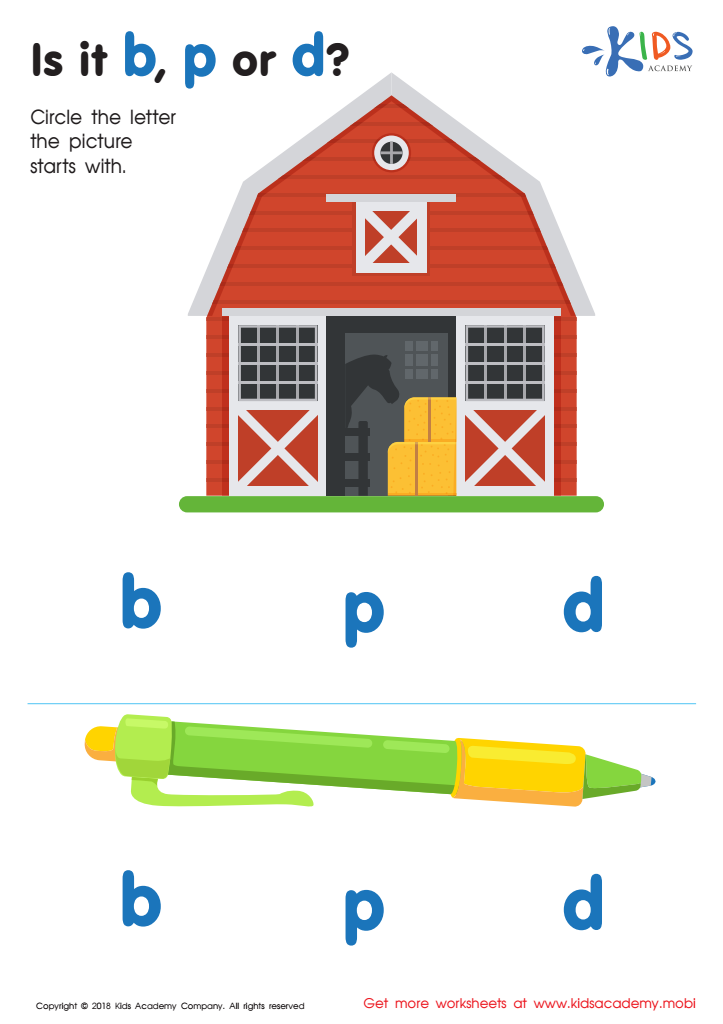
Is it b, p or d? Worksheet
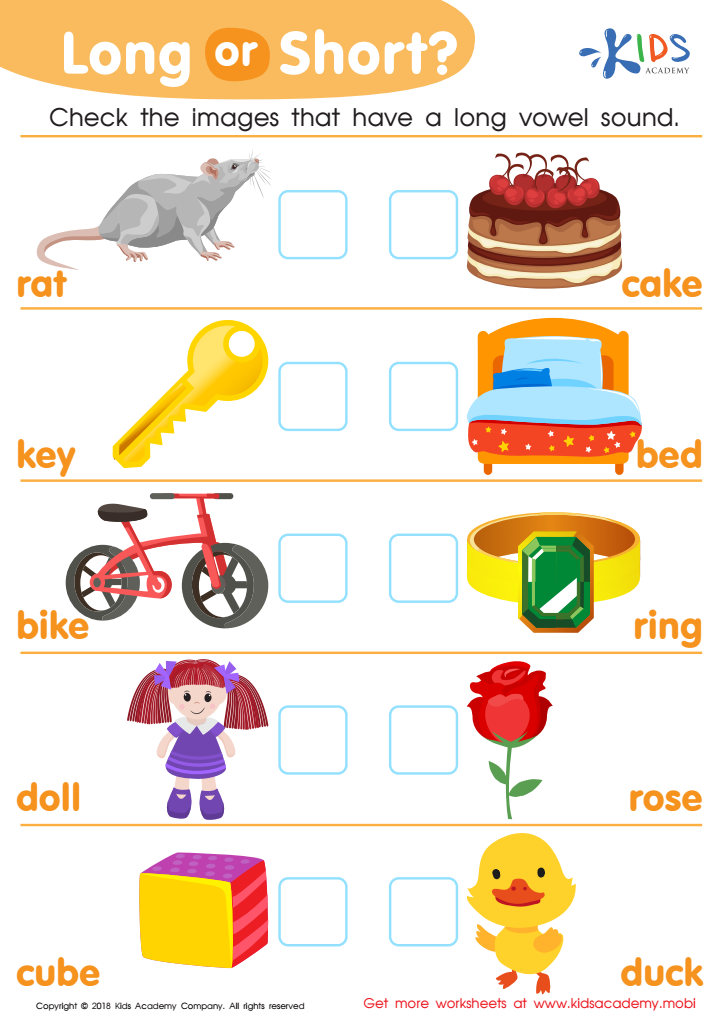
Long or Short Reading Worksheet
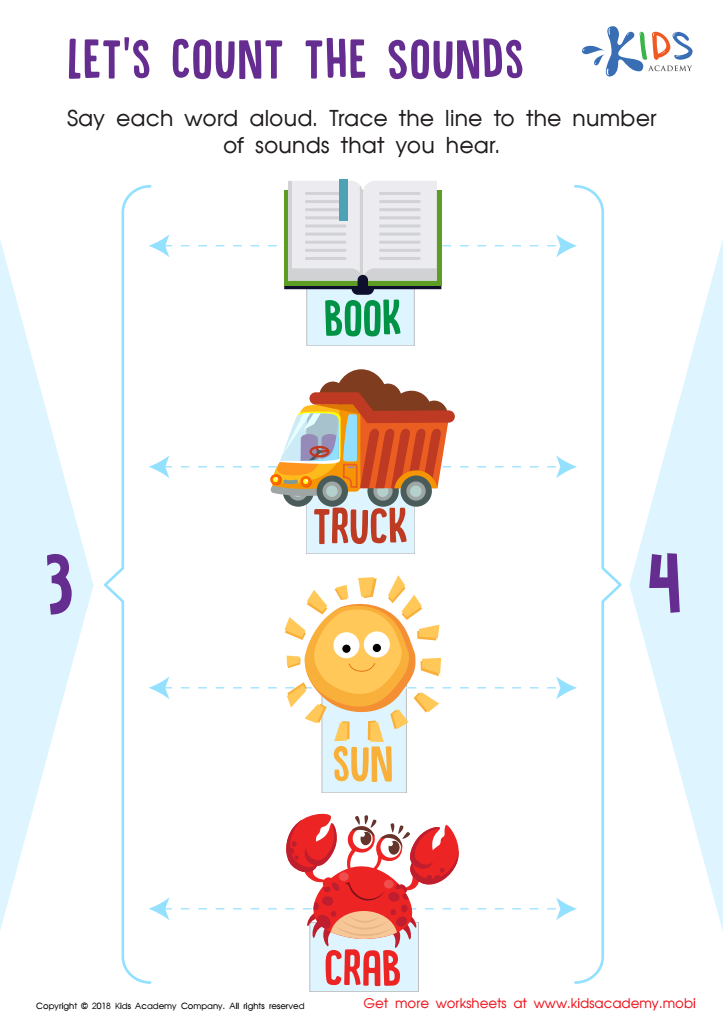
Let's Count the Sounds Worksheet
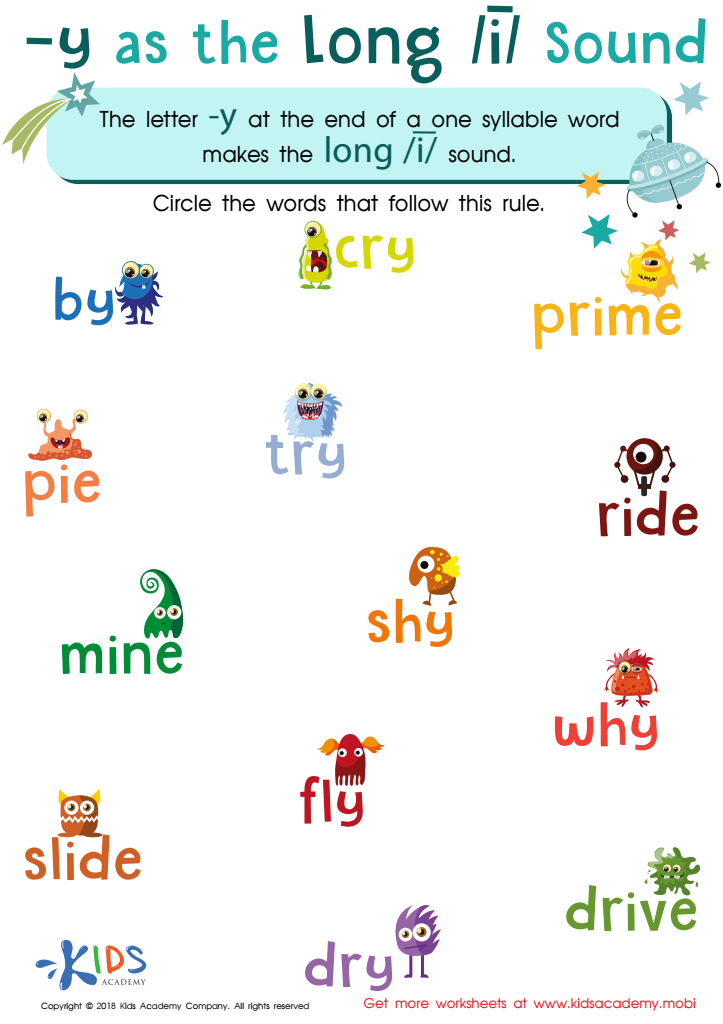
Reading: Y as Long I Worksheet
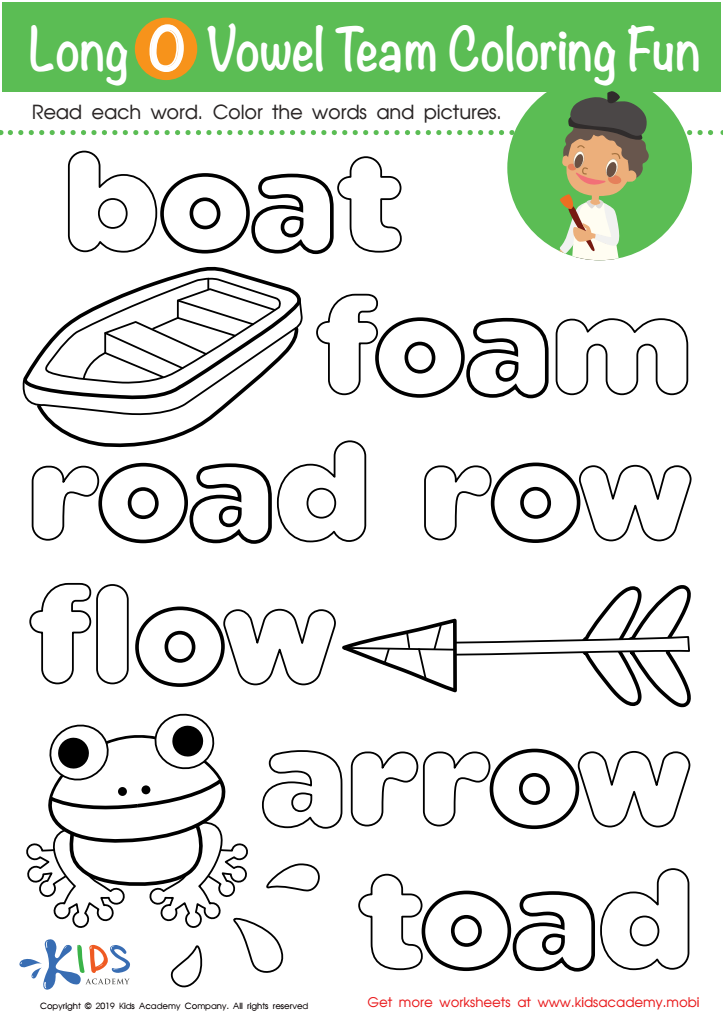
Long O Vowel Team Coloring Worksheet
 Assign to My Students






Reading development is crucial for children aged 4-8, as it lays the foundation for lifelong learning. During these early years, children's brains are exceptionally adaptable, making them highly receptive to new linguistic concepts. Introducing them to reading through the Normal Alphabet enhances their phonemic awareness and vocabulary, which are essential for comprehension and communication skills.
Parents and teachers play a vital role in this development process. By fostering an engaging reading environment, they can instill a love for books and learning. Early reading experiences promote critical thinking and creativity as children learn to interpret stories and express their ideas.
Moreover, reading competency in these formative years is closely linked to academic success later on. Children who struggle with reading may face challenges in other subjects, leading to frustration and a lack of motivation. On the other hand, proficient readers often develop stronger self-esteem and social skills.
In summary, prioritizing reading development for children aged 4-8 is imperative. It empowers them with essential life skills, nurtures their curiosity, and forms the bedrock of effective communication, ensuring they are well-prepared for future academic and personal success.







