Sound-letter association Normal Alphabet Worksheets for Ages 4-8
3 filtered results
-
From - To
Enhance your child's reading skills with our Sound-letter Association Normal Alphabet Worksheets, designed for ages 4-8. These engaging and educational worksheets help young learners connect letters with their corresponding sounds, crucial for developing early literacy. Through enjoyable activities and colorful visuals, children will improve their phonemic awareness and letter recognition, forming a strong foundation for reading and writing. Perfect for classroom use or home practice, our expertly crafted worksheets provide a fun and effective way to boost your child’s learning journey. Foster a love for reading with Kids Academy's comprehensive resources for young learners.
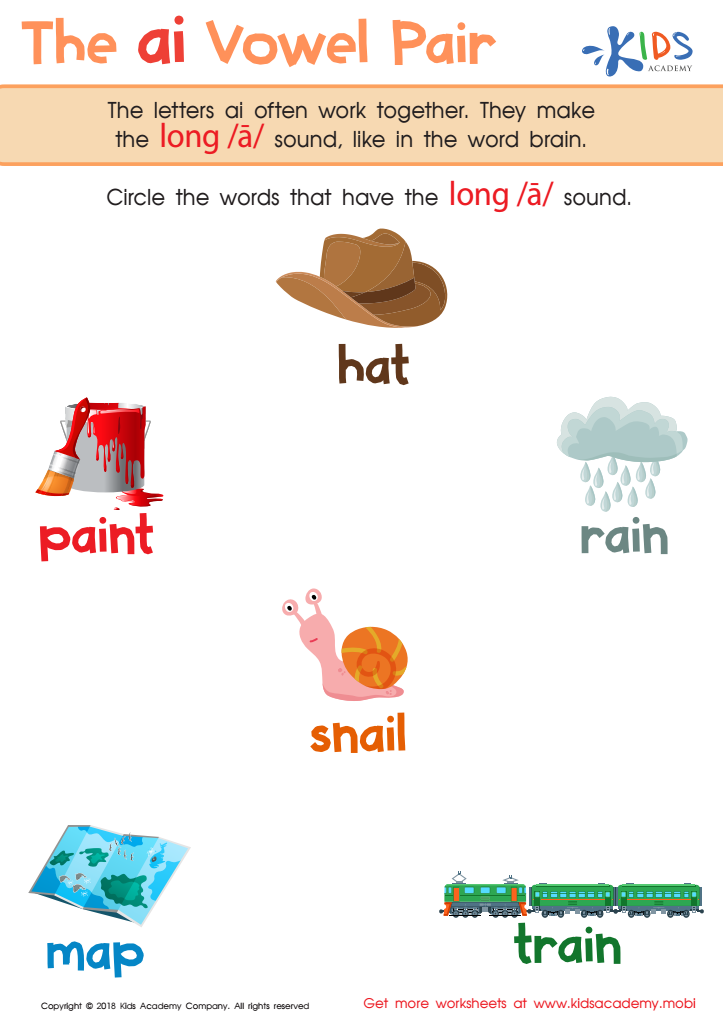
The AI Vowel Pair Worksheet
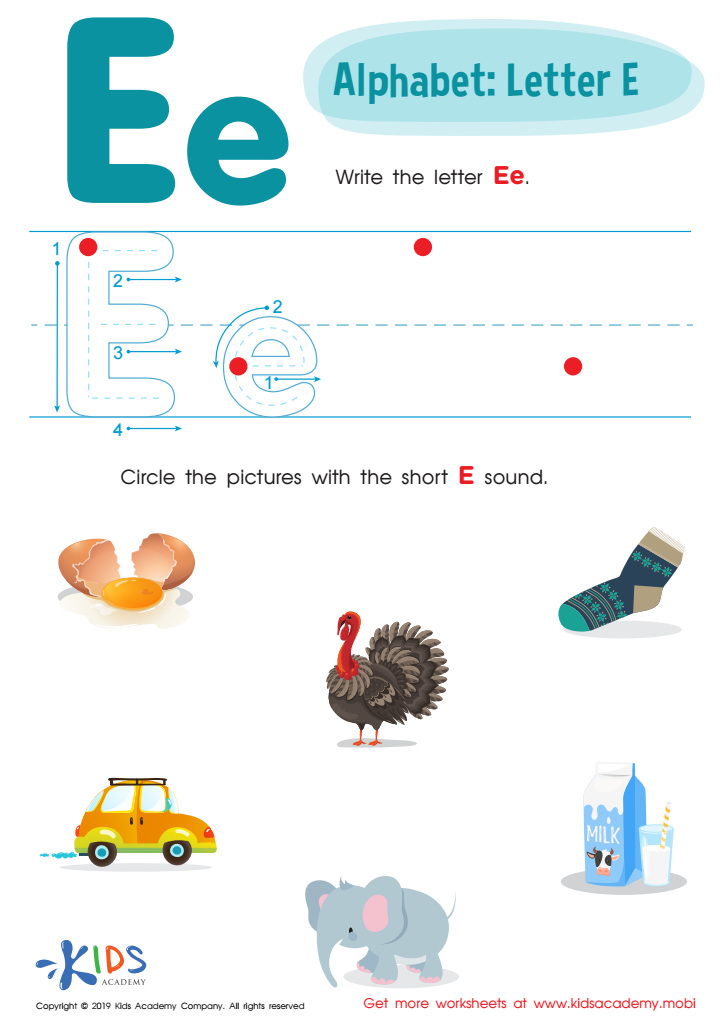
Letter E Tracing Worksheet

Letter J Coloring Sheet
 Assign to My Students








Sound-letter association, or phonics, is central to early literacy and profoundly impacts children's reading and writing development. Parents and teachers should focus on mastering the Normal Alphabet's sound-letter associations for children aged 4-8 due to its pivotal role in laying a strong literacy foundation.
When young learners understand that each letter or letter combination corresponds to specific sounds (phonemes), they become equipped to decode words efficiently. This decoding skill enables them to read new and unfamiliar words, fostering independent reading early on. Developing phonemic awareness through sound-letter association helps children spell words correctly, ensuring their writing is understood by others.
Moreover, early success in reading and writing boosts children's confidence and creates a positive feedback loop, encouraging further learning and participation. According to literacy research, effective phonics instruction seamlessly transitions into improved comprehension, nuanced vocabulary skills, and ultimately a lifelong love of reading.
Addressing sound-letter associations early on can also help identify and support children who may struggle with dyslexia or other learning challenges, facilitating timely interventions. In summary, focusing on sound-letter associations empowers young children to achieve critical early literacy milestones, setting the stage for academic success and enriching their overall learning experience.







