Lowercase identification Normal Letter Recognition Worksheets for Ages 4-8
4 filtered results
-
From - To
Boost your child's literacy skills with our Lowercase Identification Normal Letter Recognition Worksheets, specially designed for ages 4-8! These engaging worksheets help young learners confidently identify and differentiate lowercase letters, laying the foundation for reading and writing. With a variety of fun activities, including tracing, matching, and coloring, kids will enjoy developing their letter recognition skills. Perfect for use at home or in the classroom, these worksheets cater to different learning styles, ensuring that every child can succeed. Download and print our worksheets today, and watch your child's confidence grow as they master lowercase letters!
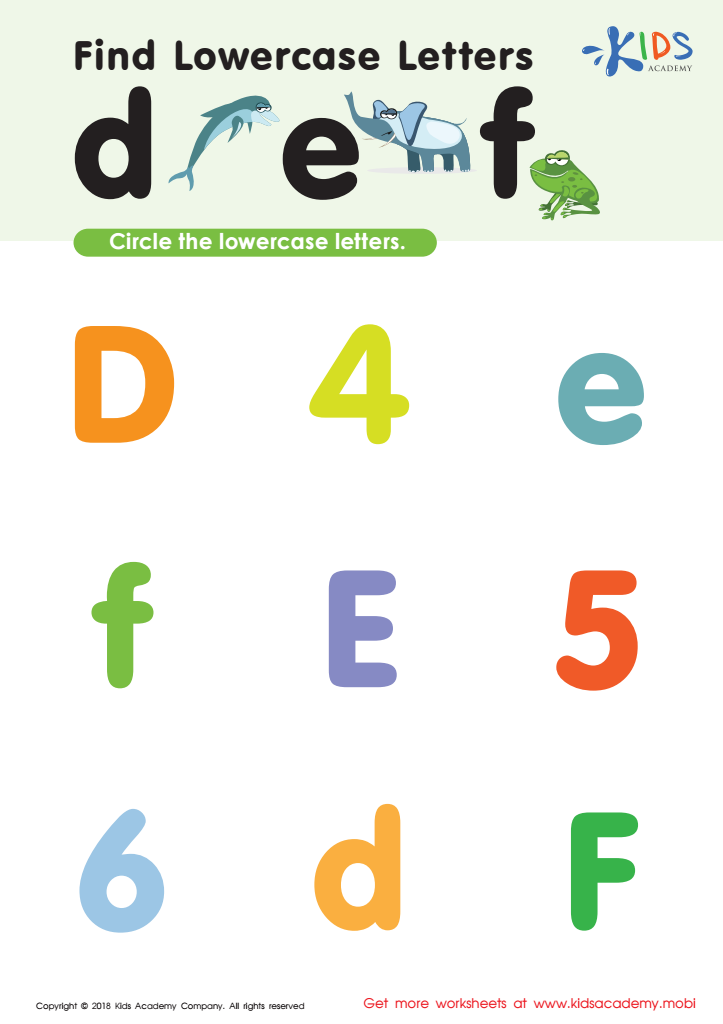
Find Lowercase Letters d e f Worksheet
 Assign to My Students
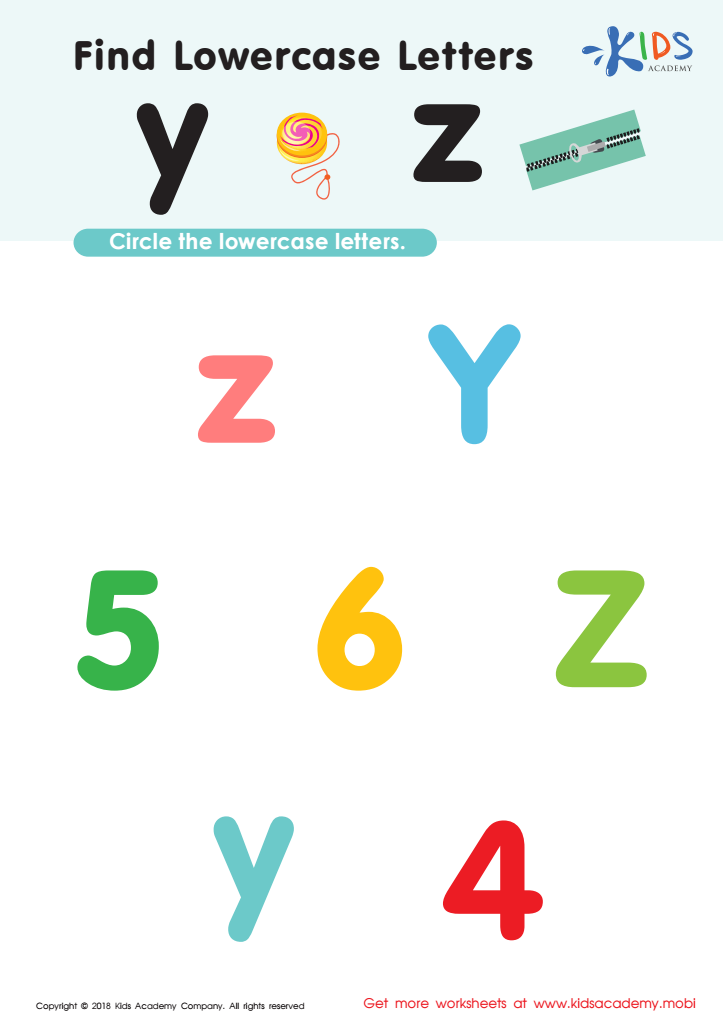
Find Lowercase Letters y z Worksheet

Find lowercase letters a b c Worksheet
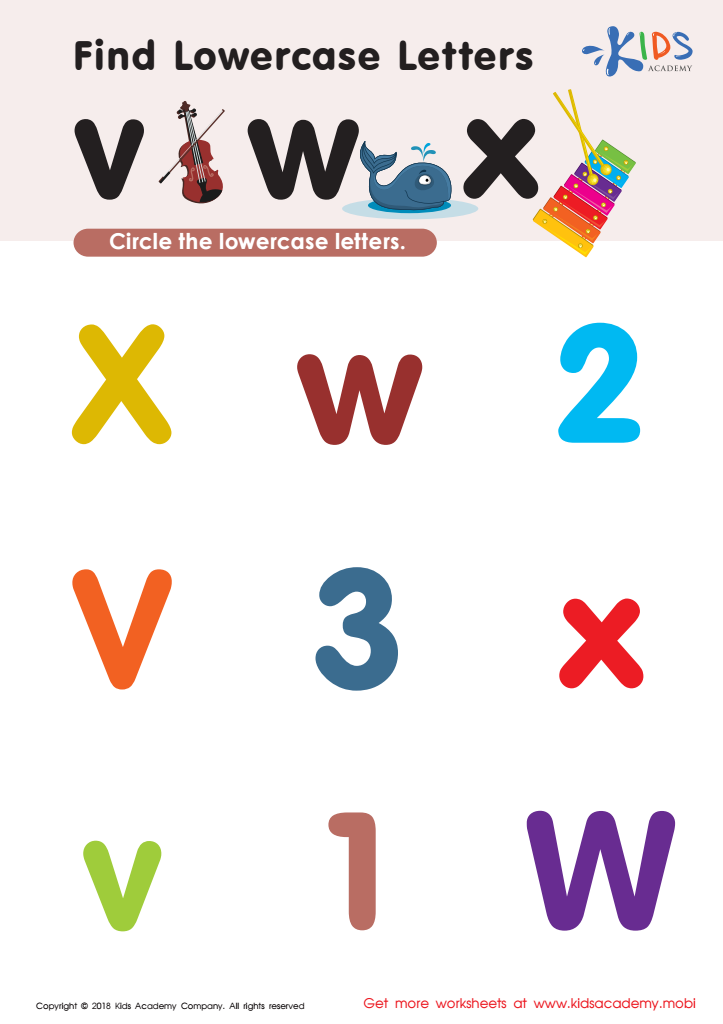
Find Lowercase Letters v w x Worksheet








Lowercase letter recognition is crucial for young learners aged 4-8 as it forms the foundation for reading and writing skills. At this stage, children begin to engage with print in their everyday environments, and recognizing lowercase letters helps them decipher words in books, labels, and signs. Unlike uppercase letters, which they might see predominantly in logos or for their names, lowercase letters constitute the majority of printed text children will encounter.
Understanding lowercase letters supports vocabulary development and language acquisition, enabling children to make connections between sounds and written symbols—an important step in phonics. This recognition promotes confidence when tackling reading tasks, fostering a positive attitude toward literacy.
Parents and teachers should also recognize that grounded lowercase identification can aid in developing fine motor skills through writing practice while enhancing cognitive development by organizing and categorizing letters and sounds. Engaging children in activities that promote letter recognition can also bolster critical thinking and problem-solving skills as they navigate various reading materials.
Ultimately, nurturing the ability to identify lowercase letters prepares children for academic success and fosters lifelong learners who are excited about reading and writing. Thus, encouraging this skill is essential in their holistic development.








