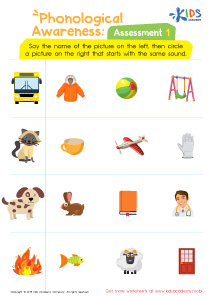
Sound differentiation Normal Vowels Worksheets for Ages 4-8
3 filtered results
-
From - To
Unlock the power of early literacy with our "Sound Differentiation Normal Vowels Worksheets," designed specifically for children aged 4-8. These engaging and interactive worksheets help young learners identify and differentiate normal vowel sounds through fun exercises. Enhance phonemic awareness as children practice recognizing vowel sounds in words, improving their reading skills and language development. Perfect for classroom or home use, our resources cater to various learning styles, making phonics enjoyable and effective. Foster a love for learning while building essential skills with our thoughtfully crafted worksheets that ensure a solid foundation for future literacy success! Explore enriching educational material today!
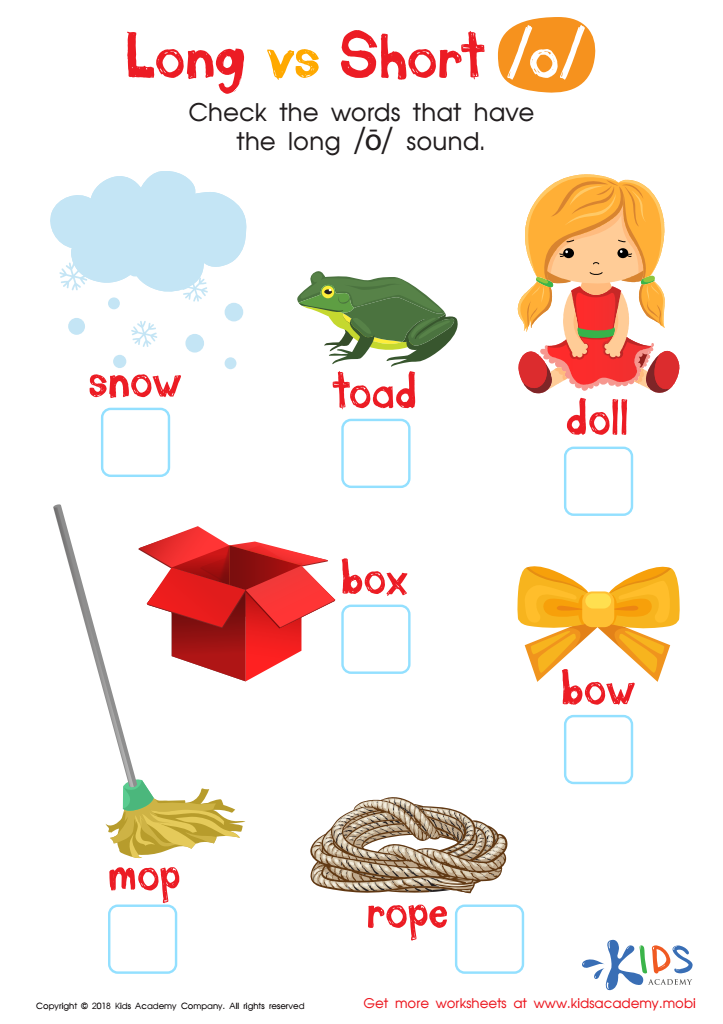
Long vs Short O Reading Worksheet
 Assign to My Students
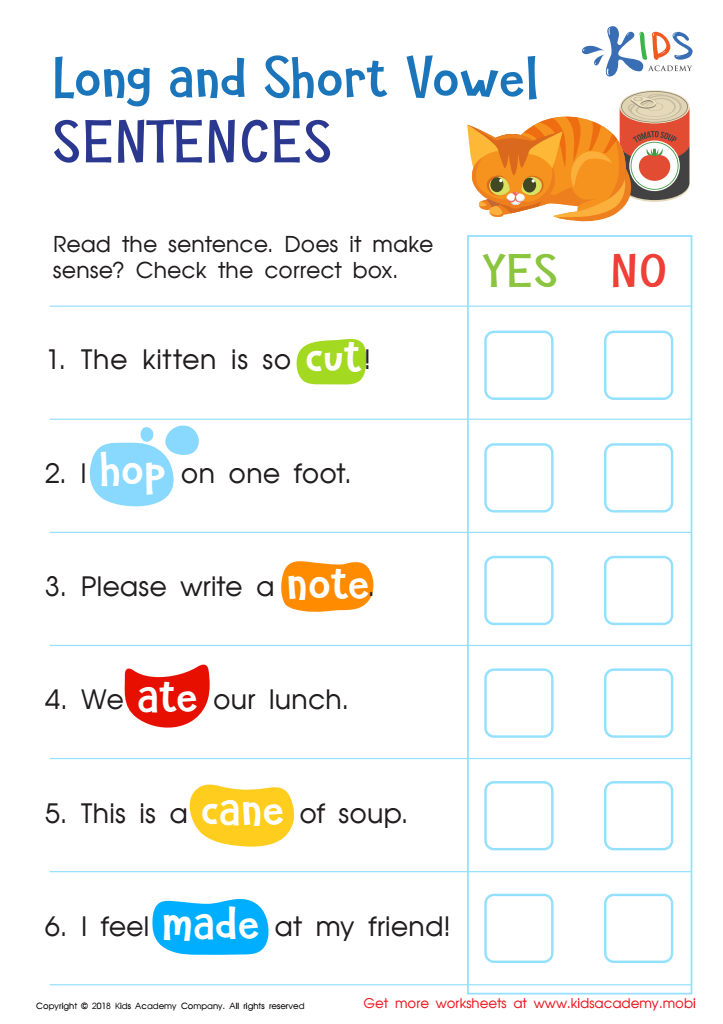
Long and Short Vowel Sentences: Assessment Worksheet
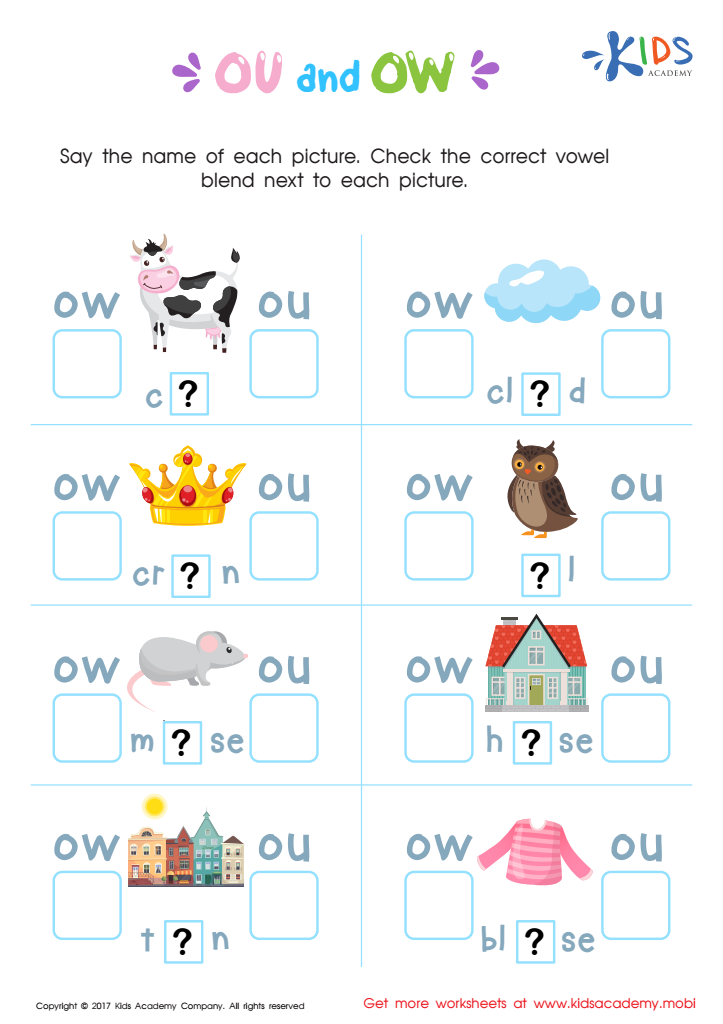
OU and OW Words Worksheet





Sound differentiation, particularly with normal vowels, is crucial for children aged 4-8 as it forms the foundation for effective reading and communication skills. At this age, children's phonemic awareness is still developing, which means they are figuring out how different sounds correspond to letters and words. Without a strong grasp of vowel sounds, children may struggle with decoding words, leading to reading difficulties later on.
By focusing on sound differentiation, parents and teachers can help children distinguish between similar sounds, such as short and long vowels. This skill is essential not just for reading fluency, but also for spelling, writing, and overall language comprehension. As vowels carry significant weight in syllables and words, a child who understands vowel sounds is better equipped to articulate themselves clearly.
Moreover, a sound understanding of normal vowels can enhance children's confidence and enjoyment of reading and writing. Engaging in activities like rhyming games or phonetic exercises can make learning fun, fostering a positive attitude towards literacy. Ultimately, investing in sound differentiation during these formative years lays a critical groundwork for lifelong learning, enabling children to express themselves effectively and enjoy the world of language.