Basic measurement concepts Normal Worksheets for Ages 4-8
3 filtered results
-
From - To
Explore foundational measurement concepts with our engaging "Basic Measurement Concepts Normal Worksheets" designed for ages 4-8. These worksheets make learning fun, helping young learners understand and practice skills such as comparing lengths, using rulers, and measuring objects. Through colorful visuals and interactive exercises, children will develop a solid grasp of essential measurement principles, fostering a love for math. Perfect for both classroom use and home practice, each worksheet promotes critical thinking and enhances development in a structured, age-appropriate manner. Equip your child with the tools they need to measure confidently by visiting Kids Academy today!
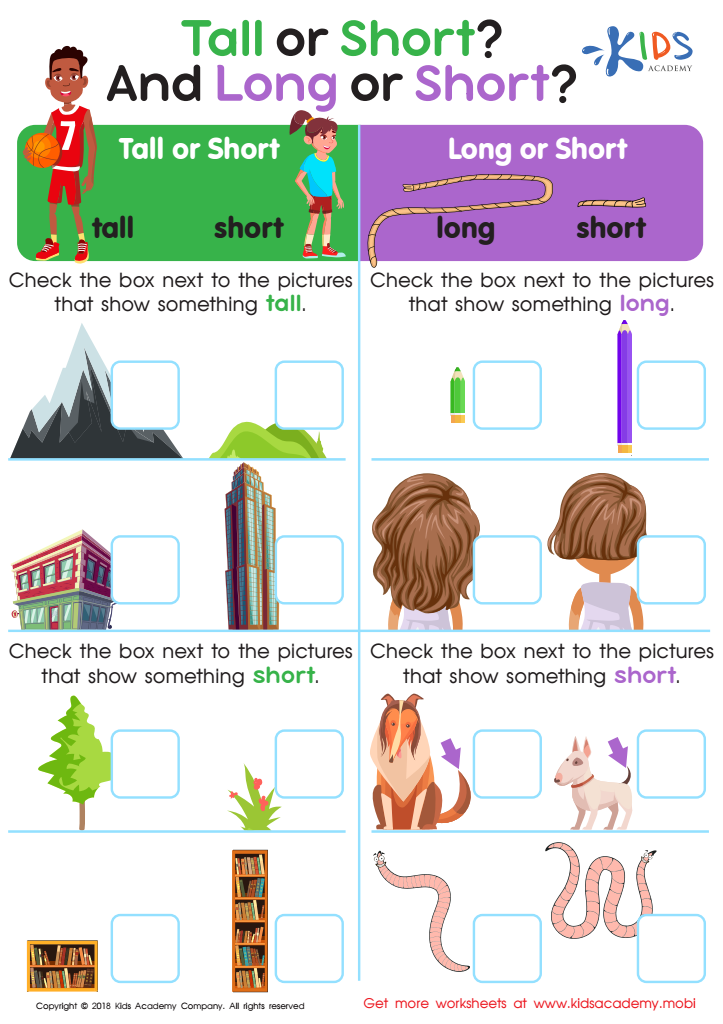
Tall or Short and Long or Short? Worksheet
 Assign to My Students
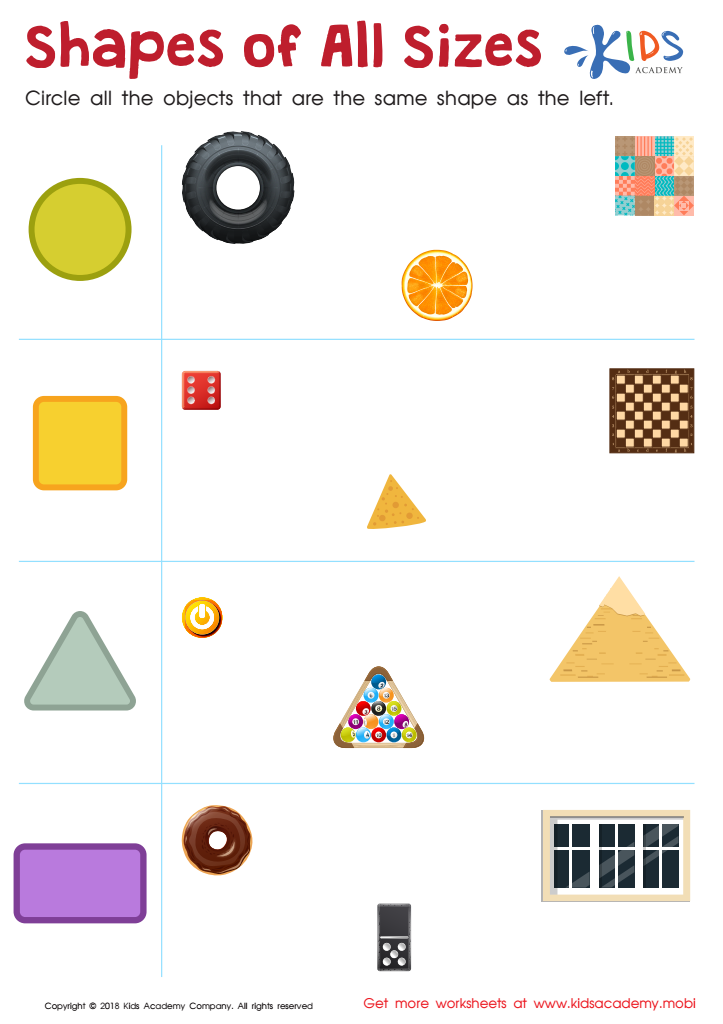
Shapes of All Sizes Worksheet
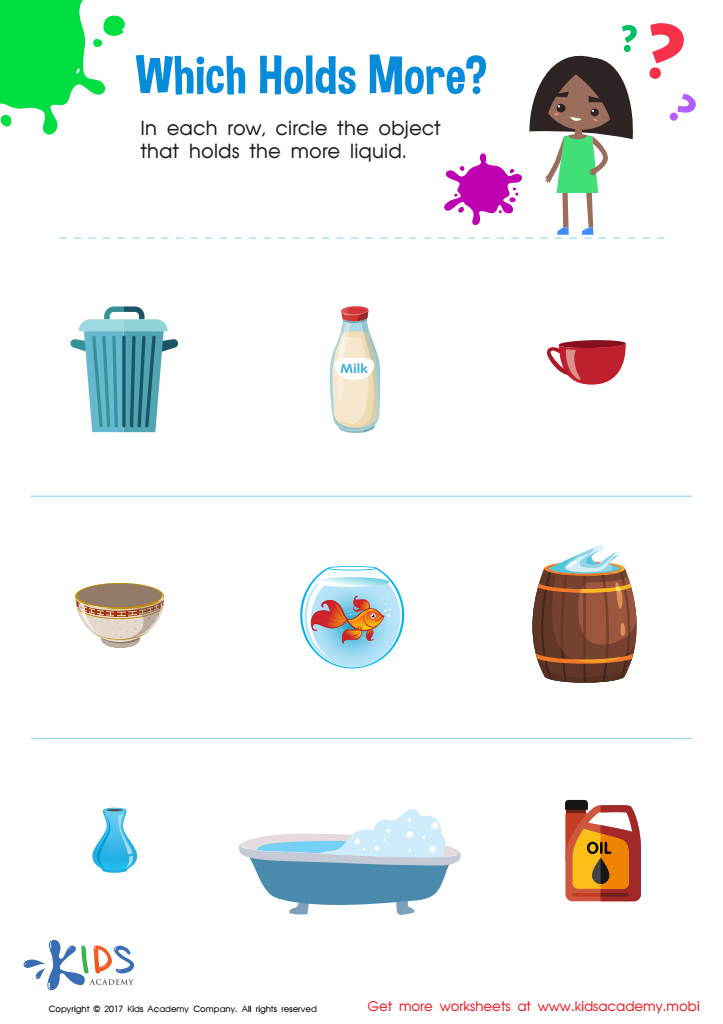
Which Holds More: Capacity Worksheet






Introducing basic measurement concepts to children ages 4-8 is essential for several reasons. First, these concepts lay the foundation for mathematical understanding, providing the tools they need to grasp more complex ideas later. Measurement concepts, such as length, weight, and volume, foster a practical sense of comparing and evaluating their world, crucial for everyday tasks and problem-solving skills.
At this developmental stage, children are naturally curious about their surroundings. Learning how to measure satisfies and stimulates their inquisitive nature, encouraging them to explore, hypothesize, and experiment, which in turn enhances their scientific thinking and reasoning abilities. Moreover, practical activities involving measurement help improve fine motor skills and cognitive development.
Additionally, familiarity with measurement terms and tools (e.g., rulers, scales, measuring cups) supports language development. Using descriptive words like "longer," "shorter," "heavier," or "lighter" enhances vocabulary and communication skills. These interactions can be made fun and engaging through hands-on activities such as cooking, building with blocks, or simple science experiments.
Finally, mastering basic measurement concepts boosts a child's confidence in their mathematical abilities, setting a positive attitude toward learning and persistence in other subjects. Therefore, both parents and teachers should prioritize these fundamental skills to support overall cognitive and academic growth.








