Building vocabulary Normal Worksheets for Ages 4-8
4 filtered results
-
From - To
Welcome to our "Building Vocabulary Normal Worksheets" designed specifically for children ages 4-8! Our engaging resources help young learners enhance their language skills through fun and interactive exercises. Each worksheet is crafted to improve vocabulary, with colorful illustrations and age-appropriate activities that capture kids' interest. From word matching and fill-in-the-blanks to captivating story prompts, these worksheets support foundational literacy and encourage creativity. Perfect for classroom settings or at-home learning, our vocabulary worksheets provide a fantastic way for children to build language confidence and expand their understanding of words. Explore our collection today and watch your little one's vocabulary flourish!

Community: Homes Worksheet
 Assign to My Students
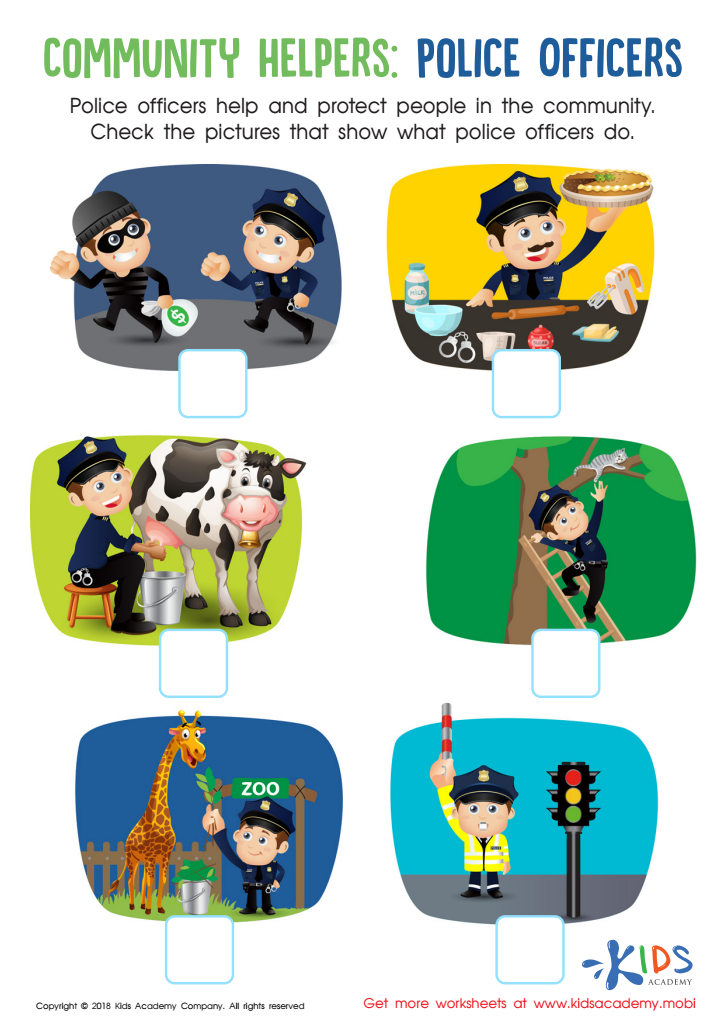
Police Officers Community Helpers Worksheet
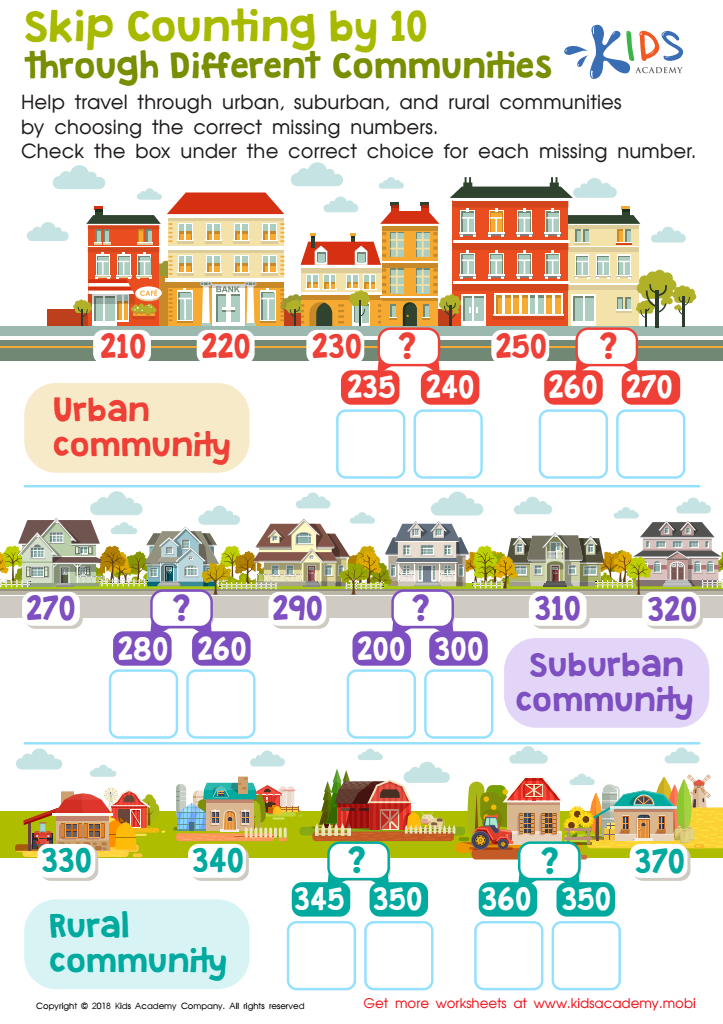
Skip Counting by 10 through Different Communities Worksheet
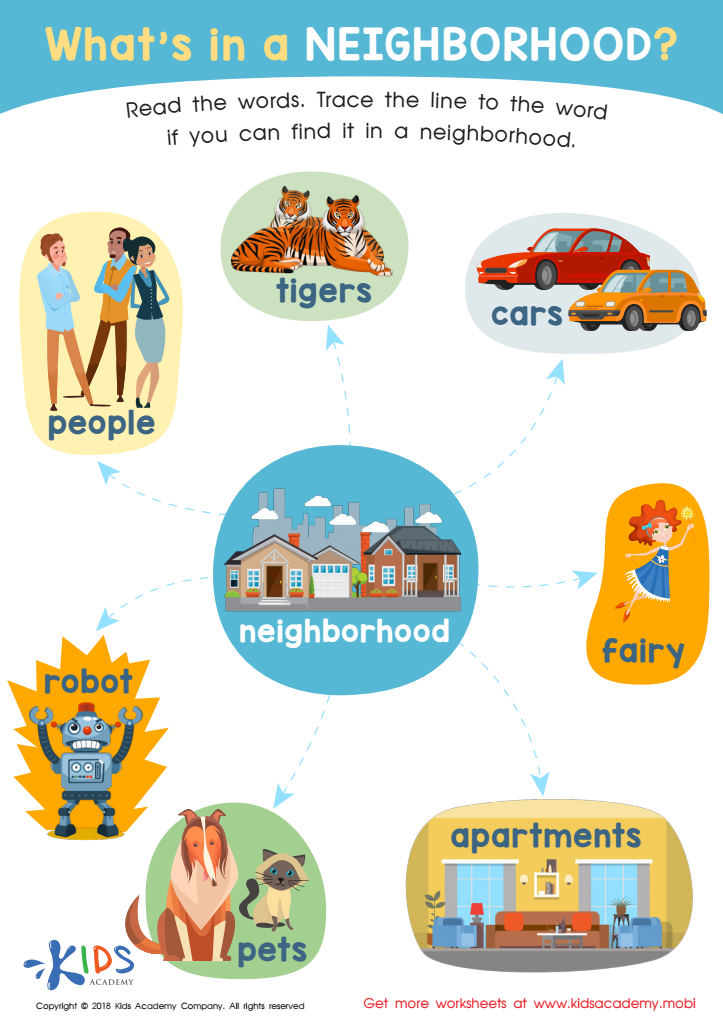
What's in a Neighborhood? Worksheet








Building vocabulary in children aged 4-8 is essential for their overall development and education. This age is a critical period for language acquisition, where children expand their ability to express thoughts, understand concepts, and communicate effectively. A strong vocabulary not only enhances reading and writing skills but also boosts verbal communication, enabling children to articulate their feelings and ideas clearly.
Parents and teachers should care about vocabulary development because it directly impacts academic success. A robust vocabulary lays the foundation for understanding complex texts, following verbal instructions, and performing well in school. Moreover, rich vocabulary enhances cognitive abilities, fostering critical thinking and comprehension skills.
Additionally, children with well-developed vocabularies are better equipped to engage in social interactions and build relationships. They can articulate their needs, express emotions, and navigate social situations, contributing to their emotional intelligence and self-confidence.
By actively engaging in conversations, reading diverse books, and introducing new words in everyday activities, parents and teachers can play a vital role in nurturing a child’s vocabulary. Investing time in vocabulary development during these formative years sets children up for lifelong learning and effective communication, ultimately contributing to their success in various aspects of life.








