Comparing Fractions Normal Worksheets for Ages 4-8
5 filtered results
-
From - To
Explore our engaging Comparing Fractions Normal Worksheets, specially designed for young learners ages 4-8! These worksheets make mastering the concept of fractions fun and interactive. Children will strengthen their understanding of how to compare fractions through colorful activities, real-life examples, and age-appropriate questions. Perfect for classroom use or at-home practice, our resources enhance kids' math skills while keeping them entertained. Whether your child is just starting to learn about fractions or is ready for a challenge, these worksheets cater to various skill levels. Download now and help your child build a strong foundation in math with our engaging resources!
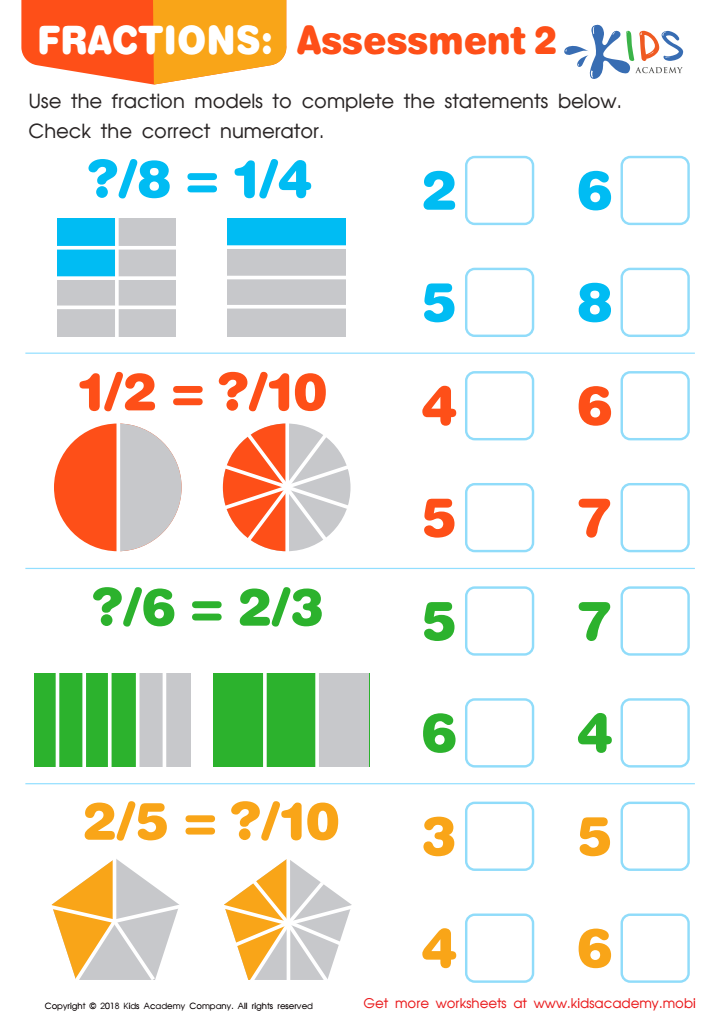
Fractions: Assessment 2 Worksheet
 Assign to My Students
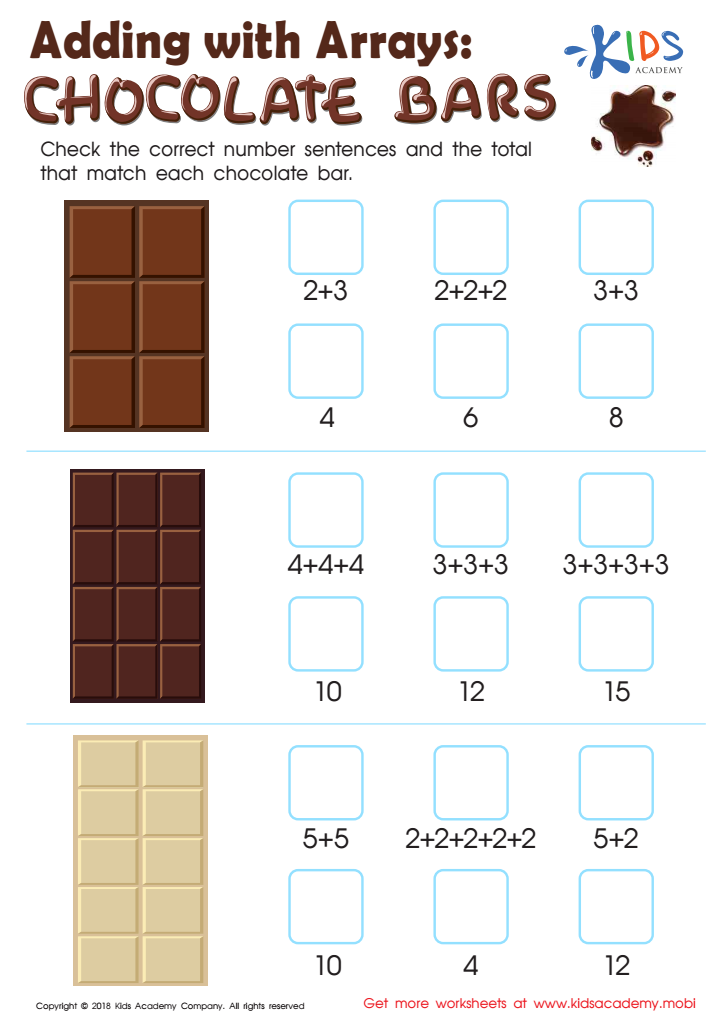
Adding with Arrays: Chocolate Bars Worksheet
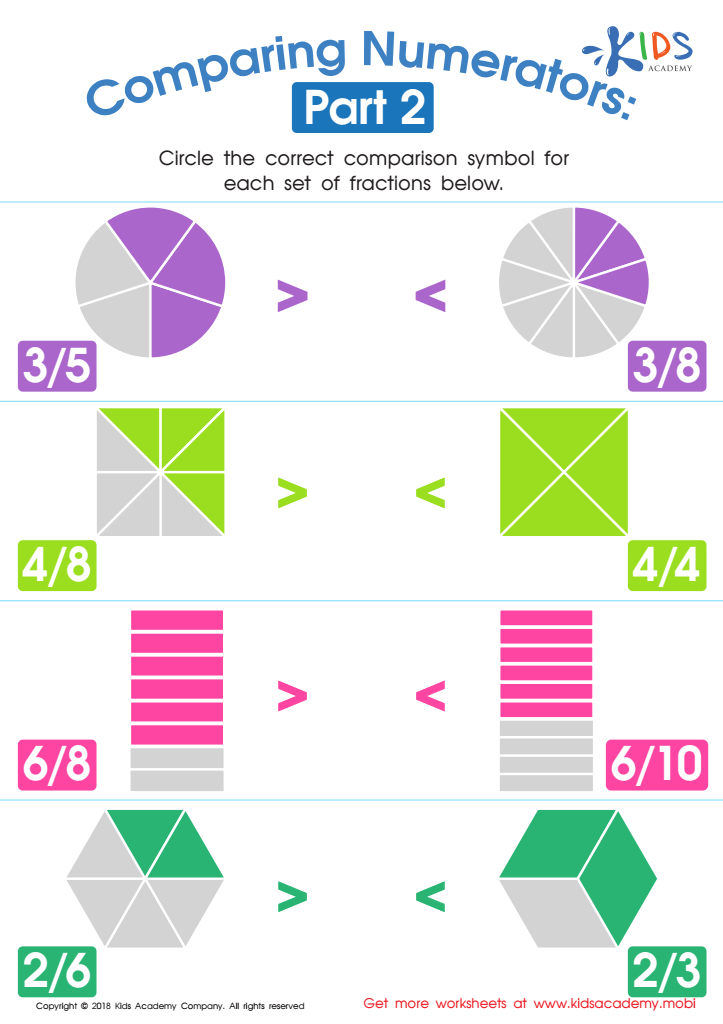
Comparing Numerators Part 2 Worksheet
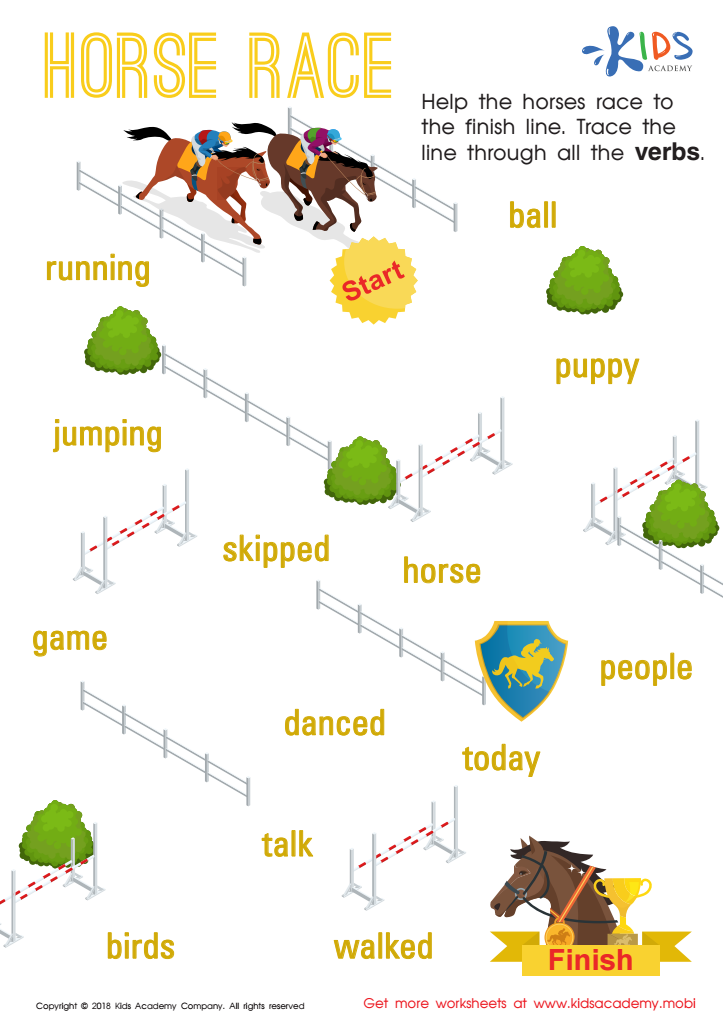
Horse Race Worksheet
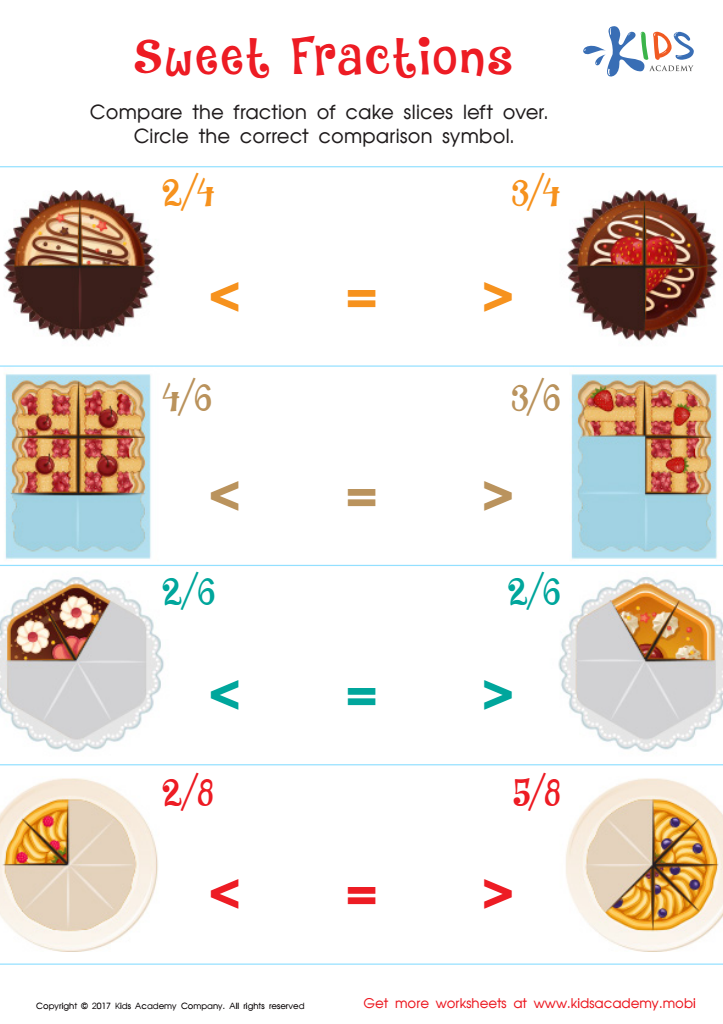
Compare Fractions Worksheet








Understanding how to compare fractions is crucial for children aged 4-8 as it forms a foundational math skill that extends beyond the classroom. Comparing fractions helps children develop critical thinking and problem-solving abilities by allowing them to visualize and quantify relationships between different quantities. It enhances their overall number sense, which is essential for more complex mathematical concepts they will encounter later.
For parents and teachers, fostering a solid understanding of fractions at this early age encourages confidence in students' math abilities. Engaging children in hands-on activities such as using visual aids like fraction bars or pie charts makes the learning process enjoyable and interactive. This not only aids in retention but also helps children relate mathematical concepts to real-life scenarios, deepening their understanding.
Moreover, grasping fractions allows children to perform basic arithmetic operations (addition, subtraction, multiplication, and division) more efficiently in future grades. It builds their ability to work with different quantities, setting the stage for success in higher-level math. Thus, both parents and teachers play a vital role in nurturing this skill, ensuring that children are well-prepared for academic challenges ahead and fostering a positive attitude toward learning mathematics.








