Improving categorization skills Normal Worksheets for Ages 4-8
3 filtered results
-
From - To
Enhance your child’s learning journey with our "Improving Categorization Skills" worksheets designed specifically for ages 4 to 8. These engaging, printable activities encourage young learners to identify, sort, and categorize various items, reinforcing their cognitive abilities and critical thinking skills. Our worksheets feature colorful illustrations and fun themes, keeping children motivated and entertained as they learn. Perfect for classroom settings or at-home practice, these resources support early childhood development and lay the foundation for lifelong learning. Explore our collection and empower your child to sharpen their categorization skills in an enjoyable way! Download and start learning today!
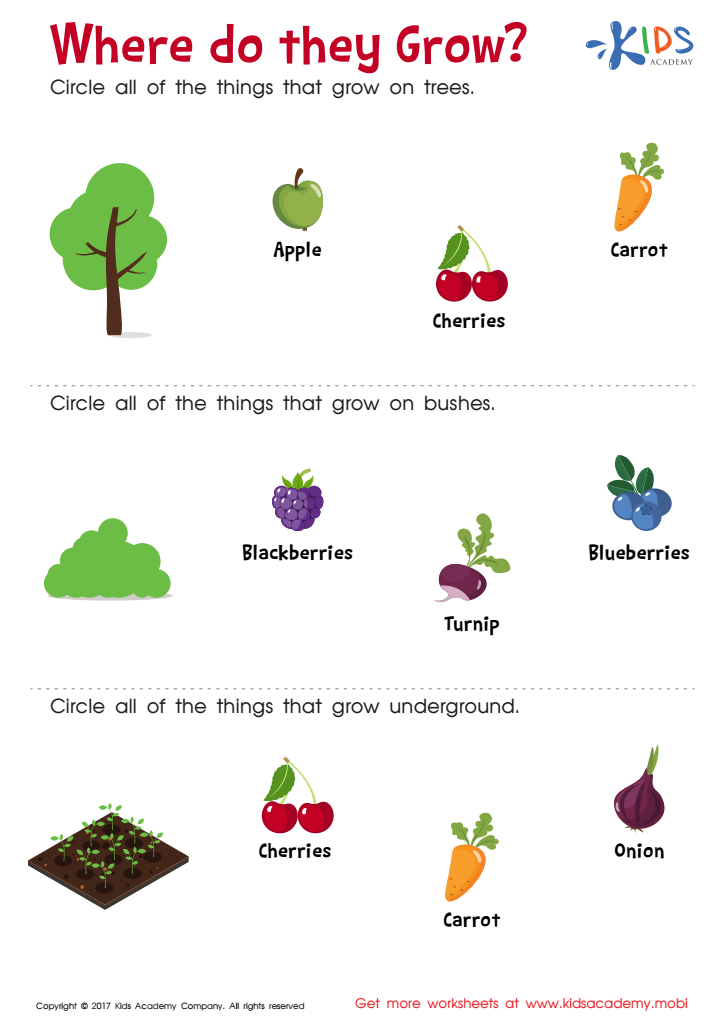
Where Do They Grow Worksheet
 Assign to My Students
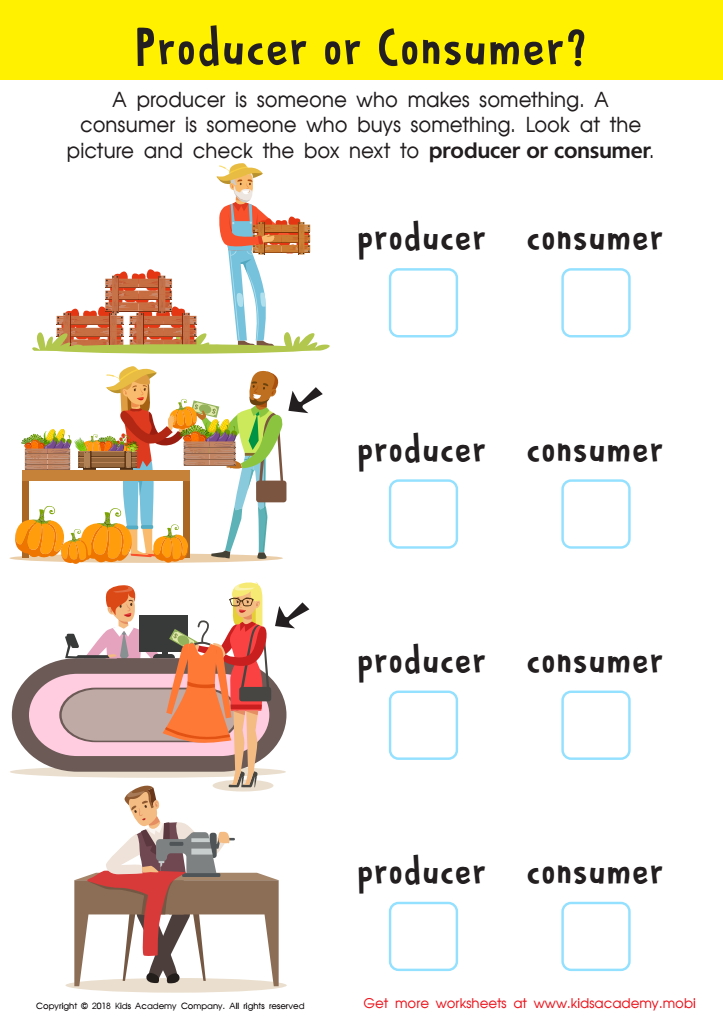
Producer or Consumer? Worksheet
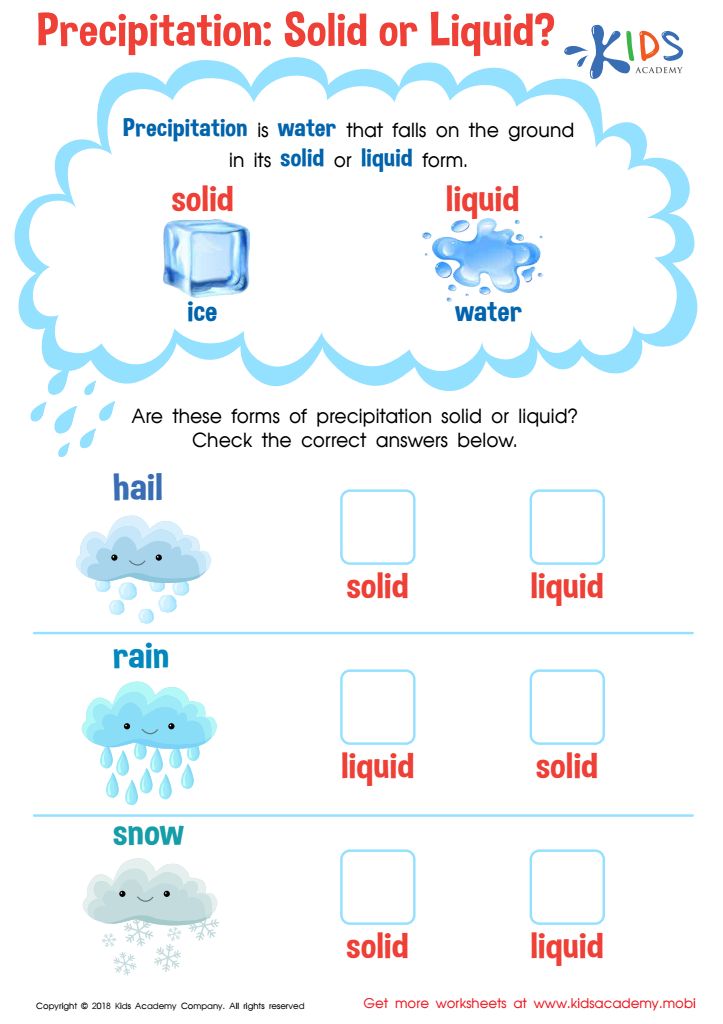
Precipitation: Solid or Liquid? Worksheet








Improving categorization skills in children aged 4 to 8 is crucial for their cognitive development and overall learning. At this age, children are naturally curious and eager to make sense of the world around them. By enhancing their ability to sort and categorize information, parents and teachers facilitate critical thinking and problem-solving skills. Categorization helps children identify similarities and differences, which is foundational for more complex concepts in subjects like math, science, and language arts.
When children can group objects, ideas, or information, they develop a better understanding of relationships and hierarchies. This skill is not only vital for academic success but also assists in social interactions; children learn to recognize patterns in friendships and social situations. Furthermore, strong categorization skills lead to improved memory and organization, helping children to classify and recall information effectively.
Investing in these skills through playful activities, sorting games, and hands-on lessons fosters a love for learning. As a result, children gain confidence in their abilities, paving the way for lifelong learning and adaptability. Thus, parents and teachers play an essential role in nurturing these skills, ensuring children are well-prepared for future challenges in and out of the classroom.








