Improving mental arithmetic Normal Worksheets for Ages 4-8
3 filtered results
-
From - To
Unlock the joys of learning with our "Improving Mental Arithmetic Normal Worksheets" designed specifically for children aged 4-8! These engaging worksheets are perfect for fostering essential math skills through fun and interactive exercises. They focus on enhancing rapid calculation abilities, aiding children in mastering addition, subtraction, and other fundamental concepts. Our thoughtfully crafted activities not only bolster mental agility but also make learning enjoyable! Parents and educators can easily access printable resources to support their students’ growth and confidence in mathematics. Give your child the tools they need for success in early math learning today with our comprehensive worksheets!
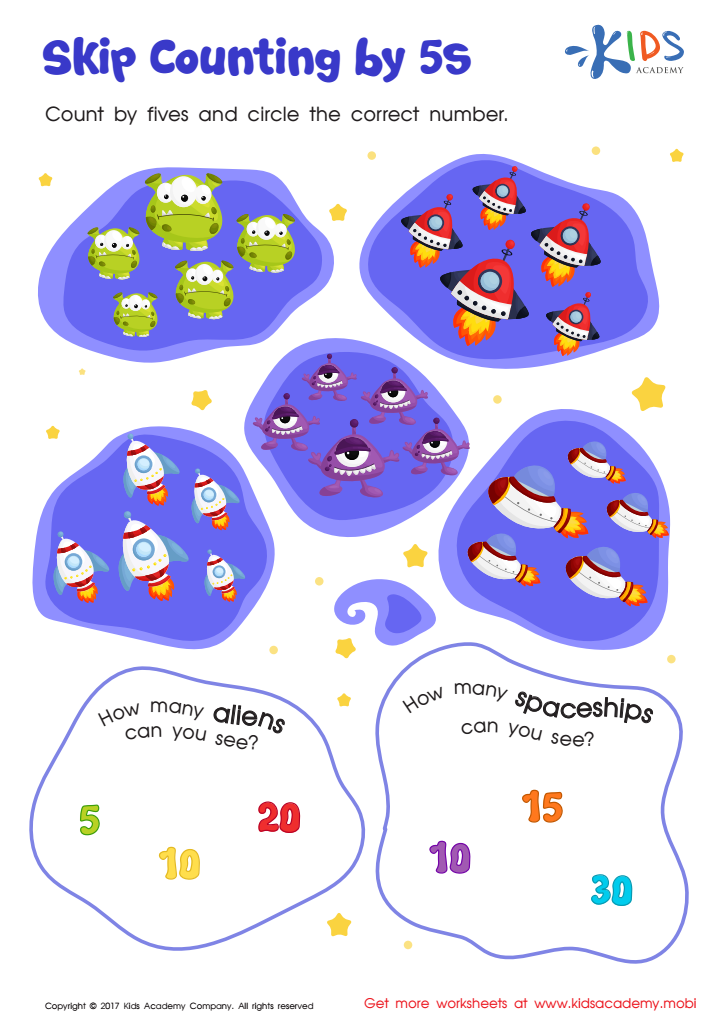
Skip Counting by 5s: Aliens and Spaceships Printable
 Assign to My Students
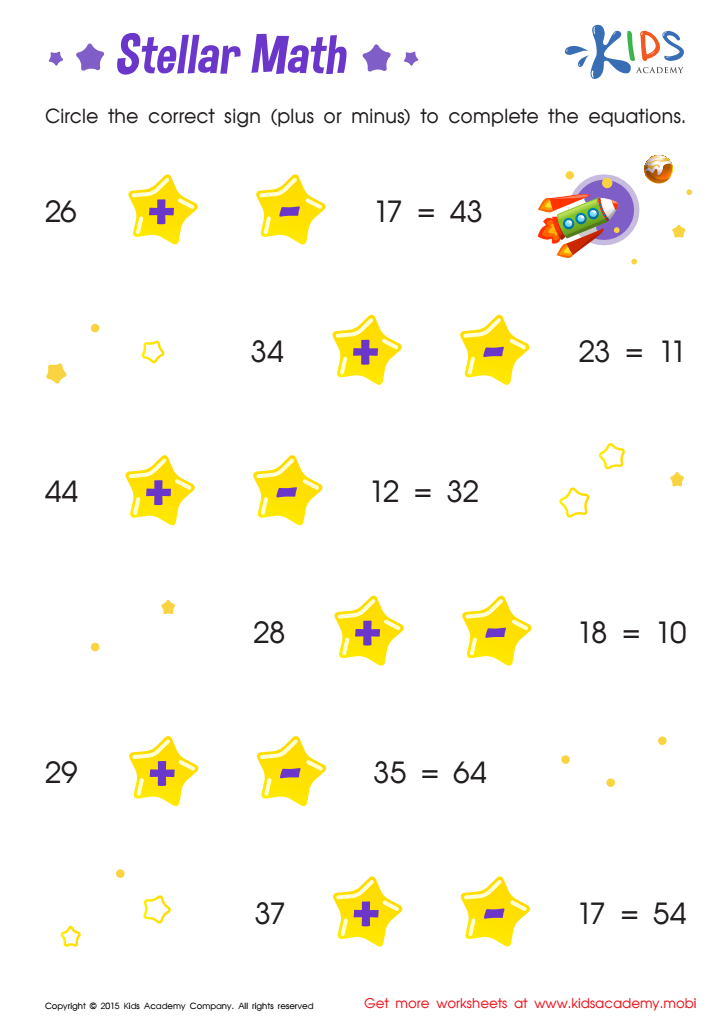
Stellar Math Substraction Worksheet
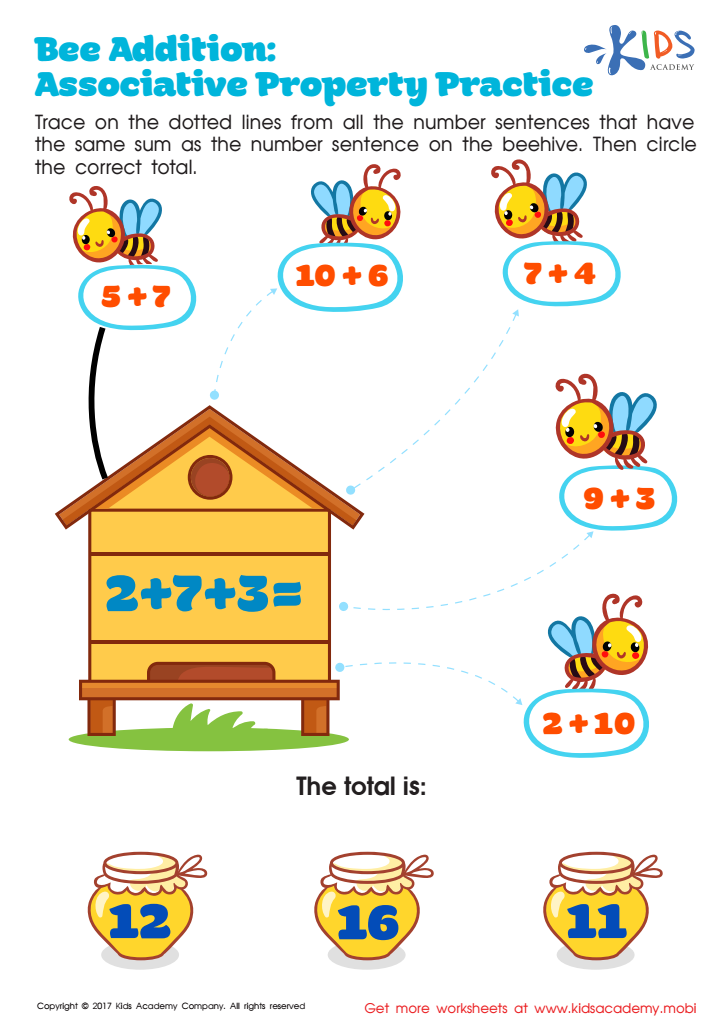
Bee Addition: Associative Property Practice Worksheet






Improving mental arithmetic in children aged 4-8 is essential for several reasons. First, mental arithmetic serves as the foundation for all future mathematical learning. During these formative years, children develop critical cognitive skills that influence their overall academic performance. Enhanced mental arithmetic aids in fostering problem-solving abilities and logical reasoning, which are crucial beyond mathematics.
Moreover, mastering mental arithmetic boosts confidence. Children proficient in basic math can approach math-related tasks with greater assurance, reducing anxiety often associated with subjects. This positivity can have a ripple effect, encouraging them to participate more in classroom discussions and collaborative problem-solving.
Engaging in simple mental arithmetic also promotes brain development. Activities like counting, adding, subtracting, and playing math games stimulate neural pathways and improve memory and concentration. These cognitive skills are essential not only for academic success but for daily life, as children begin to navigate real-world situations that require quick numerical thinking.
Finally, teachers and parents who prioritize mental arithmetic models a positive mindset towards math, showing children that it can be enjoyable and rewarding. By investing in these skills early on, educators and caregivers can lay the groundwork for lifelong mathematical understanding and enjoyment; fostering both academic and personal growth.








