
Information retention Normal Worksheets for Ages 4-8
6 filtered results
Difficulty Level
Grade
Age
-
From - To
Subject
Activity
Standards
Discover our engaging Information Retention Worksheets designed specifically for children ages 4-8. These worksheets help young learners boost their comprehension and memory skills through fun, age-appropriate activities. Our resource features colorful designs and interactive exercises that capture children's attention while promoting cognitive development. Skills practiced include recalling details, identifying key concepts, and responding to prompts, ensuring your child makes meaningful connections with the material. Perfect for home or classroom use, our worksheets encourage independent learning and provide opportunities for parents and teachers to support and assess progress. Start enhancing your child's information retention today with our expertly crafted worksheets!
Favorites
With answer key
Interactive
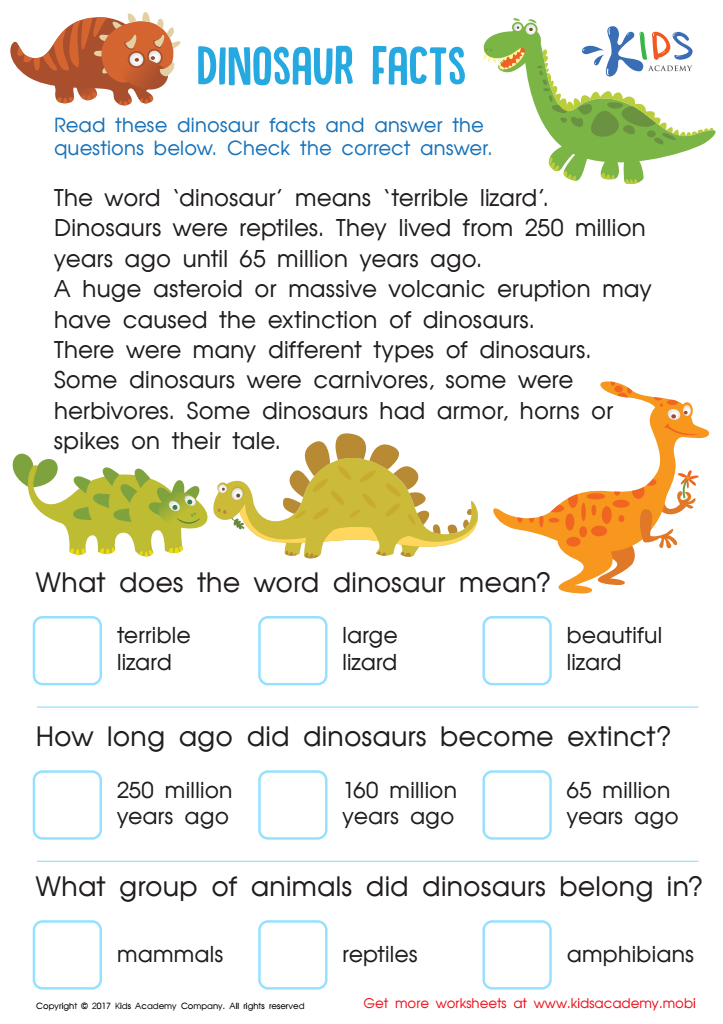
Dinosaur Facts Worksheet
Help your child improve reading skills with engaging nonfiction texts! This dinosaur facts worksheet will teach fun information and test kids on the key details. It'll keep them motivated and ready to learn!
 Assign to My Students
Dinosaur Facts Worksheet
Worksheet
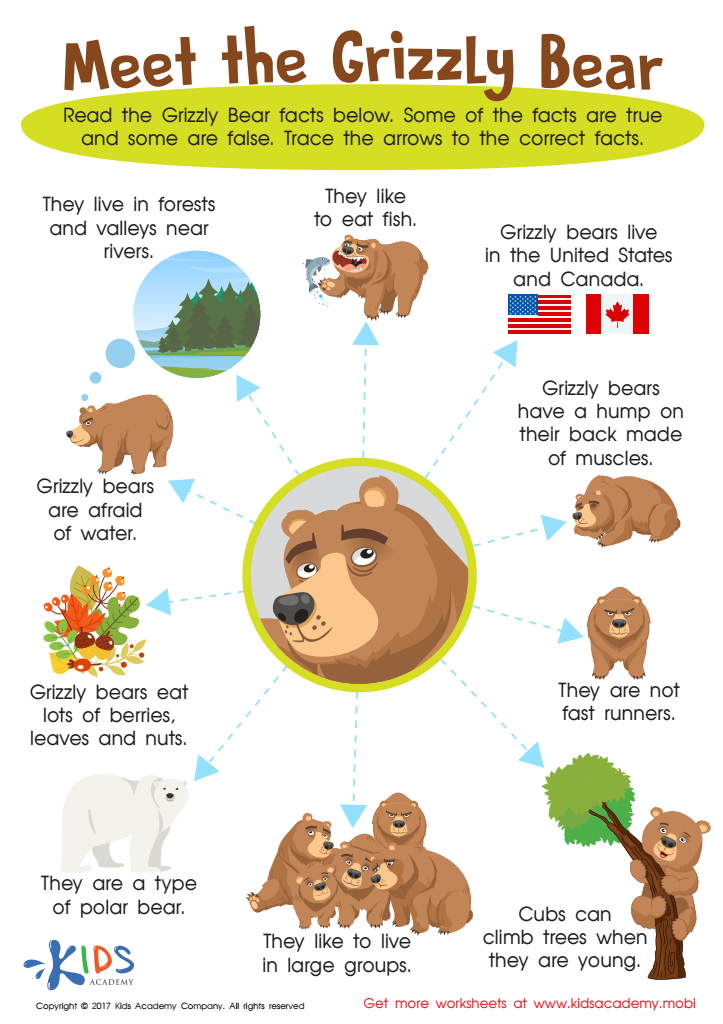
Grizzly Bear Facts Worksheet
Kids will separate truth from fiction in this engaging worksheet about the grizzly bear! Third graders will use their prior knowledge to read the facts and determine which are true and false. Give your child an interesting way to learn more with this vibrant worksheet!
Grizzly Bear Facts Worksheet
Worksheet
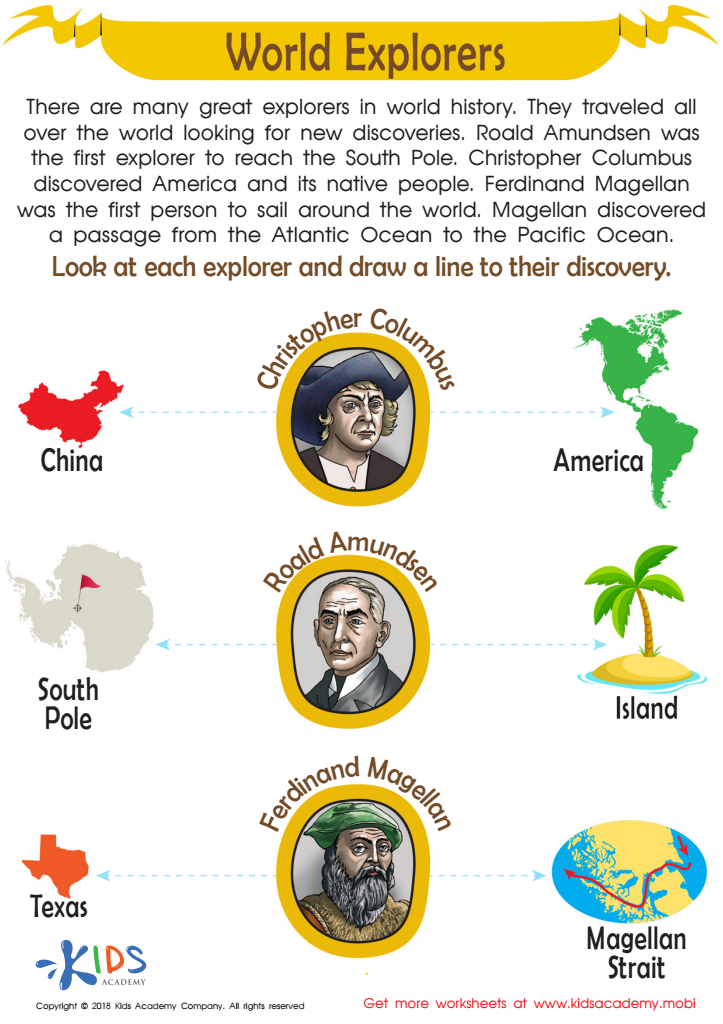
World Explorers Worksheet
Kids are citizens of the world, so it's important to teach them about different cultures and famous explorers. This social studies worksheet helps children learn about the great explorers of history and trace their travels. They'll link Ferdinand Magellan, Christopher Columbus and Roald Amundsen to the places they explored.
World Explorers Worksheet
Worksheet
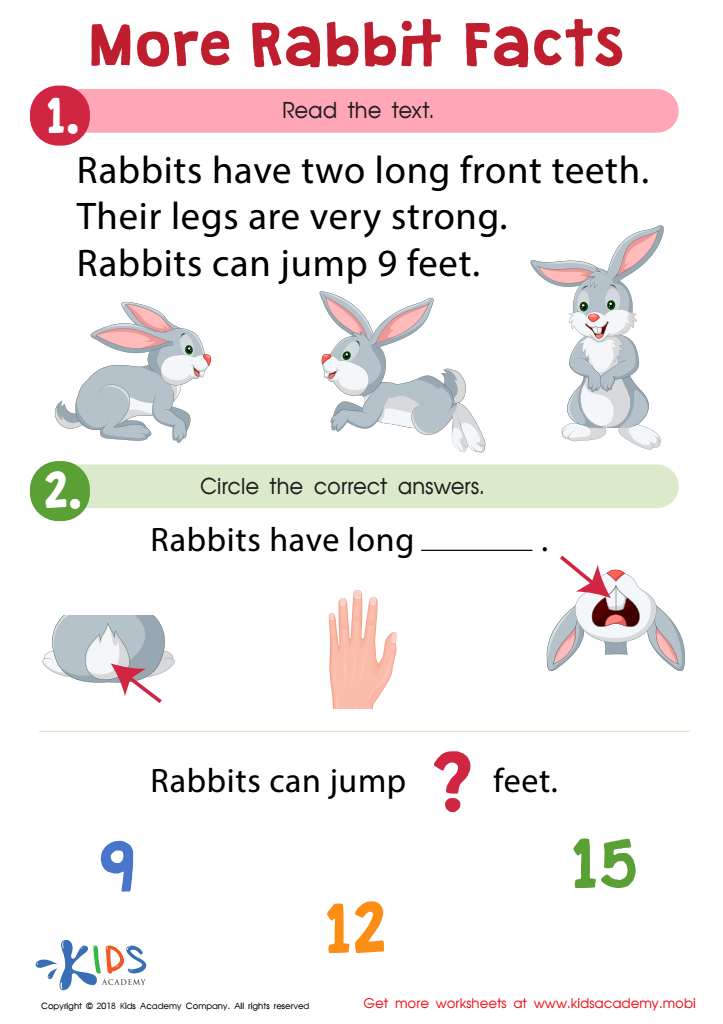
More Rabbit Facts Worksheet
Improve your child's reading comprehension skills with this fun worksheet! Read the paragraph at the top of the page, view the pictures and circle the correct answers indicating what was learned. Develop a better understanding of rabbits while learning how to recall important information from texts.
More Rabbit Facts Worksheet
Worksheet
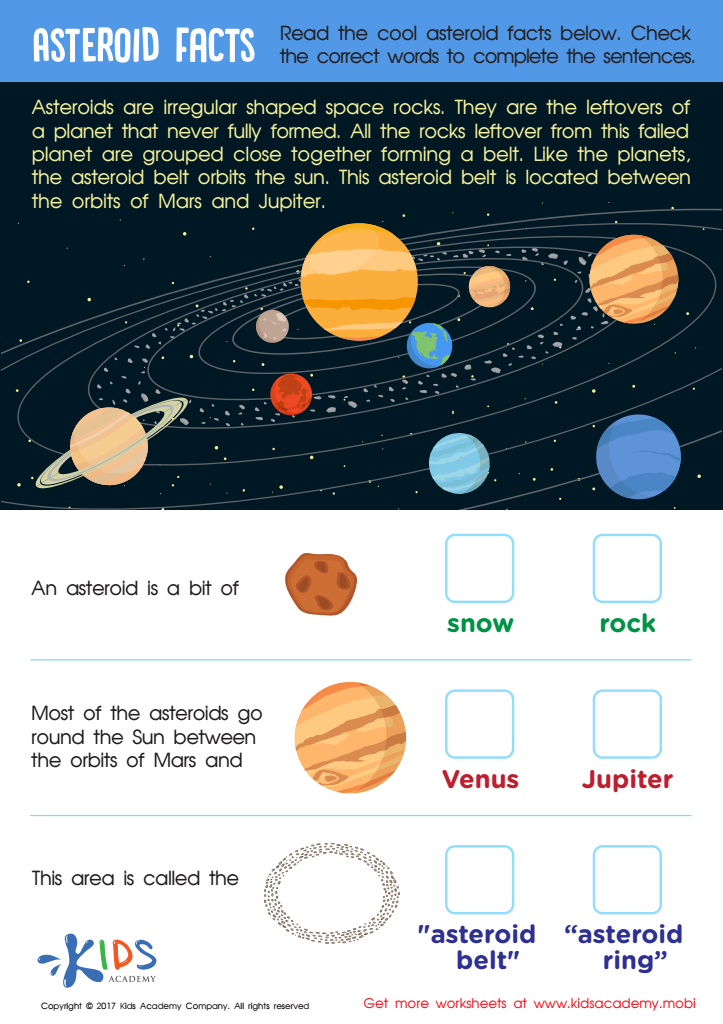
Asteroid Facts Worksheet
Your child can learn about asteroids and hone their comprehension skills with this 2nd-grade asteroid facts worksheet. They'll read a short non-fiction text and select the correct answers to demonstrate understanding of the orbit and properties of these fascinating objects!
Asteroid Facts Worksheet
Worksheet
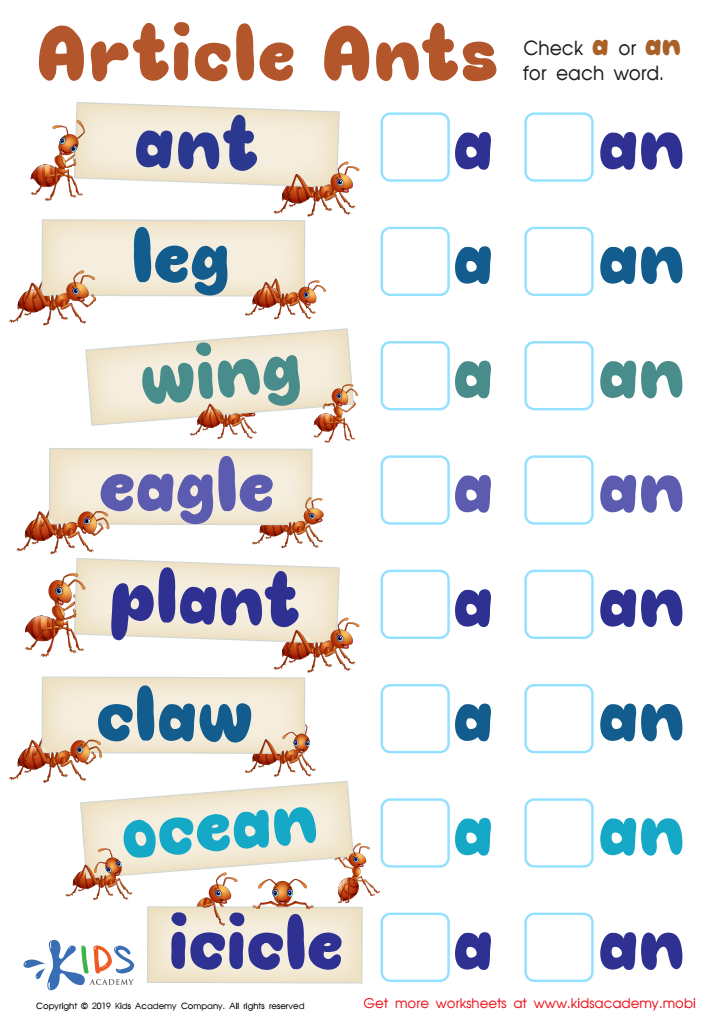
Article Ants Worksheet
Help your child master using "a" and "an" with this fun worksheet! Remind them that "an" goes with vowel sounds, while "a" is used for consonants. Have them check the right box next to each word to complete the activity.
Article Ants Worksheet
Worksheet
Join Kids Academy for Free
Who is primarily going to use this learning content?





Information retention is crucial for children aged 4-8 as it lays the groundwork for future learning. During these formative years, children are developing essential cognitive skills, including memory, attention, and comprehension. Strong information retention helps them grasp foundational concepts in literacy, mathematics, and social skills, which are vital for academic success.
Parents and teachers play a pivotal role in fostering this skill. Effective teaching strategies—like repetition, engaging activities, and real-life applications—can enhance a child's ability to remember and use information. Children often engage in learning through play and exploration, making it important for caregivers to provide rich, stimulating environments conducive to memory-making.
Furthermore, nurturing information retention promotes self-confidence and independence. When children can remember and apply what they've learned, they are more likely to engage in discussions, ask questions, and seek out new knowledge. This not only aids academic achievement but also encourages a lifelong love for learning.
Finally, by understanding the importance of information retention, parents and teachers can work collaboratively to support children, identify any challenges, and implement targeted strategies to optimize learning outcomes, ultimately setting the stage for successful futures.








