
Learning addition Normal Worksheets for Ages 4-8
4 filtered results
Difficulty Level
Grade
Age
-
From - To
Subject
Activity
Standards
Discover the joy of numbers with our Learning Addition Normal Worksheets, crafted for children aged 4-8! These engaging, age-appropriate printables from Kids Academy make mastering basic addition fun and intuitive. Each worksheet combines colorful illustrations with simple math problems, helping young learners develop their arithmetic skills step-by-step. Designed by education experts, our worksheets promote interactive learning, improve counting abilities, and build a solid foundation for future math success. Perfect for use at home or in the classroom, these printables encourage practice, boost confidence, and make math an enjoyable adventure. Start adding the fun way today!
Favorites
With answer key
Interactive
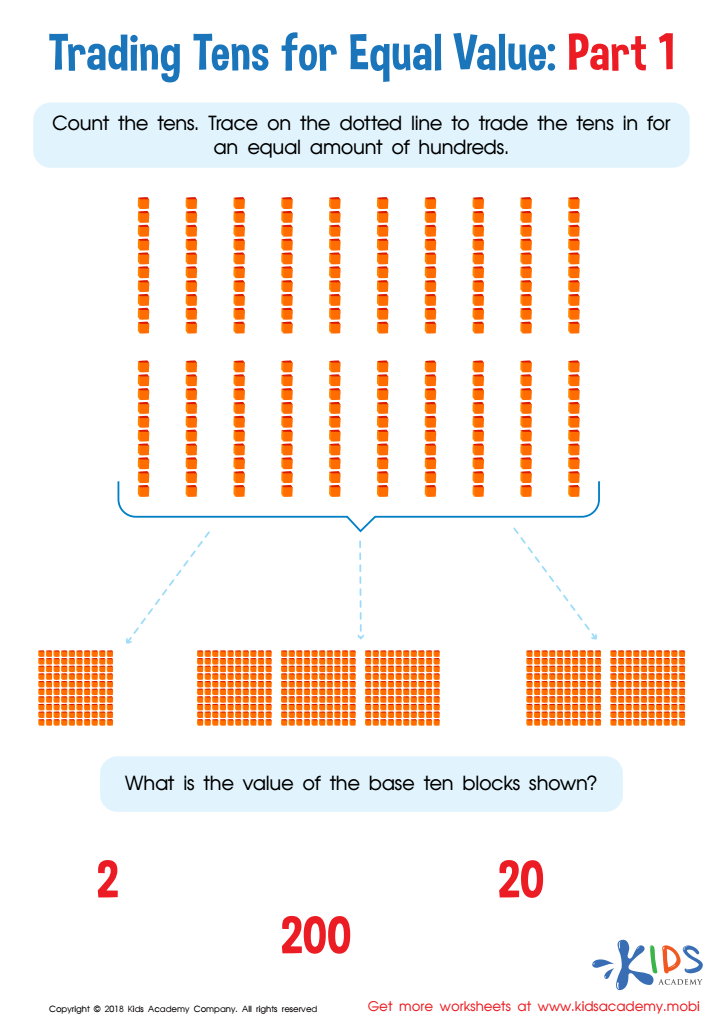
Trading Tens for Equal Value Worksheet: Part 1
This worksheet helps 3rd graders count large numbers and recognize base numbers. It lists 10 cubes and asks students to identify the hundreds, then circle the base blocks. This colorful pdf provides a fun, visual way to help students strengthen their math basics.
 Assign to My Students
Trading Tens for Equal Value Worksheet: Part 1
Worksheet
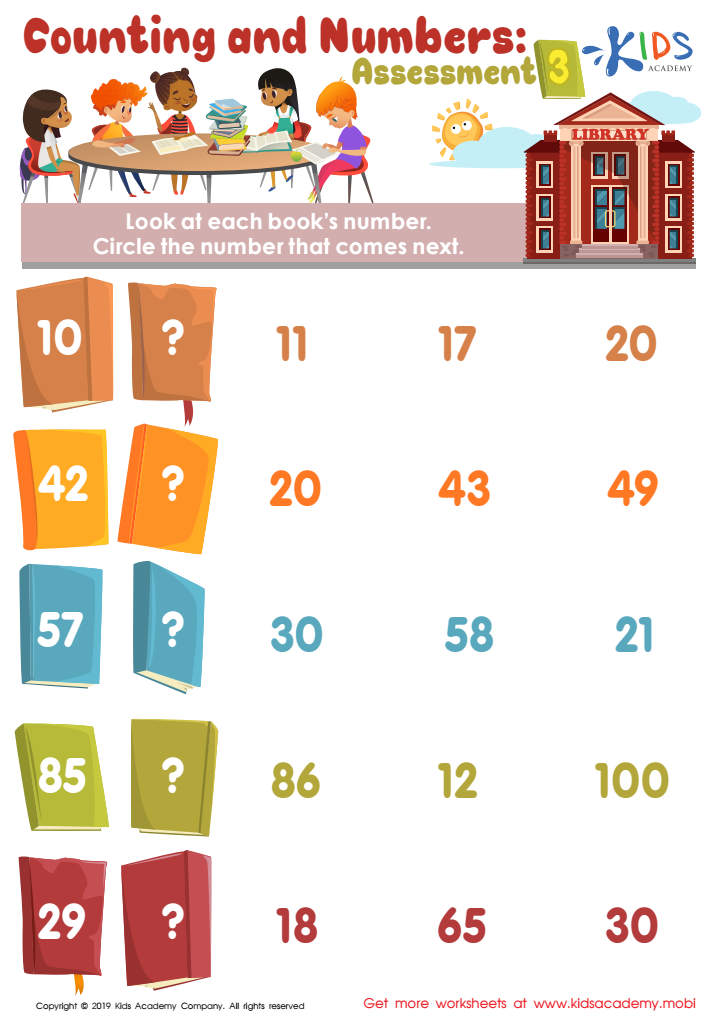
Counting and Numbers: Assessment Worksheet
Number line thinking is an essential math skill. Kids using this skill can compute math problems accurately and quickly. Our free assessment tests number line recognition; have your child pick the right number from the given options to follow the current number on the line. This assessment will give you an idea of their counting skills.
Counting and Numbers: Assessment Worksheet
Worksheet
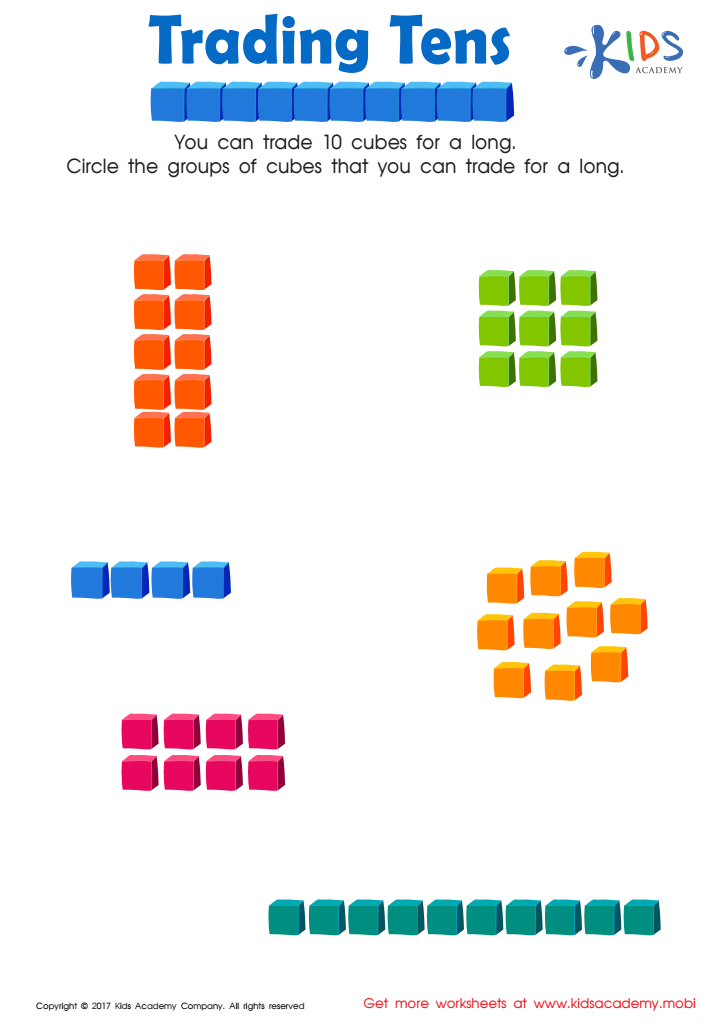
Trading Tens Worksheet
Students will hone their counting skills with this worksheet. They must identify groups of 10 cubes to trade for a long. The cubes are arranged in different ways, so students must rely on individual counting. Completing this printable pdf will help 1st graders develop problem-solving abilities and a better understanding of counting.
Trading Tens Worksheet
Worksheet
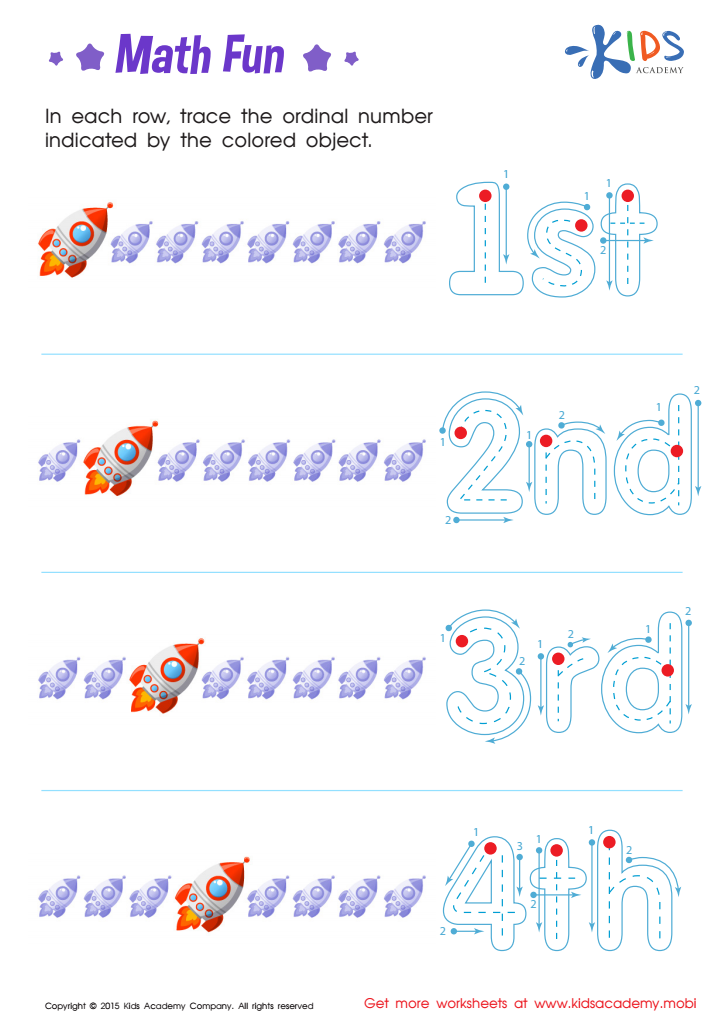
Ordinal Numbers: Math Fun Worksheet
Have fun learning ordinal numbers with our spaceship worksheet! Kids learn best while having fun and with repetition. Featuring vibrant spaceships, your child will understand placement, recognize and write ordinal numbers, and make connections. Understanding ordinal numbers leads to more advanced math concepts. Get your math whiz ready for preschool with our addition/subtraction worksheets! Have fun learning ordinal numbers and master them in no time!
Ordinal Numbers: Math Fun Worksheet
Worksheet
Join Kids Academy for Free
Who is primarily going to use this learning content?








Learning addition at an early age is foundational for children's mathematical development and overall cognitive growth. For ages 4-8, mastering addition benefits them in numerous ways, setting the stage for future success both in school and in real-life applications.
Firstly, addition is a critical building block for more advanced arithmetic skills. When children understand addition, they are better prepared to tackle subtraction, multiplication, and division. This early competence makes learning these subsequent concepts more manageable and less intimidating.
Secondly, learning addition promotes problem-solving and logical thinking. It helps children understand relationships between numbers and develops their ability to identify patterns, enhancing their overall analytical skills. These skills are not only crucial in mathematics but also across all academic subjects and everyday life activities.
Additionally, early success in addition can boost children's confidence and foster a positive attitude toward learning. Struggles with basic math can lead to a lack of confidence and a phobia of mathematics, affecting academic performance and self-esteem.
Parents and teachers play a pivotal role in this learning phase. By creating a supportive environment and using engaging, age-appropriate methods, such as interactive games and hands-on activities, they ensure that children grasp and enjoy addition. This foundational proficiency opens doors to lifelong learning and curiosity, making it an essential area of focus.








