Moral understanding Normal Worksheets for Ages 4-8
5 filtered results
-
From - To
Discover our engaging Moral Understanding Worksheets designed for children aged 4-8. These worksheets foster essential life skills by encouraging kids to explore feelings, differentiate between right and wrong, and develop empathy. Each worksheet is crafted to be age-appropriate, using vibrant visuals and relatable scenarios that captivate young learners. Perfect for classroom use or at-home learning, our resources promote critical thinking as children navigate moral dilemmas and societal values. Support your child's overall development while making learning fun! Dive into our collection today and help nurture compassionate and thoughtful individuals ready to make a positive impact on the world.
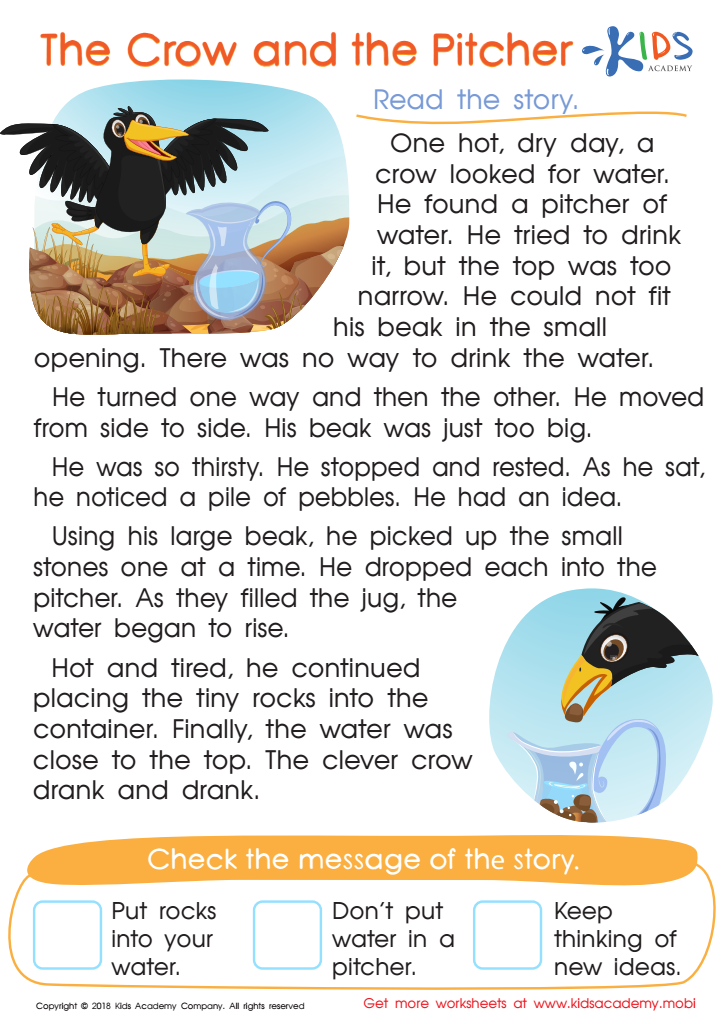
The Crow and the Pitcher Worksheet
 Assign to My Students
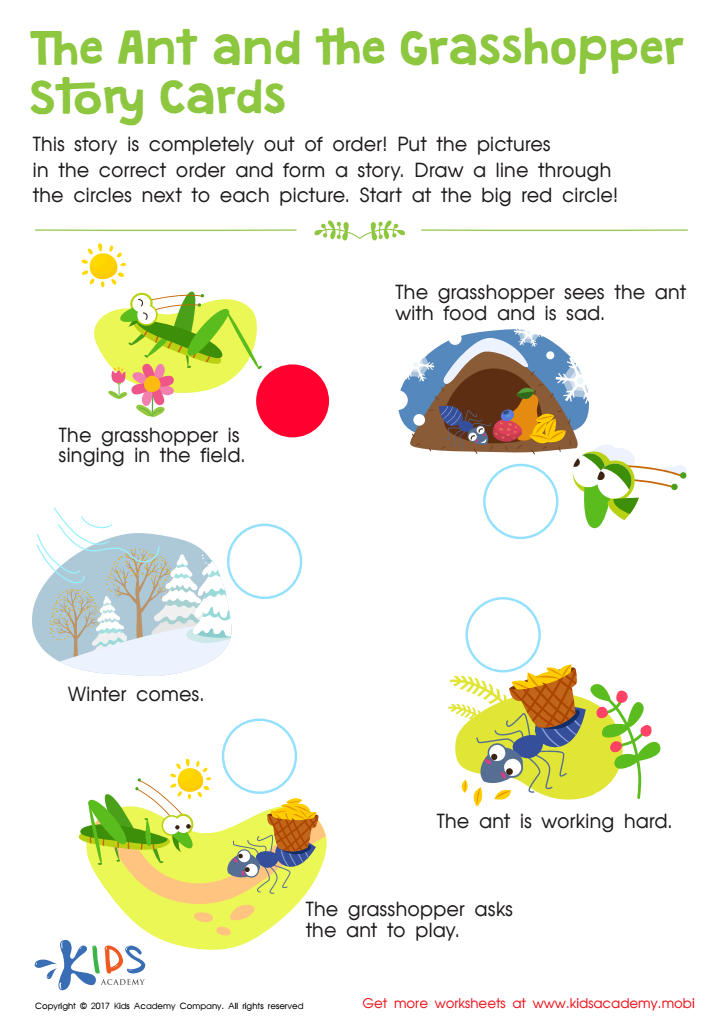
The Ant and The Grasshopper Worksheet
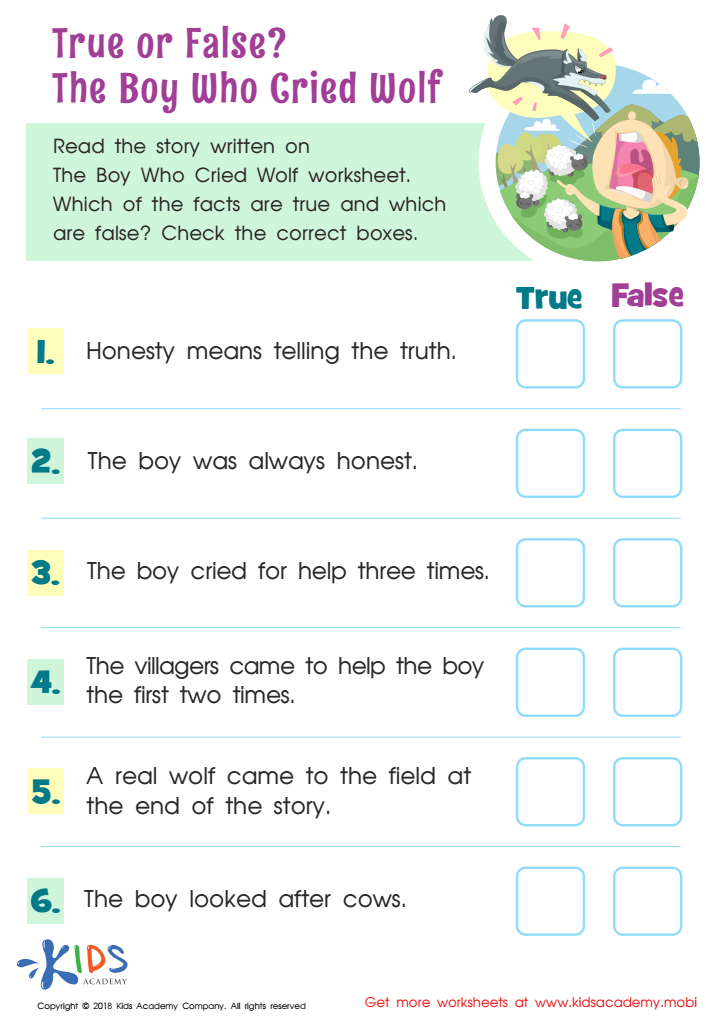
True or False? The Boy Who Cried Wolf Worksheet
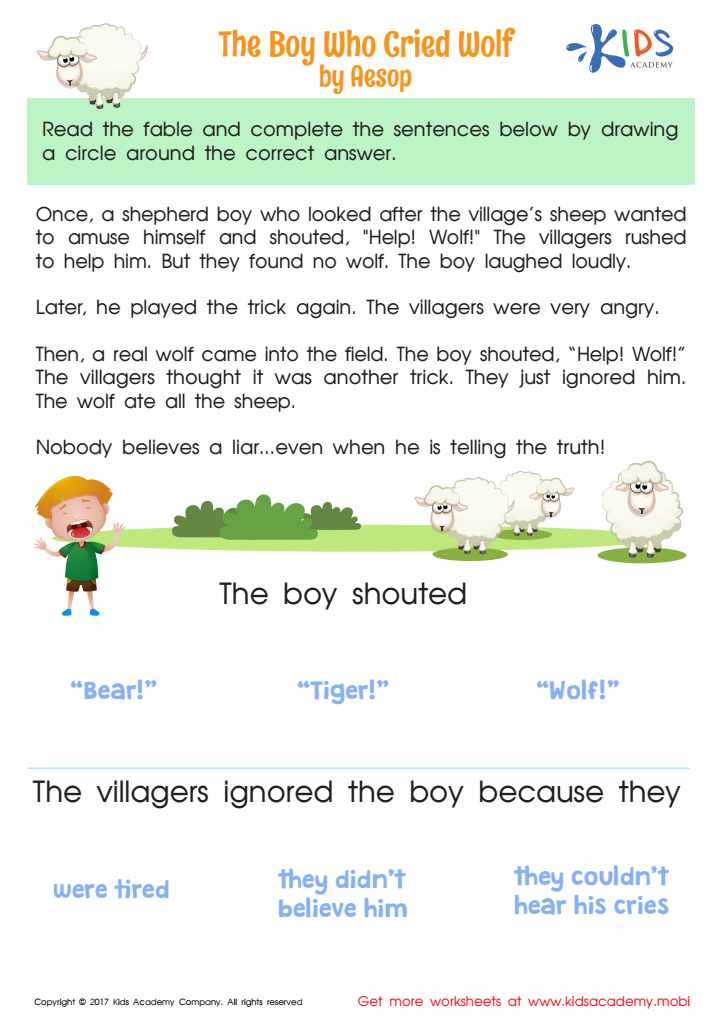
The Boy Who Cried Wolf Worksheet
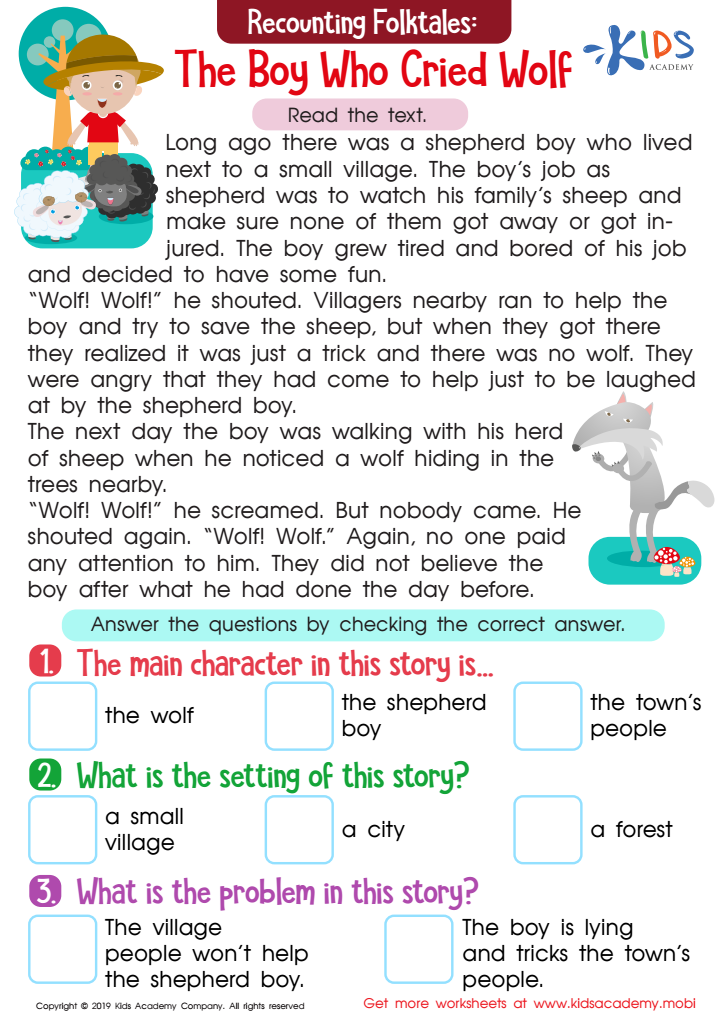
The Boy Who Cried Wolf Part 1 Worksheet





.jpg)
Moral understanding is crucial for children aged 4 to 8 as it lays the foundation for their social interactions and decision-making skills. During these formative years, children begin to grasp concepts of right and wrong, fairness, and empathy. Parents and teachers play a vital role in nurturing this understanding, as it shapes how children connect with others and respond to various situations.
By promoting moral understanding, caregivers help children develop essential social skills, such as cooperation, sharing, and effective communication. These skills are not only important for forming friendships but also for maintaining healthy relationships as they grow. Additionally, moral development encourages children to recognize and respect diversity, fostering inclusivity from an early age.
Engaging children in discussions about ethical dilemmas through stories, games, and role-playing can enhance their critical thinking and emotional intelligence. Overall, a strong foundation in moral understanding supports positive behavior, reduces bullying, and cultivates a more compassionate, community-oriented mindset. When parents and teachers champion moral development, they are not just educating about ethics; they are nurturing future responsible, empathetic adults who can contribute positively to society.








