Number comparison Normal Worksheets for Ages 4-8
5 filtered results
-
From - To
Explore our engaging Number Comparison Normal Worksheets designed for children aged 4 to 8! These worksheets provide a fun and interactive way for young learners to develop essential math skills through number comparison activities. Perfect for preschool and early grade school students, our resources focus on teaching concepts like greater than, less than, and equal to. Vibrant visuals and age-appropriate challenges make learning enjoyable, encouraging children to boost their confidence in math. Print these worksheets easily and integrate them into your curriculum for an effective learning experience. Start nurturing your child's numeracy skills today with our expertly crafted worksheets!
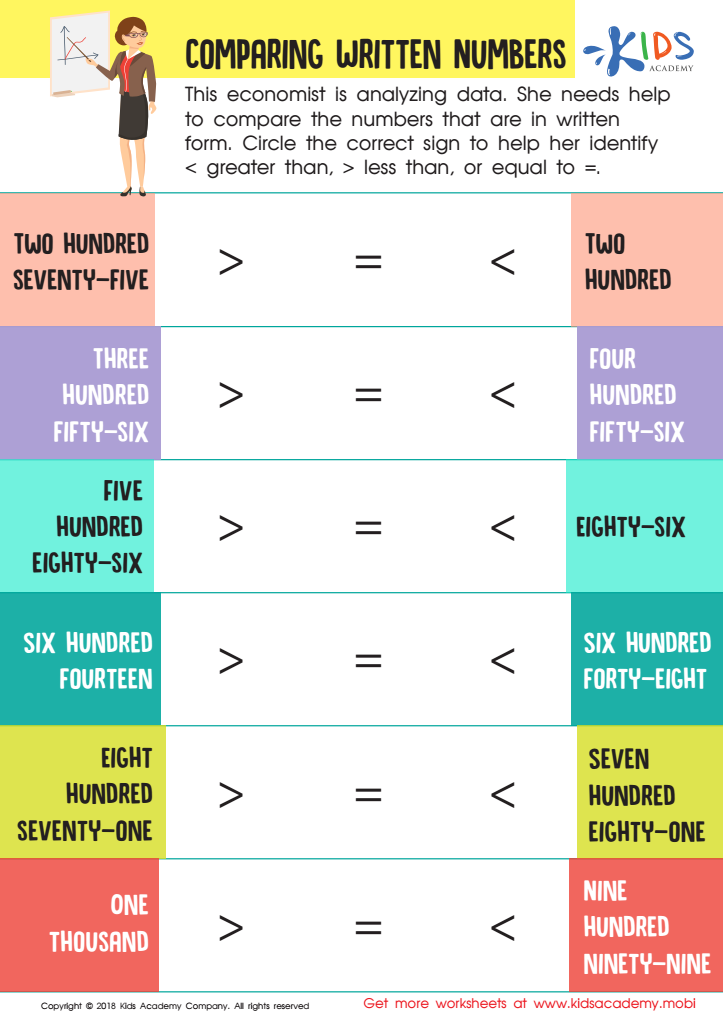
Comparing Written Numbers Worksheet
 Assign to My Students
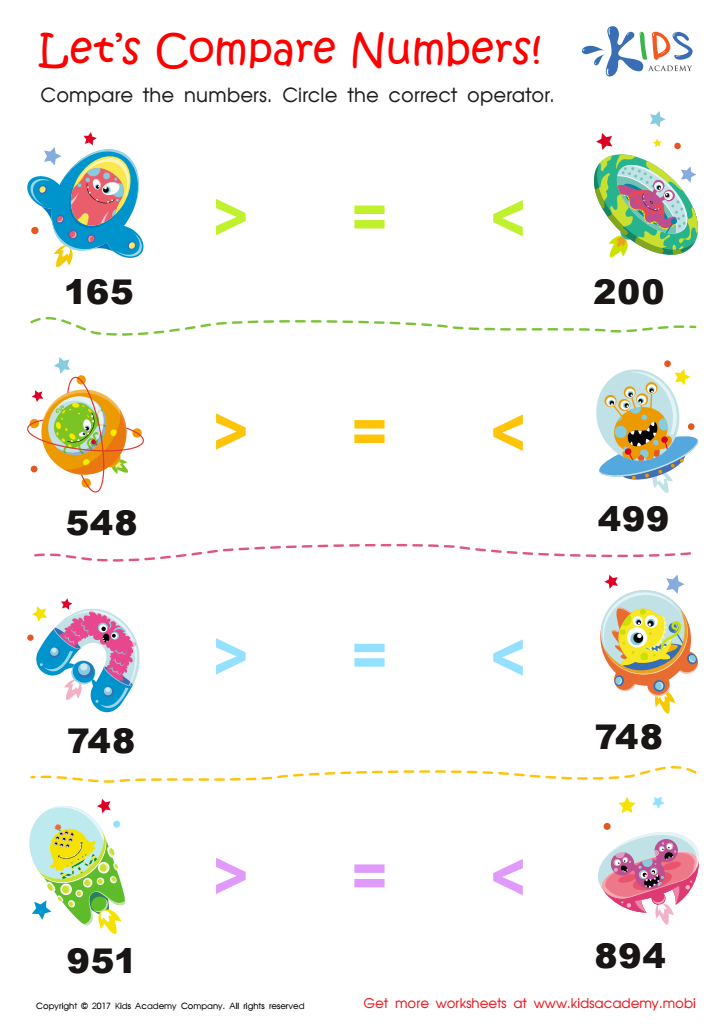
Comparing Numbers Worksheet for 2nd Grade
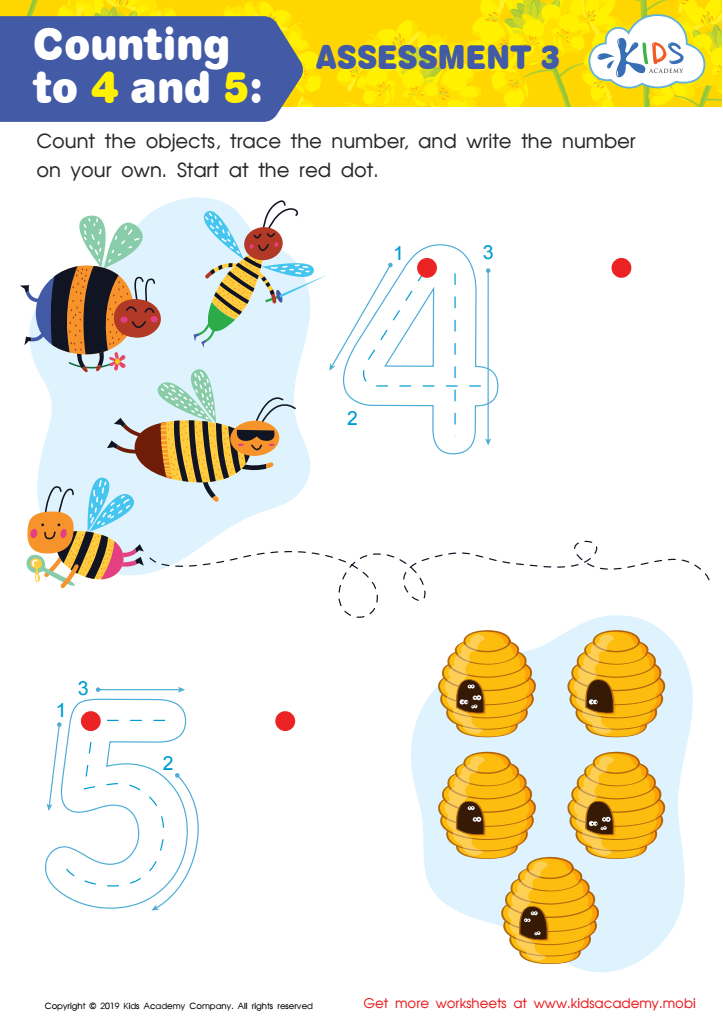
Counting to 4 and 5: Assessment 3 Worksheet
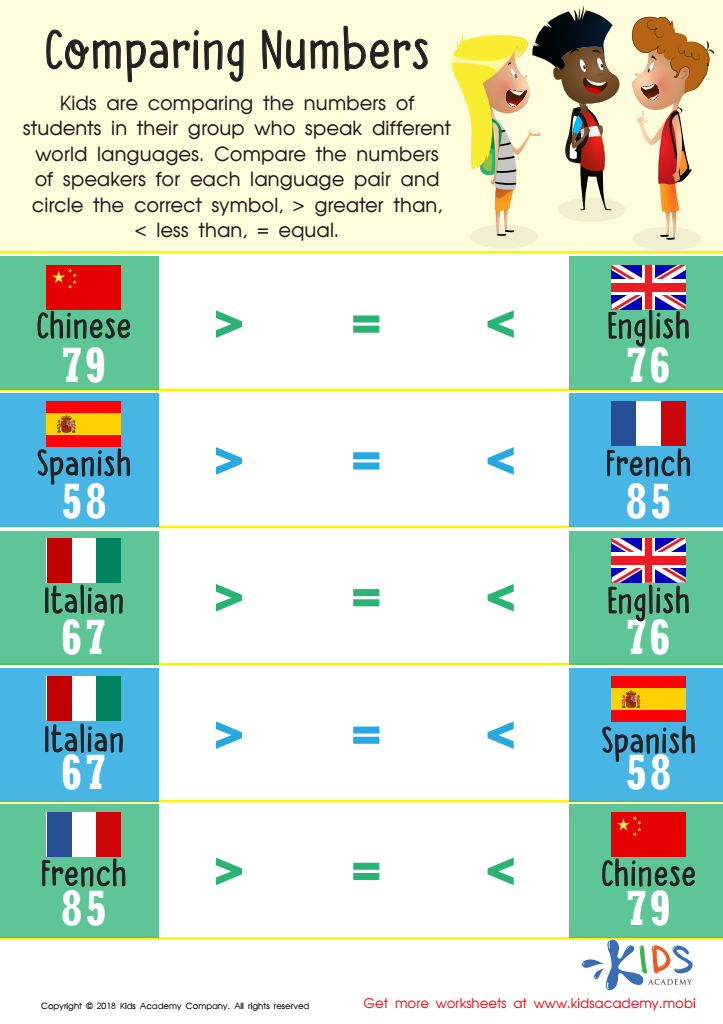
Comparing Numbers Worksheet for 1st Grade
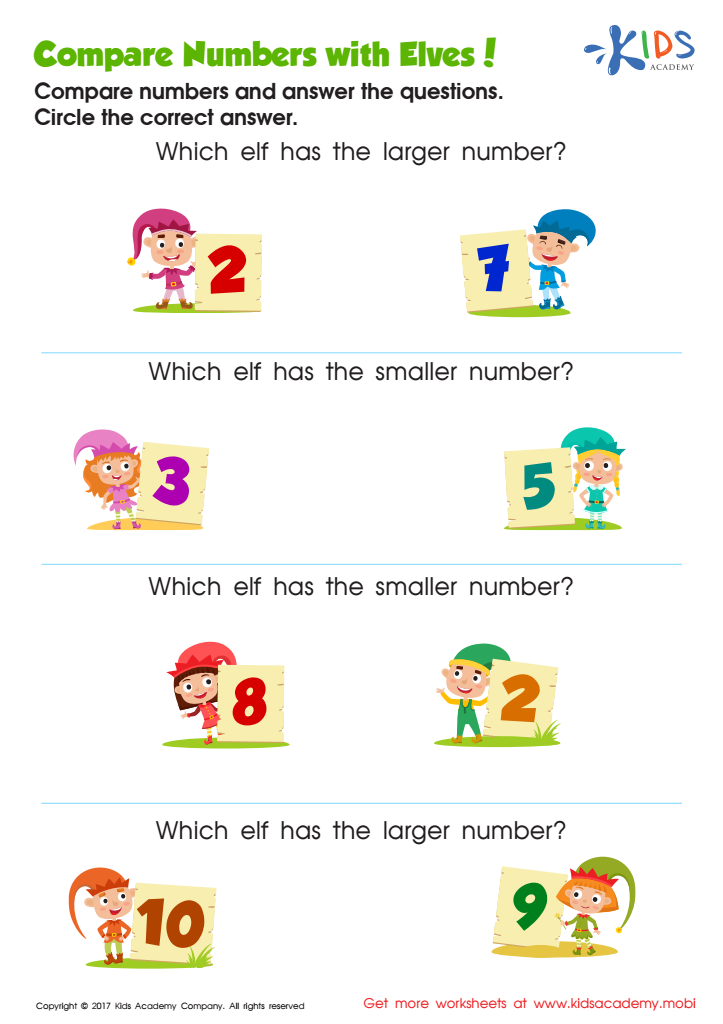
Comparing Numbers Worksheet for Kindergarten








Number comparison is a fundamental mathematical concept critical for children aged 4-8 as it lays the groundwork for their numerical understanding and cognitive development. During these formative years, children are developing essential skills that will impact their future learning. Engaging with number comparison helps young learners grasp the idea of quantity, value, and the relationships between numbers, fostering their ability to solve problems and make decisions based on numerical information.
For parents and teachers, emphasizing number comparison can enhance children's confidence and enjoyment in mathematics, promoting a positive attitude towards the subject. By providing opportunities for children to compare numbers—whether through games, everyday activities, or structured lessons—they improve their reasoning skills and build a solid number sense. This skill is not only vital for academic success in math but also for real-life situations, helping children navigate through activities like budgeting or measuring.
Furthermore, understanding number comparison can support the development of critical thinking and analytical skills, preparing children for more complex mathematical concepts as they progress in their education. Ultimately, fostering this foundational skill encourages a love for learning and assures that children are equipped for future challenges in mathematics and beyond.








