
Phonetics understanding Normal Worksheets for Ages 4-8
3 filtered results
Difficulty Level
Grade
Age
-
From - To
Subject
Activity
Standards
Explore our engaging "Phonetics Understanding Normal Worksheets" designed specifically for children ages 4 to 8. These worksheets are tailored to support early learning, helping young learners grasp fundamental phonetic concepts. Crafted with vibrant visuals and interactive exercises, our resources encourage phonemic awareness, making the process fun and enjoyable. Children will practice identifying sounds, matching letters to sounds, and building essential reading skills through various activities. Perfect for classroom use or at-home learning, these worksheets will foster a strong foundation in phonetics, setting the stage for future literacy success. Dive into our collection and ignite a passion for reading in your little ones!
Favorites
With answer key
Interactive
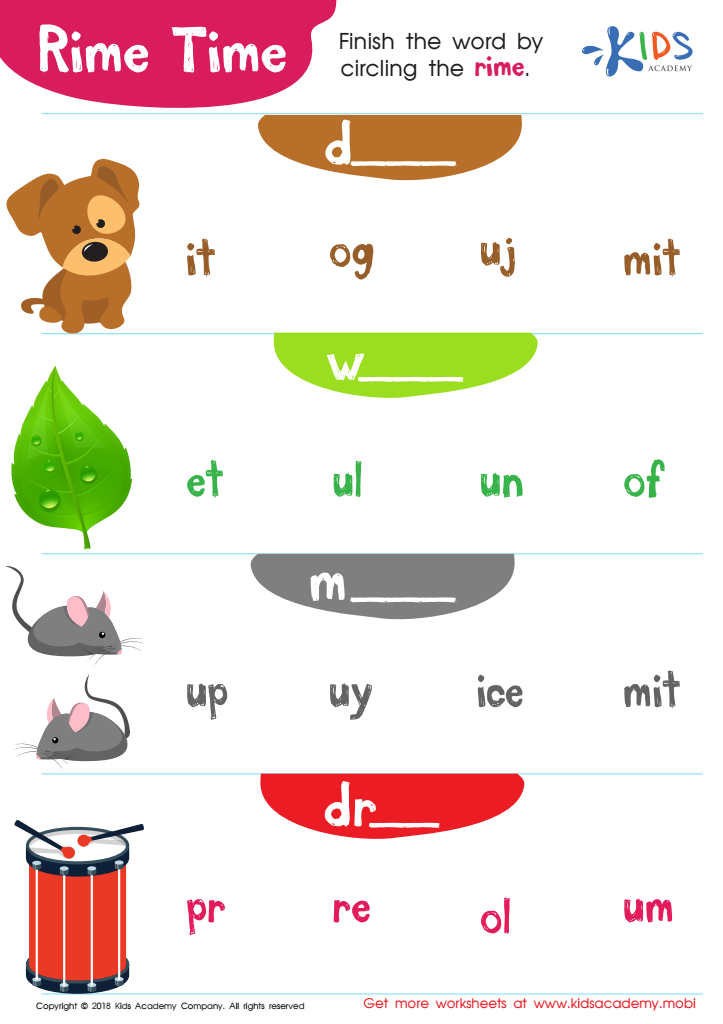
Rime Time Worksheet
This free PDF worksheet helps new and emerging readers identify rimes (the letters after initial consonants) and practice fine motor skills. Kids trace the correct rimes for each picture and increase their fluency and decoding skills with each one!
 Assign to My Students
Rime Time Worksheet
Worksheet
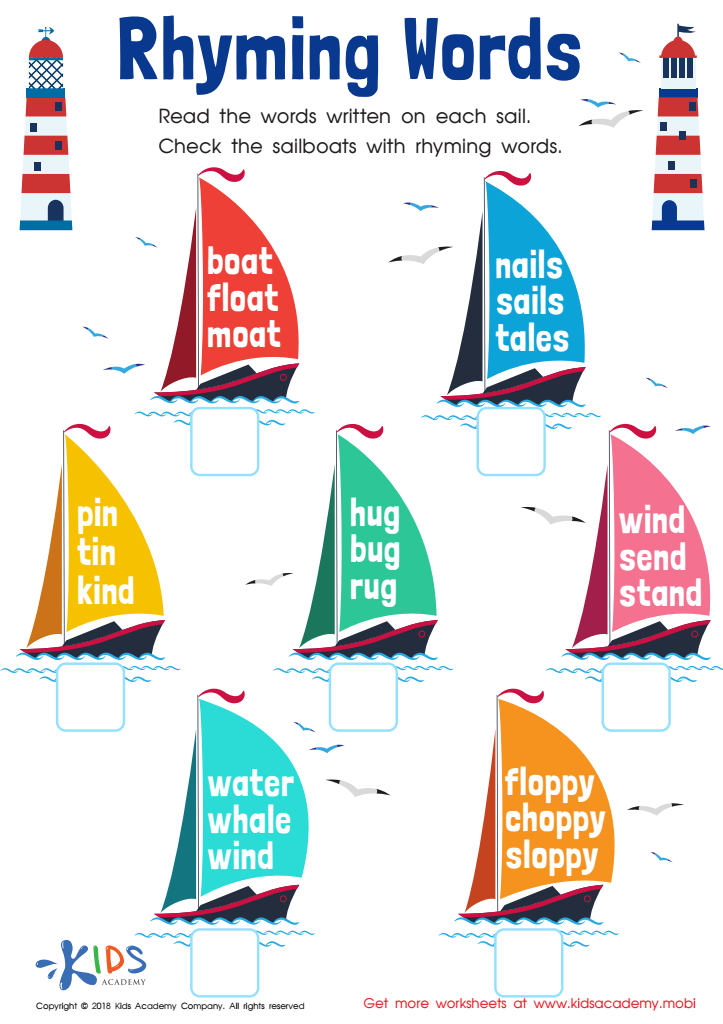
Rhyming Words Worksheet
Does your child know about rhyming words? Get them interested in poetry and explain that these words have similar sounds when pronounced. Read the words on each sailboat to your child and ask them to identify the rhyming pairs. Guide them to check the sailboats.
Rhyming Words Worksheet
Worksheet
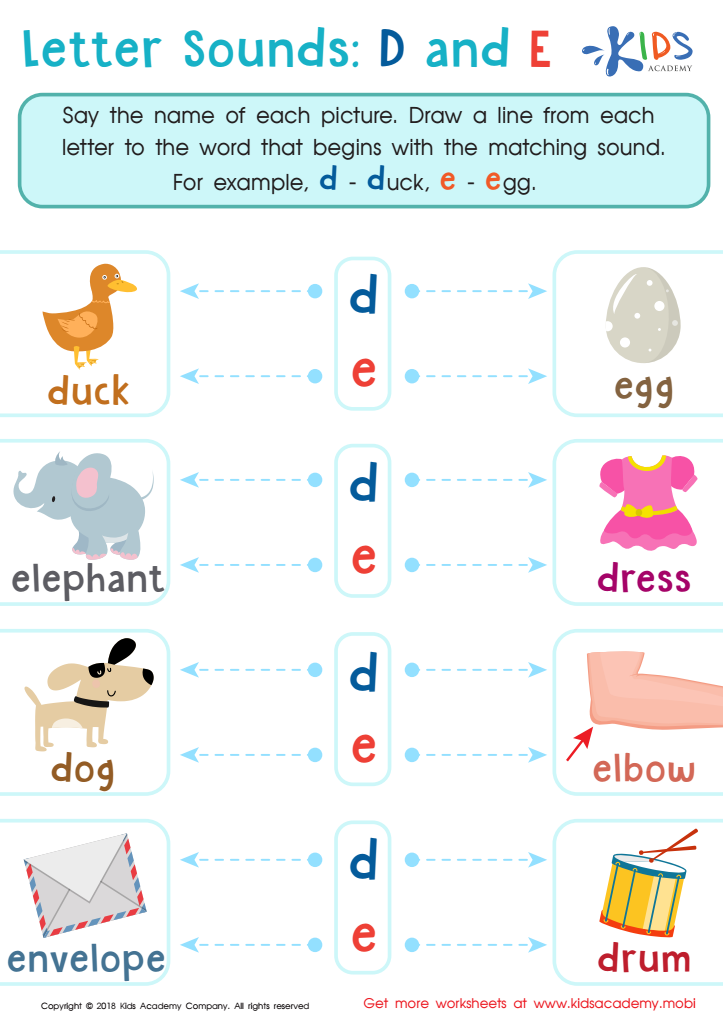
Letter D and E Sounds Worksheet
Kids can use picture clues and visual discrimination to name cheerful pics and isolate the beginning sound. This free PDF worksheet will help them develop phonological awareness, differentiate between "D" and "E", and hone fine-motor skills. It'll also boost their confidence as they become readers.
Letter D and E Sounds Worksheet
Worksheet
Join Kids Academy for Free
Who is primarily going to use this learning content?



.jpg)



Parents and teachers should care about phonetics for children aged 4-8 because it lays the foundation for reading and writing skills. Phonetics involves the sounds of language, and understanding these sounds enables children to decode words, a crucial step in literacy development. By recognizing that letters correspond to specific sounds, children learn to blend sounds to form words, enhancing their ability to read fluently.
Furthermore, phonetic awareness contributes to better spelling skills. As children learn to segment sounds in words, they can more easily connect sounds to their written forms, leading to improved writing abilities. This understanding also boosts their confidence; proficiency in reading allows young learners to explore literature, sparking imagination and creativity.
Additionally, children with a solid grasp of phonetics often exhibit stronger language skills overall, aiding their communication and discourse in social situations. This lays the groundwork for successful academic trajectories. Finally, fostering a phonetic understanding encourages a lifelong love for reading and learning, equipping children with essential skills they'll need in the future. In summary, phonetics is not merely a skill but a vital tool that shapes a child's overall educational experience and personal growth.








