Practicing subtraction Normal Worksheets for Ages 4-8
3 filtered results
-
From - To
Our "Practicing Subtraction" worksheets for ages 4-8 help young learners build and strengthen their subtraction skills in a fun and engaging way. Designed to capture children's interest, these worksheets blend colorful visuals with compelling activities to make subtraction practice enjoyable and effective. Perfect for early learners, these printable resources support foundational math skills essential for future academic success. Whether at home or in the classroom, delight kids with structured tasks that improve their problem-solving abilities and boost math confidence. Enhance your child's number proficiency with Kids Academy’s expertly crafted subtraction worksheets.
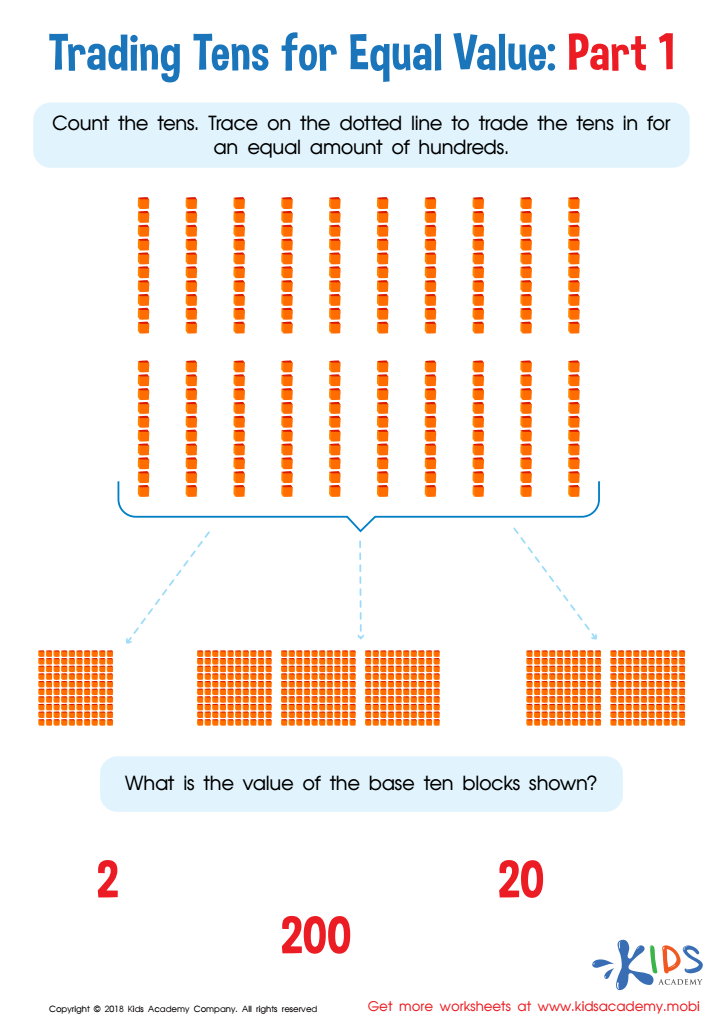
Trading Tens for Equal Value Worksheet: Part 1
 Assign to My Students
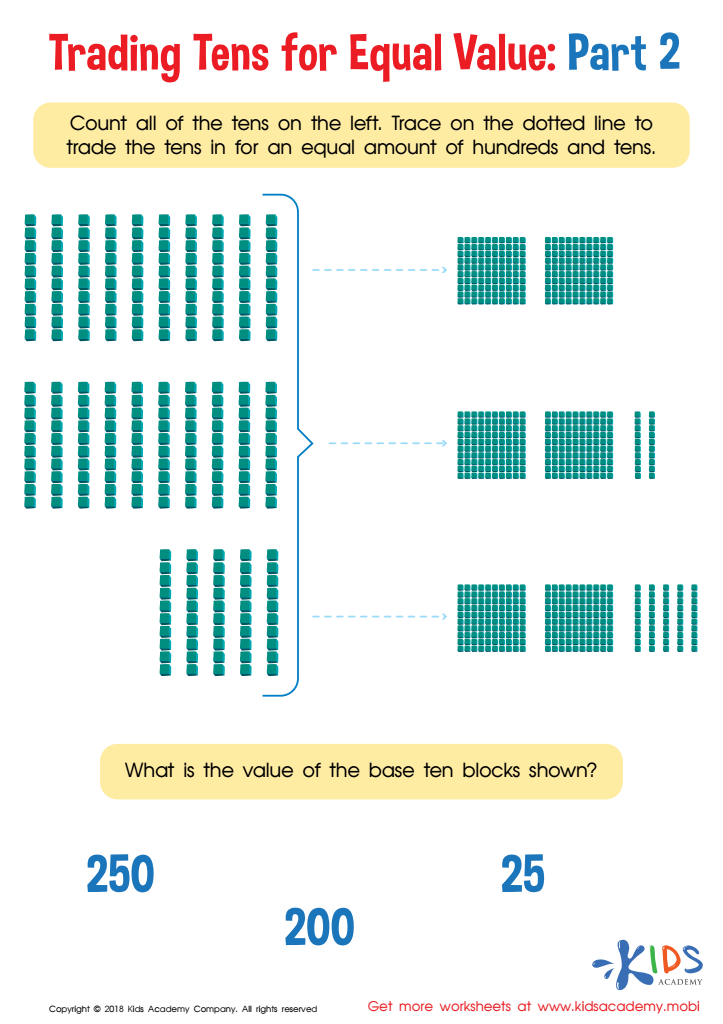
Trading Tens for Equal Value Worksheet: Part 2
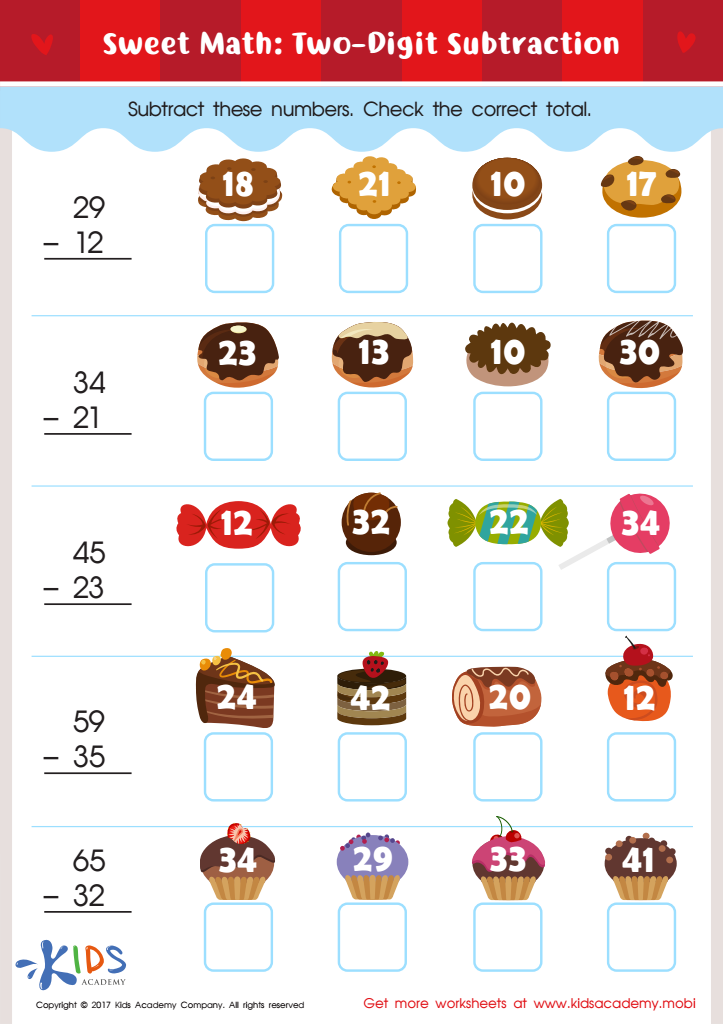
Two Digit Subtraction Worksheet







Practicing subtraction for children ages 4-8 is crucial for several reasons. First, subtraction is a fundamental math skill that serves as the building block for more complex mathematical concepts. Mastering these early basics ensures that children are prepared for future learning and problem-solving tasks. By gaining proficiency in subtraction, children develop critical thinking and reasoning abilities, as they learn to compare quantities, understand differences, and relate subtractive processes to real-life situations, such as sharing and distributing items.
Second, practicing subtraction at an early age helps build a positive attitude towards math. Early exposure to math in a fun and constructive environment can make the subject less intimidating and more engaging. Parents and teachers who integrate subtraction games, activities, and daily practices can turn learning into an enjoyable experience.
Additionally, subtraction skills complement other areas of cognitive development such as memory and attention span. For example, when children practice subtraction, they often need to recall specific numerical facts and concentrate on the steps involved. This not only boosts their mathematical skills but also enhances their overall academic performance.
Therefore, prioritizing subtraction practice for young children equips them with essential life skills, augments their academic journey, and fosters a lasting appreciation for mathematics.








