Reading thermometers Normal Worksheets for Ages 4-8
3 filtered results
-
From - To
Enhance your child's understanding of temperature with our "Reading Thermometers Normal Worksheets" designed for ages 4-8. These engaging, interactive printables help young learners practice reading thermometers accurately! Each worksheet is specially crafted to develop essential math and science skills while promoting critical thinking. Children will encounter various temperature scales, read thermometer levels, and solve fun, age-appropriate problems. Perfect for classroom activities or home learning, these worksheets encourage hands-on engagement and problem-solving. Give your little ones the tools they need to become confident in reading thermometers and understanding temperature concepts through fun and educational practice!
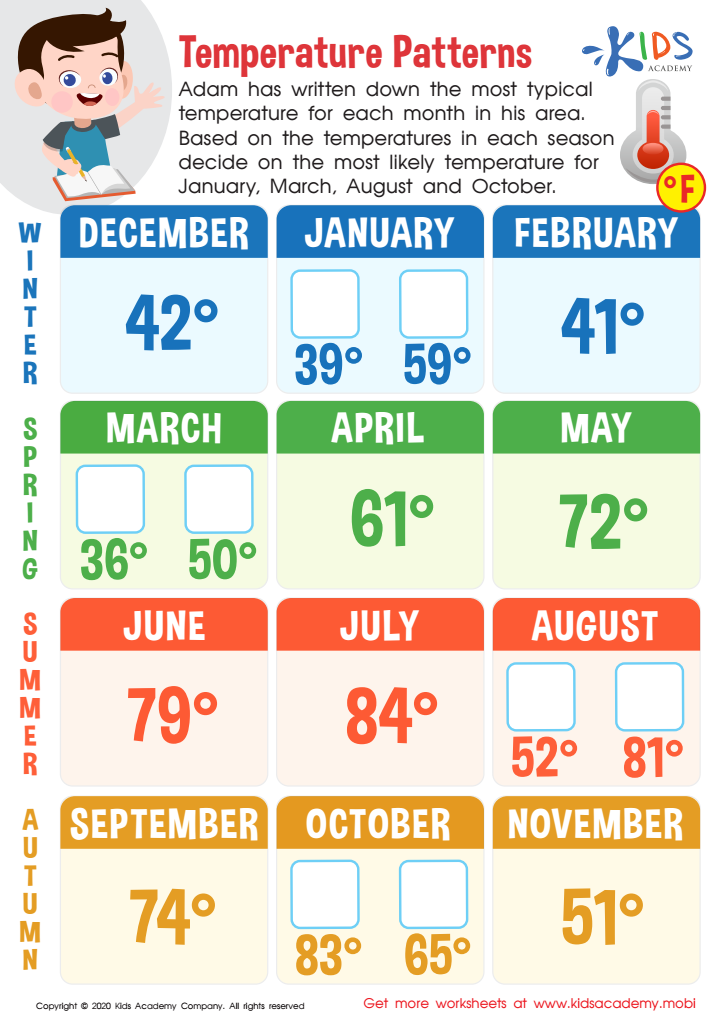
Temperature Patterns Worksheet
 Assign to My Students
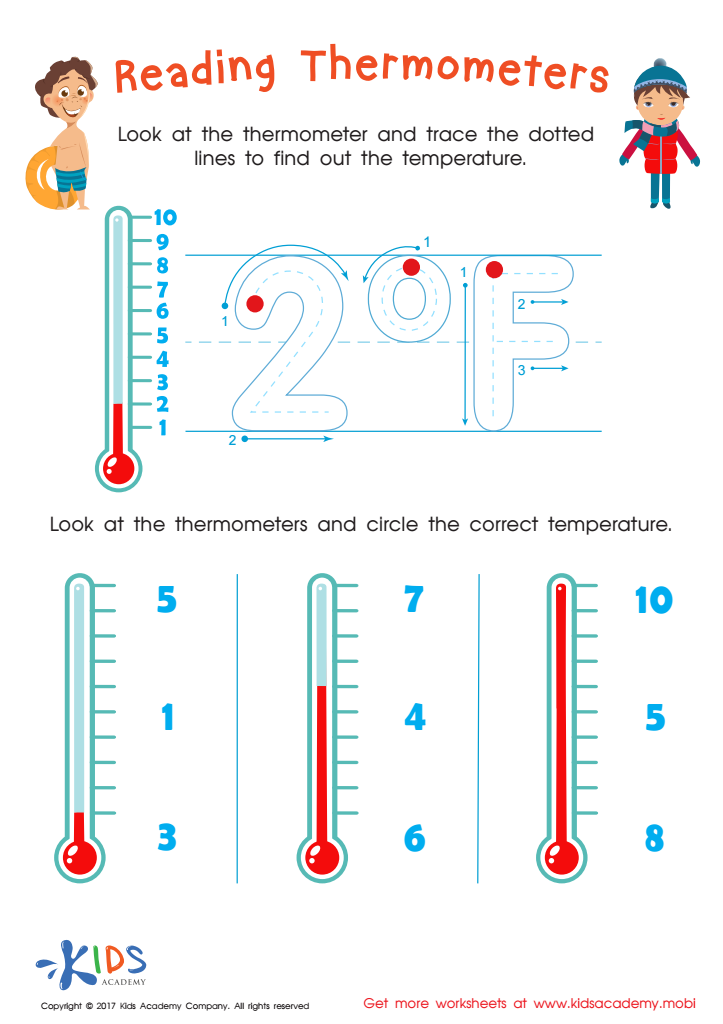
Reading Thermometers Printable
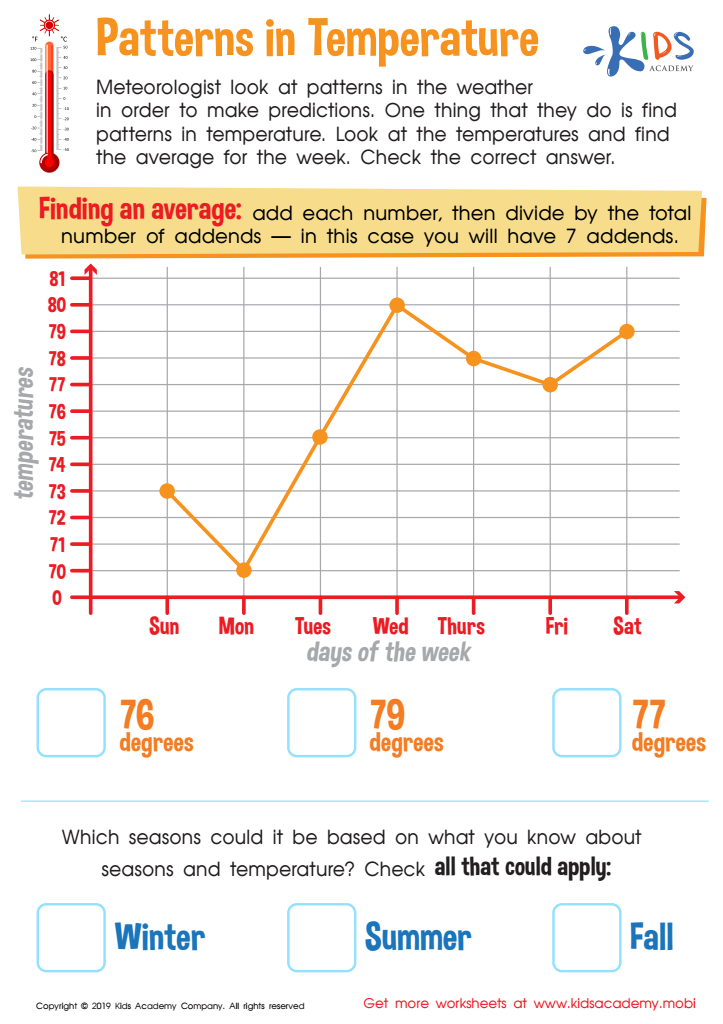
Patterns in Temperature Worksheet






.jpg)

Understanding reading thermometers and their normal ranges is essential for parents and teachers, especially for children aged 4 to 8. During early childhood, children are more susceptible to illnesses, making it important to monitor their health closely. A normal temperature range typically falls between 97°F (36.1°C) and 100.4°F (38°C); knowledge of this range helps caregivers quickly identify when a child may be unwell.
Awareness allows parents and teachers to take prompt action, whether it's seeking medical advice or providing appropriate care at home. This vigilance can lead to early detection of infections, which can prevent serious complications and promote better health outcomes.
Moreover, educating children about temperature monitoring can instill lifelong health habits. Teaching kids the importance of self-care, including recognizing when they are feeling unwell or understanding how thermometers work, fosters independence and empowers them to communicate their health needs.
In a school environment, understanding the normal temperature range helps teachers create a safe space, minimizing the spread of illness among peers. In sum, knowledge of reading thermometers is not just a health concern; it's an essential aspect of nurturing well-being and physical literacy among young learners.








