Recognizing number patterns Normal Worksheets for Ages 4-8
4 filtered results
-
From - To
Discover our engaging "Recognizing Number Patterns Normal Worksheets" designed specifically for children aged 4-8. These worksheets help young learners identify and understand numerical sequences through fun and interactive activities. By working through these exercises, kids will enhance their critical thinking and problem-solving skills in a playful environment. Each worksheet features colorful visuals and age-appropriate challenges, making mathematics enjoyable and accessible. Teachers and parents can easily print and use these resources to support early math education at home or in the classroom. Foster a love for numbers while building foundational math skills today with our delightful pattern recognition worksheets!
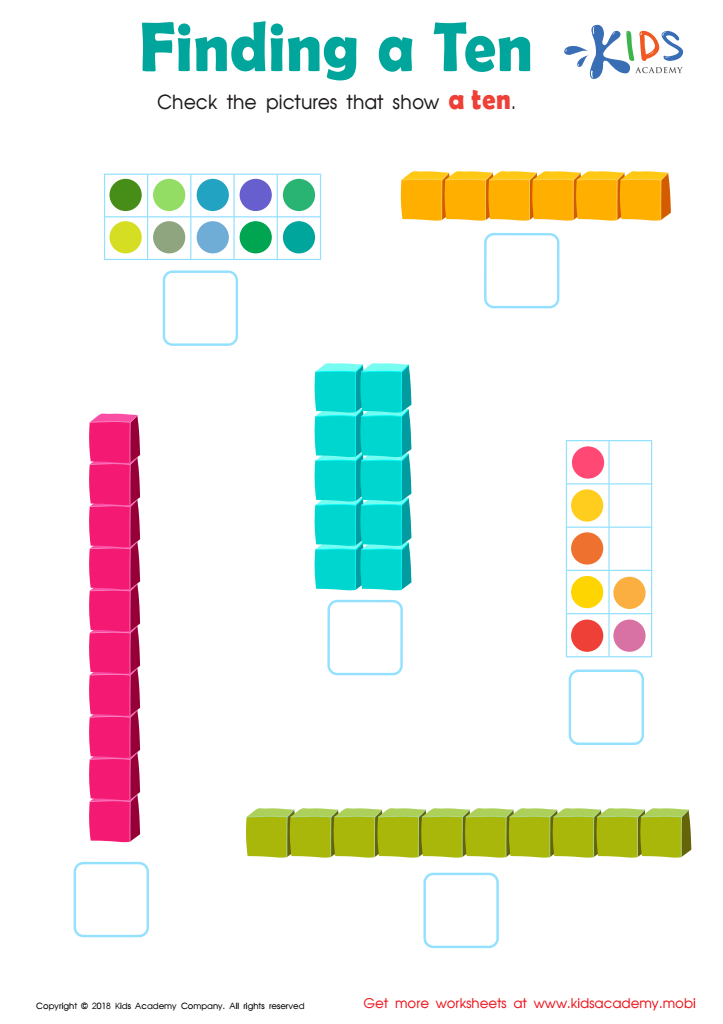
Finding a Ten Worksheet
 Assign to My Students
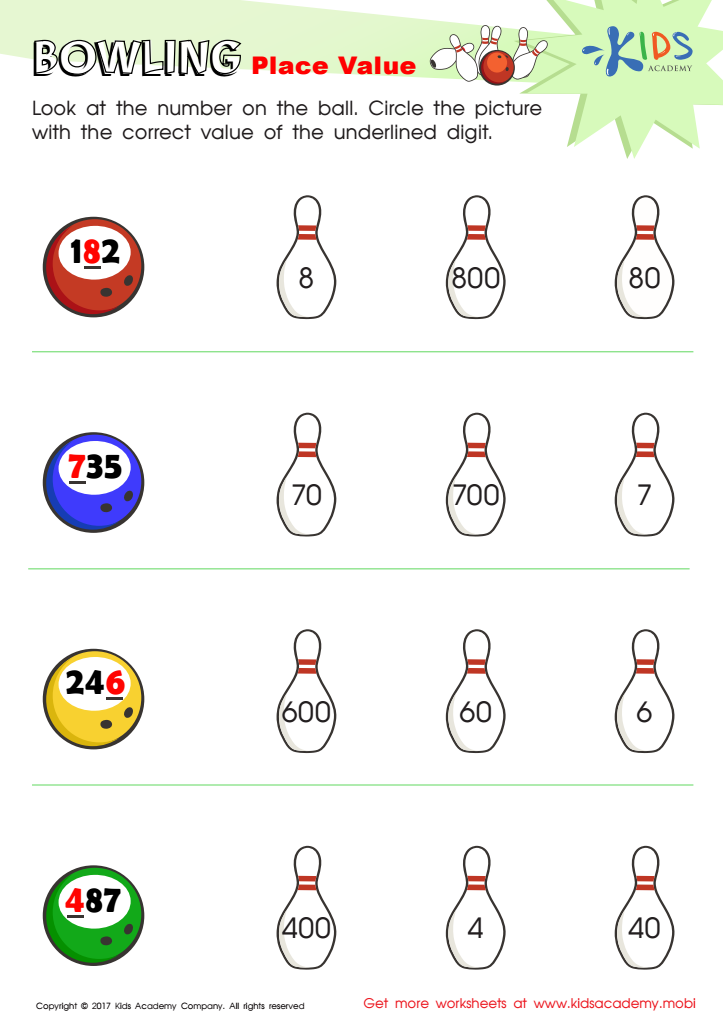
Place Value Worksheet
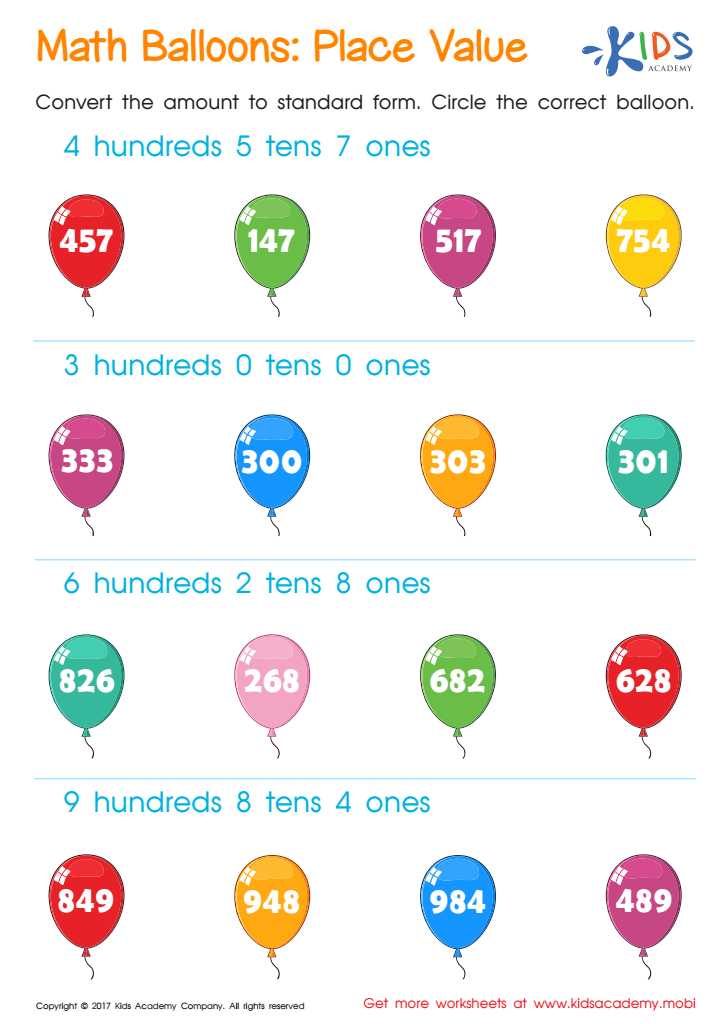
Place Value Printable Worksheet
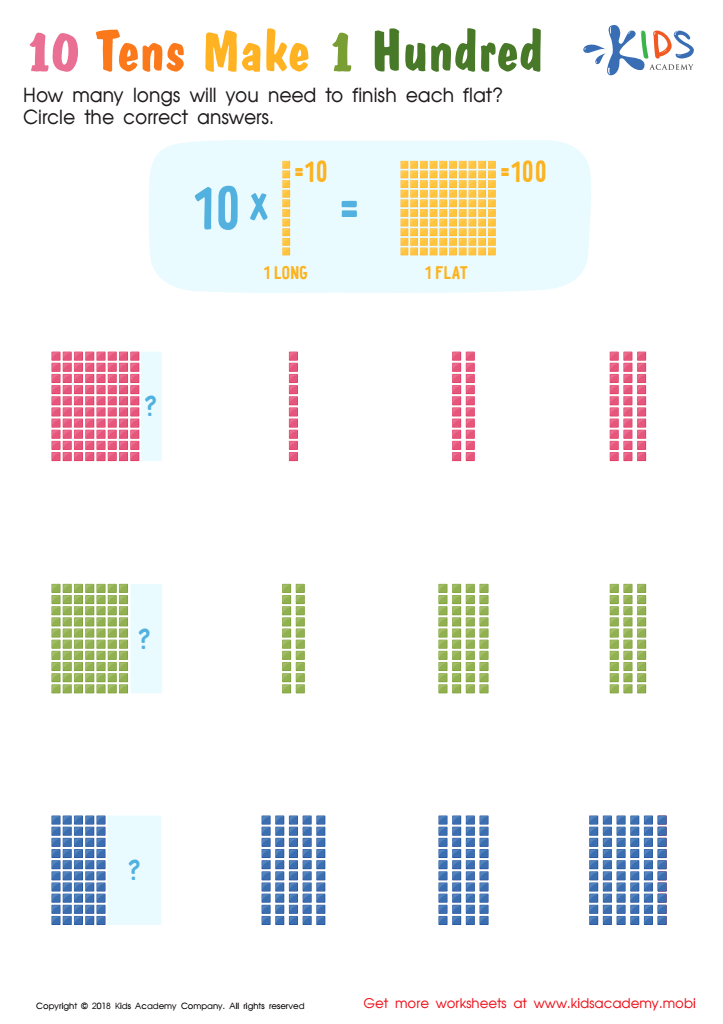
10 Tens Make 1 Hundred Worksheet






Recognizing number patterns is a crucial skill for young learners aged 4-8, as it lays the foundation for more advanced mathematical concepts. For parents and teachers, fostering an understanding of patterns helps children develop critical thinking skills, enhance their problem-solving abilities, and create a sense of order in the chaotic world of numbers.
When children engage with number patterns, they learn to identify and predict sequences, which strengthens their cognitive processes. This skill is essential for various math-related tasks, including addition, subtraction, and even multiplication later in their educational journey.
Furthermore, recognizing patterns promotes analytical thinking. Children learn to make connections, observe relationships, and apply logic, all of which are valuable in everyday situations, beyond just mathematics.
Moreover, pattern recognition supports emotional development, as successfully completing pattern-based activities boosts children's confidence and motivates them to engage further with learning.
Finally, incorporating pattern recognition activities into educational experiences adds an element of fun, making learning more engaging. By prioritizing this skill, parents and teachers not only prepare children for academic success but also cultivate a lifelong appreciation for mathematics and its relevance to the world around them.








